A practical buyer’s guide to assessing discreet security in Grove Isle, focusing on arrival choreography, staff culture, privacy design, access control, and the daily comfort that defines true luxury.
For ultra-premium buyers, security is not simply a checklist item. It is part of the emotional architecture of a residence. At its best, it feels calm, intuitive, and nearly invisible. At its weakest, it announces itself through harsh barriers, overlit approaches, inconsistent staff behavior, and the sense that the building is performing protection rather than providing it.
That distinction is especially important for buyers considering Grove Isle, where privacy, waterfront calm, and proximity to Coconut Grove are central to the appeal. A buyer may be drawn to the setting, the views, and the feeling of retreat, but the daily experience will be shaped just as much by how guests arrive, how deliveries are handled, how service providers move, and how residents pass through the property without friction.
A project such as Vita at Grove Isle belongs in that conversation because buyers are not only evaluating floor plans and finishes. They are evaluating whether the entire residential environment supports a private, composed way of living.
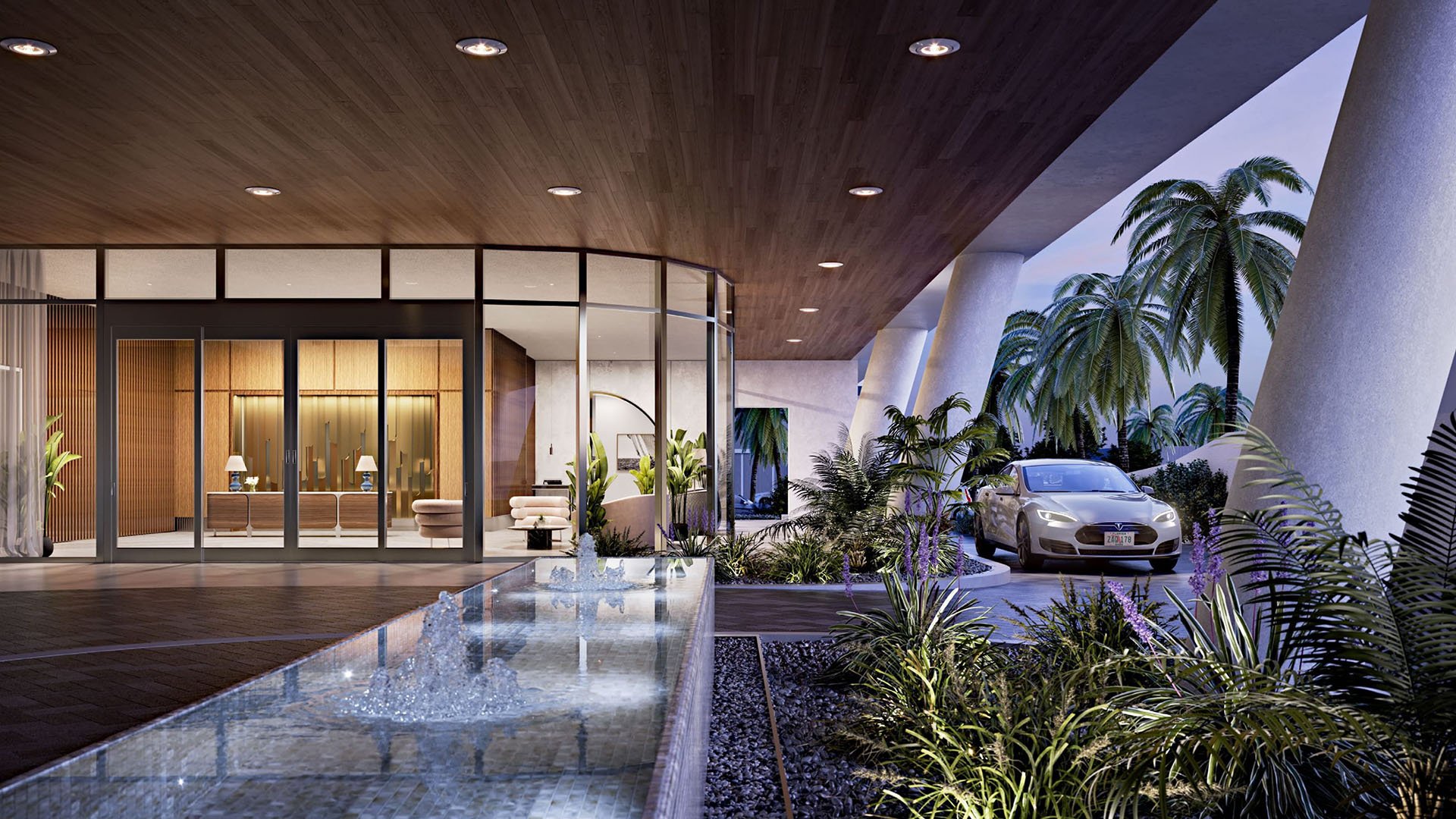
The first security test begins before a buyer reaches the lobby. Notice how the property handles approach, recognition, parking, valet, pedestrian access, and guest confirmation. A discreet system should create clarity without congestion. Residents should not feel processed, and guests should not feel interrogated in full view of everyone else.
During a showing, ask to experience the arrival as a resident would, not only as a sales guest. How does a known resident enter? How is an invited visitor received? Where do delivery vehicles wait? Is residential arrival separated from service access and public-facing movement? The answers reveal whether security has been designed into the property or added afterward as a visible layer.
The most refined buildings make access control feel like hospitality. The tone is calm, the staff is informed, and the choreography protects privacy without dramatizing it. That is the difference between a secure residence and a guarded stage.
Cameras, controlled entries, and gates can matter, but they do not substitute for professional judgment. In high-end residential settings, staff culture is often the most important security feature because it determines how rules are interpreted in real time.
A buyer should observe whether team members use names discreetly, avoid announcing personal details, and manage exceptions without visible confusion. Security that depends on confrontation is rarely elegant. Security that depends on training, consistency, and quiet recognition is far more aligned with luxury living.
Ask how new staff members are trained, how temporary personnel are supervised, and who has authority to approve unusual requests. Also ask how the building handles contractors, pet walkers, housekeepers, private chefs, drivers, and visiting wellness professionals. In a lifestyle-driven residence, the flow of trusted service providers is constant. The system should protect the home without making the resident manage every interaction.
Some properties rely on visible spectacle: imposing barriers, excessive signage, bright lighting, and conspicuous checkpoints. Those cues can make a building feel defended, but they do not always create better privacy. In many cases, they simply make the security experience louder.
Architectural privacy is different. It may come from layered transitions, controlled sightlines, thoughtful landscaping, elevator separation, private vestibules, limited exposure at arrival points, and circulation paths that keep residential life apart from service movement. These features allow residents to feel protected because the building is composed, not because it is constantly announcing control.
This is one reason buyers comparing Grove Isle with other Coconut Grove residences should look beyond marketing language. The experience at Four Seasons Residences Coconut Grove, for example, should be assessed through the same lens: not merely what the residence promises, but how naturally privacy and service are integrated into everyday life.
Luxury security fails when it becomes irritating. A buyer should imagine ordinary moments: returning from dinner, sending a guest up to the residence, receiving a high-value delivery, coordinating a private driver, hosting family for the weekend, or allowing a vendor to enter while the owner is away.
If each moment requires repeated explanations, awkward waiting, or improvised approvals, the system may be secure in theory but burdensome in practice. The goal is not to remove control. The goal is to make control feel fluent.
Ask whether residents can pre-clear guests, how long permissions remain active, and whether the system distinguishes between family, close friends, recurring staff, and one-time vendors. Ask what happens when technology fails. A discreet property should have a graceful manual process, not a public breakdown at the front desk.
A serious buyer should request specific answers before relying on atmosphere. Who monitors access points? How are guest records handled? What is the escalation process for an unidentified visitor? How are package rooms, parking areas, waterfront edges, amenity levels, and service corridors supervised? How does management balance resident privacy with incident response?
The phrase gated community can sound reassuring, but it should never be accepted as a complete answer. A gate is only one element in a larger operating culture. The more relevant question is whether the property has layered access, consistent training, sensible circulation, and a resident experience that remains refined under pressure.
This is also where waterfront living deserves special attention. Waterfront properties often have unique edges, approaches, and outdoor amenities. Buyers should understand how the property treats those transitions without turning the landscape into a visible security apparatus.
Grove Isle buyers are usually choosing a particular kind of privacy: close to Coconut Grove, yet emotionally removed from its busier village rhythm. That makes comparison valuable. A buyer touring Park Grove Coconut Grove or Mr. C Tigertail Coconut Grove should pay attention to the same details: arrival discretion, staff tone, guest handling, elevator access, amenity visibility, and how comfortably the building absorbs daily service traffic.
The point is not that every buyer wants the same security posture. Some prefer a more formal arrival. Others want a resort-like ease. Some value anonymity, while others appreciate staff familiarity. The best choice is the one whose security culture matches the owner’s private life, travel patterns, guest frequency, and tolerance for protocol.
For buyers moving from single-family homes, the adjustment can be subtle. In an estate, security is often individualized. In a condominium, privacy depends on shared standards. That is why governance, management, and resident culture matter. A polished lobby cannot compensate for loose procedures, and dramatic hardware cannot overcome inconsistent execution.
The final test is sensory. Does the property feel calm at arrival? Are transitions legible without being obvious? Do staff members project confidence rather than suspicion? Can residents move naturally from car to elevator to residence? Are guests made comfortable while still being properly screened? Does the building protect privacy without creating social friction?
For a Grove Isle purchase, the answer should be yes before the view, the terrace, or the amenity deck becomes the deciding factor. Security that feels discreet is not passive. It is disciplined, designed, and carefully operated. It allows residents to live beautifully without feeling watched, delayed, or displayed.
That is the quiet luxury standard: a residence where protection is present, but the feeling is ease.
What is discreet security in a luxury residence? Discreet security is protection that works without dominating the resident experience. It relies on layered access, trained staff, and thoughtful design rather than theatrical cues.
Why does discreet security matter before buying in Grove Isle? Grove Isle buyers often value privacy, calm, and waterfront living. The wrong security culture can make even a beautiful residence feel inconvenient or exposed.
Should buyers focus more on staff or technology? Both matter, but staff culture often determines how well technology works in daily life. Training, consistency, and judgment are essential.
How can a buyer test the arrival experience? Ask to experience arrival as a resident, a guest, and a service provider would. Watch for bottlenecks, awkward pauses, and unclear handoffs.
Is visible security always better? Not necessarily. Highly visible measures can feel reassuring, but they may also create unnecessary tension if not supported by smart design and operations.
What should buyers ask about guest access? Ask how guests are pre-cleared, how recurring visitors are treated, and how exceptions are handled. The process should be secure without becoming cumbersome.
Do waterfront residences require different scrutiny? Yes, buyers should understand how outdoor edges, amenities, and service routes are managed. The goal is safety without compromising the landscape experience.
How does condominium security differ from estate security? In a condominium, privacy depends on shared procedures and management quality. In an estate, systems can be more individualized.
Can security affect resale appeal? Yes, sophisticated buyers notice whether a building feels calm, private, and well run. A refined security culture can strengthen confidence in the residence.
When should security be evaluated during the purchase process? It should be evaluated before contract, not after closing. Buyers should ask operational questions while they still have negotiating leverage.
For a tailored shortlist and next-step guidance, connect with MILLION.
If branded residences are on your mind — as a home or as an allocation — we would be glad to share what we are seeing, privately.
Begin a quiet conversation