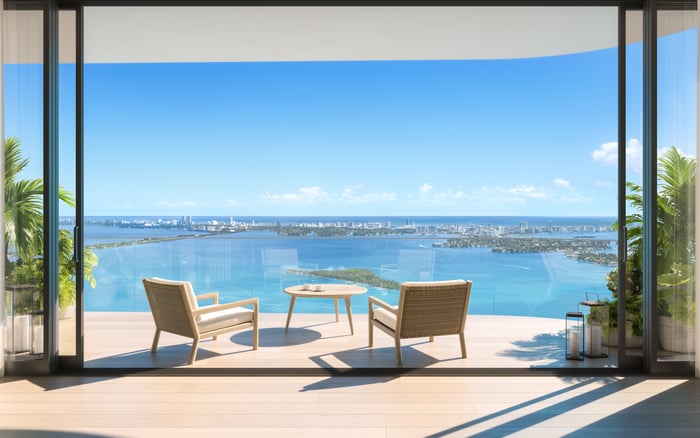
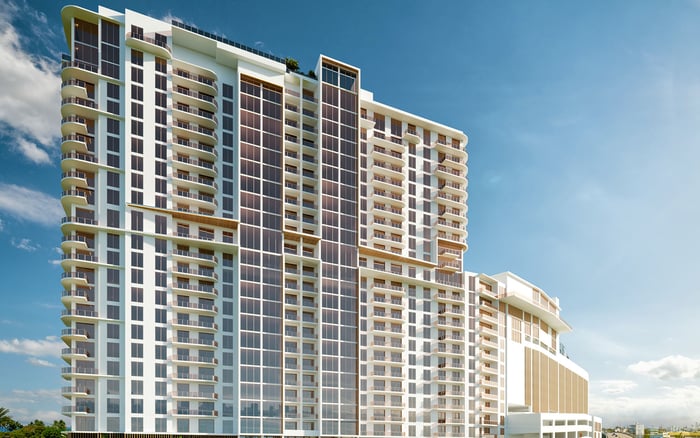
A practical luxury buyer guide to evaluating Edgewater condominiums for storm-day comfort, resilience, access, building systems, flood exposure, insurance, and post-storm recovery before closing.

In Edgewater, the question is not simply whether a tower was built to withstand a storm. For a serious buyer, the sharper question is whether the residence remains livable, accessible, functional, and financially predictable before, during, and after severe weather. Atlantic hurricane season runs from June 1 through November 30, with peak activity typically from mid-August through late October, making storm planning part of the ownership rhythm rather than an abstract concern.
The Saffir-Simpson scale measures wind only. It does not account for storm surge, rainfall flooding, tornadoes, elevator downtime, garage exposure, power loss, staff availability, or the days it can take for a building to return to normal. That distinction matters in Edgewater, where a water-view premium often comes with proximity to Biscayne Bay, wind-driven rain, and access routes that warrant close review.
Edgewater should never be treated as one uniform risk profile. Buyers should check the exact address in the county storm surge planning zone system, then separately review the official flood map for the parcel. Evacuation zones and flood zones are different tools: one informs public-safety and storm-movement decisions, while the other helps evaluate insurance, elevation, and flood-risk obligations.
For a bay-adjacent acquisition, request an elevation certificate when available, particularly if the building has ground-floor amenities, garage entries, street-level lobbies, or mechanical rooms near lower elevations. The document can help clarify the relationship among site elevation, flood zone, and lowest-floor conditions. It is not a substitute for professional advice, but it is a disciplined starting point.
Buyers comparing Aria Reserve Miami with other Edgewater options, for example, should look beyond the skyline and ask how residents reach the property during heavy rain, where vehicles are stored, and how the building controls water at entries.
Storm-day livability depends on shared systems. A private residence can be beautifully finished, but the experience changes if elevators are limited, domestic water pressure is interrupted, cooling is unavailable, or communications become fragmented. Before making an offer, ask management for the written hurricane plan, resident communication protocol, staff coverage model, post-storm re-entry process, and rules for balcony furniture removal.
Generator coverage requires especially precise questions. Buyers should ask what the generator powers, how long fuel is expected to last, whether any elevators remain operational, whether common-area cooling is supported, and how water systems perform during extended outages. Planning for long power interruptions is not pessimism; it is a baseline luxury-service expectation.
At EDITION Edgewater and comparable new or planned addresses, the buyer conversation should include resilience language early, before finishes and amenity programming dominate the tour.
Balcony design, terrace drainage, door thresholds, and wind-driven rain history matter in Edgewater. A high floor may feel protected from street flooding, but higher floors can bring more exposure to wind pressure, terrace water movement, and storm-driven moisture at balcony doors. Ask whether windows, sliding doors, shutters where applicable, roofing, and exterior components carry county product approvals or notices of acceptance.
Orientation is equally practical. Bay-facing glass may deliver the most memorable morning light, but buyers should ask whether the unit has prior leak reports, whether terrace drains have been maintained, and whether any post-storm repairs were completed in the stack. The best diligence pairs seller disclosures with board minutes, maintenance records, and conversations with current residents who remember Hurricane Irma or recent king-tide and heavy-rain events.
When touring Villa Miami or another waterfront residence, a buyer should consider how the facade, balcony doors, and terrace details perform on the least glamorous day of ownership, not only during golden-hour showings.
Florida condominium resale rules give buyers the opportunity to review key documents before closing. Use that window seriously. Budgets, reserves, insurance summaries, rules, pending assessments, maintenance obligations, board minutes, and structural records can reveal whether storm-relevant systems are being funded and managed with discipline.
For older towers, milestone inspection status is a central diligence item. For all condominium purchases, structural integrity reserve planning matters because roofs, waterproofing, windows, exterior walls, and structural components influence both risk and future cost. A building can look polished at the lobby level while carrying deferred obligations that surface after a major weather event.
Insurance should be addressed before storm-season pressure begins. Standard homeowners or condo policies generally do not replace dedicated flood coverage, and flood policies usually involve a waiting period. Buyers should discuss unit coverage, association master coverage, deductibles, exclusions, and loss-assessment exposure with qualified advisors before a named storm is on the horizon.
The most discerning Edgewater buyer asks a simple question: how long until daily life feels normal again? Access routes, garage drainage, elevator protocols, domestic water, cell-service backup, package and food delivery, pet relief areas, valet operations, security coverage, and debris removal all shape the answer.
At The Cove Residences Edgewater, as with any bayfront or bay-near address, storm-day evaluation should include street approach, garage vulnerability, lobby elevation, service staffing, and resident communications. Ask for specificity. “We have a plan” is not the same as knowing who is on site, which systems remain active, and how residents receive updates if power or cell service is disrupted.
A luxury purchase in Edgewater is still about light, views, design, and proximity to the city’s cultural core. But the most resilient ownership experience is chosen before closing, through document review, systems questions, flood evaluation, and sober attention to how the building behaves when the bay, wind, and rain arrive together.
Should Edgewater buyers judge storm risk by hurricane category alone? No. Hurricane category measures wind, while livability also depends on surge, rainfall flooding, access, elevators, power, water, and recovery time.
Are evacuation zones and flood zones the same thing? No. Evacuation zones guide storm-surge safety decisions, while flood zones are used for flood-risk and insurance analysis.
What documents should a condo buyer request before closing? Review insurance, budgets, reserves, rules, board minutes, pending assessments, maintenance records, and any available elevation or inspection documents.
Why does garage location matter in Edgewater? Storm surge and heavy rainfall can affect low-lying entries, ramps, and vehicle storage, so garage protection and drainage deserve direct questions.
What should buyers ask about generators? Ask what the generator powers, fuel duration, elevator coverage, water-system support, common-area cooling, and communications backup.
Do standard condo policies cover flood damage? Not necessarily. Buyers should discuss dedicated flood coverage, association coverage, deductibles, and waiting periods before storm-season pressure builds.
Why are board minutes useful for storm diligence? They may reveal leak history, facade repairs, insurance claims, drainage issues, assessments, or recurring maintenance concerns.
Do high-floor units avoid storm-day concerns? They may reduce certain street-level concerns, but wind exposure, terrace drainage, balcony doors, and elevator dependence remain important.
Should buyers talk to current residents? Yes. Resident experience during past storms, king tides, or heavy-rain events can add practical context to official documents.
What is the best way to shortlist comparable options for touring? Start with location fit, delivery status, and daily lifestyle priorities, then compare stacks and elevations to validate views and privacy.
For a tailored shortlist and next-step guidance, connect with MILLION.
If branded residences are on your mind — as a home or as an allocation — we would be glad to share what we are seeing, privately.
Begin a quiet conversation