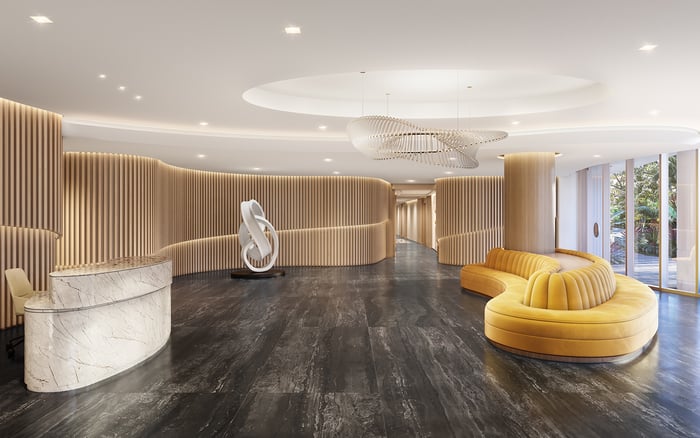
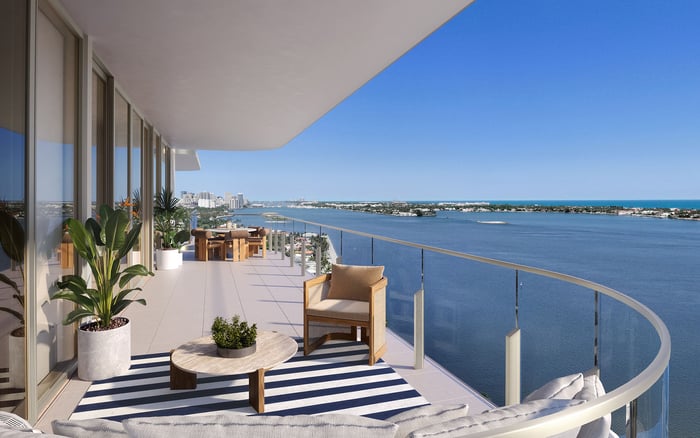
A practical luxury buyer’s guide to assessing private elevators, controlled arrival, privacy, service routing, and long-term ownership value in South Flagler residences.
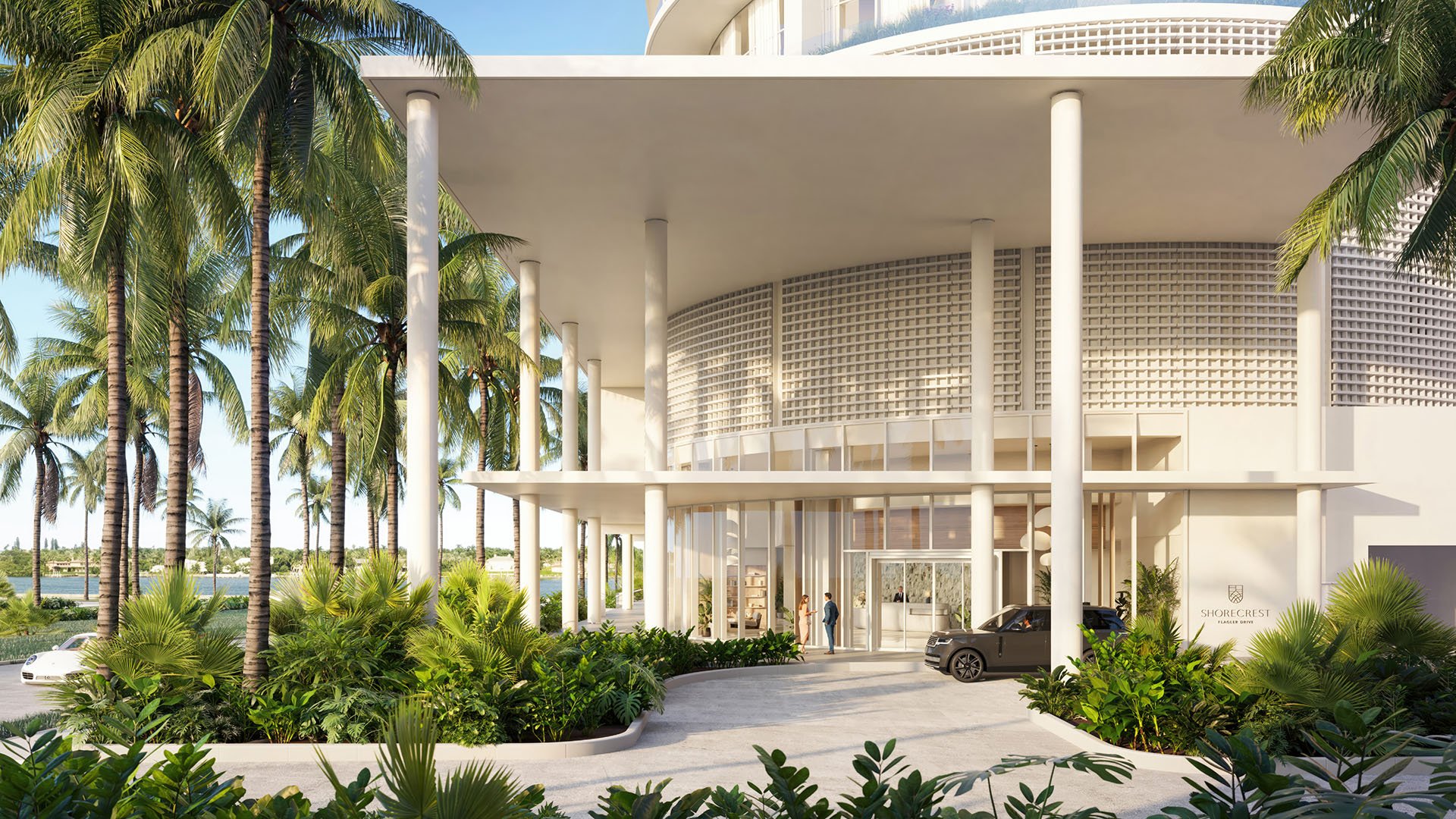
On South Flagler, coming home often begins well before the front door. For buyers evaluating private elevators and controlled arrival, the question is not simply whether the feature exists. The more important question is whether it has been resolved with discipline.
A private elevator can feel cinematic, but in a serious residence it should also be calm, legible, secure, and operationally sound. Controlled arrival touches architecture, staffing, privacy, deliveries, guests, emergency planning, insurance, maintenance, and eventual resale. In a market where buyers weigh discretion as closely as views, the elevator sequence becomes part of the residence itself.
That is why a South Flagler buyer should evaluate arrival with the same rigor applied to floor plans, terraces, building services, and association documents. The best systems are not theatrical for their own sake. They reduce friction, protect privacy, and make daily life feel composed.
The first distinction is both legal and practical: what is private, what is shared, and what is merely controlled? A true private elevator arrangement may differ from an elevator that opens into a semi-private vestibule or a controlled-access landing. Each can be desirable, but they are not interchangeable.
Before purchasing, buyers should ask how elevator access is defined in the governing documents. Is the foyer part of the unit, a limited common element, or a shared building area? Who maintains finishes outside the cab? Who is responsible for lighting, climate, cameras, hardware, and wall protection during moves? These questions matter because even the most polished arrival spaces require clear accountability.
When comparing South Flagler options, buyers may look at residences such as South Flagler House West Palm Beach alongside other West Palm Beach offerings to understand how different buildings frame entry, privacy, and service. The goal is not to chase the most dramatic arrival, but to identify the most coherent one.
Controlled arrival should be tested in real time whenever possible. Ask to walk the full path from the porte cochere, garage, valet position, lobby, elevator, and residence entry. A polished presentation can obscure the everyday sequence, while a careful walkthrough reveals whether the system is intuitive.
Buyers should understand how residents, family members, household staff, vendors, drivers, and guests receive access. Key fobs, digital credentials, concierge release, elevator programming, destination dispatch, biometric options, and temporary guest permissions can all shape the ownership experience. The more layered the system, the more important it is that the user experience remains simple.
Privacy is not only about preventing entry. It is about preventing confusion. A guest should not wander into the wrong elevator bank. A caterer should not be uncertain about where to unload. A driver should not need repeated instructions each time the owner returns home. Controlled arrival works best when it feels almost invisible.
A private elevator is only as refined as the service plan around it. Luxury buyers often focus on the front-facing arrival, but the back-of-house experience can be just as important. Package delivery, florals, art installation, catering, pet care, housekeeping, and maintenance all require movement through the building.
Ask whether there is a dedicated service elevator, how deliveries are staged, and whether vendors ever share the primary residential elevator. Review move-in rules, elevator padding requirements, advance notice periods, hours of operation, and any fees. For large-format residences, the ability to move furniture, art, wine storage, fitness equipment, and outdoor pieces without disrupting the primary arrival path is a meaningful advantage.
This is especially relevant in waterfront and urban residential settings, where owners often want the grace of a private home with the managed convenience of a full-service building. In South Flagler, that balance can define the daily rhythm of ownership.
Security should be layered, not theatrical. Buyers should ask how the building manages identity, guest authorization, elevator release, after-hours access, emergency entry, and staff oversight. The strongest systems usually combine human service with well-designed technology.
A controlled elevator that requires constant intervention can become tedious. Conversely, a system that feels effortless may not be secure enough if guest protocols are loose. The ideal arrangement gives owners quick, quiet movement while preserving strict control over who can reach a residential landing.
In any new-construction review, buyers should also ask how access technology will age. Can software be updated? Who manages credentials when ownership changes? What happens if a phone is lost, a staff member leaves, or a vendor credential expires? Elegant arrival depends on governance as much as hardware.
Private elevators are mechanical systems, not decorative amenities. Buyers should understand emergency power coverage, elevator recall procedures, fire-service operation, maintenance schedules, inspection responsibilities, and communication inside the cab. If an elevator serves a limited number of residences, ask whether that affects response times, parts planning, or service agreements.
Redundancy is essential. If the private elevator is out of service, how does the owner reach the residence? Is there a secondary elevator path? Is the stair sequence comfortable and secure? Are there clear procedures for residents with mobility needs? These questions should be answered before contract, not after closing.
Maintenance costs should also be reviewed carefully through the association budget and reserve planning. A private or semi-private arrival experience can enhance lifestyle and value, but it must be supported by disciplined building management.
South Flagler buyers are often evaluating more than square footage. They are comparing atmosphere, discretion, water orientation, service culture, and proximity to Palm Beach without necessarily wanting the same ownership structure as an estate. Arrival becomes the hinge between those priorities.
A buyer reviewing Maison D'Or South Flagler may consider how the building’s entry sequence supports privacy and ease. A comparison with Forté on Flagler West Palm Beach can sharpen questions about vertical circulation, guest flow, and the distinction between private living and shared services.
Nearby West Palm Beach options such as Shorecrest Flagler Drive West Palm Beach and The Ritz-Carlton Residences® West Palm Beach may further help buyers calibrate what they value most: brand service, boutique discretion, staff coordination, or a more residential sense of arrival. This is the type of comparison that belongs in serious buyer’s guides, because private arrival is rarely just an amenity line.
Private elevators and controlled arrival can be powerful resale differentiators, especially for buyers who prioritize security, discretion, and the feeling of a house in the sky. Yet the feature is most valuable when paired with a logical floor plan, strong service circulation, and clear association governance.
Future buyers will ask many of the same questions. Is the arrival private in practice or only in marketing language? Does the elevator open elegantly into the residence? Can staff and deliveries move separately? Are the systems easy to use? Are maintenance responsibilities predictable? If the answers are strong, controlled arrival can support both lifestyle and marketability.
The wisest buyers resist being seduced by the elevator doors alone. They look at the choreography behind them.
Is a private elevator always better than a controlled-access elevator? Not always. A well-managed controlled-access elevator can outperform a poorly designed private elevator if privacy, routing, and service protocols are stronger.
What documents should I review before buying? Review condominium documents, association budgets, rules on elevator use, maintenance obligations, insurance language, and any limited common element descriptions.
Should I test the elevator during a showing? Yes. Walk the full arrival path from car or valet to residence entry, including guest and service routes where access is permitted.
How important is a service elevator? It can be very important for privacy and convenience. Service routing affects deliveries, moves, vendors, housekeeping, and large-item installation.
What should I ask about emergency power? Ask whether elevator systems have backup power, how emergency recall works, and what alternate access exists if an elevator is unavailable.
Can private elevators affect monthly costs? They can influence maintenance, reserves, staffing, and service contracts. Buyers should review budgets carefully rather than treating the feature as purely aesthetic.
What makes controlled arrival feel luxurious? The best systems feel quiet, intuitive, secure, and unforced. Owners should not have to manage complexity every time they come home.
How should guests be handled? Guests should have a clear authorization process and an arrival path that protects resident privacy while avoiding confusion or repeated manual intervention.
Is private arrival useful for resale? It can be, particularly when paired with strong architecture, service circulation, and clear operating rules. Poor execution can limit the benefit.
What is the best way to shortlist comparable options for touring? Start with location fit, delivery status, and daily lifestyle priorities, then compare stacks and elevations to validate views and privacy.
For a confidential assessment and a building-by-building shortlist, connect with MILLION.
If branded residences are on your mind — as a home or as an allocation — we would be glad to share what we are seeing, privately.
Begin a quiet conversation