A practical luxury-buyer framework for assessing whether a Coconut Grove residence can absorb extended family visits with privacy, grace, and daily ease.
A weekend guest can be absorbed by almost any beautiful residence. A weeklong family visit is different. It tests the plan, the privacy, the kitchen, the elevator routine, the guest bath, the laundry rhythm, the parking choreography, and the emotional temperature of the home after the third breakfast together.
For buyers considering Coconut Grove, this matters because many purchases are not merely about a primary address. They are about hosting parents from the Northeast, adult children flying in between semesters or jobs, siblings arriving with spouses, grandchildren moving between pool time and quiet time, and trusted household staff helping everything feel effortless. A Coconut Grove decision is rarely just square footage. It is a lifestyle decision measured in the small frictions that appear after day two.
The smartest buyers evaluate a residence as if family has already arrived with luggage, preferences, routines, dietary needs, devices, pets, and expectations. That mental rehearsal often reveals more than a perfect afternoon showing.
Many buyers begin with the number of bedrooms. Better buyers begin with the sequence. Where does a visiting parent enter? Where do bags go? Can guests move from sleeping quarters to coffee without crossing the most private parts of the home? Is there a powder room that spares visitors from using an ensuite? Is the guest suite dignified enough for a week, not just a night?
The answer is rarely about excess. It is about hierarchy. A serene primary suite should remain protected. Children or grandchildren may need adjacency without total exposure. In-laws often value independence, especially when they stay beyond a weekend. A residence that allows family to be together by choice, not by force, will age better in daily use.
In condominium settings, consider how arrival feels when several relatives come at once. Buildings such as Four Seasons Residences Coconut Grove may appeal to buyers who want a more service-oriented residential experience, but the private residence still has to stand on its own: entry width, closet depth, guest bath placement, and how sound travels when everyone is home.
Privacy is not simply separation on a floor plan. It is the ability to read before breakfast, make a confidential call, let a child nap, or retreat after a long family lunch without offending anyone. During an extended stay, the home must offer zones of participation and withdrawal.
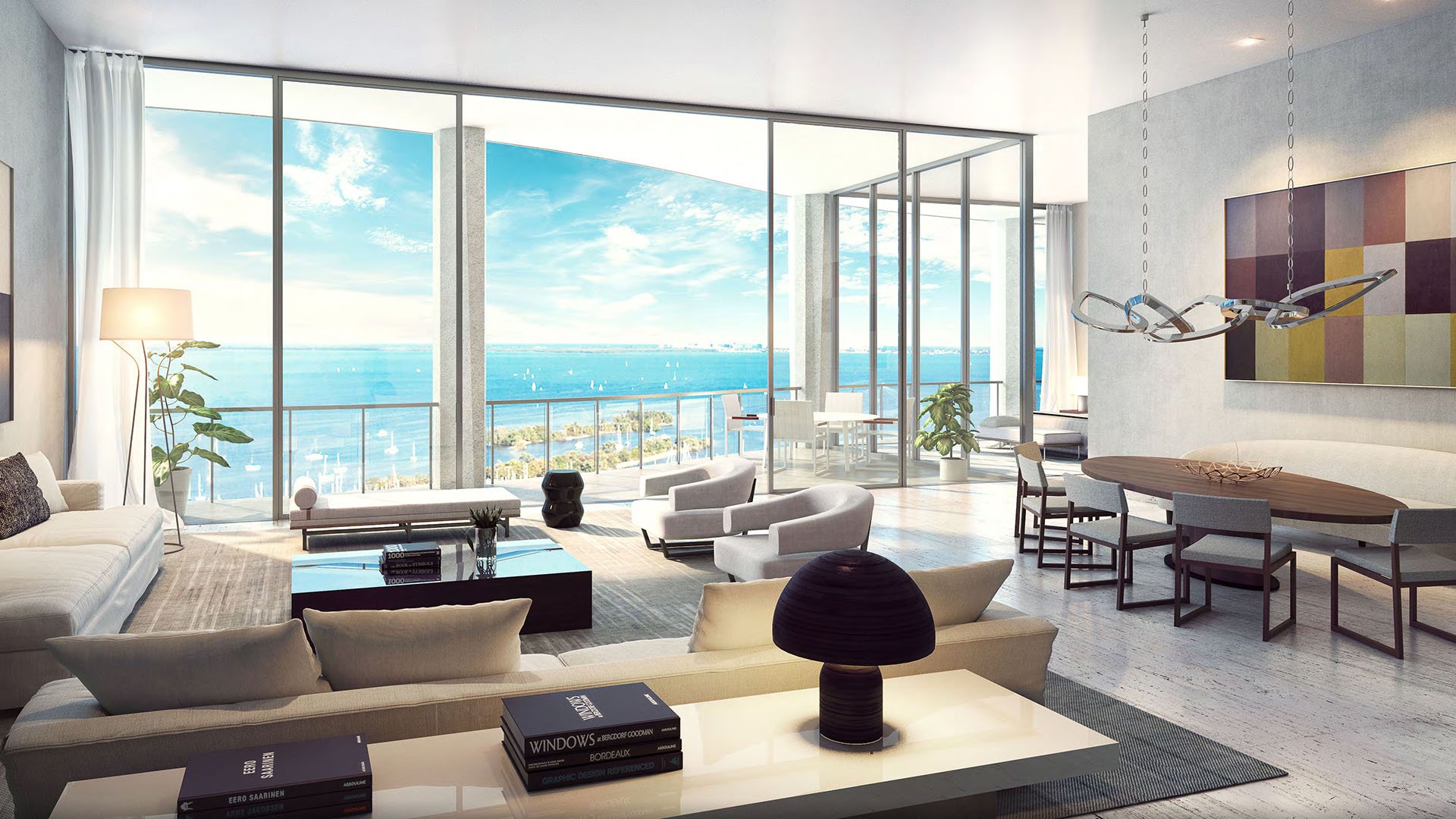
Look for at least one secondary sitting area, a den that can remain calm when the main living room is active, or a terrace arrangement that allows adults to converse while children occupy another visual field. A terrace is not just a view amenity in this context. It can become a pressure valve for the household.
At Park Grove Coconut Grove, buyers may be drawn to the idea of Grove living in a refined residential setting. The more important question for a family-oriented buyer is how a specific residence handles layered occupation. Can a guest wake early without disturbing the primary bedroom? Can a late-arriving adult child settle in quietly? Can two generations enjoy the same home without needing the same schedule?
Extended family visits often migrate toward the kitchen. Even households that dine out frequently tend to gather around coffee, snacks, wine, children’s meals, and informal conversation. The kitchen must perform as both infrastructure and theater.
Evaluate counter length, refrigeration strategy, pantry capacity, dish storage, and the distance between cooking, dining, and outdoor seating. If family members cook together, circulation around the island matters. If one person cooks while others linger, seating must feel intentional rather than obstructive. If household staff assists, service access and back-of-house storage become central to comfort.
A beautiful kitchen that works for two residents may feel undersized when six people are opening drawers, asking for filtered water, and leaving breakfast plates behind. Buyers should imagine a full morning with guests: coffee, fruit, school-age children, a conference call, a grocery delivery, and someone asking where the extra napkins are. The right residence makes this scene feel elegant rather than chaotic.
Amenities are often presented as lifestyle enhancements, but for long family visits they become practical extensions of the residence. A pool may entertain grandchildren. Wellness spaces may preserve adult routines. Lounges may create neutral territory for visiting relatives who want a change of scene without requiring a car.
For a second-home buyer, amenities can also reduce the need to overbuild inside the unit. A well-considered building can allow the private residence to remain serene while still supporting guests. This is especially relevant when family visits are frequent but not permanent.
A project such as The Well Coconut Grove invites buyers to think carefully about wellness-oriented living and how shared spaces might support longer stays. The question is not whether amenities look attractive on a tour. The question is whether they will actually be used on Tuesday morning, Thursday afternoon, and the final day when everyone is slightly tired.
Families rarely arrive as a simple pair of adults. They may include toddlers with equipment, teenagers with appetites and privacy needs, a nanny, a chef, a driver, or aging parents who prefer fewer stairs and shorter walks. Pets add another layer. The best purchase analysis is candid about who truly visits and how they behave.
For young children, evaluate sightlines, terrace safety protocols, washable surfaces, and where toys can disappear at night. For older relatives, consider thresholds, bathroom accessibility, shower comfort, elevator proximity, and whether the guest suite feels respectful rather than improvised. For staff, discreet circulation and storage can make the difference between seamless hosting and constant compromise.
A boutique-scaled option such as Arbor Coconut Grove may prompt a different set of questions than a larger amenity-rich setting. Neither is inherently superior. The right answer depends on whether the buyer values intimacy, services, guest independence, or a blend of all three.
A residence can pass the interior test and still fail the family-visit test if the daily rhythm feels strained. Buyers should imagine multiple days of errands, walks, meals, exercise, quiet evenings, and logistics. The question is not whether Coconut Grove is desirable in the abstract. The question is whether the specific location supports the family’s habits.
Think about morning walks with relatives, late afternoon returns, dinner plans, and how easily different generations can occupy themselves. Does the setting allow a parent to step out comfortably? Can adult children return independently? Is the home restful after social outings? Long visits expose whether the address offers autonomy, not only beauty.
For buyers comparing newer Grove offerings, The Lincoln Coconut Grove may enter the conversation as part of a broader evaluation of how building scale, residence planning, and neighborhood access intersect. The most successful purchase is the one where family can be present without the owner feeling displaced.
Before committing, create a private scorecard with categories that reflect actual life: sleeping comfort, guest privacy, kitchen performance, dining flexibility, luggage storage, laundry capacity, children’s needs, elder comfort, pet routines, staff support, parking, amenity usefulness, and owner recovery time.
The final category may be the most important. After guests leave, does the owner feel that the residence handled the visit gracefully, or does the home feel temporarily exhausted? A strong Coconut Grove purchase should allow generosity without self-sacrifice. It should make hosting feel natural, not heroic.
This is where luxury becomes quiet. It is not in the headline feature, but in the absence of friction: a guest suite that feels complete, a kitchen that supports abundance, a terrace that gives everyone air, and a primary suite that remains a sanctuary.
Why should buyers test for visits longer than a weekend? Longer visits reveal privacy, storage, noise, and daily-use issues that a short showing cannot expose.
Is an extra bedroom enough for extended family? Not always. The layout, bath access, closet space, and separation from the primary suite matter just as much.
What is the most overlooked feature for visiting relatives? A dignified guest sequence is often overlooked, including arrival, luggage placement, bathroom access, and morning movement.
How should buyers evaluate kitchens for family stays? Imagine several people using the space throughout the day, not just a formal dinner or catered evening.
Do amenities matter more for extended family visits? Yes. Useful amenities can give guests independence and reduce pressure on the private residence.
Should aging parents influence the purchase decision? If they visit often, yes. Consider elevator access, thresholds, bathroom comfort, and a suite that feels calm.
How do children change the evaluation? Children make sightlines, storage, terrace protocols, washable finishes, and flexible gathering areas more important.
Can a smaller residence still work for long visits? Yes, if the plan is efficient, privacy is well managed, and building amenities genuinely extend the home.
What should second-home buyers prioritize? They should prioritize ease of arrival, low-friction hosting, secure storage, and amenities that support recurring guests.
What is the best way to shortlist comparable options for touring? Start with location fit, delivery status, and daily lifestyle priorities, then compare stacks and elevations to validate views and privacy.
To compare the best-fit options with clarity, connect with MILLION.
If branded residences are on your mind — as a home or as an allocation — we would be glad to share what we are seeing, privately.
Begin a quiet conversation