A buyer-focused editorial framework for evaluating Four Seasons Residences Coconut Grove as a full-time residence in 2026, with attention to design, operations, service value, neighborhood fabric, ownership structure, and long-term resilience.

The most important question around Four Seasons Residences Coconut Grove is not whether the name has global recognition. It does. The sharper 2026 question is whether the building is conceived for full-time life in Miami, or whether it reads more as a polished seasonal pied-à-terre with hotel-style services.
That distinction matters. South Florida’s luxury buyer has become more exacting, especially at the top of the market. A recognizable brand, a waterfront neighborhood, and the promise of managed living are no longer sufficient on their own. The residence must perform on quiet Tuesdays as convincingly as it performs during winter season.
Coconut Grove gives the project an unusually strong context for that test. It is one of Miami’s established waterfront neighborhoods, with a residential identity that predates the current branded-residence cycle. Coconut Grove, in market shorthand, is not simply a location tag. It signals a different rhythm from more vertical, transient districts: greener, more settled, and more dependent on daily neighborhood use.
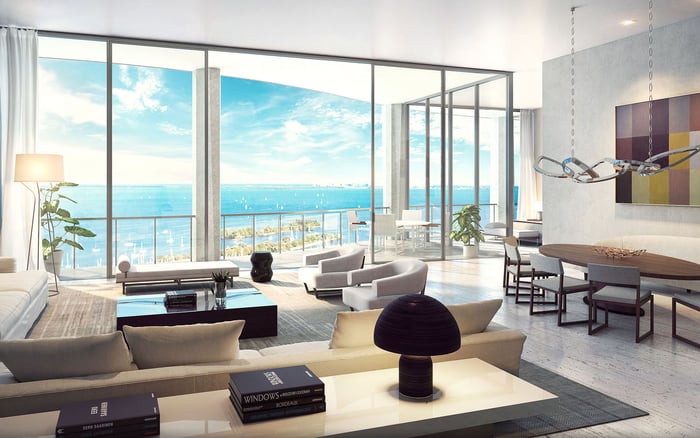
A full-time residence needs to work before it dazzles. Buyers should examine whether the private spaces support a year-round routine, not just occasional entertaining. That means asking practical questions about storage, circulation, kitchen functionality, privacy, natural light, acoustic separation, service access, and the comfort of living with art, pets, children, staff, or visiting family.
In branded ultra-luxury, the public-facing narrative can easily overshadow the apartment itself. The buyer test should move in the opposite direction. Start inside the residence. Ask how mornings, workdays, quiet evenings, and extended stays would actually unfold. A seasonal owner may forgive design gestures that look beautiful but complicate daily life. A primary resident usually will not.
This is also where comparisons within Coconut Grove become useful. A buyer considering Four Seasons Residences Coconut Grove may also study Park Grove Coconut Grove for a different expression of established Grove luxury, or Arbor Coconut Grove for a more intimate, neighborhood-oriented lens. The goal is not to declare one format superior. It is to identify which physical environment best matches the owner’s true cadence.
For a seasonal owner, services may feel like a convenience. For a full-time resident, they become infrastructure. Staffing consistency, maintenance standards, management quality, responsiveness, and daily operational discretion are central to livability.
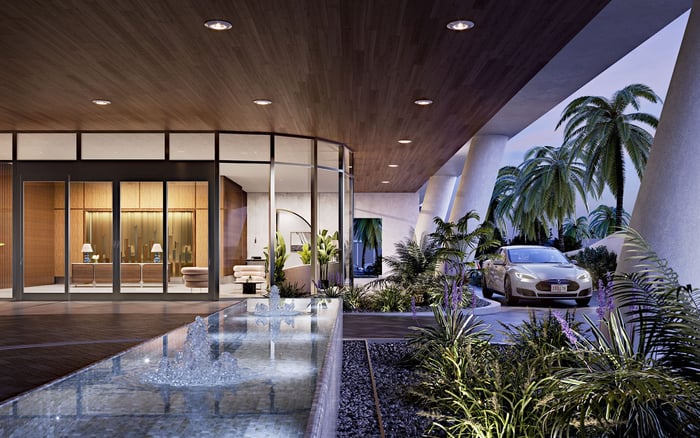
This is where the Four Seasons association may appeal to a particular buyer psychology: the desire for brand assurance and managed luxury living. But the test remains practical. Do services reduce friction in daily life, or do they mainly reinforce a hotel-style ownership experience? Does the building feel like a private residence with exceptional service, or a hospitality environment where residents happen to own the keys?
The difference is subtle but material. Year-round residents rely on predictability. They want the same standard in September as in February. They want systems that work when the building is less socially animated. They want privacy without indifference, and service without performance.
The best branded residences justify themselves when service becomes invisible support. The weaker versions feel like amenity theater: impressive on a tour, less meaningful in ordinary life.
For Four Seasons Residences Coconut Grove, the question is not whether hotel-style service is desirable. For many affluent buyers, it is. The question is whether that service meaningfully improves the experience of living in Coconut Grove full time. A buyer should separate convenience from identity. If the brand is primarily a badge, the premium may be emotional. If the service model changes the owner’s day by simplifying home management, privacy, hospitality, and maintenance, the premium becomes functional.
That same analysis applies across South Florida’s branded field. A buyer looking beyond the Grove might compare the service logic of Four Seasons Hotel & Private Residences Fort Lauderdale with Miami’s more urban branded offerings. The common question remains consistent: does the brand operate as a lifestyle utility, or merely as a marketing wrapper?
Full-time residents need more than on-site amenities. They need a neighborhood that can absorb daily life. Coconut Grove’s advantage is that it already carries a residential fabric, waterfront identity, and established sense of place. For buyers who want Miami without feeling consumed by Miami, that matters.
Still, the buyer must test the fit honestly. Is the owner seeking walkable village energy, access to the water, a quieter residential base, or proximity to broader Miami without living in a denser financial district? The Grove rewards buyers who value atmosphere and continuity. It may be less compelling for those who want the constant pulse of Brickell, Miami Beach, or a more resort-driven oceanfront setting.
Within the Grove itself, projects such as The Well Coconut Grove help illustrate how nuanced the neighborhood has become. Wellness-led, branded, boutique, established, and highly serviced concepts can all speak to different versions of luxury. A buyer should not ask only, “Is this in Coconut Grove?” The better question is, “Which version of Coconut Grove life does this building make possible?”
At the ultra-premium level, lifestyle and financial architecture are inseparable. Buyers should evaluate the ownership framework, ongoing costs, rules, governance, rental limitations if relevant, service obligations, and the way branded-residence structures may influence long-term flexibility. The details can shape both daily satisfaction and exit value.
South Florida also requires a resilience lens. Climate, insurance, tax, and maintenance considerations are now part of serious luxury due diligence. For full-time residents, these are not abstract market issues. They affect carrying costs, building stewardship, and confidence in long-term ownership.
A second-home buyer may focus on lock-and-leave ease. A primary resident should go deeper. How is the building managed through off-season periods? How does the service model adapt to year-round occupancy? Does the building’s identity depend on seasonal glamour, or can it remain composed, functional, and valuable through every month of the year?
Four Seasons Residences Coconut Grove appears conceptually aligned with full-time livability for a specific subset of affluent buyers: those who want a branded, highly managed residence in an established waterfront neighborhood, and who see hotel-style service as a daily benefit rather than a decorative layer.
It will not be the right answer for every luxury purchaser. Some will prefer the independence of a less branded condominium. Others will want a more resort-forward beach address or a denser urban setting. But for buyers who value discretion, continuity, service assurance, and the softer residential character of Coconut Grove, the project belongs in the serious consideration set.
The proper test is not admiration. It is use. If the residence, operations, services, neighborhood, and ownership structure still feel compelling after being examined through the lens of ordinary life, then the brand has done more than sell prestige. It has become a livable platform.
Is Four Seasons Residences Coconut Grove best viewed as a primary home or second home? It can be evaluated for either use, but the strongest buyer test is whether it supports year-round routines rather than only seasonal stays.
Why does Coconut Grove matter in this analysis? Coconut Grove is an established waterfront neighborhood, giving full-time residents a broader daily context beyond the building itself.
What should buyers examine first? Start with the private residence: layout, storage, privacy, light, sound, service access, and whether daily life feels effortless.
How important is the Four Seasons brand? The brand is meaningful for buyers who value service assurance, but it should be tested against practical livability rather than accepted on prestige alone.
Are amenities enough to prove full-time livability? No. Amenities matter, but operations, maintenance, staffing, neighborhood fabric, and ownership structure are equally important.
Who is the likely best-fit buyer? The best fit is an affluent buyer who wants managed luxury living, hotel-style service, and a residential Coconut Grove setting.
What should seasonal buyers consider? Seasonal buyers should focus on lock-and-leave convenience, service reliability, privacy, and whether the building remains easy to use during shorter stays.
How should this compare with other Grove projects? Buyers should compare the service model, residential feel, privacy, and neighborhood rhythm rather than relying only on brand recognition.
Why does resilience matter in South Florida? Climate, insurance, taxes, and long-term maintenance can influence both ownership comfort and confidence over time.
What is the core 2026 buyer question? The core question is whether the project functions as a true full-time residence or primarily as a refined branded retreat.
For a confidential assessment and a building-by-building shortlist, connect with MILLION.
If branded residences are on your mind — as a home or as an allocation — we would be glad to share what we are seeing, privately.
Begin a quiet conversation