A discreet buyer’s guide to reading bayfront light, exposure, glare, outdoor space, and maintenance tradeoffs before purchasing in Palm Beach.
For many Palm Beach buyers, the quiet luxury of a bayfront residence lies as much in what it withholds as in what it offers. It can provide water, sky, sunset color, and boating ambience without the daily intimacy of sand, dune exposure, and direct beach maintenance. The result is not a lesser waterfront experience. It is a different one: more restrained, more residential, and often more practical for owners who want the serenity of water without organizing life around the beach.
The key is to evaluate light as a living condition, not simply as a view. A bayfront home may look exceptional during a showing, but the real test is how the light behaves through morning routines, late-afternoon entertaining, art placement, privacy, cooling comfort, and terrace use. Palm Beach buyers should move through the residence slowly and ask a precise question in every room: does this light make the home easier to inhabit, or does it merely photograph well?
That distinction is especially important for buyers comparing island settings with nearby West Palm Beach waterfront buildings such as Forté on Flagler West Palm Beach, where the conversation often centers on water views, balcony comfort, arrival sequence, and the rhythm of city access across the water.
Oceanfront ownership carries an emotional premium, but it can also bring a more direct relationship with sand, wind-driven salt, beach equipment, and exterior wear. Bayfront living may reduce some of those day-to-day frictions, particularly for buyers who want waterfront atmosphere without planning every outdoor surface around beach use. It does not remove coastal maintenance. It changes the maintenance profile.
The better question is not whether bayfront is maintenance-free. It is whether the home’s exposure, materials, terrace depth, window systems, and management standards align with how the owner will actually live. A seasonal owner may prioritize lock-and-leave confidence. A full-time resident may care more about how often the terrace can be used comfortably. A collector may focus on light control, wall space, and humidity management.
This is where boutique and full-service buildings around the Intracoastal conversation become useful points of comparison. A buyer considering Shorecrest Flagler Drive West Palm Beach, for example, may evaluate how a waterfront residence balances views, services, outdoor living, and lower-maintenance convenience without the daily choreography of beachfront access.
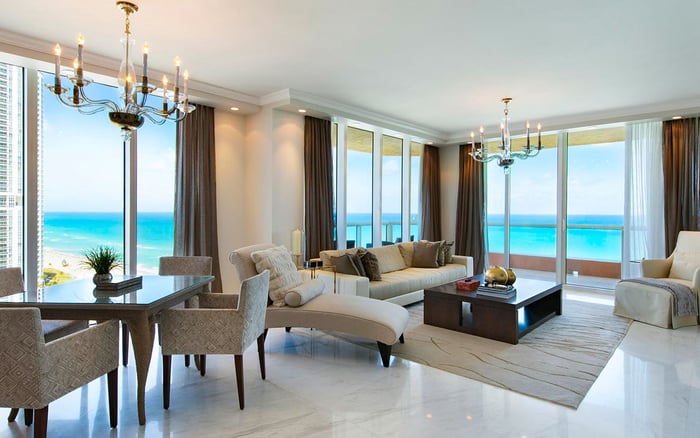
Bayfront light is not one thing. It changes with orientation, floor height, neighboring structures, balcony overhangs, glass specification, and the width of the water view. Morning light can feel gentle and ceremonial. Afternoon light can become warm, reflective, and visually intense. Sunset can be exquisite, but buyers should not mistake beauty for comfort.
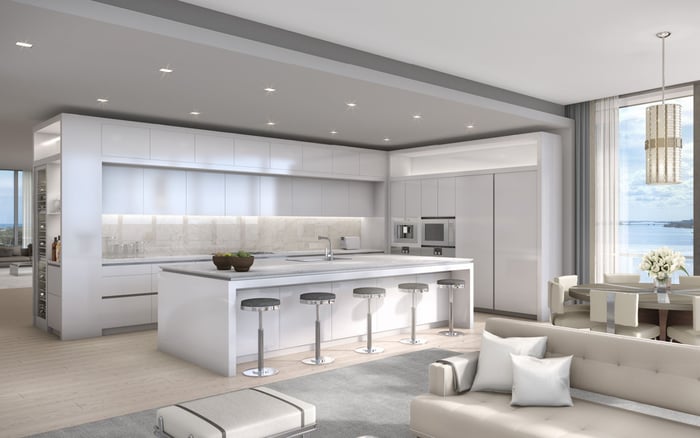
During a private showing, evaluate the residence at more than one time of day if possible. Stand where you would read, dine, work, and host. Notice whether water reflection reaches deep into the living room. Look at stone floors, lacquered millwork, pale upholstery, and television walls. Ask whether shades can manage glare without flattening the very view you are paying for.
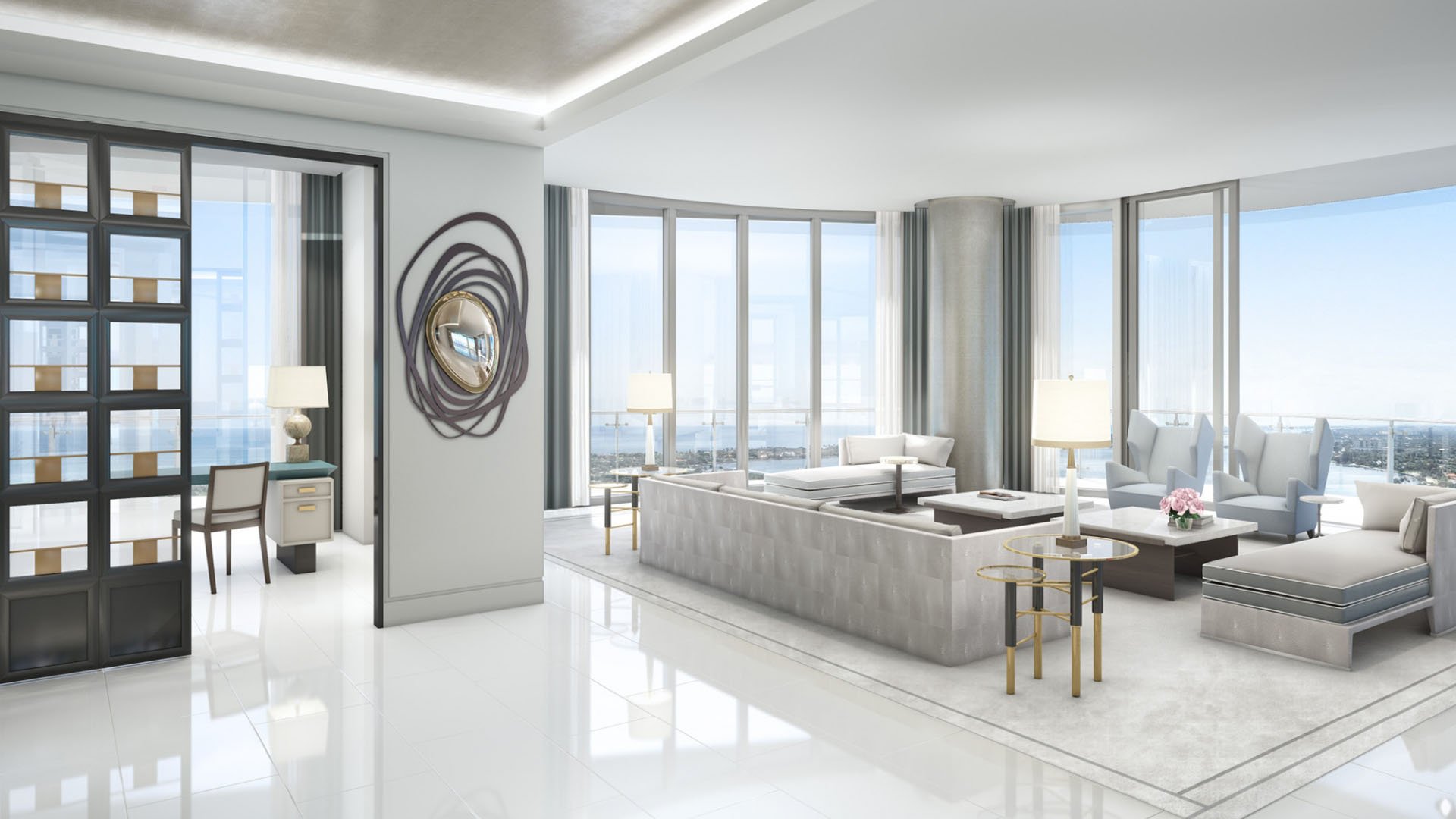
The most successful bayfront homes create layers between interior and water: deep terraces, considered overhangs, operable shading, softly reflective finishes, and rooms that allow daylight to move without overtaking the architecture. In residences such as Palm Beach Residences, the central buyer question is not simply whether the water is visible. It is whether the water, light, and room proportions work together with restraint.
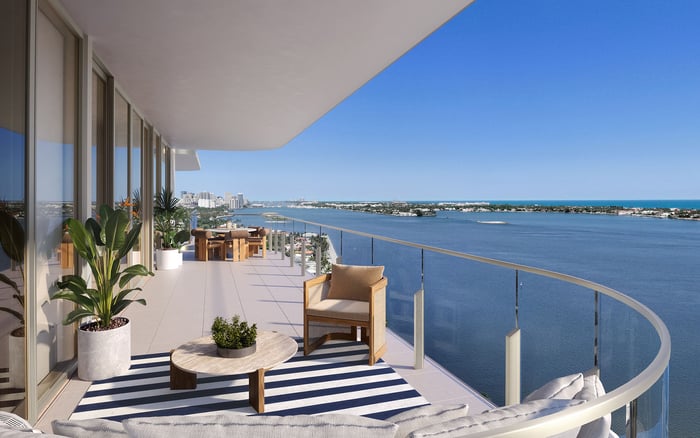
A view becomes part of daily life only when the outdoor space is genuinely usable. A shallow balcony may frame a beautiful perspective yet offer limited comfort for dining or long conversation. A deeper terrace can soften glare, create shade, and allow the owner to live outdoors without feeling exposed. The difference matters in Palm Beach, where the most prized experiences are often quiet ones: coffee before the day begins, a glass of wine at dusk, or a dinner that does not require leaving home.
Buyers should study terrace depth, railing transparency, wind feel, privacy from adjacent units, and the relationship between indoor seating and outdoor furniture placement. A terrace that is too exposed may look dramatic but sit unused. A more protected outdoor room may become the emotional center of the residence.
For search discipline, a buyer may think in shorthand: island proximity, Flagler Drive convenience, water views, balcony and terrace livability, and second-home ownership patterns. Those labels are not the decision, but they help organize what matters.
Less beach maintenance does not mean indifferent maintenance. Bayfront buyers should inspect the details that reveal how a residence handles coastal life: exterior doors, window seals, balcony drainage, terrace flooring, metal finishes, outdoor kitchens, mechanical rooms, and storage areas for cushions and equipment. The most elegant waterfront home is still a technical object. Its beauty depends on maintenance systems that remain mostly invisible.
Ask how exterior surfaces are cleaned, how terrace drainage is handled, how often glass requires attention, and whether outdoor fixtures are appropriate for a salt-air environment. In condominiums, study building policies for terrace furniture, planters, grills where permitted, storm preparation, and service-vendor access. For single-family homes, the inspection expands to seawall condition, dock considerations where applicable, landscaping resilience, irrigation overspray, and exterior lighting.
This is also where the distinction between residence and lifestyle infrastructure becomes important. A home at Alba West Palm Beach may be assessed not only for its private interior, but also for how its waterfront setting, services, and outdoor spaces support a lower-friction ownership experience.
Daylight is only half the story. At night, bayfront living becomes a study in reflection. Interior lighting can turn glass into a mirror, reducing the water view unless the lighting plan is carefully composed. Buyers should ask how the residence feels after dark, particularly in main living areas and primary bedrooms.
Privacy also changes from day to night. A residence that feels secluded in bright daylight may become more visible when interior lights are on. Window treatments should be evaluated as part of the architecture, not as an afterthought. The best solutions preserve softness, protect privacy, and avoid making the home feel sealed off from the water.
For buyers who host frequently, nighttime bayfront atmosphere can be more valuable than peak daytime drama. The glow of the water, the movement of boats, and the calmer sound profile can create a polished entertaining environment that does not depend on beach access. That is the quiet proposition of the bay: a waterfront life that feels composed.
The mistake many buyers make is comparing bayfront and oceanfront as if one must be superior. They are different ownership philosophies. Oceanfront prioritizes immediacy, horizon, surf sound, and beach ritual. Bayfront prioritizes protected water ambience, boating energy, sunset tones in many settings, and often a more urban or residential connection to dining, services, and daily errands.
A buyer drawn to The Bristol Palm Beach may be weighing the appeal of water, vertical privacy, and a refined building experience in a way that differs from a pure beachfront search. The correct choice depends on temperament. If you want the sand to define your day, oceanfront may be worth the additional maintenance. If you want water to elevate your day without managing the beach as a constant presence, bayfront deserves serious attention.
Before purchasing, return to the home with a practical eye. Open the shades. Close them. Step onto the terrace. Sit down; do not only stand. Listen for traffic, mechanical sound, boat activity, and wind. Look at how sunlight touches art walls and bedroom fabrics. Imagine the residence in season, out of season, occupied by guests, and left quiet for several weeks.
Luxury is not only what a property displays. It is what it makes effortless. In Palm Beach, the best bayfront purchase is the one where light, maintenance, privacy, and routine feel aligned before the contract is signed.
Is bayfront living easier to maintain than oceanfront living? It may reduce some beach-related upkeep, but salt air, wind, glass, terraces, and exterior finishes still require careful attention.
What is the first thing to study in a bayfront residence? Study how light enters the main living spaces at different times of day, especially where you will sit, dine, work, and display art.
Does a higher floor always mean better bayfront light? Not always. Higher floors can improve openness, but they may also increase glare, wind exposure, and distance from the water’s texture.
Why is terrace depth so important? A deeper terrace can create shade, improve comfort, and make the view feel usable rather than merely decorative.
Should buyers visit more than once before making an offer? Yes, when possible. Morning, afternoon, and evening visits can reveal glare, privacy, heat, and atmosphere that a single showing may miss.
How should art collectors evaluate bayfront light? They should review wall exposure, shade systems, glass performance, and humidity control with the same seriousness as the view itself.
Is bayfront better for a second home? It can be attractive for second-home owners who want waterfront beauty with less direct beach-related routine, but building services matter.
What maintenance questions belong in due diligence? Ask about glass cleaning, terrace drainage, exterior materials, storm preparation, service access, and rules for outdoor furnishings.
Can bayfront living still feel private? Yes, but privacy depends on floor height, neighboring sightlines, window treatments, lighting design, and the shape of the view corridor.
How should buyers compare bayfront and oceanfront emotionally? Choose oceanfront for beach ritual and horizon drama, and bayfront for composed water views, softer routines, and lower-friction living.
If you'd like a private walkthrough and a curated shortlist, connect with MILLION.
If branded residences are on your mind — as a home or as an allocation — we would be glad to share what we are seeing, privately.
Begin a quiet conversation