A discreet buyer’s guide to reading Wynwood amenity programs for daily usefulness, privacy, service tone, and long-term value without drifting into a resort atmosphere.
In Wynwood, amenity depth should never be judged by volume alone. The most persuasive residential program is not the one with the longest inventory of shared spaces, but the one that supports a sophisticated private life without making home feel like a hotel lobby. For the buyer considering a residence here, the central question is simple: will the amenities make daily life more graceful, or will they introduce constant movement, noise, and performance?
That distinction matters in an art-driven neighborhood where energy is part of the appeal. A residence can honor Wynwood’s creative pulse while still giving owners a calm arrival, quiet transitions, and spaces that do not feel programmed from morning to night. When reviewing a project such as Frida Kahlo Wynwood Residences, the most useful lens is not whether the amenity story feels abundant. It is whether the building understands restraint.
A refined amenity program has hierarchy. Some spaces should serve daily life, others should support weekly rituals, and a smaller number should accommodate occasional entertaining. If every amenity is designed as a spectacle, the building can begin to feel more public than private.
Begin by asking how often you would actually use each space. A fitness area, lounge, package room, coworking setting, pet area, Pool, or Terrace may all sound appealing, but they do not carry equal value for every buyer. The strongest buildings make ordinary routines feel considered. They do not force residents to adopt a resort schedule just to justify the maintenance burden.
The test is personal but disciplined. Imagine a Tuesday morning, a Thursday evening, and a quiet Sunday. If the amenity plan improves those moments without adding friction, it has depth. If it reads primarily as a sales-gallery narrative, it may feel less compelling once the novelty fades.
Privacy is rarely created by adjectives. It is created by circulation, thresholds, sightlines, and the relationship between active and quiet spaces. A buyer should ask whether residents can reach key amenities without crossing through overly social zones, whether guests are naturally contained, and whether work, wellness, and leisure areas have enough separation to function at the same time.
This is especially important in Wynwood, where owners may appreciate the neighborhood’s vibrancy but still want a clear psychological shift when they come home. Good amenity planning offers compression and release: a composed arrival, intuitive elevator access, and shared rooms that do not expose every resident to every activity.
For comparison, buyers often look beyond Wynwood to neighboring districts. A project like Miami Design Residences Midtown Miami can help frame how an urban residence might balance cultural proximity with a more residential sense of enclosure. The lesson is not to copy another neighborhood, but to understand how privacy is designed rather than promised.
A resort feeling often comes from constant activation. Music, food and beverage energy, large social areas, and heavily branded common spaces can be enjoyable in short doses, but they may not be what a primary residence needs every day. Amenity depth is quieter. It is the presence of useful, well-maintained, appropriately scaled spaces that serve residents without demanding attention.
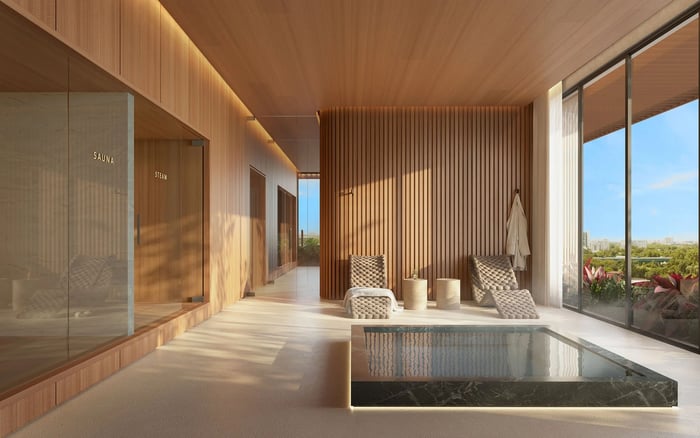
The most elegant buildings avoid making every shared area feel like a destination. A library can be intimate. A wellness room can be calm. A roof deck can offer air and outlook without becoming a scene. The goal is not austerity. It is selectivity.
Ask whether the amenities are resident first. If a building seems oriented toward guests, events, or visual drama more than owner use, the experience may lean resort. If it privileges comfort, timing, acoustics, and ease of access, it will likely age more gracefully.
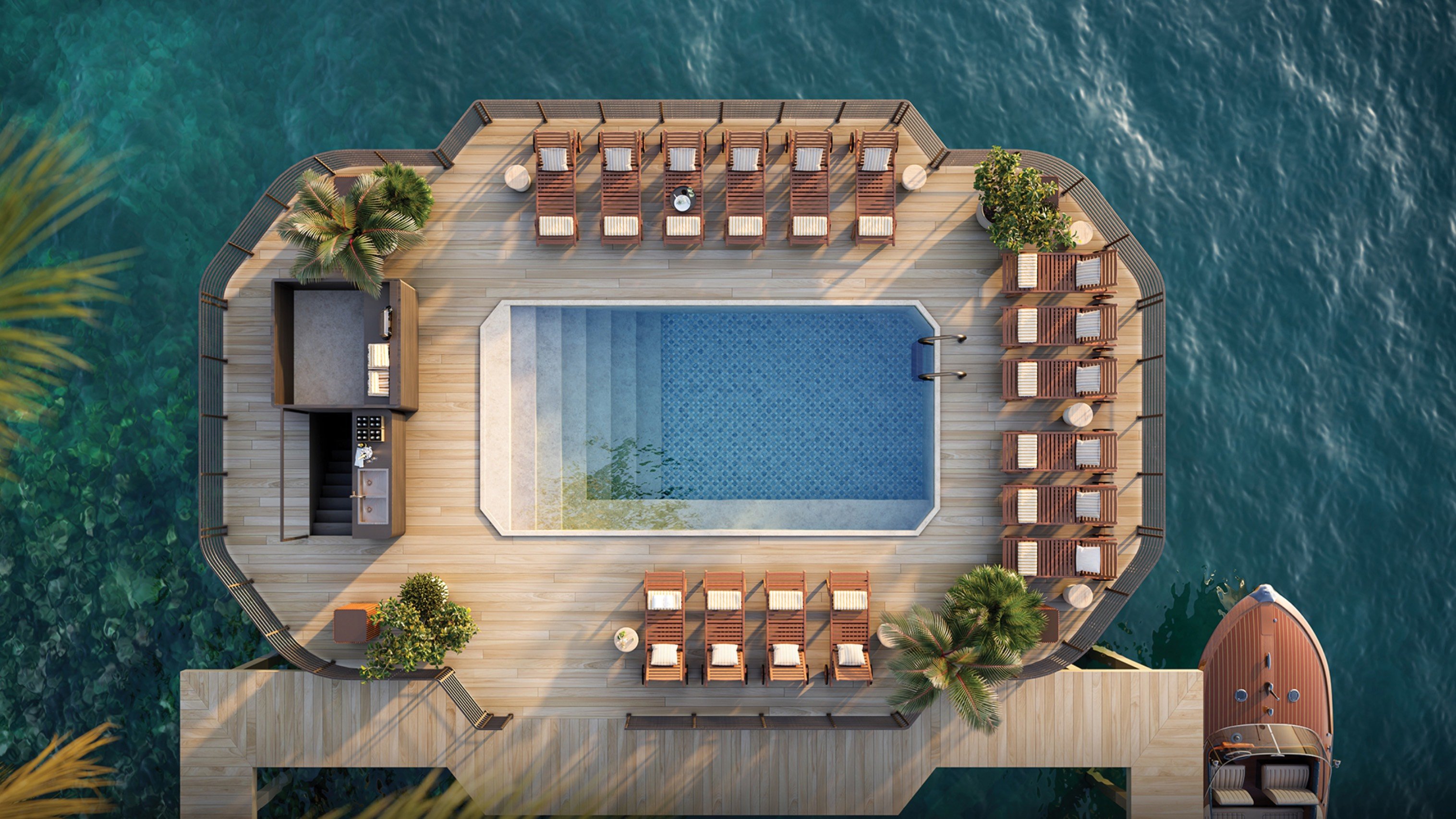
The Pool and Terrace are often where buyers most clearly see whether a building understands residential luxury. In a resort environment, these areas may be designed for density and display. In a private residence, they should feel composed, with enough room for varied rhythms: morning laps, quiet reading, casual conversation, and sunset air without overcrowding.
A buyer should consider shade, seating variety, wind exposure, privacy from neighboring buildings, and whether the outdoor areas feel usable beyond a narrow social window. A beautiful Terrace that works only for photographs is less valuable than one that feels natural at different times of day.
In nearby Edgewater, projects such as The Cove Residences Edgewater give buyers another context for thinking about outdoor residential life in an urban Miami setting. For Wynwood, the question remains specific: does the outdoor amenity experience complement the neighborhood, or does it compete with it?
Service is one of the clearest separators between a polished residence and a resort atmosphere. In the best buildings, service feels discreet, anticipatory, and proportionate. It does not make home feel staffed for performance. It makes daily living smoother.
Buyers should ask how guests are received, how deliveries are handled, how maintenance requests are managed, and whether the building’s staffing model supports privacy. The tone matters. A heavily theatrical service environment may impress during a tour, but a quieter approach may feel more luxurious over years of ownership.
This is also where Boutique buildings can be compelling. Smaller or more intimate residential environments may provide a sense of recognition without excessive visibility. That said, intimacy only works when operations are strong. A limited amenity program with poor service is not refined. It is simply thin.
The Investment lens should be measured. Amenity depth can support long-term desirability, but only when the spaces remain useful, maintainable, and aligned with the buyer profile. Novelty ages quickly. Functional elegance tends to endure.
When reviewing a New Project, ask which amenities will still matter after the opening period has passed. Wellness, secure arrival, thoughtful outdoor space, flexible work areas, and calm social rooms often have more staying power than features designed mainly for attention. The best amenity programs are not frozen in a trend. They are adaptable enough to serve changing work patterns, household structures, and seasonal use.
A buyer comparing Wynwood with the Design District might also study Kempinski Residences Miami Design District as a reminder that brand, architecture, and lifestyle positioning must be evaluated through the practical experience of ownership. Prestige is strongest when it is felt in daily ease.
Before purchasing, walk the amenity path as if you already live there. Enter as an owner, not as a guest. Notice where your eye goes, where sound travels, how exposed you feel, and whether the spaces encourage lingering without creating obligation. Luxury should not require constant participation.
In Wynwood, the winning amenity program will feel layered but not loud. It will give residents places to move, work, recover, host, and retreat, while preserving the essential privilege of home: control over one’s environment. That is the real measure of amenity depth without a resort feeling.
What is amenity depth in a Wynwood residence? Amenity depth means the building offers useful, well-planned shared spaces that support daily life rather than simply adding more features.
How can I tell if a building feels too resort oriented? Look for signs of constant activation, oversized social areas, or amenities that seem designed more for guests and events than for residents.
Is a large amenity package always better for resale? Not necessarily. Buyers often value amenities that remain practical, private, and easy to maintain over spaces that feel trendy or excessive.
What should I look for in a Pool area? Study privacy, shade, seating, circulation, and whether the Pool can support quiet use as well as social moments.
Why does Terrace design matter in Wynwood? A Terrace should extend private living outdoors without feeling exposed, crowded, or disconnected from the residence.
Are Boutique buildings better for buyers seeking privacy? They can be, especially when circulation and service are well managed, but size alone does not guarantee discretion.
How important is service style in the buying decision? Very important. The right service tone should feel polished and discreet, not theatrical or intrusive.
Should I compare Wynwood with Edgewater or the Design District? Yes, nearby neighborhoods can help clarify what type of amenity rhythm feels most compatible with your lifestyle.
What questions should I ask during a tour? Ask how residents use the spaces daily, how guests are managed, how maintenance is handled, and where quiet zones are protected.
What is the simplest test before purchasing? Imagine using the amenities on ordinary weekdays, not just during a perfect tour, and decide whether they would make home feel calmer.
When you're ready to tour or underwrite the options, connect with MILLION.
If branded residences are on your mind — as a home or as an allocation — we would be glad to share what we are seeing, privately.
Begin a quiet conversation