Edgewater can suit California entrepreneurs when the residence functions like an operating platform, with disciplined staffing, privacy, logistics and day-to-day reliability.

For a California entrepreneur, Edgewater is not simply a warm-weather address or a view-driven purchase. It is a question of operational compatibility. The right residence must support focused work, private arrivals, early calls, late dinners, secure deliveries, visiting partners, wellness routines and a life that can shift from personal to professional without warning.
That is why the neighborhood works best when the building itself is run with discipline. A beautiful lobby is not enough. A dramatic amenity deck is not enough. The real premium lies in the invisible choreography: how the front desk handles guests, how elevators perform during peak hours, how packages are managed, how vendors are cleared, how service requests are escalated and how quietly the building protects resident privacy.
This is the lens through which many buyers will compare Edgewater options such as Aria Reserve Miami, EDITION Edgewater, The Cove Residences Edgewater and Villa Miami. The question is not only which building looks best. It is which one will feel effortless on a demanding Tuesday.
California entrepreneurs often arrive with a specific set of expectations. They are used to fluid schedules, remote teams, investor calls, product deadlines, travel intensity and a strong appreciation for design. They may not need a traditional office every day, but they do need their home to perform at a professional level.
That changes how a residence should be evaluated. A primary suite matters, but so does a secondary room that can become a video-call studio. A terrace matters, but so does the ability to step outside between calls without leaving the privacy of the home. A pool matters, but so does whether the building can preserve a sense of calm when every owner wants the same services at the same hour.
Edgewater can be compelling for this buyer because it offers a vertical residential format suited to lock-and-leave living, private entertaining and waterfront-oriented daily rituals. Yet the neighborhood reaches its full potential only when the building operations match the resident’s pace.
In the ultra-premium market, operations are not a back-of-house detail. They are part of the asset. A well-operated building should make ownership feel lighter, not heavier. It should reduce friction around access, maintenance, deliveries, guests, pets, parking, repairs and communication.
For entrepreneurial buyers, the first question is whether the building has a coherent service culture. Is the staff trained to anticipate, not simply react? Are resident requests documented? Are vendors supervised appropriately? Are guest protocols discreet rather than theatrical? Does management communicate clearly when something changes?
The second question is resilience. Every building has busy days, weather events, moving activity and maintenance needs. The best-run properties are defined by how they handle disruption. Buyers should pay attention to the tone of the lobby, the confidence of the team, the cleanliness of shared spaces and the ease with which small problems are resolved.
The third question is governance. A luxury condominium can have exceptional design and still feel inefficient if rules are vague, enforcement is inconsistent or communication is poor. Entrepreneurs tend to notice systems quickly. A building with elegant procedures will feel familiar. A building with avoidable confusion will not.
A serious buyer should walk the residence as though a full business day were unfolding there. Where would a confidential call happen? What is the natural background for video meetings? Can two people work privately at the same time? Is the primary living area calm enough for reading, reviewing documents or hosting a small dinner after a long day?
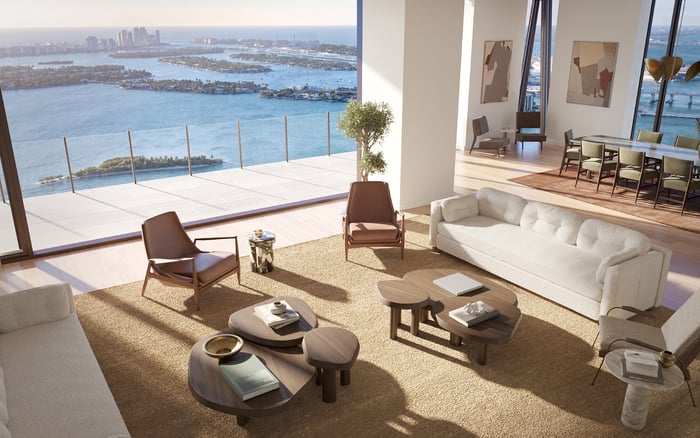
This is where the basics become luxury. Natural light should be generous but manageable. Acoustics should be considered. Storage should support a life that includes equipment, luggage, samples, wardrobe, wellness gear and visiting family. The kitchen should be suitable for quiet daily use as well as informal hosting. The terrace should feel like an extension of the residence, not merely a marketing photograph.
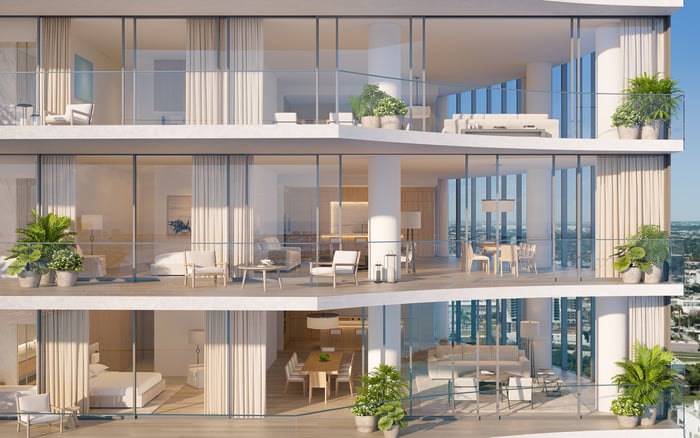
A practical buyer shorthand might read: New-construction, Waterview, Balcony. Those terms are simple, but the interpretation is sophisticated. New-construction can suggest a more current physical environment, although execution still matters. Waterview can add emotional value to the workday, although orientation and privacy should be assessed in person. Balcony space can be essential for decompression, although depth, usability and exposure matter more than brochure language.
The most useful amenity package is the one that aligns with how the owner actually lives. A gym is valuable if it saves time. A wellness area is valuable if it is quiet enough for regular use. A lounge is valuable if it can host a private conversation without feeling like a public hotel lobby. A pool deck is valuable if it offers restoration rather than performance.
Entrepreneurs should be especially cautious with amenity abundance. More is not always better. The stronger test is whether the building can operate its amenities with consistency, privacy and capacity. A residence that promises everything but strains under daily use will not feel luxurious. A building with fewer but better-managed spaces may be the more intelligent purchase.
The strongest buildings understand that the resident is not buying a vacation schedule. The resident is buying optionality: the ability to work intensely, recover well, host selectively and leave town without wondering whether the property is being watched carefully.
Before committing, buyers should ask operational questions with the same seriousness they bring to architecture and finishes. How are service requests submitted and tracked? What are the rules for deliveries? How are contractors admitted? What are the move-in and move-out procedures? How does management communicate with residents? What is the guest policy? How are shared spaces reserved and monitored?
They should also revisit the property at different times of day. A building can feel serene during a scheduled showing and very different during active arrival hours. Watch the elevators. Observe the front desk. Note whether staff members appear composed or overwhelmed. Listen for mechanical noise. Study how residents move through the building.
For California entrepreneurs, another essential test is travel readiness. The best residence is one that can be left with confidence. That means clear procedures, responsive management and a culture in which small details are not allowed to drift.
Edgewater’s appeal for this buyer is not simply visual. The deeper value is the possibility of a private, efficient, design-aware base in South Florida that can support ambition without requiring constant management from the owner. When operations are right, the residence becomes a platform. When they are not, even a spectacular view can become a daily inconvenience.
This is why the best purchase strategy is not to chase the loudest feature. It is to identify the building where life will run cleanly. For entrepreneurs, time is the ultimate amenity. Privacy is the second. Reliability is the third. Edgewater can deliver when those three are embedded into the building culture, not merely presented in the sales language.
Why might Edgewater appeal to California entrepreneurs? It can offer a vertical, lock-and-leave residential lifestyle that suits travel, privacy and demanding schedules when the building is well managed.
What should buyers evaluate first in an Edgewater building? They should evaluate operations first, including staffing, access control, package handling, communication and service recovery.
Are amenities the most important factor? Not necessarily. Amenities matter most when they are usable, well managed and aligned with the owner’s actual calendar.
Why is privacy so important for entrepreneur buyers? Many entrepreneurs blend work, travel and private entertaining, so discreet arrivals, guest handling and quiet spaces can materially affect daily life.
Should buyers prioritize views or floor plan? Both matter, but a functional floor plan often determines whether the residence can support calls, hosting, rest and everyday routines.
How should a buyer test building operations? Visit at different times, observe staff interactions, review house rules and ask how service requests and vendors are managed.
Is New-construction always the best choice? Not automatically. The physical product matters, but long-term satisfaction depends heavily on execution, management and governance.
Does a Balcony change the value of the residence? It can, especially when the space is usable, private and integrated into daily living rather than simply decorative.
Why does Waterview matter to this buyer profile? A view can improve the emotional quality of the workday, but orientation, privacy and interior comfort still need careful review.
What is the most important takeaway for Edgewater buyers? Choose the building that reduces friction, protects time and operates with the same precision expected in a high-performing business.
To compare the best-fit options with clarity, connect with MILLION.
If branded residences are on your mind — as a home or as an allocation — we would be glad to share what we are seeing, privately.
Begin a quiet conversation