A buyer-focused guide to the impact-glass questions that matter before purchasing at Ziggurat Coconut Grove, from product approvals and design pressures to acoustics, solar performance, warranty language, and long-term maintenance.
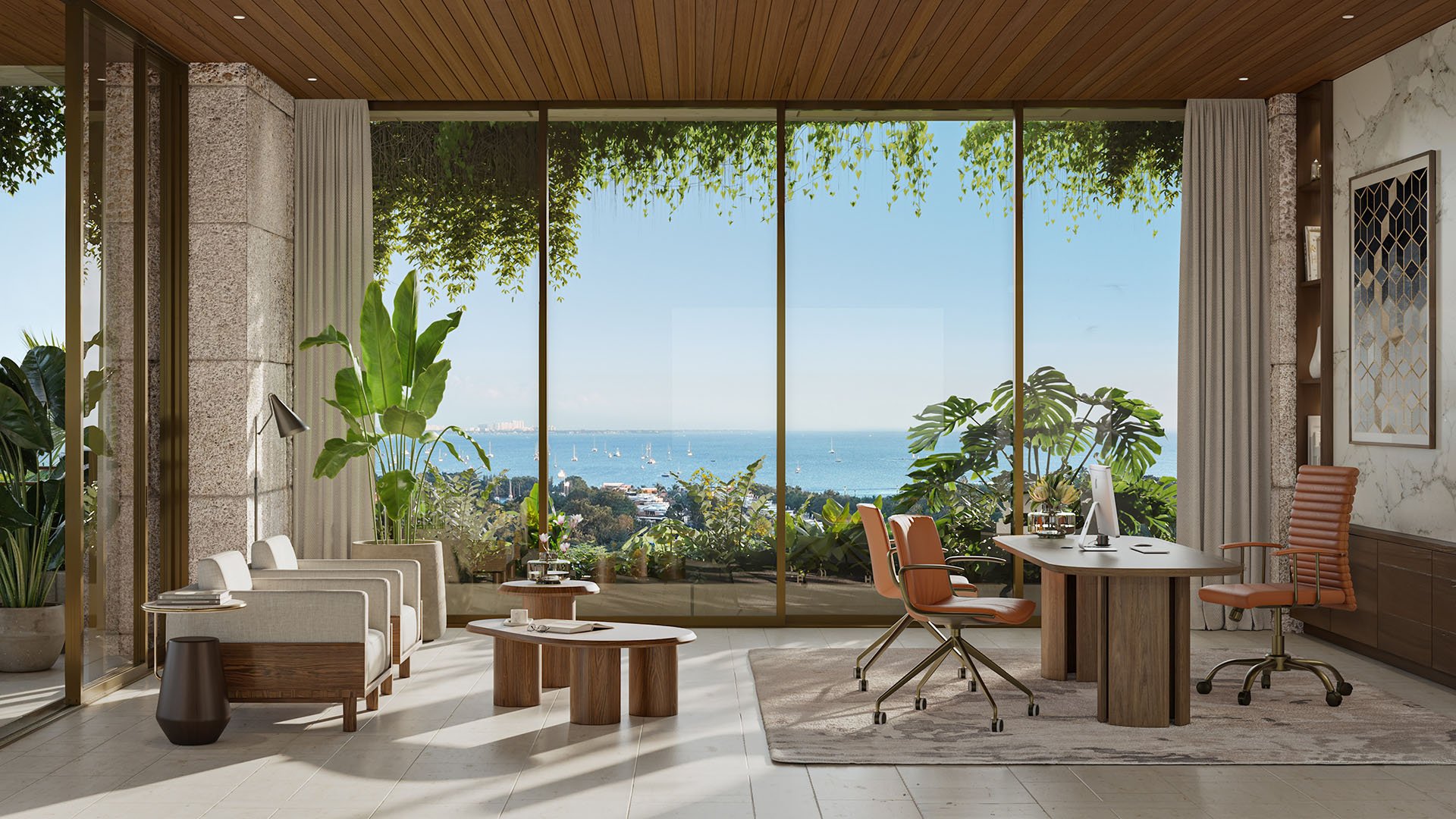
At the top of the South Florida market, glass is not simply a device for framing views. It is a structural, acoustic, thermal, and maintenance system that shapes how a residence lives through calm weather, summer heat, marina sound, and hurricane season. For buyers considering Ziggurat Coconut Grove, the essential question is not whether the building has “hurricane glass.” It is what that phrase means in the documents governing each window, balcony door, slider, and façade condition.
This is where a polished sales description should give way to precise technical review. In MILLION Buyer's Guides, impact-glass due diligence sits at the intersection of New-construction expectations, Design & Architecture scrutiny, and long-term ownership planning. Coconut Grove buyers often choose homes for treetop privacy, bay proximity, and indoor-outdoor living. Those same qualities make glazing performance especially important.
The first request should be direct: ask for the exact impact-glass manufacturer, system name, product approvals, and confirmation that each window and door type is approved for Miami-Dade High-Velocity Hurricane Zone use. Do not assume that fixed glass, operable windows, balcony doors, and large sliding glass systems share the same approval or impact rating. They may be different assemblies, and each should be evaluated on its own terms.
A buyer should also ask whether “hurricane glass” means minimum code compliance or a performance package that exceeds the baseline. There is a meaningful difference between a system that satisfies required life-safety standards and one selected for enhanced comfort, sound attenuation, solar management, or durability. That distinction should be supported by approvals, test reports, or written specifications rather than adjectives.
This same discipline applies across the Grove. The level of questioning appropriate at Four Seasons Residences Coconut Grove or The Well Coconut Grove is equally relevant here: beautiful glass must still be documented glass.
Design pressure is one of the most important phrases a buyer can bring into the conversation. Ask for the positive and negative design pressures for the specific residence under consideration. Bay-facing, corner, and higher-floor homes can have different wind-load demands than lower or more inland-facing units. A glass package that is suitable in one location may carry different performance implications in another.
For a purchaser comparing view corridors, this matters. A dramatic corner exposure may offer light and panorama, but it can also bring more demanding engineering conditions. Waterfront and near-bay settings reward openness, yet they also place the exterior envelope under closer scrutiny. Buyers should ask the developer, sales team, architect, or an independent façade consultant to connect the selected unit’s exposure with the applicable product approvals.
Impact glass is an assembly, not a single feature. Ask for the glass makeup: pane thickness, laminated interlayer type, air space, coatings, and whether the system is insulated laminated glass. These details can influence safety performance, solar control, acoustics, condensation resistance, and perceived quality.
For floor-to-ceiling glazing, go beyond the glass itself. Ask how the façade system handles story movement, thermal expansion, water intrusion, and long-term seal durability. Tall glass walls can be exquisite, but they rely on frames, anchors, gaskets, sealants, and drainage pathways performing as one system. A refined residence should feel effortless; the engineering behind that ease should never be vague.
The same principle applies when buyers evaluate other Grove residences such as Arbor Coconut Grove and Opus Coconut Grove. The view may be the emotional draw, but the assembly is the ownership reality.
Large sliding doors are central to the South Florida luxury vocabulary. They open the living room to the terrace, frame the canopy, and create the feeling of a private resort suite. They are also complex systems. Ask whether large sliding doors and operable panels have impact-rated locking hardware, and whether tested performance depends on all locks being fully engaged during storms.
That final point is practical. If a system performs as tested only when every lock, latch, and interlock is secured, owners need to understand the procedure before closing. Ask how the building communicates storm preparation obligations and whether the owner’s manual addresses tracks, rollers, locks, drainage, and weep holes.
Impact resistance is not the only measure of quality. Ask for acoustic ratings such as STC or OITC, particularly for residences exposed to Bayshore Drive, marina activity, service areas, or other neighborhood noise sources. The difference between an impressive view and a serene home often comes down to how the glazing manages sound.
Solar performance deserves equal attention. Ask for solar heat gain coefficient, visible light transmittance, UV protection, and whether west- or south-facing residences receive different glazing. A home can be bright without being punishingly hot, but only if the glass, coatings, shading, and HVAC strategy work together. For buyers of collectible furnishings, art, and custom interiors, UV performance should be part of the conversation as well.
Coconut Grove’s humid, salt-air environment makes durability a serious luxury issue. Ask what frame material, fasteners, anchors, coatings, and drainage details are used to resist corrosion. Water management should not be treated as an afterthought. For residences with extensive curtain wall, oversized sliders, or custom façade conditions, ask for mock-up, field-testing, or water-infiltration test documentation.
Warranty language also deserves careful review. Ask whether the impact-glass warranty covers glass, interlayer defects, seal failure, hardware, installation, and water intrusion. Then ask whether coastal exposure changes exclusions. Responsibility after closing should be clearly allocated: who maintains seals, tracks, weep holes, rollers, and door hardware - the unit owner, association, developer, or manufacturer?
Finally, ask whether replacement glass must match the original approved system and whether future repairs require specific manufacturer parts to preserve code compliance. A beautiful façade is a long-term asset only if it can be maintained without compromising its approvals.
Terms such as “soundproof,” “energy-efficient,” and “state-of-the-art hurricane glass” are useful only as openings to a deeper discussion. They should lead to product approvals, test reports, performance data, warranty documents, and maintenance obligations. For Ziggurat Coconut Grove, the point is not to presume a deficiency. It is to insist that premium pricing be matched by premium clarity.
The most sophisticated buyer does not merely ask what the glass is called. They ask how it performs, how it was tested, how it is maintained, and how those answers change by unit, exposure, floor, and opening type.
What is the first impact-glass question to ask at Ziggurat Coconut Grove? Ask for the manufacturer, system name, product approvals, and Miami-Dade HVHZ status for every window and door type.
Is “hurricane glass” enough detail for a buyer? No. Treat the phrase as a starting point and request the approvals and test documentation behind it.
Why do design pressures matter? They show the wind-load demands for a specific unit, which can vary by height, exposure, and corner location.
Should fixed glass and sliding doors be reviewed separately? Yes. Different openings may use different assemblies, ratings, hardware, and approvals.
What glass makeup details should I request? Ask about pane thickness, laminated interlayer, air space, coatings, and whether insulated laminated glass is used.
Do acoustic ratings matter in Coconut Grove? Yes. STC or OITC ratings can help buyers understand how the home may perform against road, marina, or neighborhood noise.
What solar data should be reviewed? Ask for solar heat gain coefficient, visible light transmittance, UV protection, and any exposure-specific glazing differences.
Who maintains the glass systems after closing? Confirm whether seals, tracks, weep holes, rollers, and hardware are the responsibility of the owner, association, developer, or manufacturer.
Should warranty exclusions be reviewed closely? Yes. Coastal exposure, water intrusion, seal failure, hardware, and installation coverage should all be clarified in writing.
When should a façade consultant be involved? Consider one when a residence has extensive curtain wall, oversized sliders, custom façade conditions, or a premium exposure.
When you're ready to tour or underwrite the options, connect with MILLION.
If branded residences are on your mind — as a home or as an allocation — we would be glad to share what we are seeing, privately.
Begin a quiet conversation