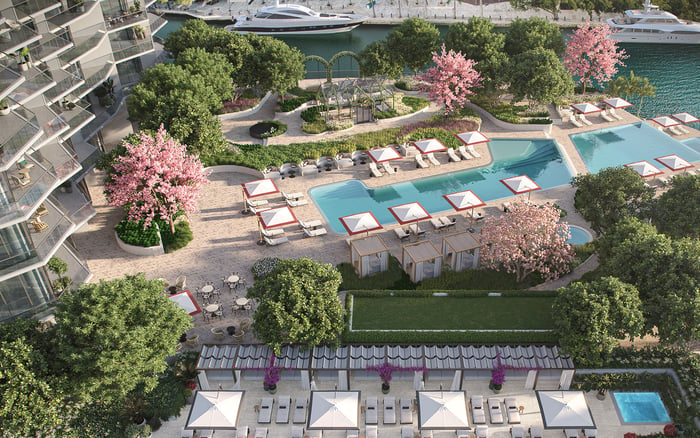
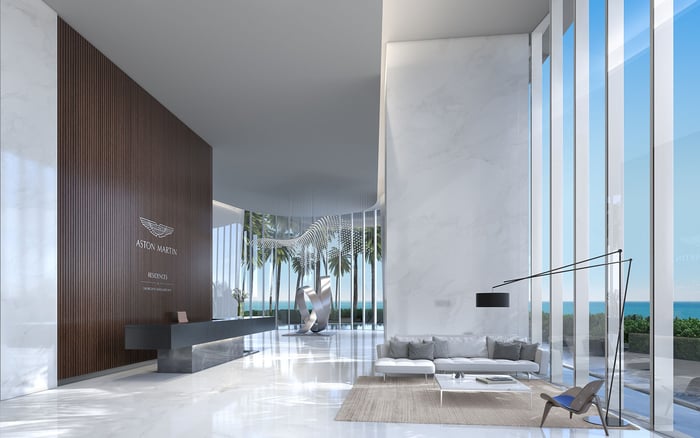
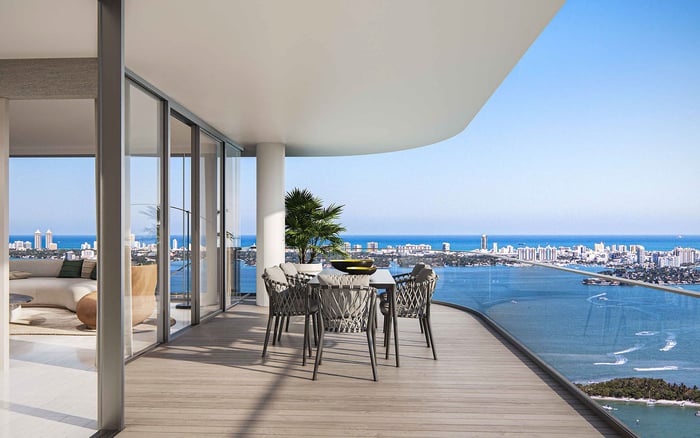
A buyer-focused look at how two very different luxury brand vocabularies, Aston Martin’s urban precision and Banyan Tree’s hospitality-led calm, can shape perceived residential value in South Florida.
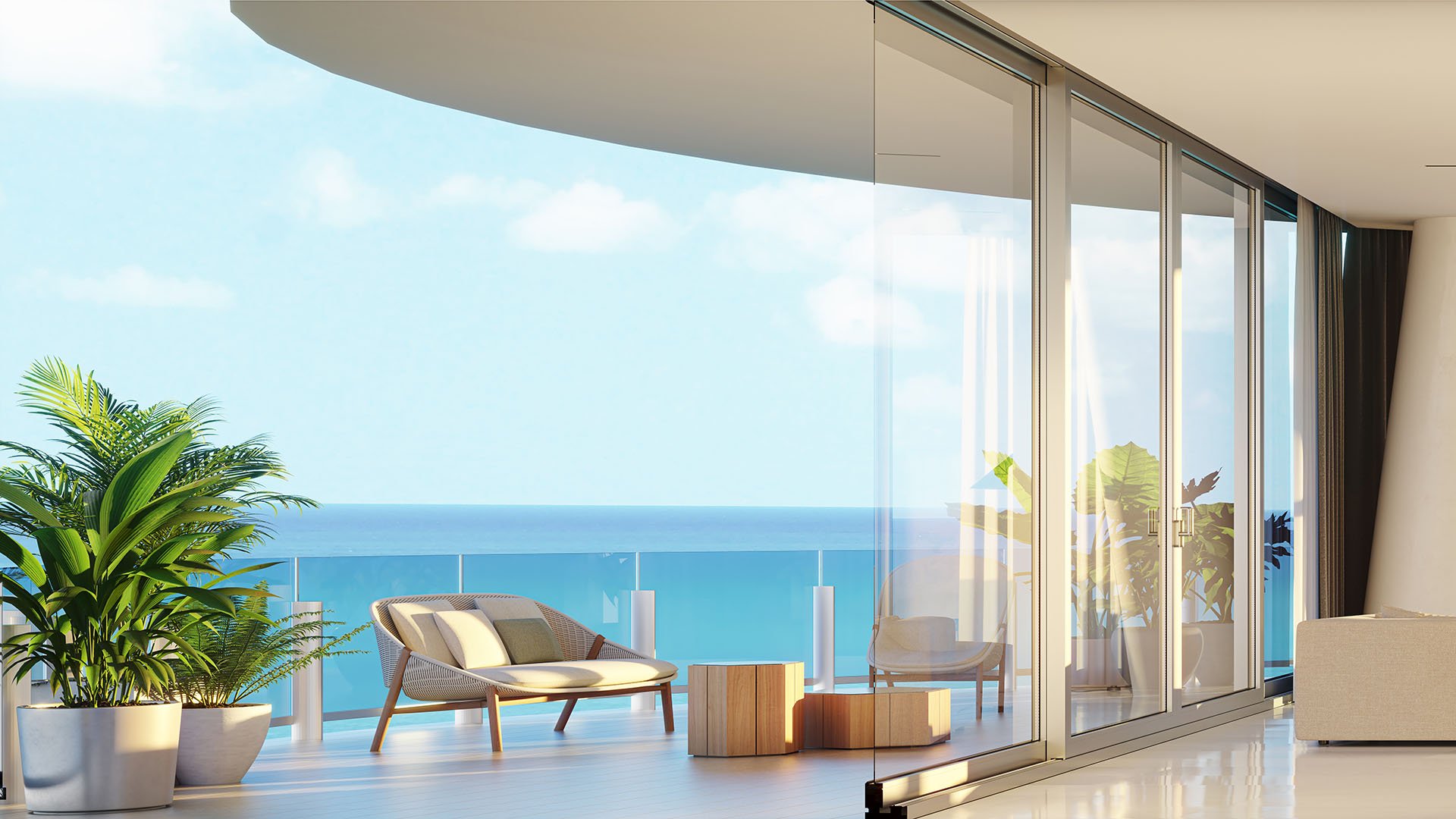
In South Florida’s upper tier, branded residences are no longer judged by logo power alone. The more relevant question is whether a brand’s language can become an organizing principle for daily life, shaping the arrival sequence, interiors, service, privacy, wellness and long-term buyer confidence. That is where Aston Martin Residences Downtown Miami and Banyan Tree Residences West Palm Beach make an instructive comparison.
The two names speak in different registers. Aston Martin carries associations of precision, proportion, performance and controlled drama. Banyan Tree suggests retreat, hospitality, nature-minded calm and a softer expression of luxury. For a buyer, the value is not that one vocabulary is superior. It is that each can clarify why a residence feels coherent, memorable and differentiated in a crowded new-construction landscape.
Downtown Miami rewards verticality, energy and immediacy. In that context, Aston Martin’s language can feel naturally aligned with an urban buyer who wants a residence with a strong identity and a polished sense of motion. The brand’s relevance is not merely automotive. It is the implication of disciplined design, a preference for sleek surfaces and a lifestyle that treats the city as part of the ownership experience.
For buyers comparing Downtown with Brickell or Edgewater, the question is practical: does the residence make the city feel more legible, more elegant and more controlled? A brand like Aston Martin can help answer that by creating a recognizable frame. It gives the buyer a narrative for why the building should feel composed rather than generic, and why design choices should read as intentional rather than decorative.
That matters for investment psychology as well. A residence with a clear identity is easier to remember, easier to explain and, in many cases, easier for future buyers to understand at a glance. Nearby branded and design-forward projects such as Baccarat Residences Brickell and 888 Brickell by Dolce & Gabbana show how Downtown and Brickell buyers increasingly evaluate architecture, interiors and brand atmosphere as part of the same conversation.
West Palm Beach has a different tempo. Its luxury market often prizes discretion, ease and a more residential rhythm. In that setting, Banyan Tree’s brand language can become valuable because it speaks to restoration rather than spectacle. The buyer is not only purchasing square footage or a view corridor. The buyer is seeking a daily mood, one that feels more private, grounded and hospitality-aware.
That distinction is important. A hospitality-led residence can make value feel experiential rather than purely visual. The arrival, the transition from public to private, the feeling of quiet after a busy day and the consistency of service all become part of the asset. When a buyer says a home feels good, that response is often created by invisible decisions: circulation, lighting, materials, acoustic comfort and the choreography of shared spaces.
In West Palm Beach, this softer language sits within a broader field of refined residential offerings, including Mr. C Residences West Palm Beach and Alba West Palm Beach. Each name approaches lifestyle differently, but the buyer’s core test is the same: does the residence translate its promise into an environment that will remain compelling after the first impression fades?
Brand language becomes residential value when it reduces ambiguity. Luxury buyers are exposed to many beautiful renderings, elegant lobbies and amenity narratives. The strongest branded residences make those elements feel connected. The name is not applied at the end; it informs the mood of the building from the beginning.
For Aston Martin, value may come from a sense of performance and visual discipline that suits an urban ownership profile. For Banyan Tree, value may come from the promise of calm, wellness and a service culture that feels less transactional. One is more metropolitan in posture. The other is more restorative. Both can be powerful if the architecture, interiors and operations support the premise.
This is also where buyers should be exacting. A recognizable brand can open the door, but it cannot compensate for a poor floor plan, awkward circulation or shared spaces that feel disconnected from the residences. Balcony usability, terrace depth, privacy, storage, elevator experience and parking flow can matter as much as the name above the entrance. In the ultra-premium market, the details either reinforce the brand or quietly weaken it.
A strong buyer should read branded residences through three filters. First, does the brand match the neighborhood? Aston Martin feels naturally urban because Downtown has speed, density and skyline presence. Banyan Tree feels compatible with a West Palm Beach buyer who may value serenity, hospitality and a softer daily cadence.
Second, does the brand match the owner’s lifestyle? A pied-à-terre buyer, a primary resident and a seasonal owner may all interpret value differently. Some want energy and arrival drama. Others want privacy, service and an atmosphere that encourages longer stays.
Third, does the brand have enough clarity to support future resale storytelling? A top project is not simply expensive. It is legible. Future buyers should be able to understand the residence quickly: what it stands for, why it differs from competitors and how its experience justifies its position.
For MILLION readers, the larger point is that South Florida’s branded residence market is maturing. The next level of discernment is not asking which name is loudest. It is asking which brand language has been translated into architecture, service and daily usefulness with the greatest restraint.
Why compare Aston Martin Residences Downtown Miami with Banyan Tree Residences West Palm Beach? They represent two distinct luxury vocabularies: urban precision and hospitality-led retreat. That contrast helps buyers understand how brand identity can influence perceived value.
Does a branded residence automatically hold more value? Not automatically. Value depends on how convincingly the brand is reflected in design, service, location and long-term livability.
What does Aston Martin’s brand language suggest in a residence? It suggests precision, performance, polish and a composed urban sensibility. For Downtown Miami, that can align with skyline living and a metropolitan ownership profile.
What does Banyan Tree’s brand language suggest in a residence? It suggests calm, retreat, hospitality and a more restorative idea of luxury. In West Palm Beach, that can resonate with buyers seeking privacy and ease.
Should buyers prioritize the brand or the floor plan? The floor plan should remain central. A strong brand enhances value only when the residence itself functions beautifully.
How does location affect branded residential value? Location determines whether the brand feels natural or forced. The best projects align brand identity with the rhythm of the surrounding market.
Are branded residences mainly for primary owners or second-home buyers? They can appeal to both. Primary owners may value daily service, while second-home buyers may value recognition, simplicity and consistency.
What should buyers examine beyond the name? They should study arrival, privacy, amenity logic, materials, views, outdoor space and service culture. These details reveal whether the brand has depth.
Can different branded residences appeal to different buyer personalities? Yes. Some buyers prefer an energetic, design-forward identity, while others prefer quiet luxury, wellness and retreat.
What is the main takeaway for luxury buyers? Brand language is valuable when it becomes a lived experience. The strongest residences make identity, place and daily comfort feel inseparable.
For a tailored shortlist and next-step guidance, connect with MILLION.
If branded residences are on your mind — as a home or as an allocation — we would be glad to share what we are seeing, privately.
Begin a quiet conversation