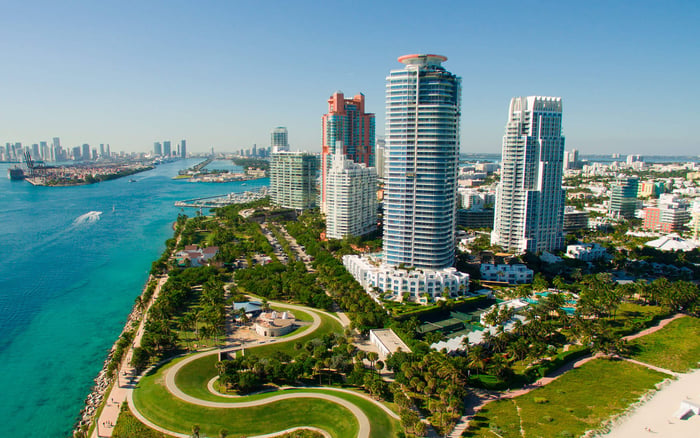
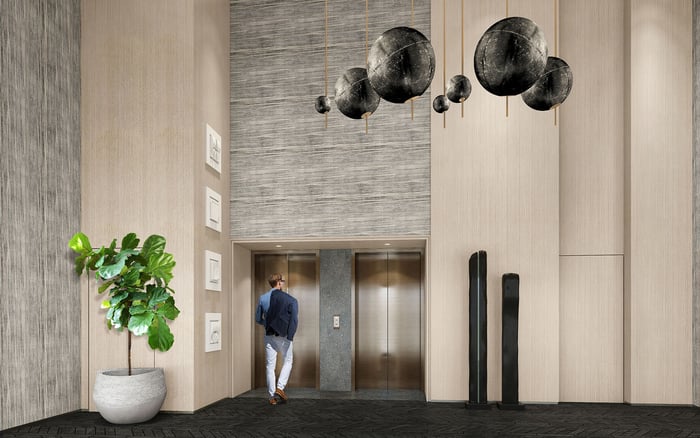
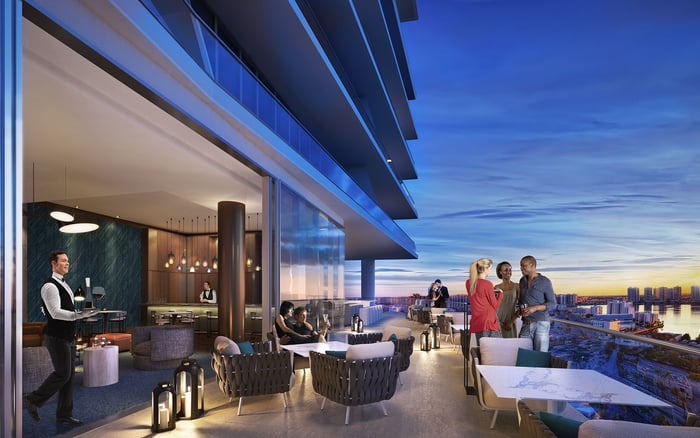
A discreet buyer’s guide to choosing between high-floor drama and low-floor convenience in Palm Beach Gardens, where daily rhythm, privacy, views, and ease of arrival shape the luxury decision.
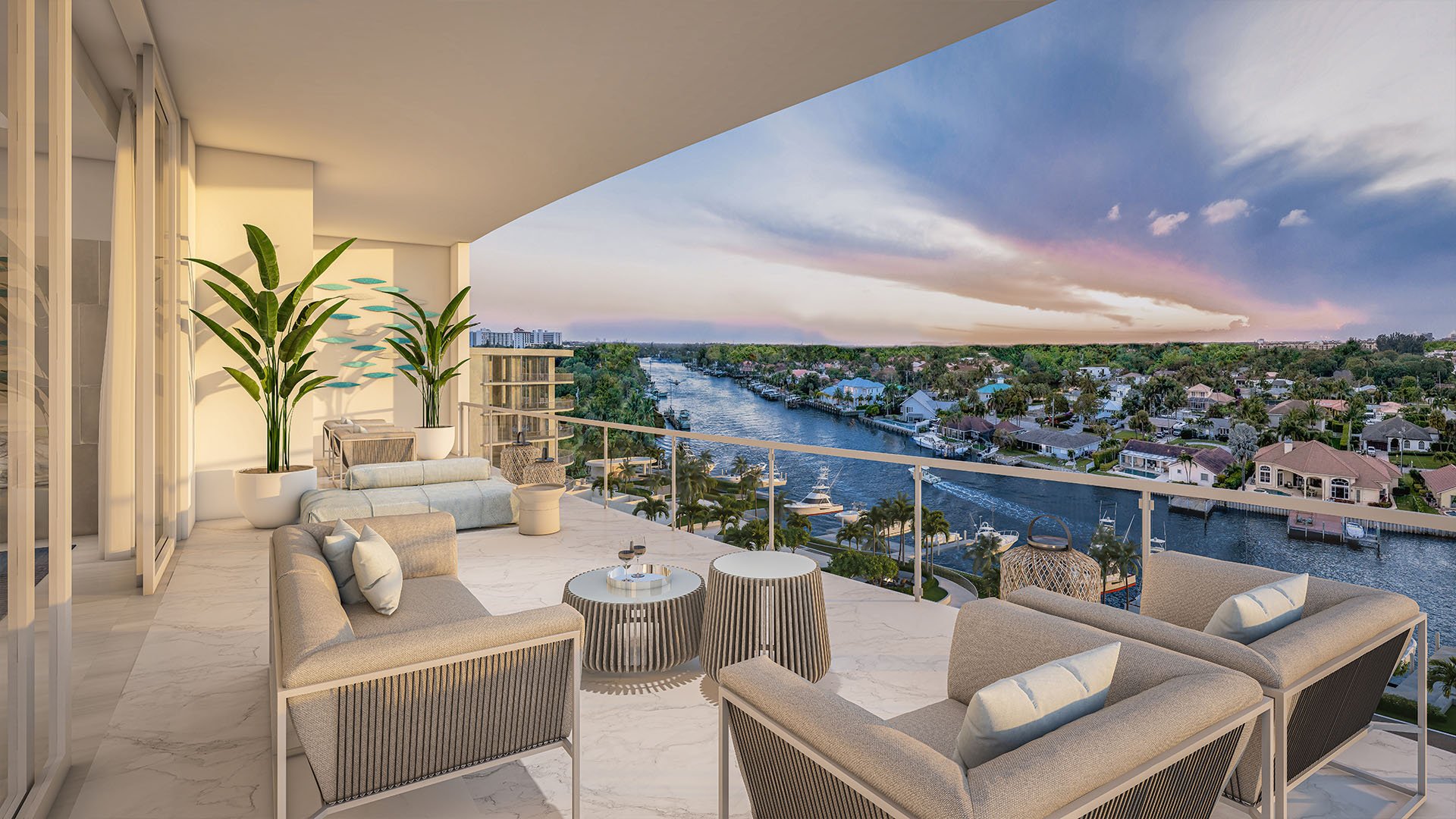
In many South Florida towers, floor height is treated as shorthand for prestige. Higher floors often suggest broader outlooks, greater privacy, and a more theatrical arrival once the elevator doors open. In Palm Beach Gardens, the calculation is more nuanced. This is a market where everyday ease matters as much as visual drama, and where the strongest residence is often the one that fits an owner’s rhythm with the least friction.
That distinction changes the high- versus low-floor decision. A buyer coming from Miami Beach, Brickell, or Sunny Isles may instinctively look upward. A buyer focused on golf, boating, family routines, wellness appointments, pets, club access, or a seasonal lock-and-leave lifestyle may find that a lower floor delivers a more graceful daily experience. Neither choice is automatically superior. The real question is what kind of luxury you want to feel every morning.
This is why The Ritz-Carlton Residences® Palm Beach Gardens is such a useful lens for the discussion. In a refined Palm Beach Gardens setting, the premium is not only in altitude. It is in arrival sequence, privacy, service, terrace usability, exposure, and how naturally a residence connects to the life outside it.
High floors appeal to buyers who want separation. An upper-level residence can feel quieter, more removed, and more cinematic, especially when the outlook captures water, gardens, treetops, or the soft geometry of the surrounding neighborhood. For some owners, that sense of elevation is emotionally important. It signals retreat.
High floors can also sharpen privacy. In a luxury residence, privacy is not only about who can see in. It is about how the home feels when the shades are open, guests are present, and the living room becomes a viewing gallery rather than a display window. Buyers who entertain at dusk, spend long mornings on a terrace, or prefer a more contemplative outlook may find real value in going higher.
The key is to avoid buying altitude alone. A higher floor with an awkward plan, limited outdoor usability, or exposure that does not suit the owner’s day can feel less luxurious than a lower residence with generous proportions and calmer circulation. In this segment, the plan is still the product.
Low floors win when daily use is the priority. The advantage is not merely shorter elevator time. It is the cumulative ease of coming and going, receiving guests, walking a dog, accessing a car, moving sports gear, returning from dinner, or stepping out for a quick errand without turning every movement into a production.
This is especially relevant in Palm Beach Gardens, where the residential experience is often tied to outdoor life and club-oriented routines. A lower floor can make the home feel connected rather than removed. For pet owners, frequent travelers, and buyers who host family for long weekends, convenience becomes its own form of quiet luxury.
Low floors may also make terraces feel more grounded. Some owners prefer to see landscape details rather than distant horizon lines. Others appreciate the psychological comfort of being closer to grade, especially in buildings where the surrounding setting is part of the appeal. The decision is personal, but it should be made in daylight, in the evening, and with close attention to sound, sightlines, and privacy.
The best high-floor residences usually offer a clearer hierarchy of views. The eye travels farther, the sky becomes part of the room, and reflective light can make interiors feel more expansive. Yet low floors can have their own visual richness when the foreground is well composed. Gardens, water edges, marina elements, and architectural landscaping can be more engaging at close range than from above.
This is where Palm Beach and the broader northern coastal corridor differ from denser urban markets. View quality is not always about seeing the most. It is about seeing the right things, without distraction. A residence that frames greenery, water, or a serene approach can outperform a higher home with a less composed perspective.
Nearby West Palm Beach examples underscore the point. Alba West Palm Beach and Forté on Flagler West Palm Beach illustrate how waterfront orientation, light, and arrival experience can matter as much as the floor number itself. A buyer should study what the residence actually sees, not simply where it sits in the stack.
Luxury buyers often focus on finishes first, but floor height is felt most in circulation. How many elevator rides define a normal day? How often will guests arrive? Will the residence be used full time, seasonally, or as a second home? Does the owner travel with pets, staff, family members, golf bags, paddleboards, or frequent deliveries?
The high-floor buyer is often willing to trade extra time for privacy and drama. The low-floor buyer may be optimizing for a smoother life. Both choices can be correct. The important exercise is to map a typical week, not an idealized weekend. Morning coffee, school visits, airport returns, dinner reservations, and late-night arrivals all reveal whether altitude feels elegant or inconvenient.
The most successful purchasers tend to treat the residence like a private instrument. They ask how it performs. High floors and low floors are not labels of status. They are different operating systems.
Resale value is rarely determined by floor height alone. Future buyers will look at the full composition: plan, terrace depth, exposure, views, sound, parking convenience, building reputation, service quality, and the emotional clarity of the arrival. A high floor may command attention, but a lower floor with exceptional usability can be easier to justify for the right buyer profile.
In Palm Beach Gardens, the buyer pool can include full-time residents, seasonal owners, downsizers, and families seeking a more serene version of South Florida luxury. That range supports both preferences. The more specific the use case, the more important it is to avoid generic assumptions.
Waterfront settings add another layer. A higher vantage may create broader water drama, while a lower perspective may feel more connected to boats, gardens, pathways, or the calm of the edge itself. Palm Beach Residences offers a nearby reminder that waterfront living is not just a view category. It is a daily atmosphere.
Start with privacy. If open-window living and visual separation matter most, look higher first. Then assess the actual view, not the marketing image. Walk the residence mentally at sunrise, midday, and evening.
Next, test convenience. If the home will support pets, family visits, frequent errands, or club-driven days, give serious weight to lower floors. Luxury can be the absence of friction.
Then consider terrace behavior. Some buyers love height but rarely use elevated outdoor space. Others discover that a lower terrace feels more intimate and more usable. The better choice is the one you will actually inhabit.
Finally, compare within the same building before comparing across the market. A floor decision should be made in relation to stack, exposure, amenity access, and plan quality. The most elegant purchase is rarely the most obvious one.
Is a high floor always better in Palm Beach Gardens? No. A high floor can offer privacy and drama, but a lower floor may deliver better daily convenience and terrace usability.
Who should prioritize a low floor? Buyers with pets, frequent guests, active club routines, or a preference for quicker arrivals may find lower floors more practical.
Do high floors have better resale potential? They can, but resale strength also depends on plan quality, exposure, sound, views, and how easy the residence is to live in.
Are low floors less private? Not necessarily. Privacy depends on sightlines, landscaping, neighboring buildings, terrace placement, and window orientation.
How should buyers evaluate views? Visit or study the residence at different times of day and focus on what the home actually frames from the main living spaces.
Does floor height matter more in waterfront buildings? It matters, but in different ways. Higher floors may expand the view, while lower floors can feel more connected to the water’s edge.
Are high floors better for seasonal owners? Some seasonal owners like the privacy of height, while others prefer the simplicity of quicker access during shorter stays.
Should pet owners avoid high floors? Not always, but they should think carefully about elevator time, late-night walks, service access, and daily routines.
What is the most overlooked factor in this decision? Terrace usability is often overlooked. The best floor is the one where indoor and outdoor living feel natural.
How should I choose between two similar residences? Choose the one with the better combination of plan, light, privacy, convenience, and emotional fit, not simply the higher number.
For a confidential assessment and a building-by-building shortlist, connect with MILLION.
If branded residences are on your mind — as a home or as an allocation — we would be glad to share what we are seeing, privately.
Begin a quiet conversation