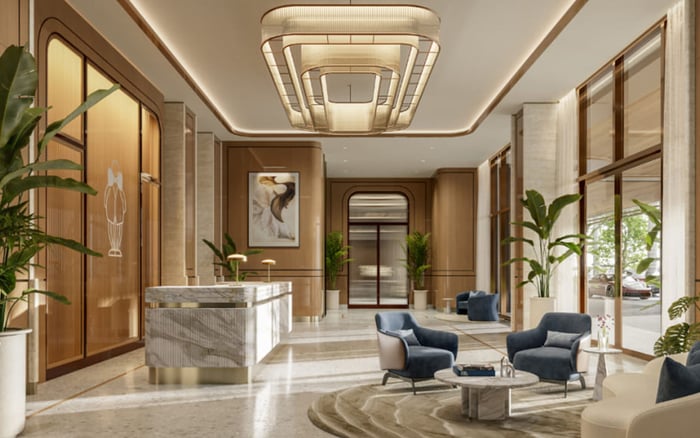
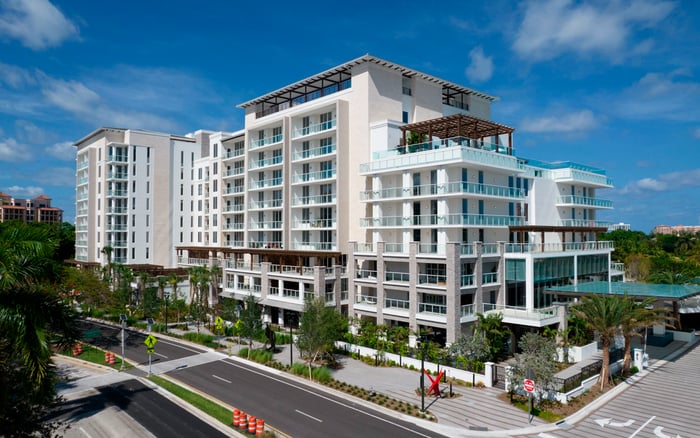
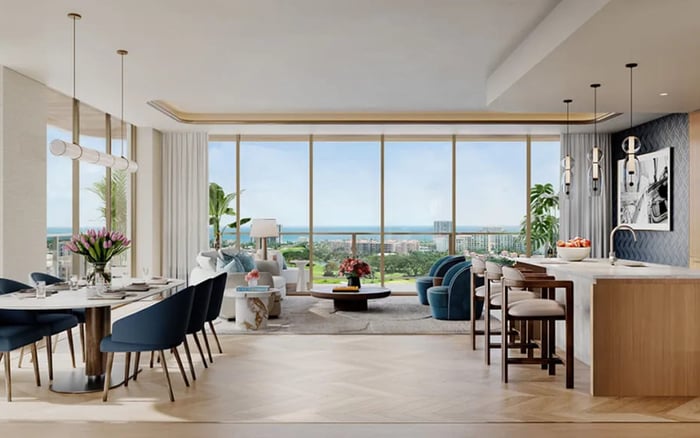
An analytical look at Glass House Boca Raton and the modern Boca buyer’s central question: whether openness, visual lightness, and boutique positioning can coexist with privacy, security, and discretion.
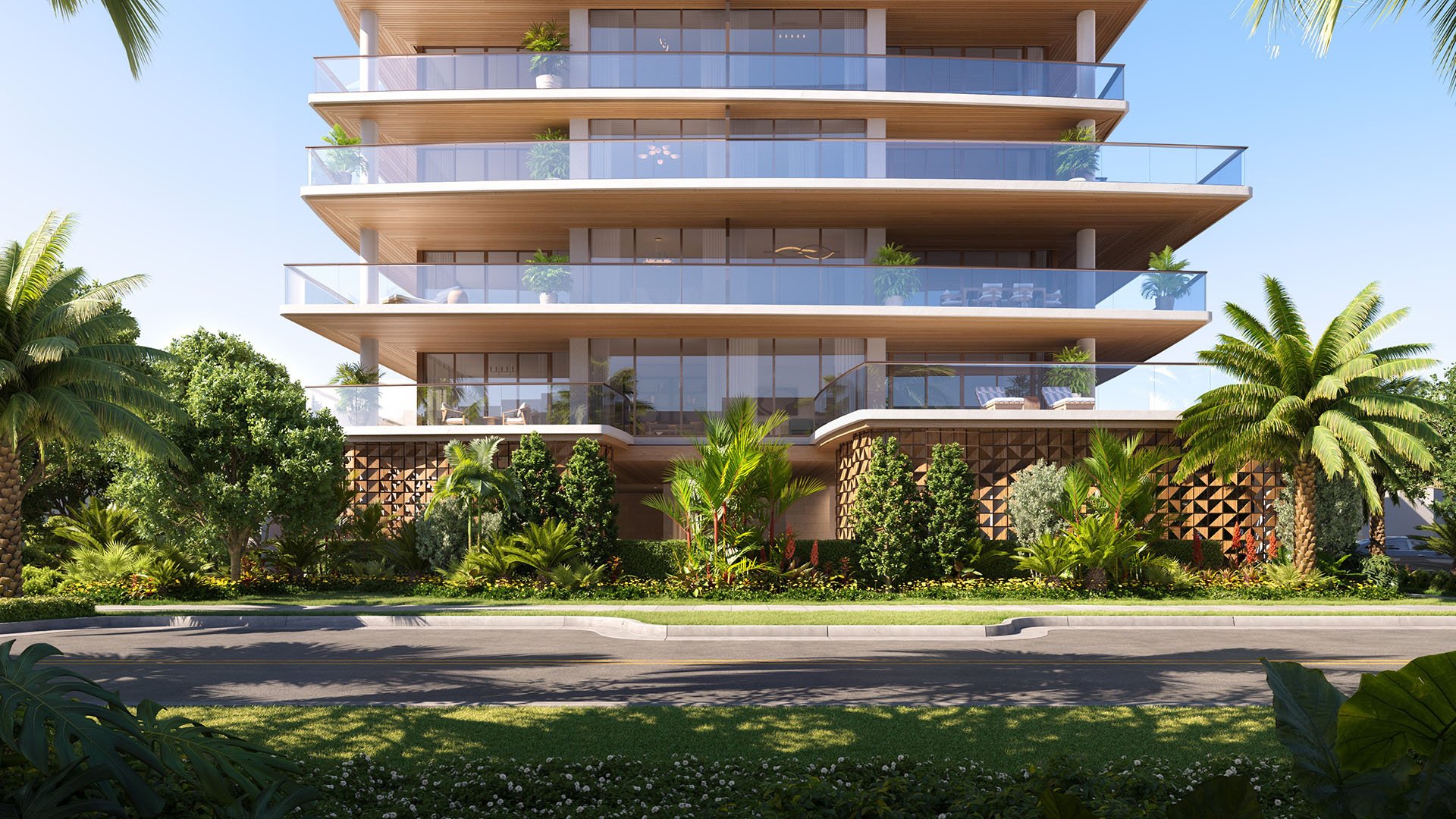
Glass House Boca Raton arrives with a name that immediately sharpens the buyer conversation. In a city where luxury has traditionally meant gates, hedges, controlled arrivals, and a certain social quiet, the idea of a Glass House suggests a more contemporary language: lightness, openness, and an architectural mood shaped by visual connection. For the Boca buyer, that is not merely an aesthetic preference. It is a lifestyle decision.
The useful way to read Glass House Boca Raton is through the trade-off it presents. Transparency can feel liberating. It can make a residence feel calmer, brighter, and more connected to its setting. Yet for affluent buyers, especially those accustomed to discretion, transparency also raises a practical question: how much openness is too much when home is meant to be the most private address in one’s life?
This is where the project becomes more interesting than a surface reading of its name. The most sophisticated buyer will not ask whether openness is fashionable. They will ask whether openness is controlled, layered, and compatible with the daily need for privacy.
Boca Raton luxury has long carried a protective instinct. Buyers often value quiet entrances, limited exposure, secure movement, and social separation between public and private life. That does not mean design must be conservative. It means design must earn its visibility.
A transparency-led residence succeeds when it gives the owner a sense of openness without surrendering command. The question is not whether a home appears light. It is whether that light can be enjoyed without making the owner feel observed. In practical terms, buyers will study arrival sequences, sightlines, outdoor edges, window orientation, landscape buffering, and the degree to which daily rituals remain shielded from public view.
That is especially important in Boca Raton, where the emotional premium often lies in calm. A beautiful residence that feels exposed may impress during a showing, then become less persuasive when imagined as a primary retreat. Conversely, a home that uses transparency with restraint can feel distinctly modern while preserving the discretion Boca buyers expect.
Boutique is one of the most seductive words in luxury real estate, but it should be understood as an experience before it is treated as a guarantee. A smaller-feeling environment can suggest intimacy, fewer social frictions, and a more personal rhythm. Still, privacy depends on execution. A residence can be boutique in positioning yet feel highly visible if circulation, access, and outdoor living are not carefully resolved.
For Glass House Boca Raton, the buyer lens should be qualitative rather than statistical. How does one arrive? Where does the eye travel from shared areas? Does the residence feel composed from the inside out? Are entertaining spaces open while bedrooms and personal zones remain protected? These questions matter more than brochure adjectives.
This is also why nearby Boca comparisons require nuance. A buyer looking at Alina Residences Boca Raton may be considering a different expression of luxury living, while another buyer drawn to The Residences at Mandarin Oriental Boca Raton may be weighing brand, service, and address psychology. Glass House Boca Raton belongs in that broader Boca conversation, but its appeal is most clearly tied to how the buyer feels about openness as part of everyday life.
Ultra-modern design can sometimes be mistaken for spectacle. In Boca, the stronger version is quieter. It is less about performing wealth and more about editing it: clean planes, visual calm, disciplined materials, and rooms that feel connected rather than crowded. A transparency-led concept can support that restraint when it is handled as atmosphere rather than display.
The strongest buyers will be sensitive to this distinction. They will not be persuaded by openness alone. They will look for privacy within openness, softness within minimalism, and warmth within an architectural idea that could otherwise feel too exposed. The most compelling version of this concept is not a house that reveals everything. It is a residence that lets in light while preserving the owner’s authority over what is seen.
That is the heart of the Boca trade-off. Openness can enlarge the emotional field of a home. It can make daily life feel more fluid, more relaxed, and more connected to gardens, terraces, or sky. But discretion remains a luxury of equal importance. Buyers should not treat privacy as the opposite of transparency. They should treat it as the discipline that makes transparency livable.
A serious buyer should walk through the concept slowly. The first test is emotional: does the residence feel serene or exposed? The second is operational: can staff, guests, deliveries, and everyday comings and goings be managed without interrupting private life? The third is visual: from the most personal spaces, does the eye encounter openness, or does it encounter vulnerability?
There is also a social dimension. Boca buyers often entertain, but many prefer to do so on their own terms. A residence that opens beautifully for a dinner, a family weekend, or a seasonal gathering must still close back down into privacy after guests leave. That ability to shift modes is central to luxury.
Glass House Boca Raton is therefore best understood as a question for a specific buyer temperament. It will appeal to those who want contemporary lightness and a more visually open way of living. It may give pause to those whose first priority is seclusion. Neither instinct is wrong. The right answer depends on whether the buyer experiences transparency as freedom or exposure.
The most refined reading of Glass House Boca Raton is not that transparency replaces privacy. It is that transparency must be designed around privacy to feel truly luxurious. Boca’s most discerning buyers are not choosing between old-world discretion and contemporary openness. They are asking whether a new architectural attitude can respect the city’s enduring preference for control, quiet, and personal space.
That is why the project’s name is so effective as a conversation starter. It forces clarity. For the right buyer, openness is not a compromise. It is an upgrade, provided the home remains private where it matters most.
What is the central buyer question at Glass House Boca Raton? The key question is whether openness and transparency enhance lifestyle value enough to offset any perceived privacy concerns.
Is Glass House Boca Raton defined by a specific glass facade? The name suggests a transparency-led concept, but buyers should review verified materials before assuming specific architectural details.
Why does privacy matter so much in Boca Raton luxury real estate? Boca buyers often prize discretion, security, controlled access, and a calm separation between public life and private retreat.
Does boutique positioning guarantee privacy? No. Boutique positioning can suggest intimacy, but real privacy depends on arrival, circulation, sightlines, and daily use.
Who is the likely fit for this kind of concept? It suits buyers who value contemporary openness but still expect a residence to protect personal space and discretion.
What should buyers study during a private evaluation? Buyers should focus on sightlines, outdoor exposure, entry sequence, private rooms, and how the residence feels at different times of day.
How does Glass House Boca Raton compare with more traditional Boca expectations? It introduces a more open design conversation while still needing to satisfy Boca’s established appetite for privacy and control.
Is transparency always a privacy risk? Not necessarily. Transparency becomes successful when it is layered with landscape, planning, and thoughtful separation of spaces.
Should buyers rely on the name alone? No. The name frames the concept, but the final judgment should come from verified project information and an in-person privacy assessment.
What is the most important takeaway for luxury buyers? The best version of openness is not total visibility, but a carefully managed sense of light, space, and personal control.
For a confidential assessment and a building-by-building shortlist, connect with MILLION.
If branded residences are on your mind — as a home or as an allocation — we would be glad to share what we are seeing, privately.
Begin a quiet conversation