A practical, discreet relocation guide for executives moving families to South Florida in 2026, with a focus on timing, schools, neighborhood fit, housing strategy, and lifestyle continuity.
Relocating a family to South Florida is not simply a property search. For an executive household, it is a coordinated transition across school calendars, commute tolerance, aviation access, household staff, healthcare preferences, security expectations, club life, and the private emotional architecture of starting again in a new place.
The strongest moves begin before the first showing. They treat South Florida as a series of distinct living patterns, not a single market. A waterfront condominium in Brickell creates one kind of week. A gated single-family setting, a walkable village environment, or a quieter coastal enclave creates another. The right answer is rarely just the most visible address. It is the address that supports the family’s actual rhythm.
For 2026, the executive relocation checklist should be less about speed and more about sequencing. Decide what must be solved before arrival, what can be tested through a temporary base, and what deserves a longer search. In South Florida’s luxury tier, optionality is valuable only when it is organized.
Begin with a private family brief. It should be more precise than a wish list. Separate requirements into five categories: school, commute, privacy, lifestyle, and residence format. A family with young children may prioritize proximity to school and weekend sports. A global executive may prioritize airport access, secure parking, staff workflow, and a building with reliable service standards. A household with older children may need independent mobility, social access, and a neighborhood that feels less isolated.
Write down the family’s actual week. Where does each parent need to be? How often will travel occur? Who handles school drop-off? Is dinner usually at home, at a club, or in the city? Does the residence need a dedicated office, separate staff access, wellness space, guest suites, or substantial storage? These questions keep the search from being distracted by views, finishes, and amenities before the fundamentals are solved.
This is also the stage to define discretion. Some families want a known building with a strong front desk and hotel-style service. Others prefer a low-profile residence with fewer touchpoints. The choice is personal, but it should be made deliberately.
For families with school-age children, education should be treated as its own workstream. Do not assume the preferred residence and preferred school will naturally align. Application timing, admissions steps, transportation, extracurricular commitments, and peer fit can reshape the entire housing map.
Create a school matrix before property tours begin. Include commute estimates at the times the family will actually travel, not only during ideal conditions. Consider whether a child can maintain continuity in sports, arts, tutoring, language programs, or specialized support. If private-school options are part of the plan, confirm admissions timelines and required materials directly with each institution as early as possible.
Only after the school track is defined should the residential search tighten. This protects the family from falling in love with a home that creates a difficult morning routine or limits a child’s social integration. In executive relocations, the best home is often the one that makes the school week feel calm.
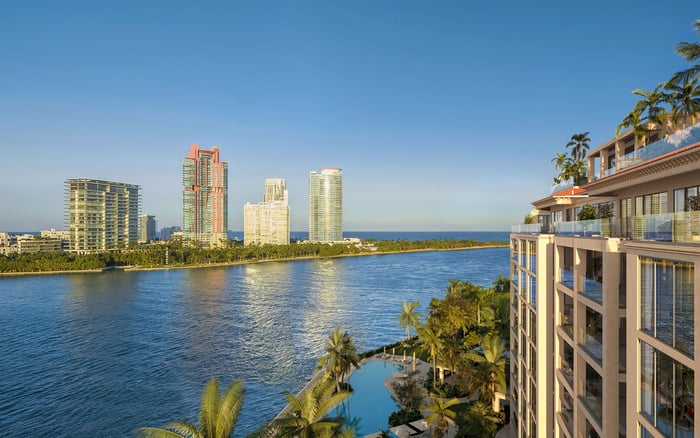
Brickell suits households that want vertical convenience, financial-district energy, dining access, and a lock-and-leave lifestyle. It can work especially well for executives who travel frequently or maintain a second residence elsewhere. Residences such as St. Regis® Residences Brickell reflect the appeal of a serviced, highly amenitized urban address for families that value convenience without giving up refinement.
Miami Beach offers a different proposition: cultural proximity, ocean access, and a more resort-like daily cadence. For families drawn to beachfront living while remaining connected to city life, a residence such as The Perigon Miami Beach may represent the kind of coastal environment to compare against more urban or suburban alternatives.
Coconut Grove is often considered by families seeking greenery, village texture, and a softer pace while remaining connected to Miami’s core. Four Seasons Residences Coconut Grove belongs in the conversation for buyers who want a polished residential setting within an established, family-oriented neighborhood fabric.
Boca Raton and West Palm Beach widen the lens. Boca Raton may appeal to families who want a more residential daily structure, while West Palm Beach can serve executives who value Palm Beach proximity, cultural access, and a different coastal rhythm. Alina Residences Boca Raton and The Ritz-Carlton Residences® West Palm Beach illustrate why the search should not stop at Miami when the family’s quality of life is the true priority.
Not every executive family should purchase immediately. A temporary lease can be the intelligent choice when schools are still being evaluated, office routines are evolving, or the family wants to experience multiple neighborhoods before committing capital. The lease period should not be treated as wasted time. It can be used to study commute patterns, weekend habits, household staffing needs, and the children’s adjustment.
Buying first can make sense when the family has conviction on location, school plan, and residence type. In that case, move quickly but not casually. Pre-align financing, counsel, insurance review, inspection expectations, association review, and closing logistics before touring seriously. Luxury sellers and developers respond to buyers who are organized.
New-construction requires its own calendar. Delivery timing, customization windows, deposit structure, interim housing, and family move-in needs should be modeled in advance. If a building is not ready when the school year begins, the family may need a bridge residence. If the building is ready before the family is, storage, staff onboarding, and furnishings become the focus.
An executive move is easier when every advisor works from the same file. Include passports and identification for residence approvals, school documents, pet records, insurance information, vehicle details, domestic staff requirements, art and wine logistics, and any security protocols. Add a separate section for vendor interviews, from household managers and drivers to pediatricians, trainers, tutors, and marine service providers if boating is part of the plan.
For condominium purchases, review building rules through the lens of the family’s lifestyle. Guest policies, elevator reservations, pet rules, renovation procedures, parking, storage, service access, and amenity protocols can affect daily life. For single-family homes, examine maintenance requirements, privacy exposure, staffing needs, landscaping, storm preparation, and neighborhood governance.
This is also the moment to discuss insurance and resilience planning with qualified professionals. Waterfront, high-rise, and single-family properties each carry different practical considerations. The goal is not anxiety. It is preparedness.
The first three months determine whether a relocation feels elegant or improvised. Schedule school orientations, medical appointments, driver’s license and vehicle tasks, club visits, household staff interviews, and technology setup before arrival whenever possible. Build a family calendar that protects downtime. Children need space to adjust, and executives need operational continuity.
Treat the first 90 days as a soft landing, not a performance. Avoid overcommitting socially. Explore restaurants, beaches, parks, clubs, cultural venues, and weekend routines in a measured way. The family is not only choosing where to live. It is learning how to live here.
A relocation succeeds when the home supports identity rather than interrupting it. South Florida can be glamorous, private, energetic, and restorative, but the right version depends on the family. The checklist is there to protect that fit.
When should an executive family begin planning a 2026 South Florida move? Begin as early as possible, especially if schools, household staff, or new-construction timing are involved. The most efficient moves are planned in parallel rather than sequentially.
Should we choose a school before choosing a home? In most family relocations, yes. School fit and commute rhythm can reshape the residential search more than any single amenity.
Is Brickell practical for families? Brickell can be practical for families that value vertical living, services, dining access, and short urban commutes. It is best evaluated against the family’s school and weekend patterns.
Should we rent before buying? Renting can be wise if the family is still comparing neighborhoods or school options. Buying first suits families with clear conviction and a well-prepared advisory team.
What matters most in a luxury condominium move? Beyond design, review service culture, privacy, parking, storage, guest access, pet rules, and daily logistics. The building should support the household’s routine.
What should families evaluate in Miami Beach? Consider beach access, school routes, privacy, traffic patterns, and whether the household wants a resort-like rhythm. The right pocket can feel very different from another nearby.
Why consider Boca Raton or West Palm Beach? These areas may suit families seeking a more residential cadence or a Palm Beach County lifestyle. They should be compared based on school, commute, and household priorities.
How should executives handle temporary housing? Treat it as a strategic bridge, not a compromise. Use the period to test commute patterns, school routines, and neighborhood comfort.
What documents should be prepared before touring seriously? Prepare financial documentation, identification, school records, pet information, and advisor contacts. Organized buyers can move with greater confidence.
What is the most common relocation mistake? Choosing the property before understanding the family’s daily rhythm. The better sequence is lifestyle first, residence second.
To compare the best-fit options with clarity, connect with MILLION.
If branded residences are on your mind — as a home or as an allocation — we would be glad to share what we are seeing, privately.
Begin a quiet conversation