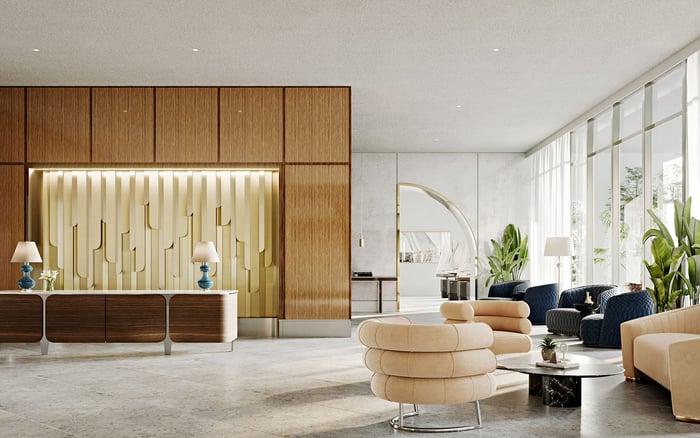
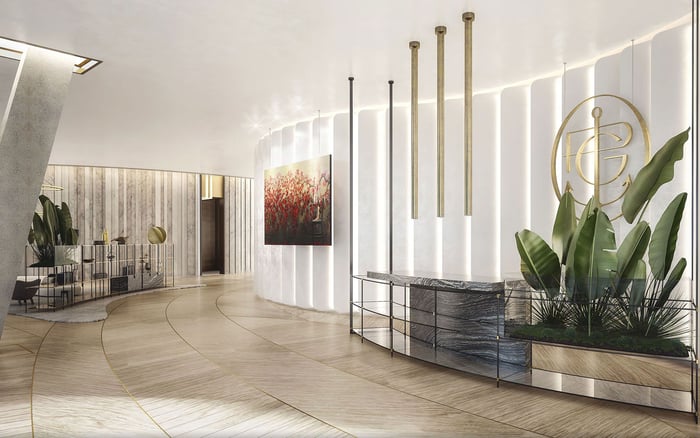
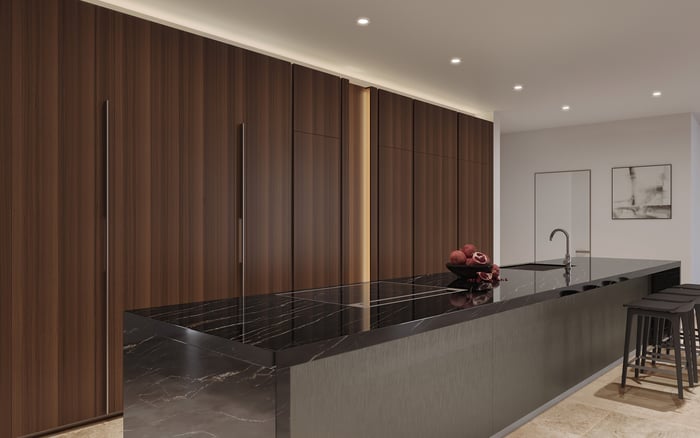
A buyer-focused comparison of Four Seasons Residences Coconut Grove and Park Grove Coconut Grove, framed around branded service, residential scale, design identity, and Coconut Grove’s waterfront-adjacent culture.
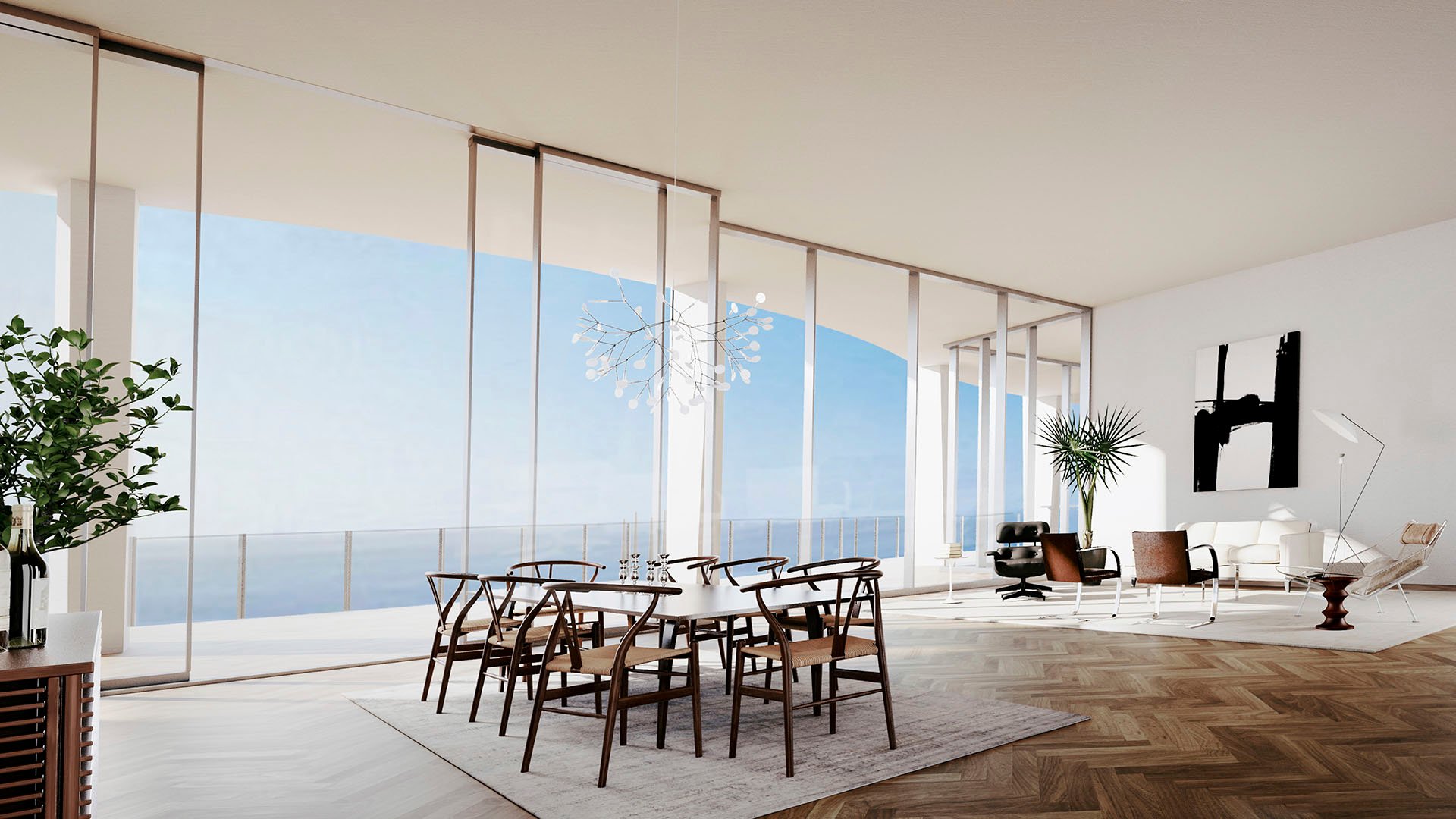
The comparison between Four Seasons Residences Coconut Grove and Park Grove Coconut Grove is less a conventional amenity matchup than a choice between two distinct definitions of ease. One is rooted in brand-backed residential service. The other is rooted in contemporary design, neighborhood rhythm, and a more independent expression of Coconut Grove living.
For buyers searching within Coconut Grove, the distinction matters because the neighborhood already speaks a specific luxury language. Coconut Grove is not Brickell with more trees, nor Miami Beach without the sand. Its appeal is tied to Biscayne Bay access, mature landscaping, low-key cultural confidence, and a residential pace that feels more personal than vertical-city living.
In that context, Four Seasons Residences Coconut Grove is best understood as the hospitality-led option. It is positioned as an ultra-luxury residential project associated with the Four Seasons brand, with service reliability and concierge-style support central to the ownership experience. Park Grove Coconut Grove, by contrast, is positioned as a design-led luxury residential environment, with a contemporary lifestyle identity and a stronger sense of place-based Grove culture.
Four Seasons Residences Coconut Grove speaks most directly to the buyer who wants managed luxury. That does not simply mean having amenities. It means wanting a building with an operating philosophy, service memory, and globally legible hospitality identity behind it.
For internationally mobile owners, second-home buyers, and residents who divide their time across several markets, that consistency can be decisive. The Four Seasons name carries a familiar expectation: polished arrivals, concierge support, residential discretion, and a hotel-style service culture adapted for private ownership. The brand itself becomes part of the asset’s lifestyle proposition.
This makes Four Seasons Residences especially compelling for buyers who do not want to assemble their own version of luxury from scratch. They want the building to anticipate needs, coordinate daily friction points, and provide an elevated service baseline. In a market where many developments promise high design, the hospitality framework gives Four Seasons a different kind of clarity.
In Coconut Grove, scale should be read not only in numbers, but in atmosphere. Exact unit counts, tower dimensions, and inventory details are not the most useful starting point here. The better question is how each property feels as a residential environment.
Park Grove Coconut Grove is framed as the more design-, architecture-, and community-oriented alternative. Its identity is less about a global hotel brand managing the owner experience and more about a contemporary residential setting that integrates with the neighborhood’s lifestyle. For some buyers, that is precisely the point. Park Grove feels closer to living in the Grove than being hosted within it.
That distinction can be subtle but meaningful. A service-led residence can feel reassuring, consistent, and highly managed. A lifestyle-led residence can feel more organic, personal, and rooted in the surrounding streets, restaurants, waterfront walks, and social texture. Neither is inherently superior. The stronger choice depends on whether a buyer values operational certainty or a more autonomous residential rhythm.
Both properties compete for buyers drawn to Coconut Grove’s waterfront-adjacent character. The appeal is not solely about a water view, although water orientation remains an important part of the emotional calculus. The deeper value is the combination of Biscayne Bay proximity, mature greenery, marina culture, and an urban village sensibility that feels distinctly separate from denser Miami submarkets.
This is why Coconut Grove continues to attract buyers who might otherwise consider Miami Beach, Brickell, or Coral Gables. The Grove offers access without constant spectacle. It has prestige without needing to announce itself at every corner. For luxury buyers, that restraint is part of the attraction.
Projects such as Vita at Grove Isle also show how the broader Grove conversation often revolves around water, privacy, and a more residential relationship with the Bay. In that environment, Four Seasons and Park Grove address different emotional priorities. Four Seasons offers the comfort of recognized service. Park Grove offers a more neighborhood-forward expression of contemporary Grove life.
Park Grove’s strength is its lifestyle-community feel. It is positioned for buyers who want a luxury residential environment that feels integrated with Coconut Grove rather than defined primarily by a hospitality brand. That can appeal to full-time residents, design-conscious owners, and buyers who want their building to feel like an extension of the neighborhood’s culture.
This is where Park Grove’s identity becomes especially relevant. Its appeal is not simply that it is luxurious. It presents luxury through a more local lens: contemporary residential living, social ease, and a sense of belonging within the Grove’s mature landscape.
The wider neighborhood reinforces that point. Mr. C Tigertail Coconut Grove brings another hospitality-inflected interpretation to the area, while The Well Coconut Grove reflects how wellness and lifestyle positioning have become increasingly important to Grove buyers. These neighboring names do not replace the Four Seasons versus Park Grove decision. They sharpen it by showing how finely segmented luxury buyer priorities have become.
Four Seasons Residences Coconut Grove is the more natural fit for the buyer who wants certainty. If the ideal ownership experience includes polished service, brand recognition, concierge-style support, and a globally understood hospitality standard, Four Seasons has the clearer proposition.
Park Grove Coconut Grove is the more natural fit for the buyer who wants a contemporary, place-based residential experience. If the priority is design, neighborhood integration, community feel, and a version of luxury that is less explicitly hotel-led, Park Grove may feel more aligned.
A buyer considering Arbor Coconut Grove or other Grove residences may already understand that this market is not monolithic. Coconut Grove luxury ranges from wellness-driven to boutique-scaled to branded-service oriented. The most successful purchase is rarely the one with the longest amenity list. It is the one whose daily operating style matches how the owner actually lives.
Four Seasons Residences Coconut Grove offers managed luxury through service, recognition, and hospitality discipline. Park Grove Coconut Grove offers Grove luxury through design, scale, and neighborhood culture. The comparison is therefore not a contest between two similar products. It is a choice between two different ownership psychologies.
Choose Four Seasons if service certainty is central to your life. Choose Park Grove if you want the Grove itself, with its design sensibility and neighborhood texture, to define the experience. In Coconut Grove, that is the real luxury question.
Is Four Seasons Residences Coconut Grove more service-oriented than Park Grove Coconut Grove? Yes. Four Seasons is positioned around branded residential living and hospitality-style service as a core differentiator.
Is Park Grove Coconut Grove considered more design-led? Yes. Park Grove is best understood as a contemporary, lifestyle-focused residential environment with a stronger neighborhood identity.
Which property is better for international buyers? Four Seasons may appeal more to internationally mobile buyers who value consistency, recognition, and hotel-style residential operations.
Which property feels more connected to Coconut Grove culture? Park Grove is framed as more place-based, with a lifestyle-community identity that aligns closely with the Grove’s residential character.
Does Coconut Grove offer a different lifestyle from Brickell? Yes. Coconut Grove is associated with Biscayne Bay access, mature landscaping, and a less dense neighborhood rhythm.
Is the decision mainly about amenities? No. The stronger comparison is between hospitality-service certainty and a more independent Coconut Grove lifestyle environment.
Does water-view potential define the entire value proposition? No. Water orientation matters, but the Grove premium also includes landscape, culture, privacy, and neighborhood atmosphere.
Is Four Seasons Residences Coconut Grove a branded residence? Yes. Its positioning is tied to the Four Seasons brand and the service expectations that come with that identity.
Is Park Grove Coconut Grove a hotel-branded residence? Park Grove is better framed as a design-led luxury residential development rather than a global hotel-brand service model.
What is the best way to shortlist comparable options for touring? Start with location fit, delivery status, and daily lifestyle priorities, then compare stacks and elevations to validate views and privacy.
If you'd like a private walkthrough and a curated shortlist, connect with MILLION.
If branded residences are on your mind — as a home or as an allocation — we would be glad to share what we are seeing, privately.
Begin a quiet conversation