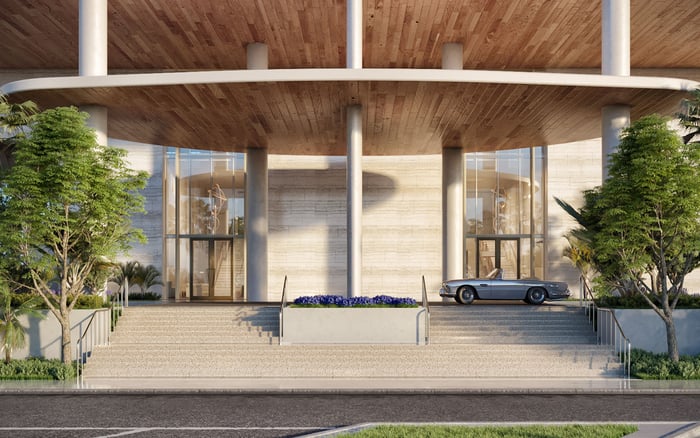
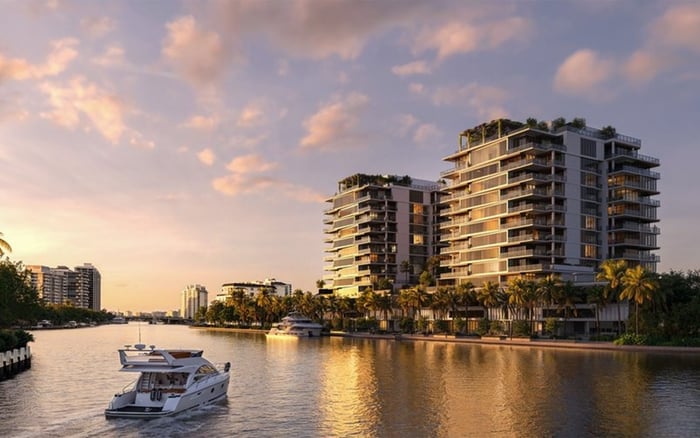
A discreet buyer’s guide to evaluating daily arrival, parking control, EV readiness, and chauffeur logistics when comparing Four Seasons Hotel & Private Residences Fort Lauderdale with The Ritz-Carlton Residences® West Palm Beach.
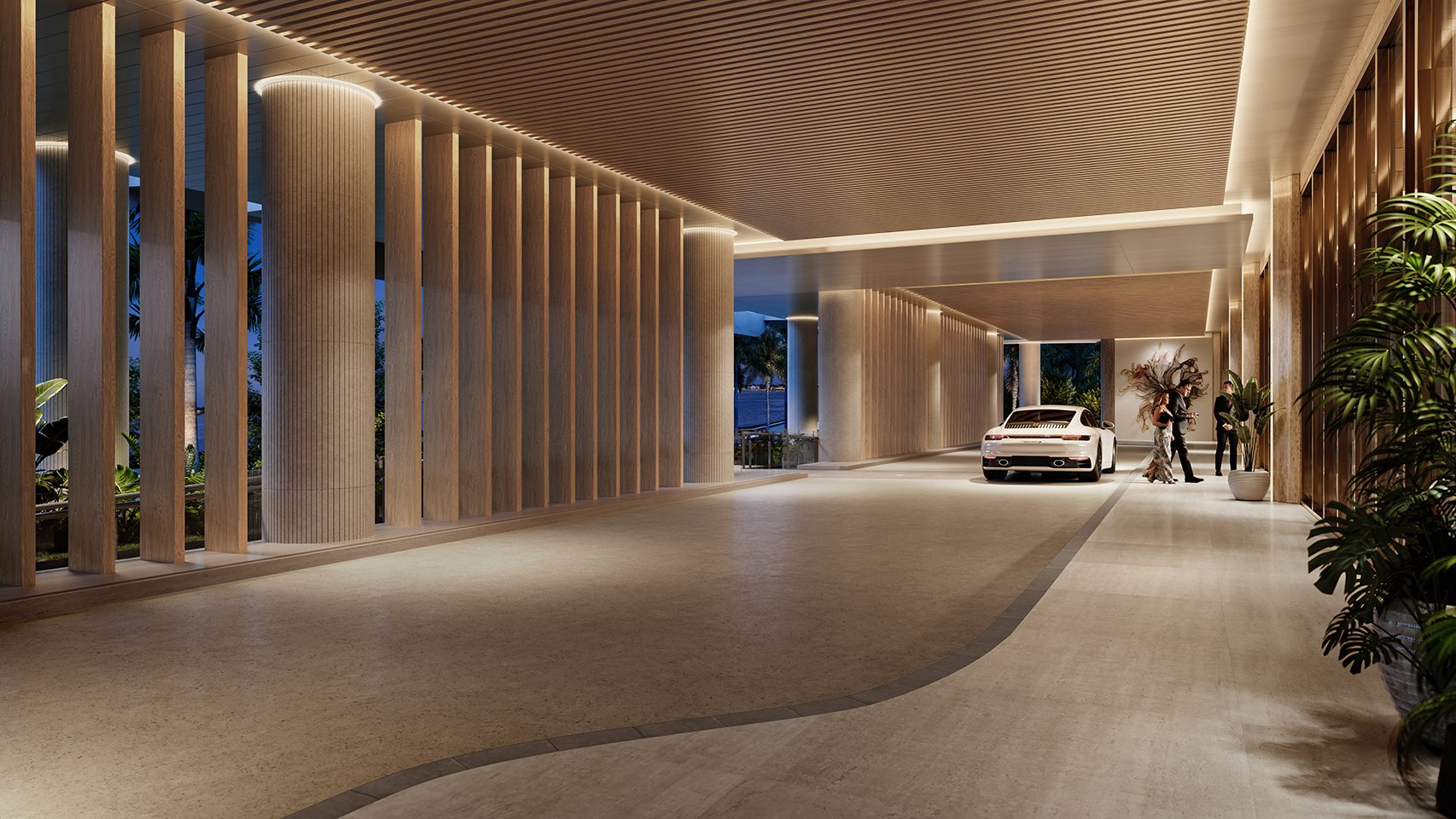
A sales gallery is designed to make the future feel effortless. The model kitchen gleams, the terrace view is framed, and the amenity renderings speak fluently in the language of ease. Yet for the buyer who will actually live in the building, or use it with family, staff, guests, and drivers, the first serious question is often less photogenic: what happens when the car arrives?
That question is especially relevant when comparing Four Seasons Hotel & Private Residences Fort Lauderdale with The Ritz-Carlton Residences® West Palm Beach. Both names carry powerful hospitality associations. Both invite buyers to think beyond the apartment and into a managed way of living. But parking rights, EV charging, and private-driver logistics are not mood-board details. They are legal, operational, and behavioral questions that shape daily use.
In a buyer’s shorthand, Broward and West Palm Beach may sit beside Oceanfront and New-construction on the wish list, but the real comparison is control. A polished arrival matters only if it is dependable at peak hours, clear in the ownership documents, and compatible with the household’s actual routine.
Luxury buyers often ask how many parking spaces come with a residence. The more precise question is what kind of parking interest the buyer receives. A deeded space, an assigned space, a limited common element, a valet-only privilege, and an optional leased arrangement can each behave differently over time.
Before allowing either brand halo to settle the matter, buyers should ask for the parking language in writing. Is the space tied to the unit? Can it be transferred separately, or only with the residence? Is it self-park, valet, or a combination? Are oversized vehicles handled differently? Are guest spaces separate from owner allocations? Is there a right to request an additional space, or only an opportunity if one becomes available?
This is not a minor detail for households with multiple cars, seasonal guests, adult children, or domestic staff. A buyer moving from a single-family estate may be accustomed to total driveway control. A buyer moving from another condominium may already understand that the friction is rarely in the brochure. It is in the rules.
The Fort Lauderdale context also invites comparison with other local offerings such as Riva Residenze Fort Lauderdale, where buyers may be weighing a broader waterfront lifestyle against the operating style of a hospitality-branded address. In every case, the value is not simply the number of stalls. It is the clarity of the right.
EV charging has moved from novelty to expectation for many premium households. Still, the meaningful issue is not whether charging is mentioned. It is whether the building can accommodate present and future demand without improvisation.
A disciplined buyer should separate three layers. First, is there an existing charging solution for owners or valet use? Second, can a dedicated charger be installed for a particular space, subject to building rules and electrical capacity? Third, if more residents add electric vehicles later, does the building have a scalable plan?
The answer may affect convenience, cost, and resale perception. A residence with a beautiful parking allocation but an unclear EV pathway can feel dated faster than expected. Conversely, a building with a transparent approval process, sensible load management, and a practical owner-request procedure may serve the household better than one that simply uses the right language in a presentation.
Buyers should also ask who controls charging access when valet is involved. If the car is stored out of the owner’s direct reach, how does the owner request charging? Is charging billed individually, absorbed into valet operations, or handled through building policy? If a guest arrives in an EV, is there a visitor protocol? These questions are mundane only until the first weekend when every preferred slot is occupied.
For some buyers, the most important vehicle is not the one they park themselves. It is the Sprinter for airport transfers, the house car, the private chauffeur’s sedan, the security vehicle, or the driver waiting during dinner. Private-driver logistics can determine whether the experience feels seamless or conspicuous.
The key is choreography. Where does the car queue without blocking the porte cochere? Can a driver wait on property, nearby, or only circulate? Is there a comfortable and discreet pickup point when the family does not want to pass through a crowded lobby moment? How are luggage carts, pets, children, and staff movements managed during peak arrival windows?
This is where hospitality branding may help set expectations, but documents and operations still govern outcomes. A buyer comparing the Fort Lauderdale and West Palm Beach propositions should ask the sales team to describe a real Friday evening sequence, not just the design intent. Airport arrival at dusk, dinner departure, rain, a visiting family member, two vehicles, and a driver waiting for instructions: that scenario will reveal more than a rendering.
In West Palm Beach, buyers may also be looking across a growing field that includes Alba West Palm Beach and other residential options with different arrival personalities. The correct choice may come down to which building makes the household feel least observed while moving most efficiently.
Hotel and private-residence environments can create a distinct arrival culture. They may offer a polished service sensibility, but they can also introduce layered use patterns: residents, hotel guests, visitors, service providers, events, and deliveries may all interact with the same campus or adjacent operational zones.
That does not make the model better or worse. It makes scrutiny essential. Buyers should ask how resident arrival is separated, prioritized, or protected. If there are shared components, what rules govern them? If there are separate residential elevators or access points, how does the journey function from car door to front door? If valet serves multiple user groups, how are resident requests ranked at high-demand moments?
The issue is not whether a famous flag understands service. The issue is whether the physical plant and governing documents give that service room to perform. In the ultra-premium segment, privacy is not achieved by attitude. It is achieved by design, policy, staffing, and repetition.
A practical comparison should be built around household use cases. Begin with the ordinary week: owner arrives, spouse leaves, guest visits, driver waits, EV charges overnight, staff receives a delivery, and a second car returns late. Then stress-test the extraordinary week: holiday occupancy, full amenity demand, rain, airport transfers, and overlapping guests.
Ask each sales team for the same answers, in the same order. Do not accept the general phrase “valet will handle it” as a substitute for policy. Ask what is included, what costs extra, what is subject to association approval, what is limited by availability, and what is only anticipated rather than finalized.
Also consider how each answer may read to a future buyer. Parking control, EV readiness, and arrival privacy are increasingly part of the premium-residence vocabulary. A beautiful home that creates daily vehicle friction may lose emotional ground to a residence with quieter operational excellence.
The same discipline applies across South Florida’s branded and design-led market, from St. Regis® Residences Bahia Mar Fort Lauderdale to boutique and waterfront developments elsewhere. The most confident buyers do not reject the romance of the sales gallery. They simply make it answer to real life.
Before reservation enthusiasm becomes commitment, buyers should bring parking and mobility issues into the legal and advisory conversation. The purchase agreement, condominium documents, rules and regulations, parking assignment exhibits, valet policies, and EV installation procedures may each contain part of the answer.
The buyer’s team should confirm whether representations made in conversation are reflected in controlling documents. If a particular vehicle height matters, ask. If a dedicated charger is essential, ask. If a driver must be able to wait discreetly, ask. If an additional parking right is a condition of purchase, ask before the negotiation becomes emotionally advanced.
The purpose is not to make the transaction difficult. It is to protect the lifestyle that the transaction is supposed to deliver. In this tier of the market, the garage is not beneath the residence. It is part of the residence’s performance.
Should parking be reviewed before choosing between these two residences? Yes. Parking rights can affect daily convenience, resale confidence, and whether the residence truly matches the household’s routine.
Is a deeded parking space always better than valet access? Not always. The stronger option depends on legal control, convenience, building operations, and how the owner actually uses the property.
What is the most important EV charging question? Ask whether charging is available, how it is controlled, and whether the building has a scalable path as more residents adopt electric vehicles.
Why do private-driver logistics matter in a luxury condominium? Chauffeur flow affects privacy, timing, guest arrival, airport transfers, and the feeling of ease at the building’s most visible threshold.
Can hospitality branding solve parking friction by itself? No. Service culture matters, but physical design, governing documents, staffing, and rules determine the actual experience.
What should a buyer ask about guest parking? Ask how guests are handled, whether visitor parking is separate from owner parking, and how peak periods are managed.
Should oversized vehicles be discussed early? Yes. Height, length, and storage constraints should be confirmed before assuming that every preferred vehicle can be accommodated.
How should buyers compare Fort Lauderdale and West Palm Beach options? Use the same real-life scenarios for each building, including EV charging, guest arrivals, drivers, luggage, rain, and busy evenings.
Are parking and EV details usually final at the sales-gallery stage? Some details may be defined, while others may depend on final documents or association procedures, so written confirmation is essential.
What is the best mindset before signing? Treat mobility as part of the residence itself, not as a secondary amenity that can be clarified after commitment.
When you're ready to tour or underwrite the options, connect with MILLION.
If branded residences are on your mind — as a home or as an allocation — we would be glad to share what we are seeing, privately.
Begin a quiet conversation