A buyer-focused comparison of three distinct South Florida ownership models: Four Seasons service culture, The Well wellness integration, and Mila’s culinary-social residential identity.
At the highest end of South Florida residential real estate, buyers are rarely choosing only a floor plan, a view corridor, or a recognizable name. They are choosing the rhythm of a day. That distinction becomes especially clear when comparing Four Seasons Hotel & Private Residences Fort Lauderdale, The Well Bay Harbor Islands, and Mila Bay Harbor Islands.
Each property speaks to a different idea of modern ownership. Four Seasons Hotel & Private Residences Fort Lauderdale is the oceanfront, globally branded hospitality choice, built around service consistency and the operating culture of a refined resort hotel. The Well Bay Harbor Islands is the wellness-led alternative, where the building is intended to support health, fitness, recovery, and restorative routines as part of daily residential life. Mila Bay Harbor Islands is the culinary and social counterpart, oriented around gastronomy, mixology, curated events, and a more outward-facing residential energy.
The digital shorthand may be Fort-lauderdale, Oceanfront, Condo-hotel, or Bay-harbor, but the more important question is personal: which environment makes life feel most considered from morning to evening?
Four Seasons Hotel & Private Residences Fort Lauderdale is the clearest fit for a buyer who values the certainty of a globally recognized hospitality framework. Its appeal is not simply that it is branded, but that the brand implies a daily structure: arrivals handled with polish, staff interaction shaped by established service protocols, and amenities experienced through the lens of resort-hotel operations.
Because the property combines a hotel environment with private residences, ownership feels more hospitality-driven than a conventional condominium. That matters for owners who want a home that behaves, in part, like a managed luxury destination. The experience begins before the residence itself, through reception, service culture, amenity choreography, and the quiet reassurance that someone is anticipating the next need.
The beachside setting reinforces that identity. Daily life can be organized around the ocean, resort amenities, and an arrival experience that feels polished rather than improvised. For an owner who splits time across multiple homes, or simply prefers predictable standards, the Four Seasons model offers the comfort of familiarity without requiring the owner to relearn how a building functions.
This is less about novelty than trust. The right buyer is likely to prioritize consistency, global brand recognition, and the reassurance of an established luxury hotel operator.
The Well Bay Harbor Islands approaches ownership from a different premise. Instead of making hospitality the organizing principle, it makes wellness the center of gravity. The experience is not framed around traditional resort service or dining-led social programming, but around integrating health-oriented routines into the fabric of the building.
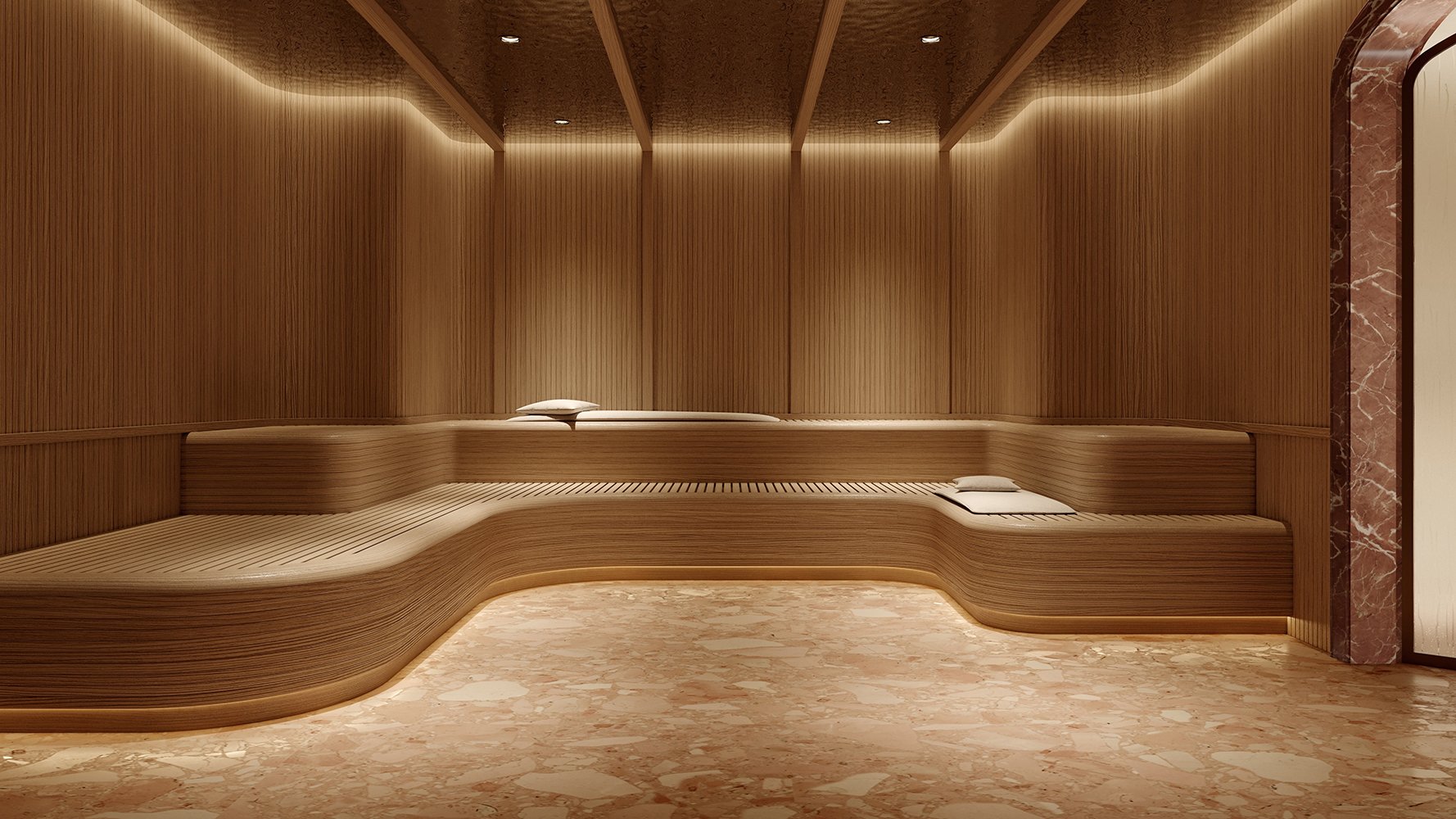
That creates a more inward, personal version of luxury. The daily value lies in the ability to move from residence to spa, fitness, recovery, or holistic health programming without treating wellness as an occasional appointment elsewhere. The residence is not merely close to wellness; it is intended to function like a personal wellness platform.
This distinction is especially meaningful for buyers who view lifestyle discipline as a core part of ownership. A morning workout, recovery ritual, restorative treatment, or health-conscious routine can become less episodic and more embedded. The building’s purpose is not to entertain first, but to support the owner’s own operating system.
The Well also differs from Four Seasons because it represents a more niche lifestyle identity rather than a broad global hotel-service model. Its appeal is specific, which can be its greatest strength. It is not trying to be everything to every luxury buyer. It is speaking to the owner who wants the residence to support how the body feels, how routines hold, and how private life is restored.
Mila Bay Harbor Islands completes the comparison by introducing a third version of daily ownership: social, culinary, and experience-led. Where The Well emphasizes wellness immersion, Mila is framed around gastronomy, mixology, curated events, and a residential culture connected to dining and entertaining.
This is a different type of hospitality. It is not the institutional service language of Four Seasons, and it is not the wellness platform of The Well. Mila’s proposition is closer to a residence with a social pulse, where food, drink, atmosphere, and programming help define the ownership experience.
For the right owner, that can be deeply compelling. The home becomes a setting for hosting, gathering, and participating in curated social moments. Instead of retreat as the dominant theme, Mila places greater emphasis on connection. The buyer is likely to be someone who values restaurant culture, entertaining, and the sense that a residence can extend into a tasteful social ecosystem.
Mila is not necessarily louder in the conventional sense. Bay Harbor Islands gives it a quieter residential context than an oceanfront resort address. But within that more restrained setting, its lifestyle identity is oriented toward social sophistication rather than purely private recovery.
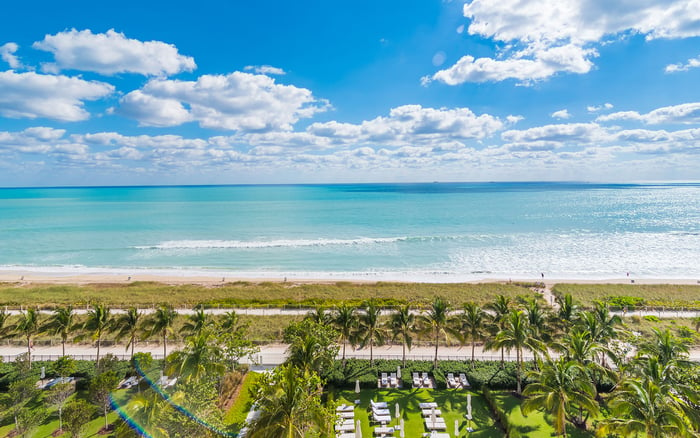
Location separates the daily experience almost as much as brand identity. Four Seasons Fort Lauderdale is defined by its beachside, resort-style environment. The ocean is part of the everyday routine, and the building’s relationship to arrival, staff service, amenities, and proximity to the water gives ownership a destination quality.
The Well and Mila, by contrast, are shaped by Bay Harbor Islands. That setting offers a quieter, more residential context than the oceanfront resort environment in Fort Lauderdale. For some buyers, that residential calm is precisely the point. It allows the brand concept, whether wellness or culinary social life, to sit inside a more discreet neighborhood cadence.
This is where the comparison becomes less about which project is more luxurious and more about which daily backdrop feels right. One owner may want the emotional lift of a resort arrival by the ocean. Another may prefer a wellness-focused home base in a calmer enclave. A third may want residential privacy with a stronger connection to dining, events, and hospitality-driven social life.
The simplest way to compare the trio is to ask what should happen automatically in the background of daily life.
If the answer is service, Four Seasons is the most direct fit. It is designed for owners who want polish, protocol, and the confidence that comes from a recognized hotel operating culture. The experience is particularly aligned with buyers who prefer their residence to feel supported by a hospitality institution.
If the answer is wellness, The Well becomes the clearer match. It is best suited to owners who want spa, fitness, recovery, and holistic health routines embedded into residential life rather than treated as external luxuries.
If the answer is dining and social connection, Mila has the strongest identity. It speaks to owners who want gastronomy, mixology, curated events, and entertaining to feel native to the property rather than incidental.
None of these choices is a universal upgrade over the others. They are three distinct definitions of comfort. Four Seasons emphasizes institutional luxury service. The Well emphasizes wellness integration. Mila emphasizes culinary-social lifestyle. For sophisticated buyers, that clarity is the value.
Which project is most hospitality-driven? Four Seasons Hotel & Private Residences Fort Lauderdale is the most hospitality-driven because it combines a hotel environment with private residences.
Which project is most wellness-oriented? The Well Bay Harbor Islands is the wellness-oriented option, centered on spa, fitness, recovery, and holistic health routines.
Which project is most social in daily character? Mila Bay Harbor Islands is the most social of the three, with an ownership experience framed around gastronomy, mixology, and curated events.
Is Four Seasons more like a conventional condominium? Its day-to-day experience is more hospitality-driven than a conventional condominium because of its hotel-residential structure.
How does Bay Harbor Islands change the experience? Bay Harbor Islands gives The Well and Mila a quieter, more residential setting than the oceanfront resort environment in Fort Lauderdale.
Who is the best fit for Four Seasons Fort Lauderdale? It suits buyers who prioritize predictable service protocols, global brand recognition, and a refined resort-hotel operating culture.
Who is the best fit for The Well Bay Harbor Islands? It suits buyers who want wellness routines embedded into daily residential life rather than treated as occasional amenities.
Who is the best fit for Mila Bay Harbor Islands? It suits owners who want a residence connected to dining, entertaining, hospitality, and curated social energy.
Are these projects competing on the same lifestyle promise? Not exactly. Four Seasons emphasizes service, The Well emphasizes wellness, and Mila emphasizes culinary and social experience.
What is the best way to shortlist comparable options for touring? Start with location fit, delivery status, and daily lifestyle priorities, then compare stacks and elevations to validate views and privacy.
For a tailored shortlist and next-step guidance, connect with MILLION.
If branded residences are on your mind — as a home or as an allocation — we would be glad to share what we are seeing, privately.
Begin a quiet conversation