A discreet buyer’s guide for Monaco-minded purchasers evaluating wellness-led residences in Fort Lauderdale and across South Florida’s luxury waterfront markets.
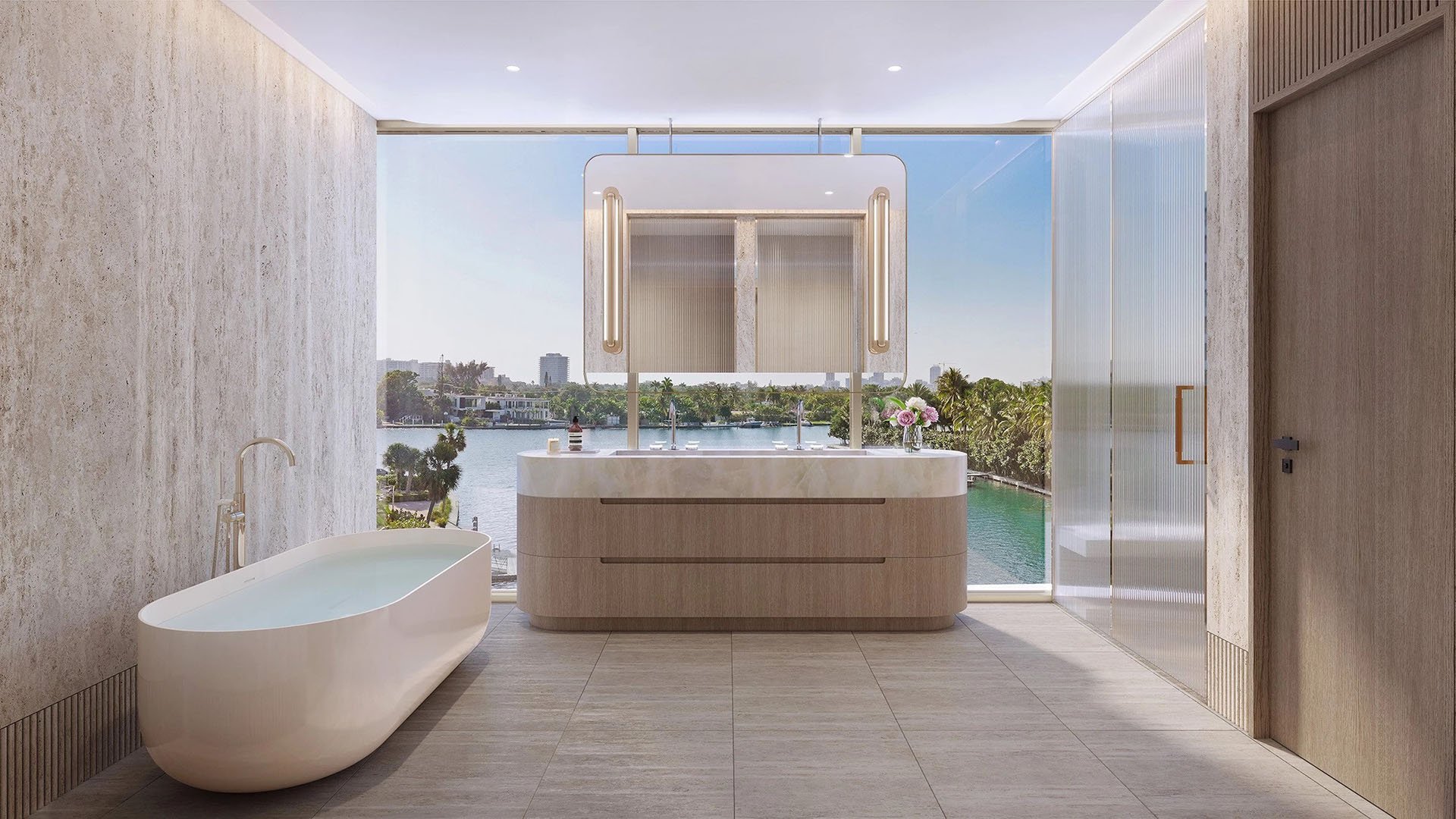
For the Monaco buyer, wellness is rarely a novelty. It is part of the operating system of daily life: privacy, movement, water, quiet service, excellent design and the ability to move from a morning swim to a business call without friction. In South Florida, the question is not whether a residence has a gym or pool. The sharper question is whether the property supports a complete lifestyle with the ease expected in a mature, service-oriented enclave.
Fort Lauderdale has become especially relevant for this buyer profile because it offers a quieter waterfront rhythm than Miami’s most visible districts, while keeping the larger South Florida ecosystem within reach. For search purposes, many buyers shorthand the market as Fort-lauderdale, but the real decision is more nuanced: which pocket, building type and wellness philosophy best match the way you actually live.
A wellness-led residence should feel restorative before it feels impressive. The best examples reduce daily decisions, protect privacy, frame natural light, support movement and create a graceful transition between home, water, club life and travel.
Wellness is often used too broadly in luxury real estate. A more useful buyer framework separates it into five categories: physical health, mental restoration, service, environmental comfort and social balance. A residence may excel in one category and fall short in another.
Physical wellness includes fitness spaces, swimming, walking routes, recovery areas and room for private training. Mental restoration is more subtle: views, acoustics, ceiling height, terrace depth, elevator experience, natural materials and the ability to disconnect. Service is the layer that keeps the lifestyle effortless, from arrival sequence to maintenance standards. Environmental comfort includes light, air, shade, privacy and storm-conscious design. Social balance asks whether the building feels like a sanctuary, a club or a stage.
This is where wellness-led buyers should be disciplined. Do not overvalue a long amenity menu if the residence itself feels compressed or noisy. Do not underweight circulation, storage, service elevators, private outdoor space or the sensation of returning home after a long flight. The daily choreography matters.
Fort Lauderdale is compelling for buyers who want waterfront living without defaulting to the most public version of South Florida luxury. It can feel more residential, more navigable and more boating-oriented than many denser urban cores. That does not make it a compromise. For the right buyer, it can be the more precise choice.
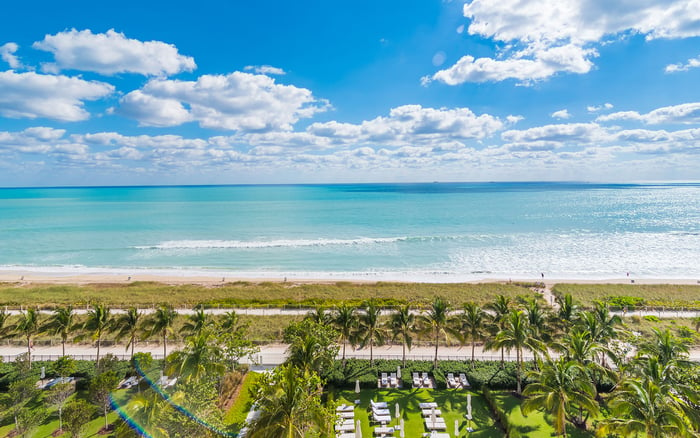
The wellness case begins with water. Even when a residence is not directly oceanfront, proximity to the coast, marinas, promenades and open-air dining can shape a healthier daily routine. Morning walks, private workouts, time on the terrace and easy movement between home and water create a rhythm that many Monaco buyers understand instinctively.
The project comparison should include both established hospitality names and newer residential interpretations. Four Seasons Hotel & Private Residences Fort Lauderdale suits buyers who value a hotel-informed service culture, while St. Regis® Residences Bahia Mar Fort Lauderdale will naturally enter conversations where brand, waterfront identity and a polished arrival experience are central priorities. The right answer depends less on the logo than on how the building’s rhythm fits your personal routine.
A Monaco-to-Fort Lauderdale buyer should still evaluate the broader South Florida map. The region is not one market, but a necklace of distinct lifestyles. Miami Beach offers immediate coastal energy. Coconut Grove provides canopy, village texture and a softer residential pace. Bay Harbor Islands delivers a discreet, low-rise sensibility in a compact setting. Brickell speaks to buyers who want urban intensity and vertical convenience.
For those prioritizing wellness as a central concept, The Well Bay Harbor Islands and The Well Coconut Grove are natural reference points. They help frame an important distinction: some buildings are wellness-branded, while others are wellness-compatible. Both can work, but they serve different temperaments.
A wellness-branded residence may appeal to the buyer who wants the philosophy clearly embedded in the property’s identity. A wellness-compatible residence may appeal to the buyer who prefers privacy, space, water and discretion over an overt concept. Fort Lauderdale often competes strongly in the second category, particularly for those who want a calmer base with access to the wider region.
Amenities can seduce, but floor plan quality is the foundation. Monaco buyers are accustomed to extracting value from every square foot, so the plan must work hard. Prioritize primary suite privacy, terrace usability, kitchen placement, service access, storage and the separation of entertaining and rest areas.
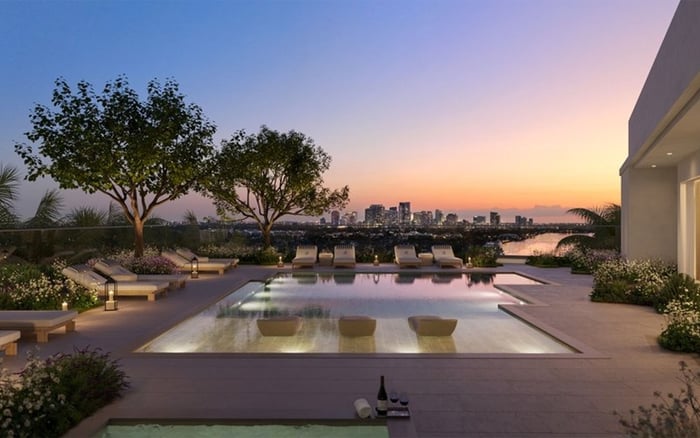
Light should be studied at different times of day. A bright residence can still be uncomfortable if glare is uncontrolled. A shaded residence can feel elegant if the views, proportions and materials are well resolved. Terrace depth is equally important. A narrow balcony photographs well but may not support true outdoor living. A useful terrace becomes an extension of the wellness program, especially when it accommodates breakfast, reading, stretching or quiet evening conversation.
Acoustics deserve more attention than many buyers give them. Wellness is difficult to sustain if elevator noise, mechanical hum or street exposure interrupts the home. During a private showing, pause in silence. Listen from the primary bedroom, the terrace and the main living area. Luxury is often most evident in what you do not hear.
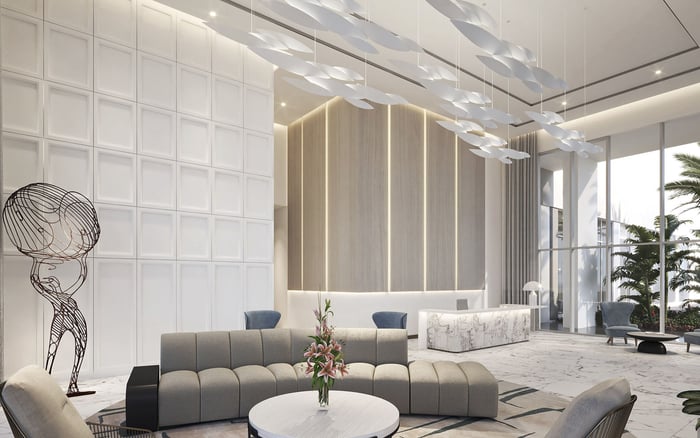
The arrival experience is one of the most revealing tests of a wellness-led residence. A strong arrival sequence should feel calm, legible and protected. Valet, lobby, elevator, staff movement and guest access should be intuitive. If the path home feels theatrical but inefficient, the building may be better suited to occasional use than daily restoration.
Privacy is not only about security. It includes elevator density, corridor design, sightlines from neighboring buildings, terrace exposure and how staff circulation is handled. Buyers coming from Monaco often understand that privacy is a form of wellness. It reduces social friction and preserves mental space.
Hospitality-branded residences can be attractive when service consistency is paramount, but boutique buildings may provide a quieter kind of luxury. The decision should be personal. Some owners want a recognized service culture. Others want fewer shared spaces and a more residential mood. Neither is inherently superior.
Begin with lifestyle non-negotiables, not price. Decide whether your wellness routine requires beach proximity, boating access, a serious fitness environment, walkability, private outdoor space or hotel-level service. Then identify the neighborhoods and buildings that truly support those requirements.
Next, separate primary-residence logic from second-home logic. A second home can tolerate a more dramatic lobby or a livelier social program. A primary residence must withstand repetition. It must feel good on an ordinary Tuesday, not only during a hosted weekend.
Finally, pressure-test the building against your travel patterns. If you move frequently between Europe, New York, Palm Beach and Miami, ease of arrival matters. If you entertain family for extended stays, bedroom separation and storage matter. If health routines are central, the path from bed to movement, water, light and recovery should be effortless.
The best wellness-led residence is the one that makes discipline feel natural. It should encourage better mornings, quieter evenings and smoother transitions. It should support privacy without isolation and service without performance. It should also respect the fact that true luxury is not only what is available, but what is made unnecessary.
Fort Lauderdale’s appeal lies in that balance. It can offer a waterfront base with a more composed tempo, while remaining connected to the larger South Florida luxury landscape. For the Monaco buyer, that may be the point: not to recreate Monaco, but to find a South Florida residence that understands the same values of discretion, proximity, service and ease.
What defines a wellness-led residence? It is a home designed around daily health, privacy, natural light, movement, recovery and calm service rather than amenities alone.
Is Fort Lauderdale a strong fit for Monaco buyers? Yes, for buyers who value waterfront living, discretion and a more composed residential rhythm within South Florida.
Should I choose a branded residence for wellness? Not automatically. A branded residence can offer service confidence, but the floor plan, privacy and daily usability must still lead.
How important is direct ocean access? It depends on your routine. Some buyers need immediate beach proximity, while others prioritize boating, terraces or quieter waterfront views.
What should I inspect during a private tour? Study light, sound, elevator flow, terrace depth, storage, service access and how naturally the home supports your daily routine.
Are wellness-branded projects different from wellness-compatible buildings? Yes. Wellness-branded projects foreground the concept, while wellness-compatible buildings may deliver calm, privacy and health through design.
Is a boutique building better for privacy? It can be, but privacy also depends on layout, staff circulation, elevator density, sightlines and resident culture.
How should second-home buyers think differently? A second home can emphasize ease and arrival, while a primary residence must perform gracefully every day.
Can Miami-area wellness residences compete with Fort Lauderdale? Yes. Bay Harbor Islands, Coconut Grove, Miami Beach and Brickell each offer distinct interpretations of wellness-led living.
What is the best first step before buying? Define your wellness routine in practical terms, then compare residences by how well they support that rhythm.
If you'd like a private walkthrough and a curated shortlist, connect with MILLION.
If branded residences are on your mind — as a home or as an allocation — we would be glad to share what we are seeing, privately.
Begin a quiet conversation