A buyer-focused comparison of two prominent West Palm Beach waterfront addresses, clarifying that the real distinction is not closeness to the water but the lifestyle model each project delivers.
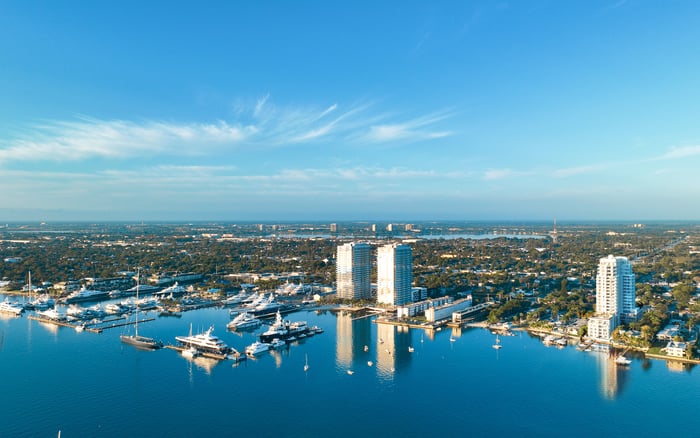
In the current conversation around Forté on Flagler West Palm Beach and The Ritz-Carlton Residences® West Palm Beach, the obvious question is often the wrong one. Buyers tend to start with waterfront proximity, as if one tower holds a decisive edge simply by being closer to the water. In practice, that is not the clearest dividing line. Both projects are positioned on the Intracoastal waterfront in West Palm Beach, and neither should be mistaken for true Atlantic beachfront frontage.
That distinction matters. If a purchaser is specifically chasing direct sand-and-sea living, these are not substitutes for a beachfront address. But if the brief is refined waterfront living in the urban core of Palm Beach County, both belong in the conversation. The real reality check is not which is more waterfront. It is what kind of waterfront life each project is designed to support.
For readers tracking the broader local pipeline, this is the same lens that helps separate nearby offerings such as Alba West Palm Beach, Mr. C Residences West Palm Beach, and Shorecrest Flagler Drive West Palm Beach. On this stretch of waterfront, the decisive variable is rarely geography alone. It is service structure, atmosphere, and how public or private daily life feels.
Forté on Flagler is framed around Flagler Drive in downtown West Palm Beach, with the Intracoastal as a defining element of its setting. The Ritz-Carlton Residences® West Palm Beach is also planned along the Intracoastal waterfront. That makes this comparison far more nuanced than a simple map exercise.
From a pure proximity standpoint, buyers should view the waterfront story as broadly comparable. The water is central to the appeal at both addresses, and both promise the visual and lifestyle value that comes with that frontage. The difference lies in the character of access and use.
Forté’s setting leans into downtown connectivity. Its positioning ties the waterfront to walkability, nearby dining, culture, and the energy of the city core. There is a more public-facing quality to that vision, reinforced by ground-level retail and plaza space. The experience suggests an owner who wants to step out into an active neighborhood rather than retreat completely from it.
The Ritz-Carlton approach is more insulated and more curated. The water is not simply a view corridor or a backdrop to downtown life. It is part of a resort-style residential proposition shaped around privacy, recreation, and branded service. That creates a different emotional register, even if the map tells a similar story.
This is where the split becomes easier to read.
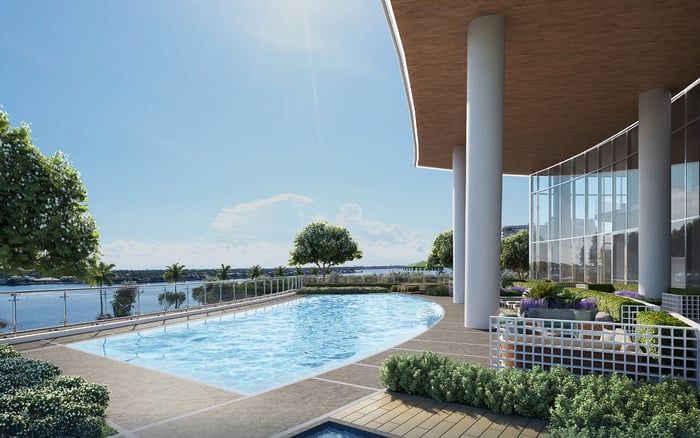
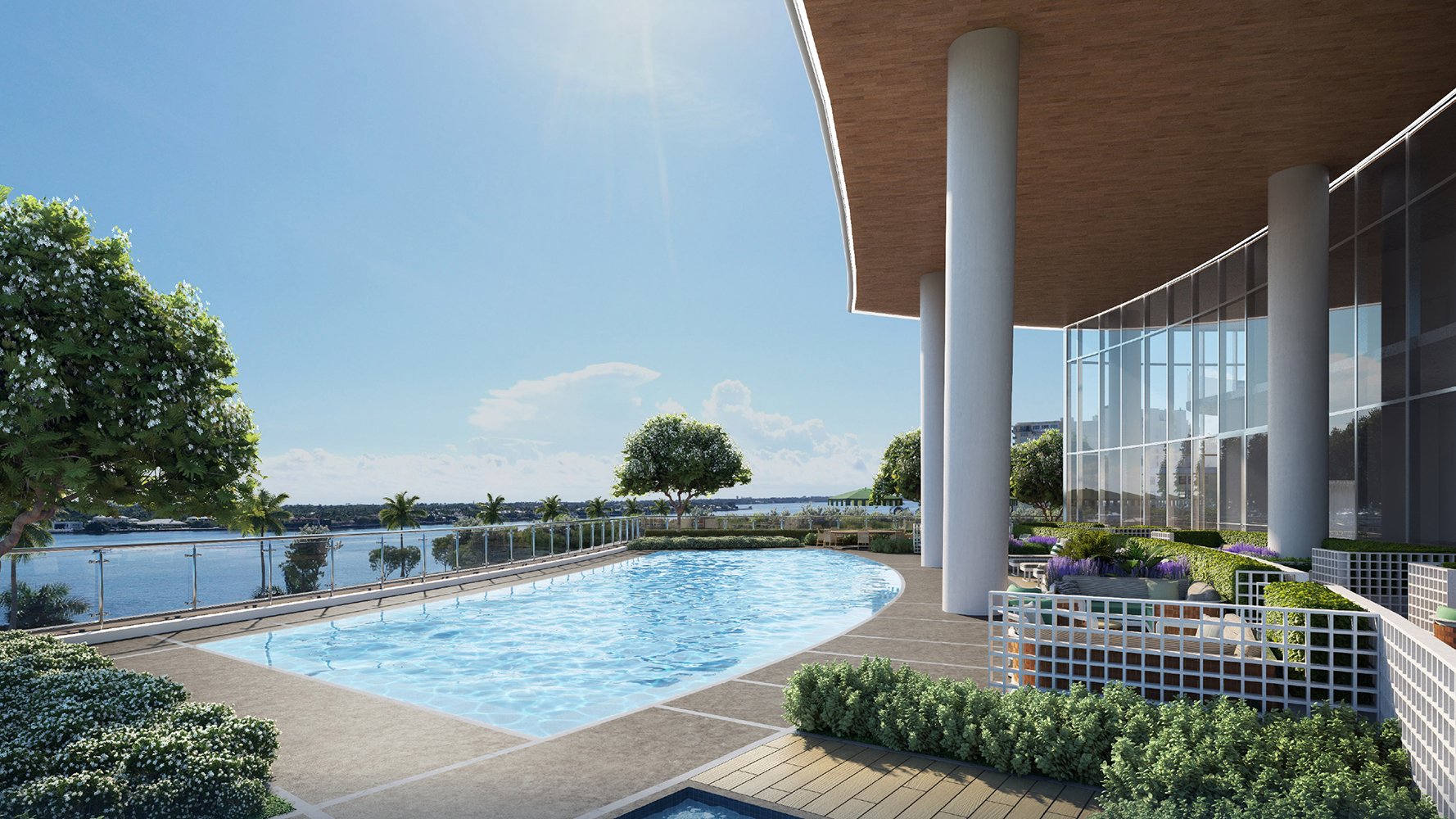
Forté is presented as an independent mixed-use development with residential, retail, and hospitality elements. Its residential program is larger in scale, and the unit mix is described broadly enough to suggest appeal across a wider luxury buyer pool. Amenities include a resort-style pool, fitness center, and spa-oriented wellness programming, which together place it firmly in the upper tier of contemporary luxury condominium living.
That is meaningful, but it is still a different proposition from a fully branded hospitality ecosystem. Forté’s amenity package appears designed to support a polished residential lifestyle with some hospitality influence, not to replicate the rhythm of an all-service luxury hotel.
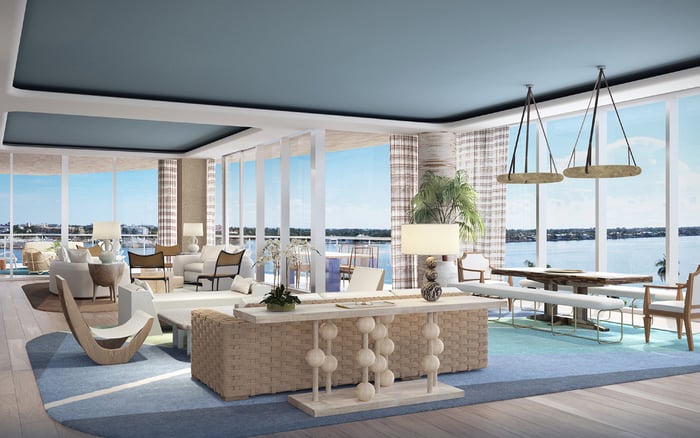
The Ritz-Carlton Residences® West Palm Beach is positioned differently from the start. The project is tied to the Ritz-Carlton platform, and that changes buyer expectations around service. Concierge, valet, room service, and housekeeping options are central to the appeal. Multiple pools, spa facilities, dining, and lounge spaces reinforce the idea that daily life is meant to feel more like a private residence embedded within a luxury hospitality framework.
For some purchasers, that difference is everything. A buyer who values frictionless service, recognizable brand standards, and a predictable hospitality cadence will likely see the Ritz-Carlton model as worth its premium. Someone who prefers a less managed atmosphere and more urban spontaneity may find Forté more aligned with how they actually live.
Forté’s advantage is not that it is more luxurious on paper than Ritz-Carlton. Its advantage is that it delivers luxury through urbanity.
Residents are positioned to take advantage of downtown West Palm Beach with unusual ease, including dining, cultural destinations, and the retail and entertainment texture associated with the central district and nearby Clematis Street. In that sense, Forté belongs to a category of luxury developments that treat the neighborhood as an extension of the amenity set.
Ritz-Carlton moves in the opposite direction. The concept is less about stepping into the city and more about returning to a finely managed environment where service is always present and leisure is carefully choreographed. Even though the project is not beachfront in the literal Atlantic sense, it is clearly selling a more curated waterside lifestyle.
This is the real buyer filter. Do you want your day to begin with the city at your doorstep, or with the sense that the residence itself is the destination?
Exact current pricing and inventory for both projects require direct inquiry, so the more useful editorial framework is market positioning.
Forté appears aimed at a broader luxury audience, with layouts ranging from studios to larger multi-bedroom residences. That signals flexibility: primary residents, part-time urban users, and buyers who want a polished waterfront address without necessarily paying for a full global brand layer.
The Ritz-Carlton Residences® West Palm Beach sits at the more rarefied end of the spectrum. The branding premium is part of the proposition, not an incidental feature. Buyers are paying not only for the residence and location, but also for a particular promise of consistency, service culture, and status signaling.
In practical terms, Forté may appeal to buyers who prioritize location efficiency, mixed-use vibrancy, and a contemporary luxury standard. Ritz-Carlton is more likely to attract those who place a premium on staff-supported living, branded predictability, and a resort-minded cadence.
For Palm Beach County buyers, the cleanest conclusion is this: waterfront proximity is essentially a tie. Neither project wins by being meaningfully more on the water, and neither should be framed as an Atlantic beachfront substitute.
The more consequential choice is experiential. Forté offers a mixed-use, city-connected waterfront lifestyle with strong amenity support and a more public urban edge. The Ritz-Carlton Residences® West Palm Beach offers a more private, service-intensive, hotel-managed model that pushes closer to full resort living.
That means the better project is not universal. It depends on whether you value independence or orchestration, neighborhood energy or branded calm, a luxury condominium with hospitality elements or a residence nested inside a hospitality machine.
For buyers comparing the next tier of South Florida branded and quasi-branded product, this same distinction often appears in other nearby conversations as well. In West Palm Beach, however, the contrast is especially clear. One project sells the city with the water. The other sells the water with the service.
Is one project significantly closer to the waterfront than the other? No. Both are positioned on the Intracoastal waterfront, so proximity to the water is effectively a draw.
Are either of these projects true beachfront properties? No. Both are waterfront but not direct Atlantic beach frontage, so neither should be treated as a true beachfront residence.
What is Forté on Flagler West Palm Beach best known for? It stands out for mixed-use urban living, with residential, retail, and hospitality elements plus walkable downtown connectivity.
What is The Ritz-Carlton Residences® West Palm Beach best known for? Its defining appeal is branded hotel-style living with concierge, valet, housekeeping options, and resort-oriented amenities.
Does Forté have luxury amenities comparable to other high-end condos? Yes. Its program includes a resort-style pool, fitness center, and spa-oriented wellness offerings associated with luxury condominium living.
Does Ritz-Carlton offer a more service-rich lifestyle? Yes. The project is positioned around a more immersive hospitality model with a broader service package than a typical condo tower.
Which project is more connected to downtown West Palm Beach? Forté is more closely associated with walkable access to downtown dining, culture, and public-facing waterfront activity.
Which project feels more private and resort-like? The Ritz-Carlton concept is designed to feel more secluded, curated, and leisure-forward in everyday use.
Is Forté positioned for a broader buyer pool? Yes. Its range of residence types suggests wider luxury-market appeal than a narrowly targeted ultra-luxury branded tower.
How should a buyer decide between them? Choose Forté for urban mixed-use energy and choose Ritz-Carlton for hotel-managed service and a more resort-centered rhythm.
For a tailored shortlist and next-step guidance, connect with MILLION Luxury.
If branded residences are on your mind — as a home or as an allocation — we would be glad to share what we are seeing, privately.
Begin a quiet conversation