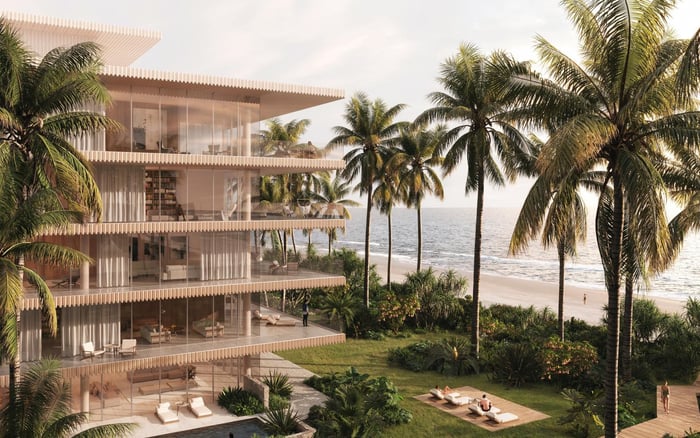
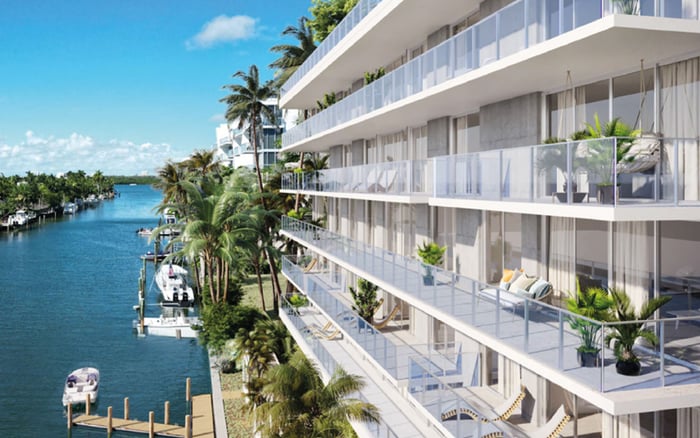
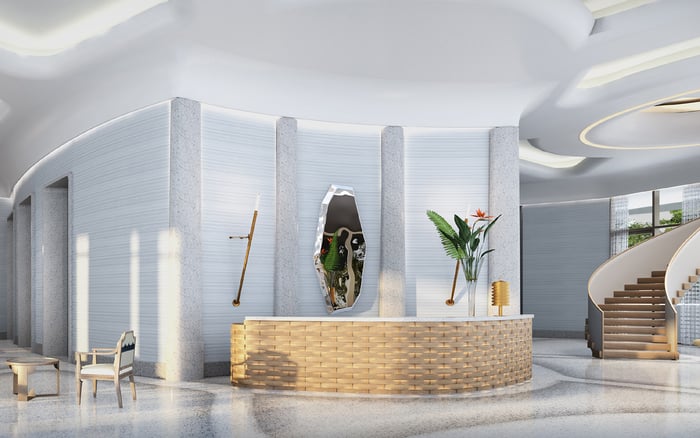
A discreet buyer advisory for comparing Forté on Flagler and Origin Bay Harbor Islands through the practical lens of parking rights, EV charging, valet operations, and private-driver use.
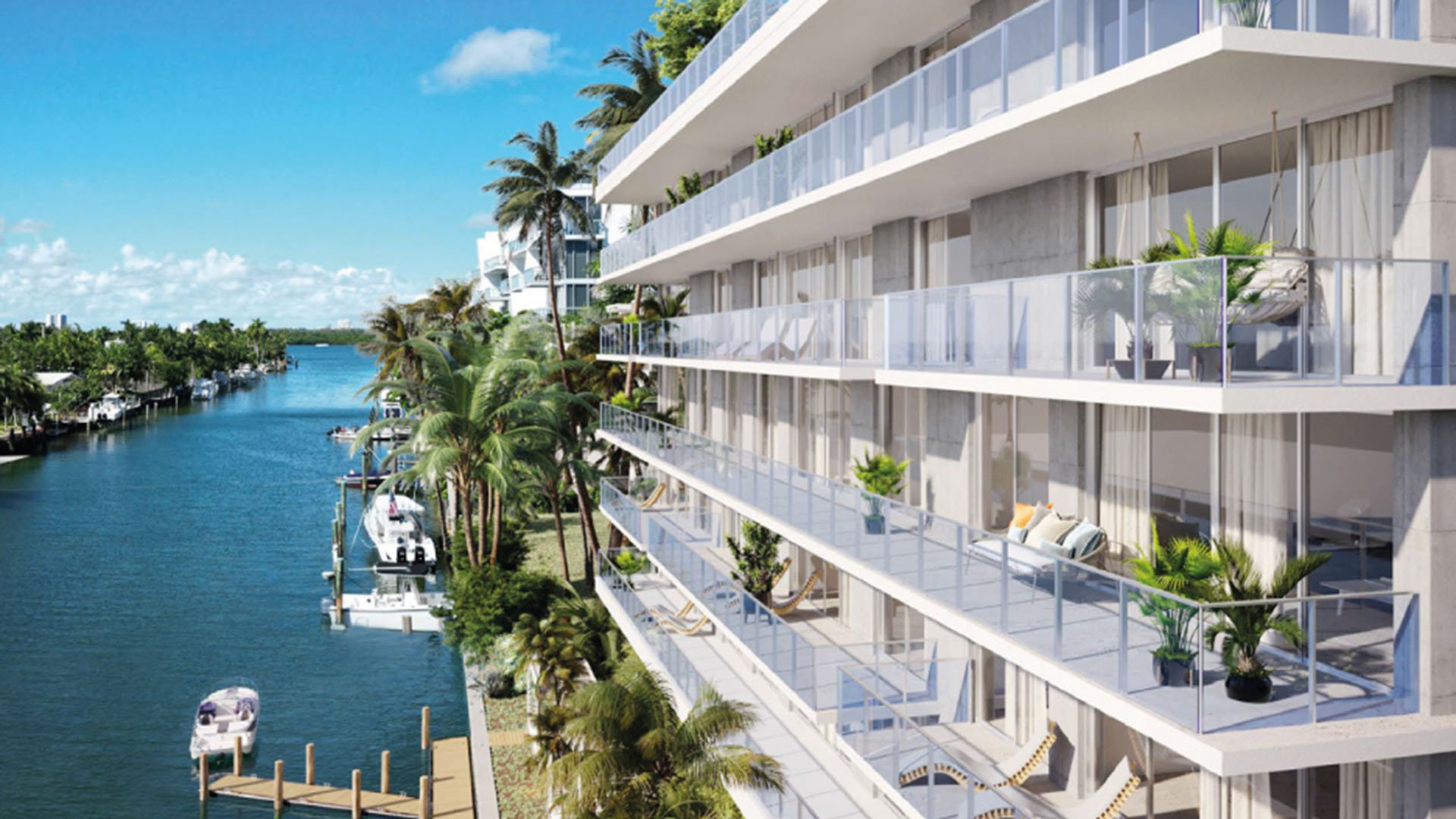
In South Florida's ultra-premium condominium market, the most consequential questions are not always the most photogenic. A private terrace, a finely resolved kitchen, and a water-facing arrival sequence all matter. Yet for many owners, the daily experience is shaped by something less visible: the legal and operational control of the garage.
That is the practical lens for comparing Forté on Flagler West Palm Beach and Origin Bay Harbor Islands. Forté on Flagler is the West Palm Beach project in this conversation. Origin Bay Harbor Islands is the Bay Harbor Islands project. Both deserve evaluation not only through architecture, amenities, and finish language, but also through parking rights, EV charging infrastructure, and private-driver logistics.
For a buyer with multiple vehicles, a chauffeur, visiting family, staff, or an electric fleet, this is not a secondary issue. It is central to the ownership experience. The essential question is whether the building's promise of convenience is supported by enforceable documents, clear rules, and workable physical design.
For buyers at Forté on Flagler West Palm Beach and Origin Bay Harbor Islands, the first parking question should be legal rather than aesthetic. Is a space deeded with the residence, assigned as a limited common element, licensed to the owner, or controlled by the association or developer? Those categories can produce very different outcomes when a unit is resold, leased, refinanced, or transferred within a family structure.
A deeded space is not the same as an assigned space. A licensed space is not the same as a transferable right. A valet-managed arrangement is not the same as personal control. The word "assigned" may sound reassuring in a presentation, but the buyer's counsel should confirm how that assignment is created, whether it appears in the declaration, and whether it can be changed.
The same scrutiny applies to extra spaces. Buyers should determine whether additional parking can be bought, leased, reassigned, or restricted, and who has the authority to approve those changes. In a high-service building, this can affect not only day-one convenience but also long-term liquidity. A residence that works beautifully for one car may be less suitable for an owner with a sport utility vehicle, a collector car, and regular family visitors.
The phrase "EV-ready" should trigger questions, not assumptions. At both Forté on Flagler and Origin Bay Harbor Islands, EV due diligence should focus on electrical capacity, charger-installation rights, metering, billing, association approval, and whether readiness applies to every space or only selected spaces.
A buyer should ask whether the building has spare electrical capacity for current and future demand. If a charger can be installed, who pays for the equipment, wiring, engineering review, maintenance, insurance, and any future removal? If charging is billed separately, how is usage measured? If it is billed through the association, how are non-EV owners protected from subsidizing private consumption?
There is also an equity question. If EV infrastructure is available only in certain spaces, owners should know whether those spaces are already allocated, whether retrofits are permitted elsewhere, and whether association approval can be withheld. The practical distinction is simple: marketing language may describe a building as prepared for EV life, but only the condominium documents, garage plans, and association policies can show whether a specific owner has a usable right.
For some buyers, the driver experience is as important as the owner's elevator ride. Chauffeur and private-driver logistics should be evaluated through porte-cochère flow, valet rules, guest staging, driver waiting areas, loading access, and after-hours access policies. These are operational details, but they define the tone of arrival.
At Forté on Flagler, a West Palm Beach owner may be thinking about daily circulation, family drop-offs, medical appointments, dining, and Palm Beach island routines. At Origin Bay Harbor Islands, the concern may be the rhythm of Bay Harbor Islands, Bal Harbour, Surfside, and Miami Beach access. In both cases, the question is whether the building can absorb simultaneous arrivals without friction.
Buyers should ask how long a driver may wait at the porte-cochère, whether guest vehicles must be valeted, where staff vehicles may stage, and how late-night access is handled. Loading access also deserves attention. A building can feel effortless during a sales appointment and less graceful during a holiday weekend, a large delivery, or a rainy evening with multiple guests arriving at once.
Multiple-vehicle owners should physically test the garage experience where possible. At both projects, due diligence should include headroom, ramp angles, turning radii, clearance for large SUVs and exotic cars, and whether tandem or mechanical spaces are involved. These details can be decisive.
An exotic car may have a low front splitter. A full-size SUV may have limited maneuverability on tight ramps. A roof box, bicycle rack, or executive vehicle with extended dimensions may change the equation. A tandem space may work for a couple with predictable routines, but it may be inconvenient for staff, children, guests, or a private driver who needs independent movement.
Mechanical spaces require separate scrutiny. Buyers should understand operating rules, maintenance responsibility, weight and dimension limits, downtime procedures, and who is liable if equipment fails. In luxury real estate, inconvenience is often the most expensive hidden cost.
The buyer's document request should be specific. Ask for the declaration of condominium, parking assignment schedule, garage plans, EV charging policy, valet and parking rules, electrical-capacity documentation, and association budget language for garage operations. If the garage is still evolving, request written clarification on what is final and what remains subject to association or developer control.
For a new-construction and investment buyer, these materials are not administrative clutter. They are the operating manual for a daily routine. The same is true for a second-home owner who may keep vehicles in residence for seasonal use, especially when travel patterns move between Palm Beach, West Palm Beach, and Bay Harbor settings.
The objective is not to overcomplicate the purchase. It is to match the residence to the buyer's actual life. A single-car owner who mostly uses valet may be comfortable with one structure. A collector, chauffeur-driven household, or family with adult children may require something more durable, documented, and flexible.
Terms such as "EV-ready," "valet," and "assigned parking" should be treated as starting points. They describe an experience, but they do not necessarily define enforceable rights. The enforceable answer usually lives in condominium documents, rules, recorded plans, association policies, and written approvals.
For Forté on Flagler West Palm Beach and Origin Bay Harbor Islands, the refined buyer's approach is simple: admire the building, then audit the mechanics of ownership. The garage is where legal rights, engineering, staffing, and lifestyle meet. When those elements align, the luxury feels seamless. When they do not, even the most beautiful residence can become operationally awkward.
What is the first parking question a buyer should ask? Ask whether the space is deeded, assigned as a limited common element, licensed, or controlled by the association or developer.
Is assigned parking the same as ownership? Not necessarily. The documents should confirm whether the assignment is transferable, changeable, or subject to future rules.
What should EV buyers verify before closing? Verify electrical capacity, installation rights, metering, billing, association approval, and whether EV readiness applies to the specific space.
Why do private-driver logistics matter? A chauffeur-driven household depends on clear porte-cochère flow, waiting rules, guest staging, loading access, and after-hours policies.
Should buyers inspect garage dimensions? Yes. Headroom, ramp angles, turning radii, and clearance can affect SUVs, exotic cars, and vehicles with roof accessories.
Are tandem or mechanical spaces a concern? They can be. Buyers should understand operating rules, access limitations, maintenance obligations, and potential downtime.
Can extra spaces usually be bought or leased? It depends on the condominium documents and association policies. Buyers should verify whether extra spaces are transferable, leasable, restricted, or unavailable.
What documents are most important for garage due diligence? Request the declaration, parking schedule, garage plans, EV policy, valet rules, electrical information, and garage budget language.
Does valet service replace the need for parking review? No. Valet can enhance convenience, but buyers still need to understand legal rights, operating rules, liability, and access.
How should buyers compare Forté on Flagler and Origin Bay Harbor Islands? Compare the specific legal rights, EV infrastructure, driver operations, and garage geometry against the way the household actually lives.
For a tailored shortlist and next-step guidance, connect with MILLION.
If branded residences are on your mind — as a home or as an allocation — we would be glad to share what we are seeing, privately.
Begin a quiet conversation