A practical luxury buyer guide for Buenos Aires families evaluating South Florida homes through the lens of daily logistics, service flow, schools, privacy, commute patterns, and long-term household resilience.
For a Buenos Aires household considering Miami Beach or the wider South Florida market, the most elegant purchase is not always the most theatrical one. It is the home that protects time. A strong residence should absorb school mornings, airport departures, visiting relatives, staff schedules, wellness routines, evening entertaining, and quiet recovery after long travel days.
That is why logistics should come before views, finishes, and even brand recognition. A home may be visually exceptional, but if the household operates through friction, the glamour fades quickly. The more international the family rhythm, the more important it becomes to understand how a building, neighborhood, floor plan, and service model perform from Monday morning to Sunday night.
For buyers moving between Buenos Aires and South Florida, the decision is not simply Miami Beach versus the mainland. It is where the household can function with elegance: how groceries arrive, how children are collected, where visiting family stays, how staff enter, where luggage is stored, how cars circulate, and how privacy is preserved.
Miami Beach remains the emotional center of many South Florida searches because it combines ocean proximity, dining, design, and a sense of arrival. For the household logistics buyer, however, Miami Beach should be studied by routine rather than romance. The essential questions are direct: how often will the household cross to the mainland, how many cars are involved, and how frequently will guests or service providers need to enter the residence?
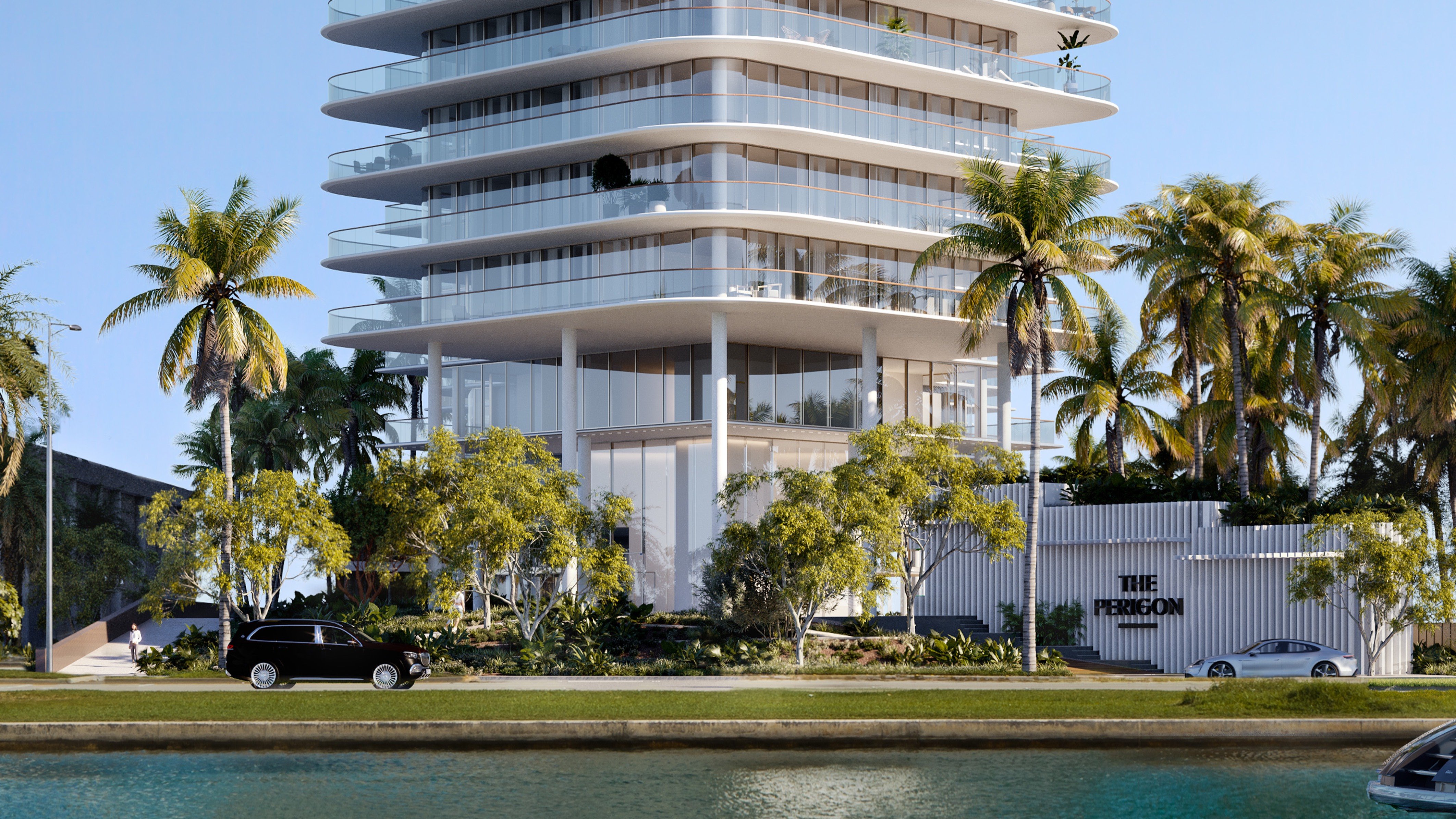
A residence such as The Perigon Miami Beach belongs in the conversation for buyers who want the Beach to feel residential rather than transient. The broader point is not only the address, but how the household uses the location. Families who prioritize daily ocean walks, beach time, and a resort-adjacent rhythm may accept more deliberate planning around mainland appointments.
For buyers comparing Miami Beach options, the unit’s internal plan matters as much as the tower. Look for a proper entry sequence, separation between primary and secondary bedrooms, a powder room that does not expose private areas, laundry capacity that matches the household, and enough storage for seasonal clothing, sports equipment, luggage, and beach items. In a luxury home, the service areas should be as intelligently resolved as the entertaining spaces.
Brickell appeals to buyers who want a more urban routine, with dining, offices, services, and social life arranged vertically and nearby. For some Buenos Aires families, that concentration can feel natural: a sophisticated city rhythm, elevator-to-amenity convenience, and a more immediate connection to mainland appointments.
The logistical advantage of Brickell is not merely that it is urban. It is that a household can compress many daily needs into a smaller operating radius. That can be meaningful for couples without children, families with older children, or owners who expect frequent guests and want a setting that is easy to understand quickly.
In this context, 2200 Brickell can be considered as part of a mainland strategy focused on ease and access. The right Brickell residence should be evaluated for elevator performance, parking practicality, package management, guest valet flow, and how the building handles peak arrival times. A beautiful lobby is not enough if the family’s daily movement is congested.
Buyers should also test the unit’s acoustic privacy. Urban convenience is valuable, but the home itself should feel composed. Bedrooms should be buffered from entertaining areas, terraces should be usable rather than symbolic, and the kitchen should support both family meals and catered evenings without crowding the living room.
Coconut Grove often enters the search when the household wants a softer daily tempo. The appeal is not necessarily escape, but balance: a sense of neighborhood, access to outdoor routines, and a more domestic atmosphere than a purely vertical district.
For families thinking in terms of school runs, tutoring, sports, pets, and weekend lunches, Coconut Grove can offer a compelling frame. The key is to avoid treating the neighborhood as a generic lifestyle idea. Each property should be examined for parking, household staff, deliveries, outdoor gear, and the transition between indoor and outdoor living.
Projects such as Four Seasons Residences Coconut Grove and The Lincoln Coconut Grove can sit within a search that values calm, service, and daily usability. The strongest choice will be the one that makes the family routine feel natural. If the household needs frequent formal entertaining, confirm that the plan supports it. If the priority is children and privacy, prioritize bedroom separation, arrival discretion, and practical storage.
Coconut Grove also rewards buyers who think carefully about cars. Even in luxury living, small details matter: where a second car waits, how a driver coordinates pickup, whether guests can arrive without confusion, and whether daily errands feel graceful or improvised.
Not every household wants the intensity of Miami Beach or the full urban pace of Brickell. Bay Harbor Islands and nearby enclaves can appeal to buyers who want a quieter residential mood while remaining connected to the broader Miami lifestyle. For a logistics-minded household, the value is often in the middle position: close enough to participate, removed enough to decompress.
A property such as Bay Harbor Towers may suit a buyer who wants water, calm, and a more measured residential experience. The important exercise is to map the household’s real week. If mornings are complex, if relatives visit often, or if the household depends on recurring service providers, a less congested arrival experience can be more valuable than a more famous address.
Bay Harbor also illustrates a larger truth about South Florida luxury: prestige is not only a question of name recognition. It is the ability to live privately, receive comfortably, and move without constant negotiation.
Once the neighborhood field is narrowed, the building should be tested like an operating system. Ask how staff enter and exit. Understand where deliveries are staged. Study whether the loading area is discreet. Confirm how many elevators serve the residence and whether service elevators are separated from guest arrivals.
Parking is equally critical. The household should understand assigned spaces, valet culture, guest parking, charging needs, bicycle storage, and the daily choreography of drivers or household help. A luxury residence should not force improvisation every time a guest arrives or a child needs to be collected.
Security should feel protective, not theatrical. The best buildings create a calm boundary between public and private life. For international owners, this includes clear guest authorization, reliable package protocols, and front-desk teams that understand discretion.
A floor plan reveals how a family will actually live. A generous living room is only useful if circulation is intuitive. A show kitchen may be beautiful, but a household that entertains often may need a secondary prep zone or a layout that keeps catering movement out of the main social area.
For Buenos Aires buyers accustomed to gracious apartments and formal entertaining, the ideal South Florida plan often includes a dignified entry, a true dining area, a private primary suite, and secondary bedrooms that allow family and guests to coexist comfortably. Terraces should be assessed for real use: morning coffee, outdoor dining, shade, privacy, and furniture placement.
Storage deserves unusual attention. International households tend to accumulate duplicate wardrobes, luggage, sports gear, documents, gifts, and seasonal items. If the apartment feels perfect only because storage has been ignored, the household will eventually feel the compromise.
The best South Florida purchase is the one that makes the family’s real life feel more composed. Miami Beach may be right for an ocean-centered household. Brickell may be right for a vertical, urban routine. Coconut Grove may be right for a softer domestic rhythm. Bay Harbor may be right for privacy and balance.
The common thread is discipline. Begin with the calendar. Map the cars. Walk the arrival sequence. Study the service corridors. Test the guest experience. Then choose the view, the finishes, and the address. In the luxury market, beauty is expected. The rare advantage is a home that gives the household time back.
Should a Buenos Aires buyer choose Miami Beach first? Not automatically. Miami Beach is compelling, but the best choice depends on the household’s daily routes, service needs, guests, and desired pace.
Is Brickell better for a city-oriented routine? It can be, especially for buyers who value vertical convenience and frequent access to mainland appointments. The building’s operations still need close review.
Why consider Coconut Grove for family logistics? Coconut Grove can support a calmer domestic rhythm with a neighborhood feel. Buyers should still test parking, storage, staff access, and school-day routines.
What makes Bay Harbor attractive for logistics-minded buyers? Bay Harbor can offer a quieter residential mood while keeping the household connected to Miami life. It may suit buyers who value privacy and measured arrival patterns.
What is the most overlooked feature in a luxury condo? Storage is often underestimated. International households need room for luggage, seasonal wardrobes, sports gear, documents, and guest-related items.
Should views outweigh floor-plan practicality? No. A spectacular view cannot fix poor circulation, weak bedroom separation, or inadequate service flow in daily life.
How important is elevator design? Very important. Elevator quantity, service separation, and peak-time flow can shape how private and effortless the building feels.
What should buyers ask about household staff? They should understand staff entry, parking, elevator access, delivery handling, and whether the building supports discreet service routines.
Can one residence work for both family life and entertaining? Yes, if the plan separates private rooms from social areas and allows catering, guests, and children to move without conflict.
What is the best way to shortlist comparable options for touring? Start with location fit, delivery status, and daily lifestyle priorities, then compare stacks and elevations to validate views and privacy.
For a tailored shortlist and next-step guidance, connect with MILLION.
If branded residences are on your mind — as a home or as an allocation — we would be glad to share what we are seeing, privately.
Begin a quiet conversation