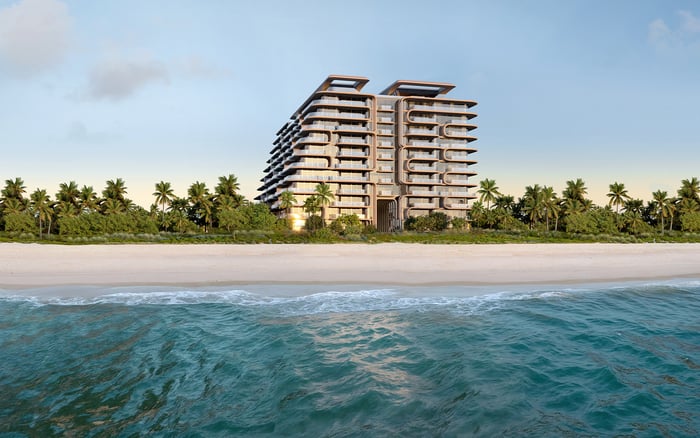
Florida’s condominium market has entered a more regulated, more transparent era after the 2021 Surfside tragedy. For luxury buyers, the headline is not simply stricter inspections. It is how inspection outcomes, reserve funding, and insurance costs flow through to special assessments, lender eligibility, and ultimately resale liquidity. Here is what materially changed, what HB 913 refined in 2025, and how to approach due diligence with the calm rigor the moment demands.

The collapse of Champlain Towers South in Surfside on June 24, 2021, which resulted in 98 deaths, rewired Florida’s approach to condominium safety, legally and culturally. The state moved from a comparatively permissive environment around reserves and long-range maintenance to a framework that expects documented structural oversight, recurring inspections, and disciplined capital planning.
For luxury buyers, the primary implication is practical. A building can present beautifully and still carry meaningful balance-sheet risk. The reverse can also be true: a well-run, well-maintained, newly compliant building may feel temporarily “expensive” to own because the association is rebuilding reserves after years of lighter funding.
In 2026, the decisive question is often not “Is the building beautiful?” It is “Is the building documentable?” Documentation affects pricing, negotiation leverage, and whether a future buyer can obtain conventional financing.
That is why due diligence now extends well beyond the unit. Buyers increasingly evaluate the association’s engineering narrative, reserve math, and insurance posture. In South Florida, that mindset is as relevant in Miami Beach as it is in Surfside.
Florida’s post-Surfside reforms require “milestone inspections” for condominium and cooperative buildings that are three stories or taller. These structural evaluations are conducted by licensed engineers or architects and are no longer optional in the way many maintenance conversations once were.
Timing is central. Initial milestone inspections are generally triggered at 30 years of age, or at 25 years if the building is within 3 miles of a coastline. After the initial milestone inspection, subsequent milestone inspections are generally required every 10 years. For oceanfront buildings, that coastal trigger and recurring cadence mean many communities are either working through their first mandated cycle or planning for the next.
In parallel, associations must complete a Structural Integrity Reserve Study (SIRS) covering specified structural and life-safety components and their reserve needs. In prior years, some associations relied on owner votes to waive or underfund reserves. A key change is that associations can no longer rely on owner votes to waive or underfund reserves for SIRS-identified structural items.
For the luxury segment, this has two immediate effects:
Market impact has been uneven. Buildings with strong maintenance histories use the new framework to validate stewardship. Buildings with postponed projects use it to quantify the catch-up.
In June 2025, HB 913 was signed and, as widely summarized by practitioners, refined condo reserve funding and inspection compliance rules while preserving the core safety mandates.
Three aspects are especially relevant to owners evaluating cash flow and timing.
First, HB 913 allows an association, under specified conditions tied to milestone inspections and SIRS timing, to pause reserve funding contributions for up to two consecutive annual budgets. In luxury buildings sequencing major projects, that flexibility can matter. It is not a blanket permission to avoid reserves. It is a timing tool, available only under defined conditions.
Second, HB 913 raises the reserve-item replacement-cost threshold, in certain reserve-accounting contexts described in summaries, from $10,000 to $25,000, with inflation adjustments described in practitioner commentary. For some associations, this reduces administrative friction around smaller items while keeping attention on material components.
Third, HB 913 explicitly permits certain alternative reserve funding methods, including special assessments, lines of credit, and loans, subject to approval requirements described in summaries. This formalizes the reality many boards already face: if reserves must be funded, the decision becomes whether capital is accumulated gradually, assessed at once, or financed.
For buyers, the practical takeaway is to understand not only what a building must do, but how it plans to pay for it.
Post-reform budgeting has surfaced a reality that was always present, even when it was not fully funded. Concrete restoration, waterproofing, structural repairs, and life-safety upgrades arrive on a calendar that does not negotiate.
Large special assessments are now part of the modern condo narrative. Murano at Portofino has been cited as a cautionary example involving a $30M special assessment. Separately, Palm Bay Yacht Club owners were reported as facing a $46M repair bill, with assessments of about $175,000 per unit, illustrating the potential scale of post-reform costs.
Luxury buyers should not treat these examples as universal. They are signals about magnitude and speed: an association’s problems can become an owner’s wire transfer quickly.
The second-order effect is behavioral. Even affluent owners experience assessment fatigue. It can trigger selling pressure, board turnover, and polarized votes. In resale buildings, a smooth ownership experience correlates less with amenities and more with governance maturity: clear minutes, consistent engineering guidance, and budgets that do not rely on optimism.
In South Florida’s upper tier, many purchases are cash. Liquidity still matters because your eventual buyer may prefer financing, and because lender posture can influence appraisals and negotiating leverage.
Fannie Mae’s project eligibility rules can render condos “ineligible projects,” limiting conventional mortgage availability when projects present unacceptable risk factors under its selling guidance. Its selling guide describes multiple ineligibility triggers tied to project risk and compliance, including situations involving significant deferred maintenance or repairs and certain insurance or financial red flags.
Practitioner commentary has described a “secret mortgage blacklist” dynamic where some condos become effectively unavailable to financed buyers when lenders deem the project ineligible under Fannie or Freddie criteria.
This is not theoretical. It can change who can buy, how long listings sit, and what discount the market demands to compensate for a smaller buyer pool. In 2026, disciplined buyers treat financeability as a resale feature, even when today’s purchase is all cash.
The Urban Land Institute has noted that post-Surfside regulations and sharply rising insurance premiums have strained condo owners, compounding the impact of required inspections and reserves. For many associations, insurance is no longer a stable operating line. It is a strategic risk that can force mid-year adjustments, special assessments, or premium-driven maintenance deferrals.
There are also signs of stabilization in parts of the market. Security First Insurance announced an 8% statewide rate decrease on its HO3 homeowners product, marking its second consecutive year of rate reductions. This does not solve condo master policy realities, but it is a reminder that pricing cycles can turn.
For buyers, the actionable takeaway is to review the association’s current insurance posture and renewal history with the same seriousness as engineering reports. A building that is structurally on track but insurance-stressed may still face abrupt financial pressure.
Another visible outcome of the new regime is intensified developer buyout interest for older oceanfront condos. Continuum Company’s offer of $141M for the Four Winds condo in Surfside was widely reported.
Buyouts can be attractive, especially when major repair obligations collide with owners who prefer a clean exit rather than a multi-year construction and assessment cycle. They can also be divisive. For buyers considering older buildings in high-value Miami-area locations, it is worth understanding whether the community has discussed termination, bulk sale, or redevelopment scenarios. Even informal conversations can influence long-term certainty.
Where land value is extraordinary, the market can reprice older structures as redevelopment opportunities. That logic is one reason new, design-forward inventory such as The Delmore Surfside is arriving as part of a broader recalibration, with Zaha Hadid Architects attached to the project.
Many buyers still prefer the established character of legacy buildings, especially where the address is irreplaceable. But new construction has taken on a second identity: it is increasingly viewed as a way to buy into a newer lifecycle of components, with the expectation of fewer near-term structural projects and clearer reserve trajectories.
In Miami Beach, branded and service-oriented projects often position themselves as long-horizon ownership products, supported by institutional-grade management culture. Buyers exploring this route may compare offerings like Shore Club Private Collections Miami Beach, Setai Residences Miami Beach, and The Ritz-Carlton Residences® Miami Beach not only on finishes and views, but on the architecture of decision-making: who runs the building, how reserves are approached, and how transparency is handled.
None of this eliminates diligence. It simply changes the questions that matter most.
Condo diligence is no longer a courtesy. It is a risk screen.
Florida Realtors has reported a “new condo rider” that expands a buyer’s ability to request official records and documents. In practice, the transaction rhythm now includes more paper, more questions, and less tolerance for “we will get it later.”
Before you sign, prioritize a coherent package that explains both condition and governance. In a disciplined review, you want to see:
At this end of the market, the goal is not to find a building without issues. It is to find a building where issues are priced, planned, and professionally managed.
Do milestone inspections apply to every condo building? They generally apply to condominium and co-op buildings that are three stories or taller, with timing tied to age and proximity to the coastline.
Why do reserves feel more expensive now? Because SIRS requirements cover specified structural and life-safety components, and associations can no longer rely on owner votes to waive or underfund reserves for those structural items.
Can a building avoid special assessments under the new rules? Not always. Some associations can fund reserves over time, but major repairs, insurance shocks, or timing constraints can still lead to special assessments or financing.
If I pay cash, should I care about lender eligibility? Yes. Fannie Mae project eligibility influences the future buyer pool, and projects deemed ineligible by lenders can face resale liquidity pressure.
For discreet guidance on navigating Surfside-era condo diligence in Miami Beach and beyond, connect with MILLION Luxury.
If branded residences are on your mind — as a home or as an allocation — we would be glad to share what we are seeing, privately.
Begin a quiet conversation