A grounded guide for family buyers considering Coconut Grove, with a clear-eyed look at walkability, park access, school routines, and where car dependence still shapes daily life.
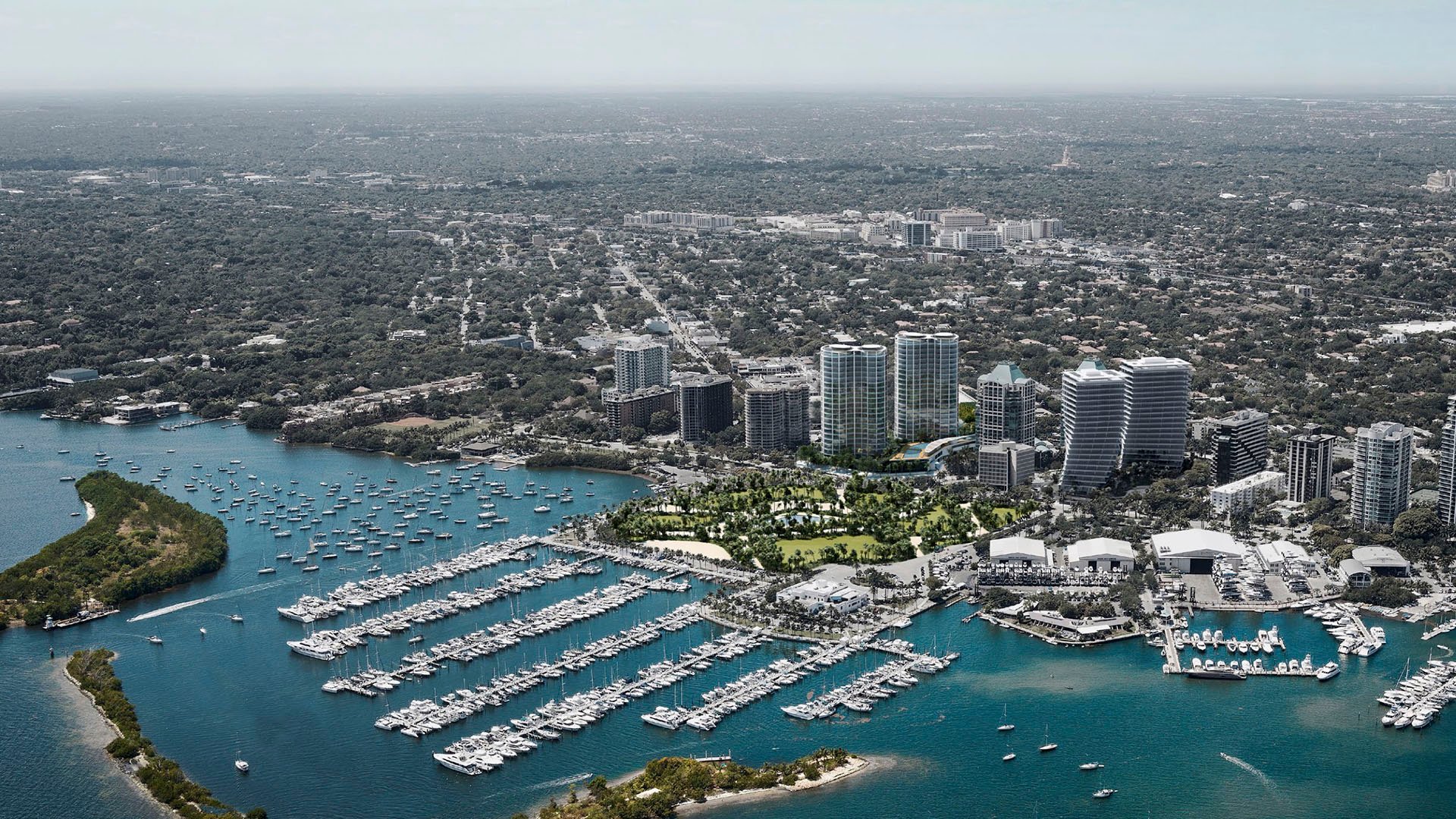
For families shopping South Florida at the upper end of the market, Coconut Grove holds a distinct appeal. It is not simply beautiful, leafy, and historic. It is one of the few Miami neighborhoods where a family can realistically imagine handling parts of daily life on foot without pretending the car has disappeared from the equation.
That distinction matters. Coconut Grove is walkable by Miami standards, but not car-free for most families. In practical terms, that means certain addresses make coffee runs, park outings, school drop-offs, and dinner reservations easier to manage than elsewhere in the region. It does not mean every household can replace a second car, or that every route will feel equally comfortable with a stroller, scooter, or young child in tow.
For many buyers, the sweet spot is the central area around Commodore Plaza, Main Highway, and McFarlane Road. This is the part of the Grove where errands stack more efficiently and daily life can feel genuinely local. Homes farther out, especially on quieter residential blocks, often offer more privacy and serenity, but the trade-off is straightforward: more driving for basics, more coordination for school, and less spontaneous mobility.
That dynamic helps explain why proximity to the most walkable core tends to command a premium. Families are often paying not just for architecture or lot size, but for a less fragmented day.
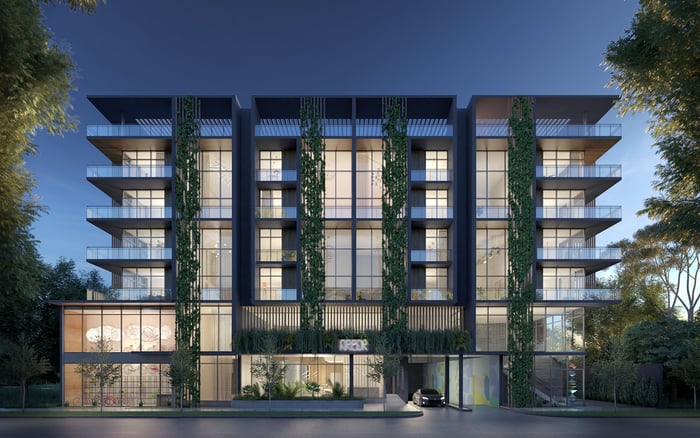
In that context, luxury buyers comparing options such as Four Seasons Residences Coconut Grove, Arbor Coconut Grove, The Well Coconut Grove, Opus Coconut Grove, or The Lincoln Coconut Grove are often evaluating something more nuanced than finishes and amenities. They are buying into a pattern of life.
A headline walkability score can be useful, but families should interpret that kind of label carefully. Walkability for adults running solo errands is not the same as walkability for parents managing school bags, heat, rain, crossing timings, and children with limited patience.
The first distinction is traffic stress. A route may be technically short while still feeling uncomfortable at certain crossings or during busier periods. For parents, perceived safety often matters more than theoretical distance. A pleasant five-minute walk can quickly become a reluctant drive if the route includes hurried turning traffic or repeated street crossings that do not feel intuitive with children.
The second distinction is climate. From June through September in particular, South Florida heat and humidity reshape the practical map of the neighborhood. What feels charming in January can feel draining by midday in August. Families with younger children quickly learn to think in shaded blocks, early-morning timing, and whether a destination justifies the heat exposure.
The third distinction is cargo. School life comes with backpacks, sports gear, art projects, snacks, and occasional sibling negotiations. A neighborhood can be functionally walkable for one adult and only selectively walkable for a household.
This is why Coconut Grove tends to work best for families who want optionality rather than ideology. You may walk often, but you will still drive often enough.
The Grove’s strongest family advantage may be that its quality of life is not confined to retail streets. Outdoor access is woven into the neighborhood, and that changes the rhythm of weekends and after-school hours.
Peacock Park remains one of the essential family anchors. It is more than a scenic green space. For local households, it functions as part playground, part social commons, and part pressure valve.
That is a meaningful distinction in luxury real estate. A beautiful residence matters, but so does the question of where children can reliably expend energy, where caregivers can reset the day, and where family time does not require a major production. In Coconut Grove, waterfront access and parks support that ease unusually well.
Programming also matters. Recreation schedules, resident-oriented activities, and local park services add a layer of habitability that buyers often undervalue on a first tour and fully appreciate after move-in. The Grove’s family lifestyle is not only picturesque. It is functional.
The broader waterfront network also contributes to recreation and neighborhood appeal, even if it does not create a fully protected family cycling grid for school use.
School planning is where Coconut Grove becomes less romantic and more exact.
For families considering public options, Coconut Grove Elementary is a central reference point and sits on Main Highway. If you live relatively close, walking can be realistic and genuinely valuable. That can simplify mornings, reduce dependence on tightly timed car trips, and create a more neighborhood-based routine.
But the benefits are highly localized. The farther a household sits from that core, the more likely school logistics revert to driving. This is especially true for families balancing multiple children, varied dismissal times, after-school activities, or destinations outside the Grove.
Private-school households face a similar equation. Nearby options are part of the area’s appeal, yet school transportation in practice still leans heavily on the car for many families. Coconut Grove may soften the burden of daily movement, but it rarely erases it.
The most sophisticated buyers tend to reverse-engineer their search from weekday choreography. Instead of asking whether Coconut Grove is walkable in the abstract, they ask the better question: can this specific address make our actual daily sequence smoother?
In the luxury segment, location precision often matters more than broad neighborhood branding.
Coconut Grove does have transit service, and for certain commuting patterns it can be useful. But family logistics are rarely built around a single linear trip. They are layered: school, activities, grocery stops, pediatric appointments, waterfront recreation, social plans, and work obligations. Public transit coverage does not always translate into time-efficient family mobility.
The same logic applies to biking. Infrastructure is improving in parts of greater Miami, but the Grove still does not offer the kind of comprehensively protected, family-safe school cycling network seen in cities where biking is an ordinary default for children. Parents who cycle confidently may still find that the neighborhood’s infrastructure requires selectivity.
That does not diminish Coconut Grove’s appeal. It clarifies it. This is a neighborhood where many families can reduce car dependence, especially for leisure and select errands, while still keeping the car central to the weekly operating system.
For a family purchase in Coconut Grove, the most important luxury feature may be friction reduction. Before focusing on interiors, ask whether the home improves the daily sequence.
Look first at your walk radius to school, parks, and the central village core. Then test the route at realistic times, including warmer parts of the day. Notice crossings, shade, stroller practicality, and how many separate trips still require a car.
Next, decide what kind of family life you actually want. If your goal is a quieter estate feel with occasional village access, outer blocks may suit you beautifully. If your goal is a more spontaneous, semi-walkable household rhythm, proximity to the core usually matters more than buyers expect.
Finally, recognize that Coconut Grove’s value proposition is subtle. It offers a refined version of family convenience, not a fully urban, car-free model. For many affluent households, that balance is precisely the attraction: elegance, greenery, waterfront recreation, and enough walkability to make life feel lighter.
Is Coconut Grove truly walkable for families? Yes. It is one of the more walkable family-oriented neighborhoods in Miami, but most households will still use a car regularly.
Which part of Coconut Grove feels most convenient on foot? The central area around Commodore Plaza, Main Highway, and McFarlane Road is generally the easiest for errands and day-to-day family routines.
Can children walk to school in Coconut Grove? Some can, especially if the home is close to Coconut Grove Elementary. In practice, it remains highly address-specific.
Are parks a major part of the neighborhood’s family appeal? Yes. Parks and waterfront access help turn the Grove into a lifestyle neighborhood rather than just a residential one.
Does walkability for adults translate directly to walkability with kids? Not always. Heat, crossings, stroller use, timing, and children’s ages can change what feels easy on foot.
Is Coconut Grove a good biking neighborhood for families? It can work for recreation and selective routes, but it is not a complete family-safe cycling environment for everyday school logistics.
Can families rely on transit instead of driving? Transit can help for certain trips, but it usually does not replace the car for a full family schedule.
Do homes near the village core have a practical advantage? Yes. Many buyers value easier access to parks, dining, and school routines as much as the residence itself.
Is Coconut Grove better for public-school or private-school families? It can suit both. The key is mapping actual routes and timing rather than assuming convenience across the whole neighborhood.
What is the best way to shortlist comparable options for touring? Start with location fit, delivery status, and daily lifestyle priorities, then compare stacks and elevations to validate views and privacy.
For a confidential assessment and a building-by-building shortlist, connect with MILLION Luxury.
If branded residences are on your mind — as a home or as an allocation — we would be glad to share what we are seeing, privately.
Begin a quiet conversation