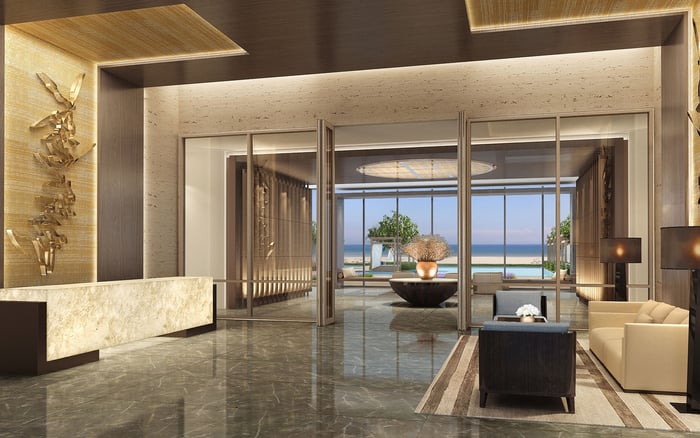
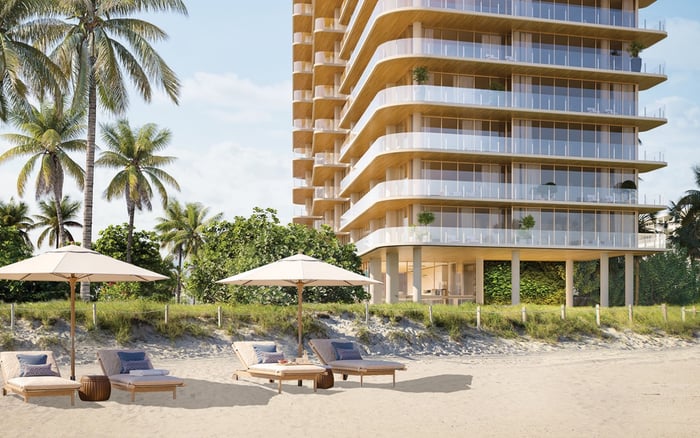
A practical comparison of Fendi Château Residences Surfside and The Estates at Acqualina Sunny Isles through the lens that matters most to ultra-luxury buyers: how each oceanfront address feels in daily use.
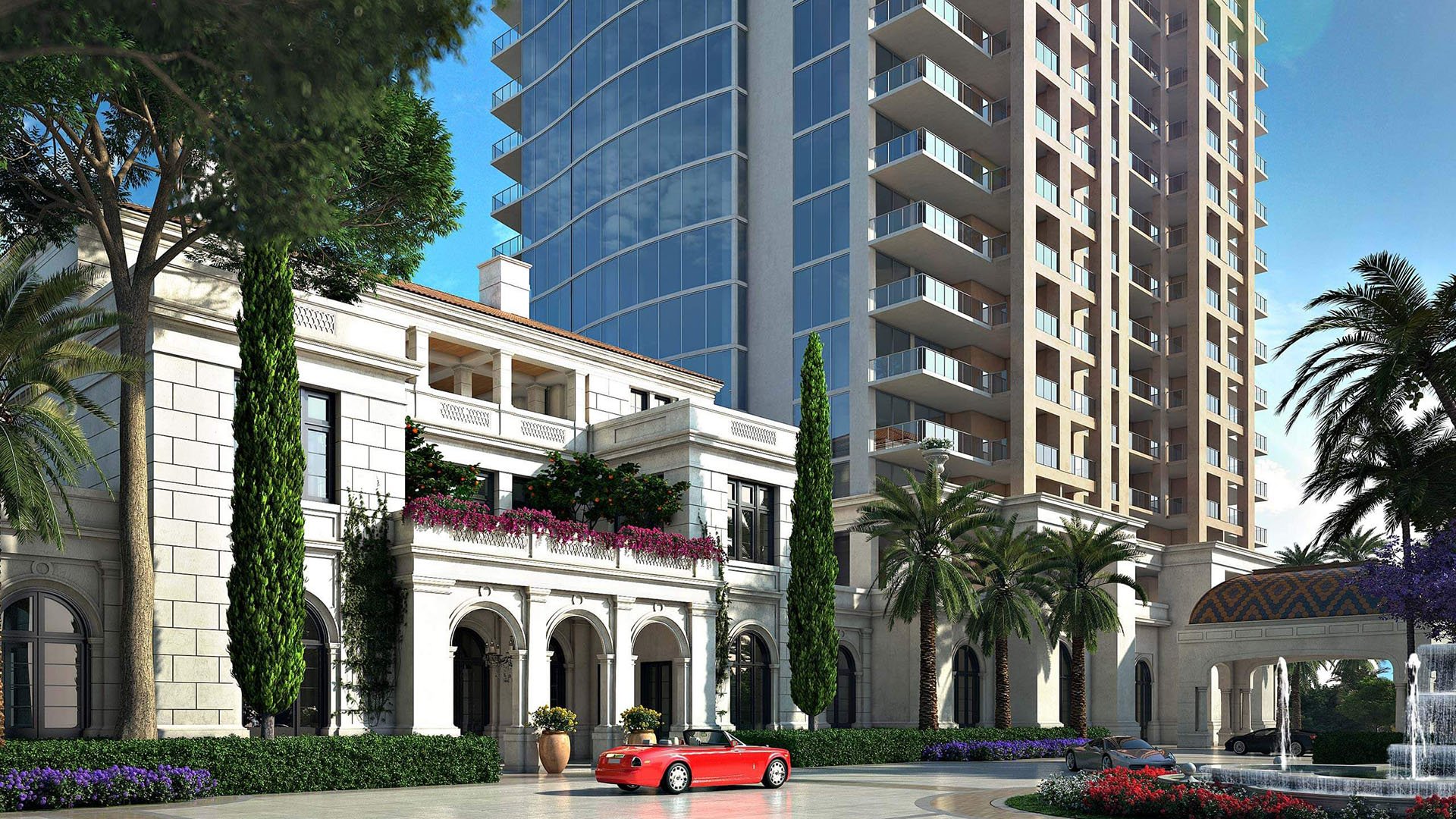
For the buyer weighing Fendi Château Residences Surfside against The Estates at Acqualina Sunny Isles, the obvious similarities are easy to see. Both are ultra-luxury condominium options in South Florida’s coastal market. Both speak to buyers who expect refined service, privacy, coastal access, and a highly finished residential environment. Yet the more useful question is not which address has the more impressive vocabulary of luxury. It is which one feels more natural at 8 a.m. on a Tuesday, during a quiet family weekend, or after a long-haul arrival when the household wants service without friction.
That is where the distinction sharpens. Fendi Château Residences Surfside reads as the more intimate, boutique, design-driven choice. The Estates at Acqualina Sunny Isles reads as the larger, resort-style private-estate environment. Neither model is inherently superior. They serve different instincts. One favors discretion and calm. The other favors a more expansive service setting with a hotel-style sensibility.
For South Florida’s ultra-premium buyer, that difference matters more than a checklist. Amenity counts can impress during a tour, but daily rhythm determines whether a residence becomes a sanctuary.
Fendi Château Residences Surfside is closely tied to the quieter residential character of Surfside and the Surfside-to-Bal Harbour corridor. This is the appeal for buyers who want coastal living without the feeling of entering a large hospitality machine every time they come home. The building’s identity is more private residence than social resort, with a design-forward personality that suits owners who value restraint.
The word boutique matters here. It suggests a residential experience that feels composed, quiet, and less publicly activated. Buyers drawn to this model often care about how many moments of the day can remain uninterrupted. They may want service, but they do not necessarily want frequent staff interaction or a constant sense of movement around them.
In practical terms, the Surfside setting supports a calmer pattern. The appeal is not isolation. It is proximity to the refined Surfside and Bal Harbour lifestyle while preserving a sense of residential remove. For an owner who divides time between several homes, or for a family seeking a discreet coastal base, that quieter tone can be the deciding factor.
The Estates at Acqualina is positioned very differently. Its Sunny Isles Beach setting supports a more expansive luxury-resort residential model, and its service identity is framed around a hotel-style experience rather than a low-touch condominium approach. For the buyer who wants a robust service ecosystem, that is the point.
This is where The Estates at Acqualina Sunny Isles separates itself. It is designed for the owner who wants the convenience and assurance of a high-service, amenity-rich residential campus. The mood is less about retreating into a small private envelope and more about living within a broader private-estate environment where the building experience itself is part of the lifestyle.
For some households, that degree of service is essential. Multi-generational families, frequent entertainers, and owners who want a fuller resort cadence may find this model more useful. The activity level can feel energizing rather than intrusive when it matches the way the household lives. For Sunny Isles buyers who want a polished, service-forward coastal address, the larger format can be a strength.
Service is often discussed as if more is always better. In practice, service has a texture. Some owners prefer highly visible, anticipatory attention. Others prefer discretion, minimal interruption, and a sense that the residence operates quietly in the background.
Fendi Château generally aligns better with buyers prioritizing discretion and a quieter building experience. That does not mean the service is unimportant. It means the value proposition leans toward intimacy and privacy. The ideal owner may want recognition without ceremony, assistance without performance, and a building rhythm that does not feel constantly activated.
The Estates generally aligns better with buyers prioritizing a high-service, amenity-rich residential campus. Its hotel-style positioning appeals to owners who want the property to carry more of the operational burden of daily life. In that model, staff interaction is not a compromise. It is part of the luxury.
The right choice depends on temperament. A buyer who prizes invisibility may find a resort cadence too present. A buyer who expects extensive service touchpoints may find a quieter boutique environment less complete.
Privacy in this tier is often reduced to access control, but the lived experience is broader. It includes elevator encounters, arrival sequences, amenity use, staff visibility, guest traffic, and how often a resident feels observed in shared spaces. The distinction here is not about specific security procedures. It is about atmosphere.
At Fendi Château, privacy is tied to scale and tone. The building reads as a private boutique residence, which supports the buyer who wants a more subdued environment. The feeling is less about maximizing the number of shared experiences and more about preserving the quiet pleasure of coming and going with ease.
At The Estates, privacy is expressed within a larger private-estate framework. The setting can still feel exclusive, but the experience is likely to be more layered because the residential model is broader and more service-intensive. For the right buyer, that creates comfort. For another, it may feel more active than desired.
This is why serious buyers should tour with lifestyle questions, not just visual ones. Where will you spend time every day? How often will you use shared spaces? Do you want the property to feel silent, social, or fully serviced?
Fendi Château is the stronger fit for the owner who wants Surfside living with a quieter, design-led sensibility. The ideal profile may include a second-home buyer, a privacy-first household, or someone who wants proximity to Bal Harbour without adopting a resort-campus rhythm.
The Estates at Acqualina is the stronger fit for the owner who wants the property itself to function as a major lifestyle platform. The appeal is not only the residence, but the feeling of being in a full-service private-estate environment. Buyers who value service density, activity, and resort-style convenience may find this more aligned with daily expectations.
The practical distinction is simple: Fendi Château reads more like a private boutique residence, while The Estates reads more like a full-service luxury resort environment. That is the comparison that matters.
In the upper tier of South Florida real estate, similarity can be misleading. Two properties may both be rare, elegant, and highly serviced, yet deliver completely different daily lives. The sophisticated buyer should resist the urge to choose by spectacle alone.
Instead, focus on rhythm. If your luxury is silence, restraint, and a sense of personal retreat, Surfside will likely feel more natural. If your luxury is abundant service, convenience, and a residential campus that behaves with hotel-style polish, Sunny Isles Beach may be the better match.
The best decision is not a universal winner. It is the residence whose service style, privacy profile, and activity level match the way you actually live.
Is Fendi Château more private than The Estates at Acqualina? Fendi Château generally aligns better with buyers seeking discretion and a quieter boutique building experience.
Is The Estates at Acqualina more service-oriented? The Estates is positioned around a hotel-style service model and a larger resort-style residential campus.
Which property is better for a quieter lifestyle? Fendi Château is the more natural fit for buyers prioritizing a calmer residential rhythm in Surfside.
Which property is better for an amenity-rich lifestyle? The Estates at Acqualina is better suited to buyers who want a high-service, amenity-rich private-estate environment.
Are both properties in South Florida? Yes. Fendi Château Residences is associated with Surfside, while The Estates at Acqualina is associated with Sunny Isles Beach.
Is this a simple winner-versus-loser comparison? No. The better framing is boutique discretion versus resort-campus service, depending on the buyer’s lifestyle.
Why does daily-use experience matter so much? Because amenity lists do not reveal how a building feels during arrivals, staff interactions, quiet mornings, and family routines.
Who should consider Fendi Château Residences Surfside? Buyers who value design, discretion, Surfside calm, and a more intimate residential atmosphere should consider it closely.
Who should consider The Estates at Acqualina Sunny Isles? Buyers who want resort-style service, a broader luxury campus, and a highly activated residential environment may prefer it.
Should pricing or resale drive the decision? Those factors require current, property-specific guidance, but the lifestyle fit should still be central to the decision.
If you'd like a private walkthrough and a curated shortlist, connect with MILLION.
If branded residences are on your mind — as a home or as an allocation — we would be glad to share what we are seeing, privately.
Begin a quiet conversation