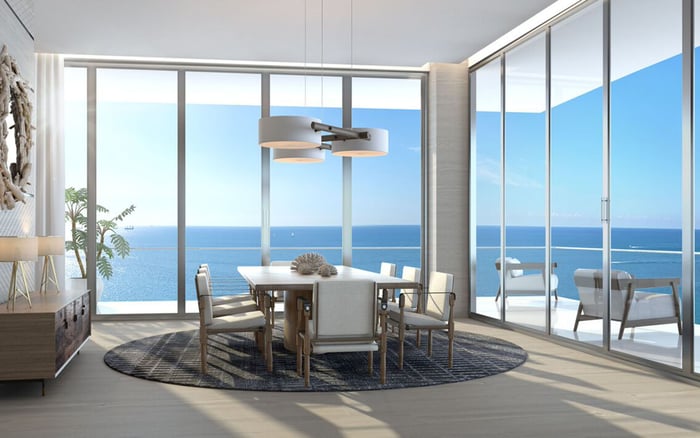
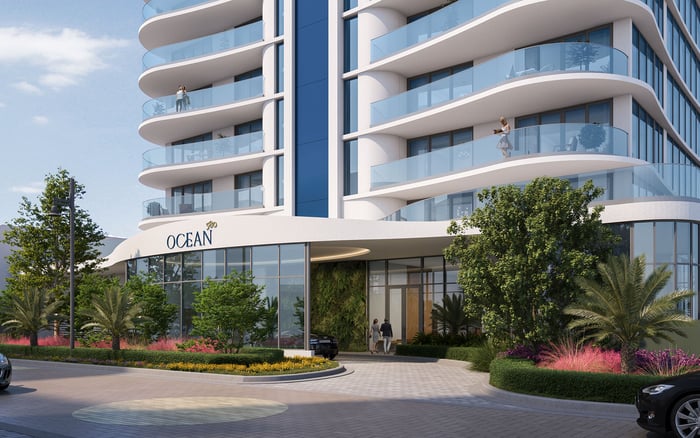
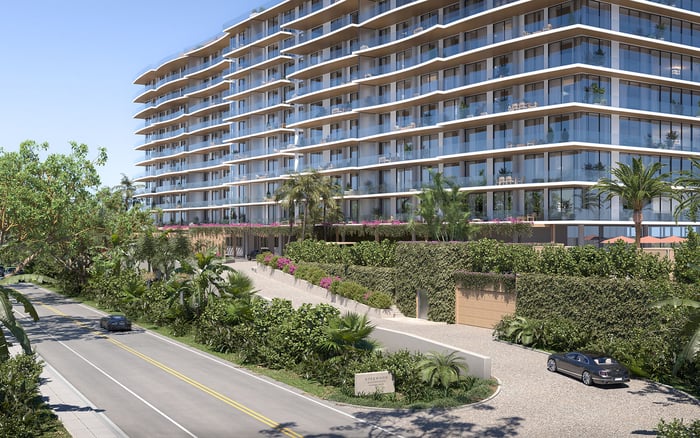
A discreet buyer’s guide to evaluating view-corridor risk before purchasing luxury real estate in Miami Beach, from neighboring parcels to floor height, resale, and contract diligence.
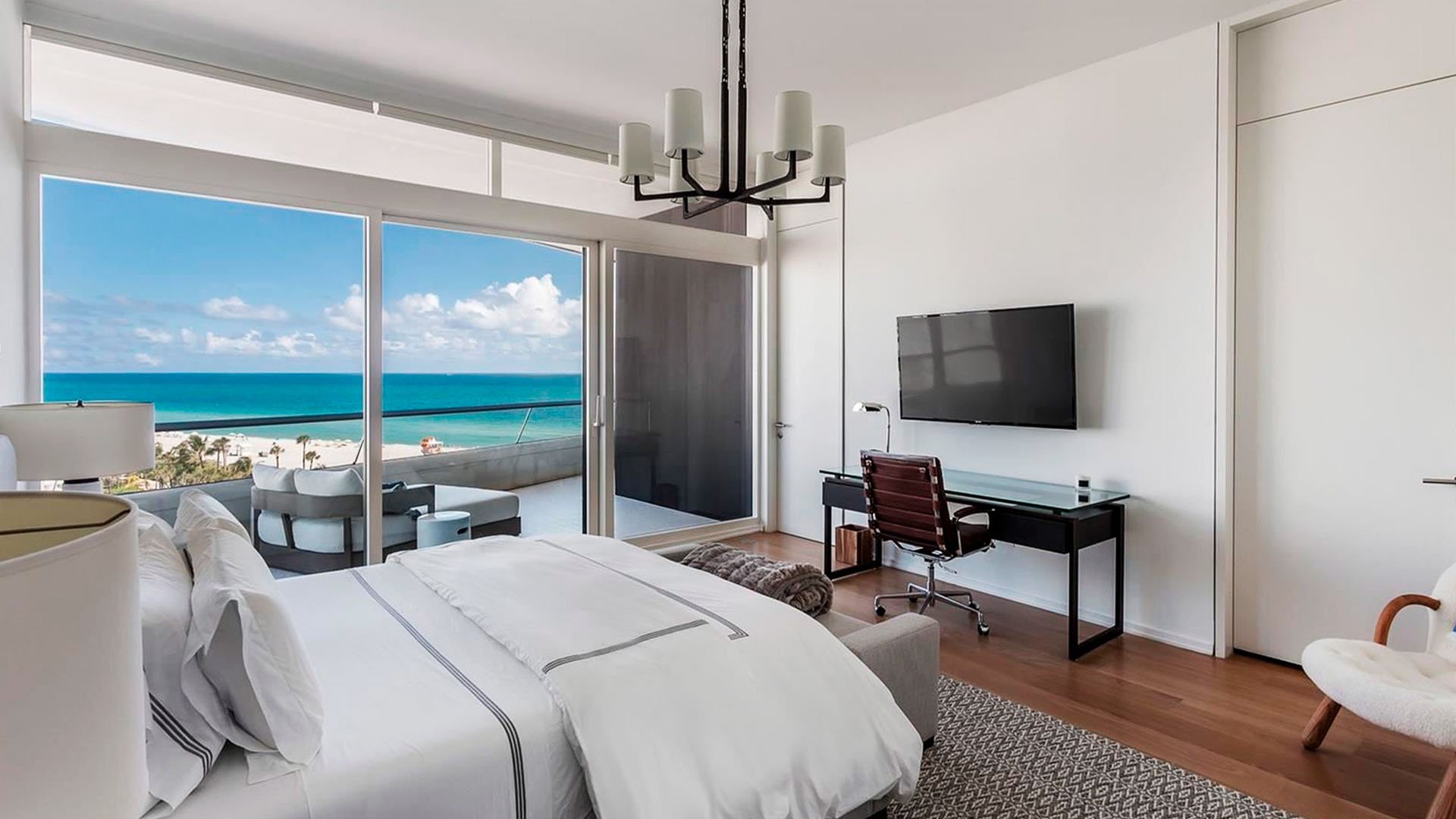
In Miami Beach luxury real estate, the view often carries emotional weight before it carries financial weight. A buyer steps onto a terrace, sees the Atlantic, Biscayne Bay, a garden canopy, or the South Beach skyline, and the residence suddenly feels complete. Yet the more sophisticated question is not simply what the view looks like today. It is what could happen over time to the land, buildings, streets, and open spaces between the residence and that view.
View-corridor risk is the possibility that an outlook may be altered by future construction, redevelopment, renovation, landscape growth, infrastructure work, or changes in the surrounding built environment. It is not limited to towers. A low-rise structure, a rooftop addition, a new mechanical screen, a mature tree canopy, or a neighboring building that repositions its mass can change the daily experience of a home.
For a Miami Beach buyer, this is where lifestyle and diligence meet. Oceanfront, Waterview, High-floors, New-construction, and Resale considerations should be reviewed together, not separately. The aim is not to remove every uncertainty. It is to understand which risks are remote, which are plausible, and which should influence price, floor selection, contract terms, or even the decision to proceed.
The most important question is direct: what could legally or practically be built between this residence and the view? A clear outlook across a low building, parking area, vacant parcel, aging structure, or underused site deserves close attention. If a neighboring parcel has redevelopment potential, the current view may be more fragile than it appears.
Buyers should ask for a parcel-by-parcel review of the properties in the sightline. That review should consider current use, surrounding building heights, lot depth, frontage, setbacks, and whether the parcel appears likely to be repositioned. The objective is not to predict a specific project. It is to identify where the exposure sits.
This is especially important when comparing boutique beachfront residences with larger resort-style settings. A home at 57 Ocean Miami Beach, for example, may invite a different view conversation than a residence overlooking interior water, a neighboring roofline, or a more urban edge. Each setting has its own form of risk.
Not all views behave the same way. An ocean view may feel intuitive, but its quality can depend on elevation, angle, neighboring structures, dunes, palms, beach access points, and the depth of the building line. A bay view may be wide and cinematic, yet sensitive to construction across the water or along an adjacent waterfront parcel. A skyline view may improve as the city matures, or it may narrow as new buildings appear.
Garden and park views require their own discipline. Buyers often assume greenery is permanent because it feels established. In reality, vegetation changes, maintenance standards evolve, and nearby improvements may alter the foreground. A lower floor with a lush outlook may offer privacy and atmosphere, while a higher floor may offer more durable horizon lines. Neither is automatically better.
The most refined acquisitions begin by naming the view category. Is the premium being paid for an unobstructed ocean horizon, a lateral water angle, a protected garden frame, a skyline composition, or simply natural light? Once the view is defined, the buyer can test the risk with greater precision.
Higher floors often reduce exposure to immediate obstructions, but they do not eliminate view-corridor risk. A high residence may clear neighboring rooflines while remaining vulnerable to taller future development in the distance. A lower residence may have a more intimate relationship with landscape, pool decks, and architectural detail, yet carry greater risk if the foreground changes.
The right question is not, “Is this floor high enough?” It is, “High enough relative to what?” Buyers should study the sightline from the exact residence, not only from a model residence, sales gallery, drone image, or amenity deck. The angle from the primary bedroom may differ materially from the angle from the living room. A terrace corner may hold the best view while a dining area looks directly toward a neighboring facade.
In trophy projects such as The Perigon Miami Beach, buyers often think carefully about orientation, stack, and height because the residence is not only a floor plan. It is a composition of light, privacy, and outlook. That same discipline should apply at every price tier in the luxury segment.
A buyer’s team should not stop at the building being purchased. The view may depend on properties the buyer will never control. Ask about adjacent lots, nearby assemblages, older buildings, service areas, rooftop equipment, hotel or condominium repositioning, and public-facing improvements. Even where no specific proposal is known, the character of neighboring parcels can reveal whether a view feels settled or transitional.
The most delicate sightlines are often diagonal. A residence may appear open when viewed straight ahead, while the premium view actually depends on an angled corridor between two buildings. These diagonal corridors can be surprisingly valuable and surprisingly vulnerable. They should be walked, photographed, and reviewed from multiple rooms and at different times of day.
For buyers considering branded or hospitality-influenced residences such as The Ritz-Carlton Residences® Miami Beach, the same rule applies. Service, design, and amenities may define the ownership experience, but the view remains a separate asset that deserves its own diligence file.
Luxury marketing can be elegant, evocative, and highly polished. It can also compress complexity. Buyers should ask which images are renderings, which are existing photographs, what elevation they represent, and whether any outlook shown is from the exact residence or from another vantage point. The language matters. “Ocean view,” “partial ocean view,” “water view,” and “skyline view” can describe very different experiences.
For pre-construction purchases, ask how the developer represents views in the contract documents, if at all. For existing residences, ask the seller’s side whether any known neighboring work, association project, or visible change is pending. The answer may be narrow, but the question is still valuable because it frames the view as a material part of the decision.
At a coastal property such as Shore Club Private Collections Miami Beach, buyers may be drawn to the romance of place. The stronger acquisition process pairs that romance with verification, including sightline review, plan review, and a careful understanding of what is actually being purchased.
A view premium should be valued with nuance. If two residences have similar interiors but one offers a stronger, more durable corridor, that distinction may justify a meaningful preference. If a view depends on an uncertain neighboring condition, the buyer may still proceed, but the risk should be reflected in negotiation strategy.
This is particularly relevant for resale planning. Future buyers will ask many of the same questions. They may be more conservative if a view feels exposed or if the outlook has changed since the prior purchase. A residence with a slightly less dramatic but more reliable view may, in some cases, feel calmer to the next buyer than a more spectacular view with obvious vulnerability.
Before committing, ask for the exact residence sightlines from the living room, primary suite, kitchen, terrace, and any secondary bedrooms that matter to daily life. Ask what lies within those corridors today. Ask what neighboring parcels could become. Ask whether the building’s own common-area improvements, landscaping, or mechanical systems could alter the outlook. Ask how much of the purchase decision depends on a single angle.
Then rank the view as essential, important, or incidental. If it is essential, the diligence should be deeper and the tolerance for uncertainty lower. If it is important but not central, risk may be acceptable with the right pricing. If it is incidental, the buyer can focus more heavily on architecture, services, privacy, and location.
The most elegant Miami Beach acquisitions are not made by ignoring uncertainty. They are made by understanding it early, calmly, and with the right questions.
What is view-corridor risk in Miami Beach real estate? It is the risk that a residence’s current view may change because of nearby construction, redevelopment, landscaping, or other physical changes.
Is an ocean view always safer than a city view? Not automatically. Ocean, bay, garden, and skyline views each depend on elevation, angle, neighboring parcels, and foreground conditions.
Should I worry more on lower floors? Lower floors can be more exposed to foreground changes, but higher floors can still face risk from taller development farther away.
What should I ask about neighboring parcels? Ask what currently occupies them, whether they appear underused, and whether future redevelopment could affect the residence’s sightline.
Are renderings reliable for judging views? Renderings can be useful, but buyers should clarify the vantage point, elevation, and whether the view represents the exact residence.
Can a partial water view still be valuable? Yes. A partial view can be highly desirable if it is well framed, private, and priced appropriately for its durability.
How does view risk affect resale? Future buyers may discount a residence if the view feels vulnerable or has changed materially since the prior purchase.
Should view language be reviewed in the contract? Yes. Buyers should understand whether and how any view representation is addressed in the purchase documents.
Can landscaping affect a luxury view? Yes. Palms, canopy growth, landscape redesign, and maintenance changes can all alter privacy, light, and foreground outlook.
What is the best first step for a serious buyer? Walk the exact residence, study each sightline, and review nearby parcels before treating the view premium as secure.
For a tailored shortlist and next-step guidance, connect with MILLION.
If branded residences are on your mind — as a home or as an allocation — we would be glad to share what we are seeing, privately.
Begin a quiet conversation