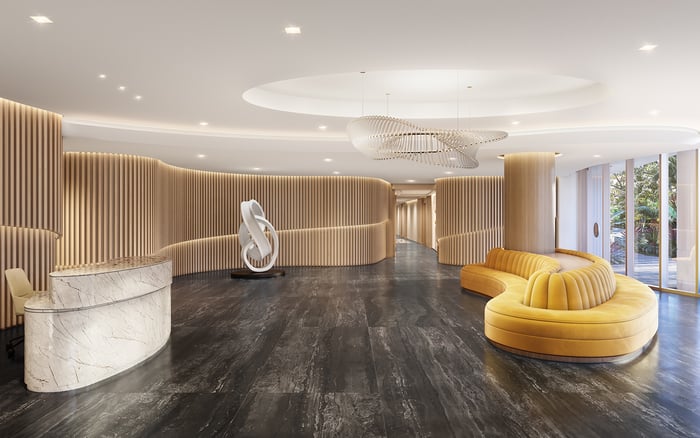
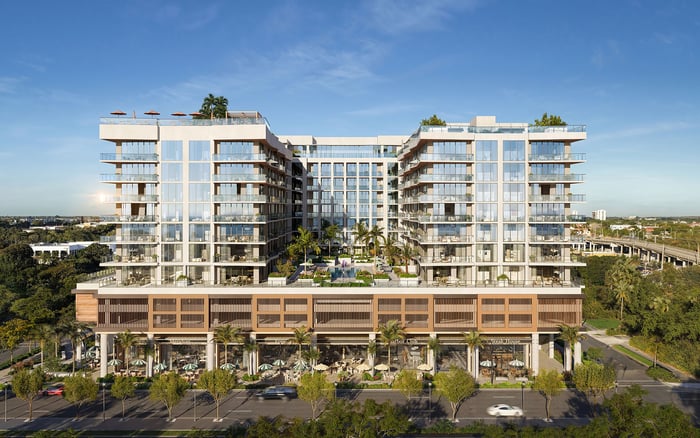
A discerning buyer's framework for testing whether full-floor living at The Berkeley Palm Beach delivers meaningful privacy, control, and long-term value.

For buyers accustomed to estates, the appeal of The Berkeley Palm Beach is clear. Its full-floor concept presents a privacy-focused alternative to the conventional condominium plan, in which several residences share a corridor.
One home per level can reduce routine encounters, hallway traffic, and activity immediately outside the front door. Yet “full-floor” describes a configuration, not a comprehensive privacy guarantee. The essential question is whether the architecture, legal documents, and building operations translate exclusivity into a consistently discreet experience.
That distinction is particularly important in Palm Beach and West Palm Beach, where privacy can command a meaningful premium. It also places the subject at the intersection of Buyer's Guides, Design & Architecture, and Pricing & Trends.
A full-floor arrangement generally places one residence on each level. A private elevator vestibule may create a graceful threshold between the home and the building's general circulation, delivering a sense of arrival closer to that of a private house than a typical condominium corridor.
That distinction has daily value. There are no same-floor neighbors passing the residence, receiving visitors across the hall, or generating regular corridor activity. In a boutique building, this reduced exposure may be one of its most persuasive luxuries.
Still, private elevator access does not eliminate reliance on shared elevators, service areas, mechanical systems, staff, or common spaces. Full-floor ownership can approximate the seclusion of a single-family home without conferring the same control over the wider property.
Buyers should distinguish exclusive use from legal ownership. An elevator vestibule may feel like part of the residence while remaining a common element, limited common element, or an area subject to building access. The same consideration applies to service corridors, elevator shafts, and other infrastructure adjoining the home.
Counsel should review the condominium documents to determine the precise treatment of these spaces and the association's access rights. That review should also encompass maintenance entry, staff access, guests, deliveries, contractors, security systems, and shared areas. Privacy is strongest when architectural separation and enforceable rules reinforce one another.
The absence of a neighbor across the hall does not guarantee silence. Acoustic performance depends on floor slabs, walls, entry doors, glazing, plumbing lines, elevator shafts, and mechanical equipment. Buyers should inspect plans and technical materials rather than treating one residence per floor as a substitute for sound isolation.
Pay particular attention to rooms adjoining vertical infrastructure. Ask how elevator and mechanical noise are mitigated, how service activity reaches the floor, and whether doors and penetrations preserve the intended separation. A private vestibule has limited value if operational noise regularly enters the residence.
Staffing and access-control procedures can materially define the experience. Buyers should understand who can authorize elevator access, how visitors are verified, where deliveries are held, how contractors are supervised, and under what circumstances personnel may enter residential levels.
The most revealing test is a sequence of ordinary scenarios: a guest arriving, a food delivery, scheduled maintenance, an emergency inspection, and a household contractor entering while the owner is away. Each shows whether the building's systems preserve discretion or create avoidable contact.
Privacy-minded purchasers considering the broader local market may also review Forté on Flagler West Palm Beach and South Flagler House West Palm Beach. The purpose is not to assume equivalent configurations, but to compare how distinct residential propositions address arrival, circulation, and service.
A full-floor premium is most defensible when it secures demonstrable benefits: controlled access, fewer neighbor interactions, effective sound isolation, and limited service intrusion. Marketing language alone cannot establish those advantages.
Request architectural plans, the relevant condominium provisions, and a clear account of operating procedures. Then assess how each layer functions as part of the whole. If the vestibule is exclusive but frequently accessed by staff, or the floor is private but exposed to elevator noise, the premium may be buying symbolism rather than complete seclusion.
The comparison set can extend to The Ritz-Carlton Residences® West Palm Beach, particularly for buyers weighing different approaches to residential service. The relevant comparison is experiential: how many points of contact occur between vehicle arrival and the front door, and how controllable are they?
Before committing, privacy buyers should map the entire journey through the property. Review the garage or arrival sequence, elevator controls, residential vestibule, service route, refuse handling, mechanical adjacencies, and staff protocols. Confirm which protections are physical, which are procedural, and which are legally enforceable.
The final decision should reflect the buyer's actual standard of privacy. Someone seeking fewer incidental encounters may find the full-floor format compelling. Someone expecting estate-level control should recognize that even an exceptionally private condominium remains part of a managed, shared building.
What does full-floor living generally mean? It generally means that one residence occupies each level, rather than several homes sharing the same corridor.
Does a full-floor residence eliminate neighbor encounters? It can reduce encounters and activity immediately outside the home, but shared building spaces still create points of contact.
Is a private elevator vestibule part of the residence? Not necessarily. The condominium documents should establish whether it is owned, reserved for exclusive use, or treated as a common element.
Does private elevator access mean the elevator itself is private? No. A residence may have a private arrival vestibule while still relying on shared elevator equipment and building controls.
What acoustic details deserve scrutiny? Review slabs, walls, doors, glazing, plumbing, elevator shafts, and mechanical equipment for potential sound transmission.
Which operating procedures affect privacy most? Guest verification, delivery handling, contractor supervision, maintenance entry, staff access, and security protocols are central.
Can full-floor living match a single-family estate? It can approximate an estate's seclusion within the residence, but it does not provide equivalent control over the wider property.
What should legal counsel review? Counsel should examine access rights, common-element definitions, maintenance provisions, security rules, and restrictions governing shared spaces.
How should buyers assess the premium? Tie the premium to observable benefits, including fewer interactions, controlled access, sound isolation, and limited service intrusion.
Is the “full-floor” label enough for a decision? No. Architectural plans, legal rights, and day-to-day operating procedures should all substantiate the privacy claim.
When you're ready to tour or underwrite the options, connect with MILLION.
If branded residences are on your mind — as a home or as an allocation — we would be glad to share what we are seeing, privately.
Begin a quiet conversation