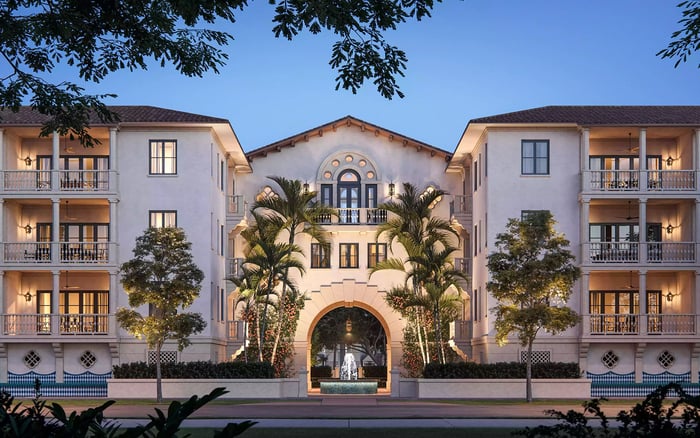
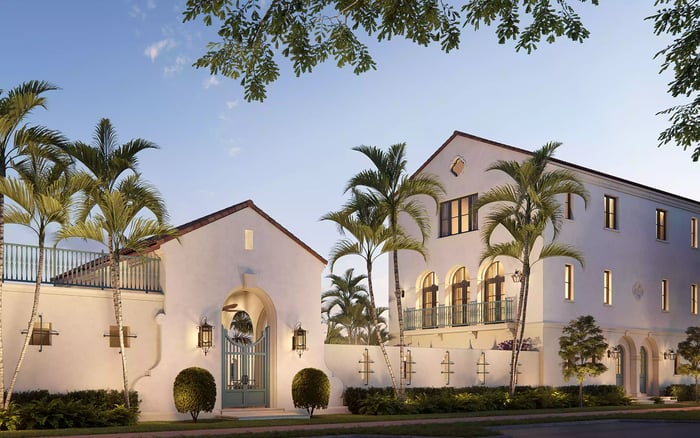
An editorial look at how Coral Gables luxury family rooms are becoming more layered, flexible, acoustically refined, and suited to multigenerational living in 2026.
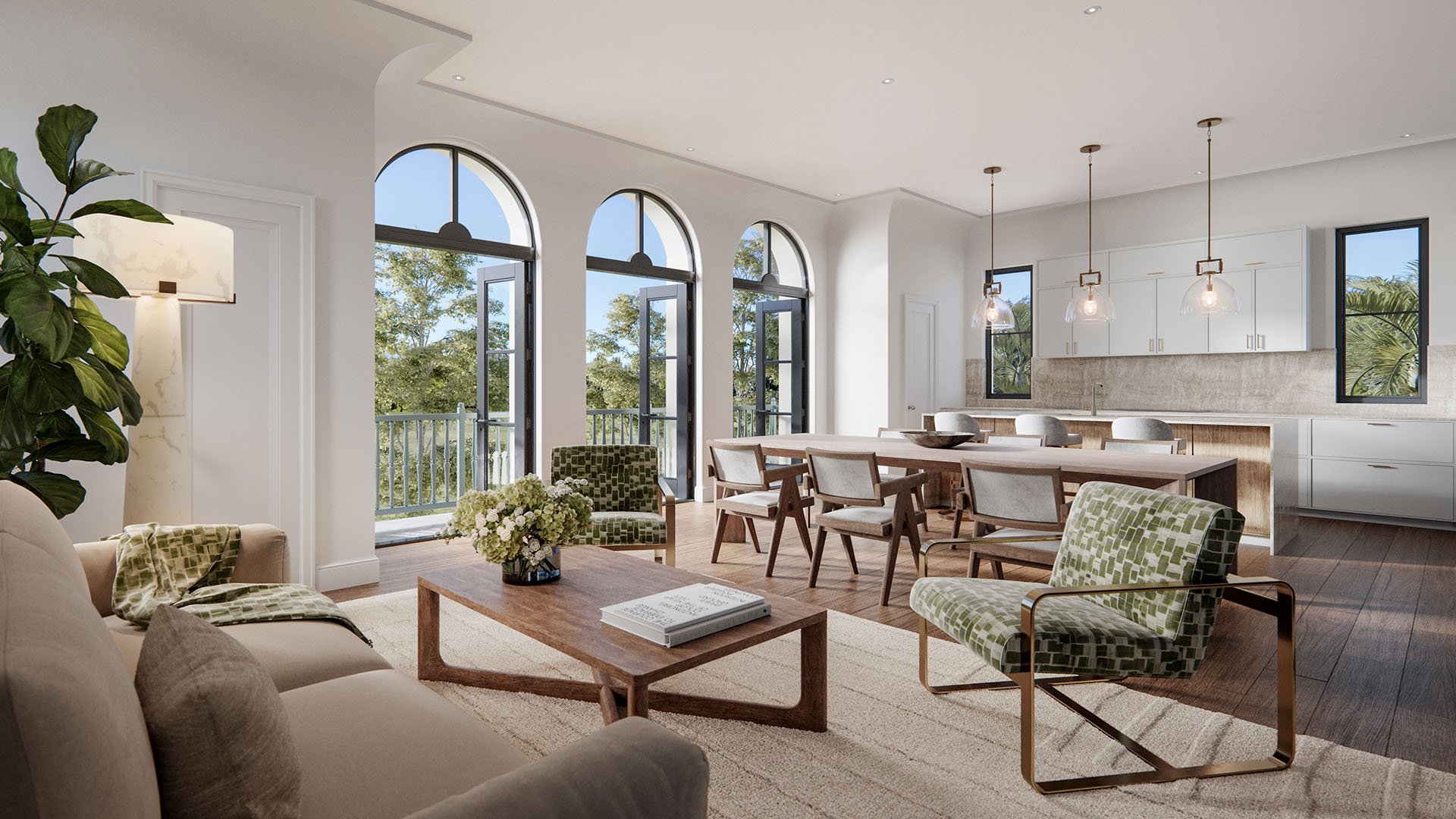
For 2026, the family room in Coral Gables luxury home design is moving beyond the familiar formula of sofa, screen, and casual coffee table. The new priority is a room that can change tempo without losing composure. It must support homework and hosting, grandparents and guests, quiet streaming and spirited conversation, all while remaining visually aligned with the home’s architecture.
That evolution matters because the family room is now the space where private life is most visible. Formal living rooms can remain pristine. Dining rooms can be reserved for occasion. The family room carries the daily rhythm of the household. In the luxury tier, that does not mean accepting clutter or compromise. It means designing for everyday use with the same rigor once reserved for kitchens, primary suites, and outdoor entertaining areas.
In Coral Gables, where buyers often value proportion, privacy, and a graceful relationship between indoors and landscape, the strongest family room configurations feel relaxed without becoming casual in the wrong way. They are warm, practical, and highly edited.
The most important shift is the move from a single open lounge to a sequence of connected zones. Rather than one oversized sitting area, 2026 plans increasingly favor a central family room supported by smaller adjacencies: a media alcove, a games table, a reading corner, a homework counter, or a discreet beverage station.
This approach gives the household options. Children can occupy one side of the room while adults converse at the other. A guest can take a call without retreating upstairs. A weekend movie can feel immersive without requiring a separate theater that sits unused most of the week.
The best layouts avoid making these zones feel like fragments. Ceiling details, rugs, millwork, and lighting define each use while preserving one coherent room. A sectional may anchor the core, but swivel chairs, benches, and ottomans allow the space to reset as the day changes. In buyer shorthand, Coral Gables, Coconut Grove, and single-family homes are increasingly associated with this kind of adaptable, design-conscious domestic planning.
After years of fully open plans, luxury homeowners are reconsidering the value of partial separation. This does not mean a return to closed, compartmentalized interiors. It means using architectural pauses to protect sound, sightlines, and comfort.
Pocket doors, cased openings, reeded glass, low partitions, and built-in shelving can give the family room a defined identity without isolating it. This is especially relevant when the room sits near the kitchen. The kitchen remains the social engine of many homes, but a family room needs its own atmosphere. Conversation should not have to compete with food preparation, appliances, or the movement of staff and family.
For buyers studying refined urban and village-scale residences, The Village at Coral Gables underscores that livability is not only about square footage. It is about the choreography of daily life, the ability to move through a home with ease, and the presence of spaces that feel purposeful rather than merely large.
The family room still needs to accommodate media, but the screen is no longer allowed to dictate the room. In 2026 design, televisions are increasingly handled as one element within a larger composition. They may be recessed into millwork, paired with art walls, concealed behind panels, or positioned so the room remains attractive when the screen is off.
This is a subtle but important luxury cue. A family room should not read as a theater unless the owner wants that explicit experience. In Coral Gables homes, the more compelling direction is a hospitality-informed room where media, seating, lighting, and materials all share authority.
Acoustics are becoming part of the conversation as well. Upholstered walls, textured rugs, fabric window treatments, wood ceilings, and softer furnishings can improve comfort without looking technical. The goal is a room where children can watch a film, adults can talk, and the house still feels calm.
The family room’s success often depends on what disappears. Toys, blankets, remotes, board games, devices, school supplies, and charging cables need a destination. Luxury design in 2026 is responding with more sophisticated built-ins: full-height millwork, concealed drawers, integrated desks, hidden charging niches, and display shelves that make storage feel architectural.
A well-designed wall of cabinetry can replace several pieces of loose furniture. It can frame the screen, hold books and objects, hide speakers, store games, and create a visual anchor. When detailed correctly, it also adds permanence. That is particularly important in homes where the family room must feel as finished as the formal entertaining areas.
Projects such as Ponce Park Coral Gables and Cora Merrick Park enter the discussion naturally for buyers thinking about how newer residences handle modern living patterns. The takeaway for custom homes is not to imitate a specific floor plan, but to study how contemporary residences balance polish with daily usability.
The family room is also being reconsidered in relation to terraces, gardens, loggias, and pool areas. The strongest configurations allow the room to act as an interior companion to outdoor living, not simply a passageway to it.
That means seating should face both inward and outward. Doors should expand the room without leaving furniture stranded. Materials should be elegant but forgiving. Floors, fabrics, and surfaces need to handle children coming in from the pool, guests moving between spaces, and the realities of South Florida living.
A family room connected to the outdoors benefits from layered lighting. Daylight may dominate in the afternoon, but evening use requires a different mood: dimmable lamps, cove lighting, picture lights, and discreet architectural fixtures. The result should feel intimate at night, even if the room opens generously during the day.
Nearby design conversations in Four Seasons Residences Coconut Grove show why buyers continue to respond to homes that make indoor-outdoor living feel serene rather than performative. For Coral Gables homeowners, the principle is clear: connection to the exterior should enhance family life, not overwhelm it.
A 2026 family room must also recognize that luxury households are often multigenerational in use, even when not permanently multigenerational in occupancy. Visiting parents, adult children, young families, friends, and staff may all intersect in the same space.
That changes the seating plan. Deep sectionals are comfortable, but they should be balanced by upright chairs for older guests. Low tables may look elegant, but side tables within reach are often more useful. A games table can serve children in the afternoon and adults in the evening. A small writing surface can become a laptop zone, gift-wrapping station, or quiet place for correspondence.
The most successful rooms do not announce this flexibility. They simply work. Nothing feels improvised. Every activity has a place, and every place feels intentional.
When evaluating a luxury home in Coral Gables, buyers should look past staging and ask how the family room performs over a full week. Is there a natural place for media that does not compromise the room? Can furniture support both conversation and relaxation? Is there storage where it is actually needed? Does the room connect to the kitchen without becoming part of the kitchen? Does it offer enough separation for sound and privacy?
Scale is only one variable. A smaller, well-composed family room can outperform a larger room with poor circulation or limited walls. Proportion, ceiling height, daylight, acoustics, and adjacency matter as much as square footage. For 2026, the ideal family room is not the biggest room in the house. It is the room that most gracefully absorbs real life.
What is changing most in Coral Gables family room design for 2026? The main shift is toward flexible zones that support media, conversation, study, and casual entertaining within one composed space.
Are open-concept family rooms still desirable? Yes, but buyers are favoring partial definition, stronger acoustics, and architectural transitions rather than completely open layouts.
Should the television remain the focal point? Not necessarily. Many luxury plans integrate the screen into millwork or artful wall compositions so the room feels elegant when media is off.
What storage matters most in a family room? Concealed storage for devices, games, blankets, remotes, and children’s items helps the room remain calm and visually refined.
How should a family room connect to outdoor living? It should open easily to terraces or gardens while preserving comfortable furniture placement, shade, lighting, and durable finishes.
Is a separate media room still useful? It can be, but many households prefer a family room that handles everyday media beautifully without requiring a dedicated theater.
What seating mix works best? A combination of deep lounge seating, upright chairs, ottomans, and flexible side tables supports different ages and activities.
How can buyers judge a family room during a showing? Consider where people will sit, talk, watch, charge devices, store items, and move between the kitchen and outdoor areas.
Do family rooms affect resale appeal? A well-planned family room can strengthen emotional appeal because it shows how comfortably the home supports everyday life.
What is the most timeless approach? Prioritize proportion, natural light, quiet storage, layered lighting, and flexible furniture rather than trend-driven decoration.
If you'd like a private walkthrough and a curated shortlist, connect with MILLION.
If branded residences are on your mind — as a home or as an allocation — we would be glad to share what we are seeing, privately.
Begin a quiet conversation