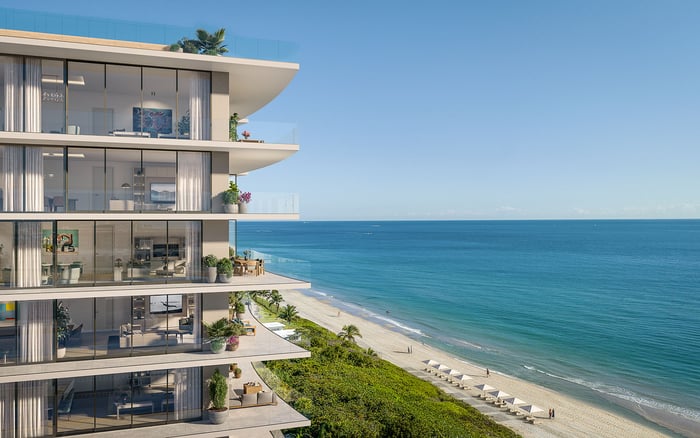
A buyer-focused ranking of five Pompano Beach residences, emphasizing the questions that define service, privacy, governance, and day-to-day residential control.

For luxury buyers, branded living is rarely a simple contest of logos. The more consequential question is how seamlessly a residence pairs attentive service with the autonomy expected of a private home. That balance can shape everything from guest arrivals and household staffing to privacy, association governance, operating costs, and the freedom to personalize daily routines.
Pompano Beach offers a focused setting in which to assess that equation. The five residences below form a practical shortlist for buyers comparing branded identity, hospitality associations, and residential independence. Because service programs and ownership terms can evolve, each selection should serve as a starting point for document review-not a substitute for it.
This MILLION Buyer's Guides perspective favors clarity over spectacle. Buyers should distinguish among what ownership conveys, what is available only by arrangement, and what remains subject to association rules, management policies, or separate charges.
1. The Ritz-Carlton Residences® Pompano Beach - established hospitality identity
The Ritz-Carlton name makes this residence a natural first consideration for buyers who place a recognizable service culture at the center of their decision. The essential diligence question is not simply whether assistance is available, but how residential operations are separated from any hospitality component-and how owners direct access to their homes.
Prospective purchasers should examine the governing documents, service scope, staffing protocols, guest procedures, fee schedules, and boundaries between standard residential management and individually requested services.
2. Waldorf Astoria Residences Pompano Beach - formal branded-residence proposition
Waldorf Astoria Residences Pompano Beach ranks high on the shortlist for purchasers evaluating a clearly identified hospitality brand in a residential setting. Its relevance lies in the opportunity to measure brand standards against the contractual rights and responsibilities attached to ownership.
Buyers should ask which services are included, which are optional, how requests are handled, and whether brand-related standards affect renovations, leasing, pets, deliveries, household employees, or guest access.
3. W Pompano Beach Hotel & Residences - hotel-and-residence framework
The project name explicitly presents hotel and residential components, making operational separation a central concern for buyers. Purchasers seeking energy and convenience should still determine where private-residence protocols begin, particularly across arrival sequences, amenity access, security, and guest circulation.
A rigorous review will compare the promised experience with the declaration, management agreement, budget, and rules. Buyers should also understand how shared facilities, if any, are governed and funded.
4. Armani Casa Residences Pompano Beach - design-led branded identity
Armani Casa Residences Pompano Beach provides a useful comparison for buyers drawn to a brand associated with design and lifestyle. The ownership analysis should determine which elements of that identity are embedded in the residence-and which are aesthetic or marketing expressions rather than continuing service obligations.
Control-minded purchasers should review customization rules, approval processes, maintenance responsibilities, the management structure, and any standards intended to preserve a consistent visual character.
5. Ocean 580 Pompano Beach - residential-control counterpoint
Ocean 580 Pompano Beach provides a valuable counterpoint within this ranking. For buyers seeking service without allowing the brand itself to dictate the choice, it can help establish whether a more residentially framed proposition better suits the desired degree of autonomy.
The comparison should remain disciplined: assess staffing, security, maintenance, amenity operations, governance, reserves, fees, and owner-use rules on the same basis applied to the branded candidates above.
A productive tour begins before a buyer enters a sales gallery. Start by comparing the branded propositions, noting where each places its emphasis and which questions remain for the governing documents.
The hotel-residential relationship warrants a distinct line of inquiry. Buyers should assess the practical separation of private and hospitality functions while also scrutinizing design governance and the durability of each branded identity.
Finally, use the more residentially framed candidate as a benchmark. Applying a single scorecard to every option prevents brand familiarity from obscuring consequential differences in control, cost, access, and obligations.
Residential control is best tested through ordinary scenarios. Can an owner authorize household staff directly? Are guests processed through residential or hotel procedures? Who controls access credentials? Which approvals are required for interior work? How are deliveries, private events, pets, leasing, and extended absences handled?
Financial control matters just as much. Review the operating budget, reserves, assessment authority, insurance responsibilities, management arrangements, and treatment of optional services. A compelling lifestyle proposition can still feel restrictive when its rules and recurring expenses do not align with an owner's expectations.
For branded residences, buyers should identify which obligations survive a change in management or branding. If oceanfront positioning is central to the purchase, view, access, maintenance exposure, and insurance considerations warrant independent professional review. A new project also demands careful attention to the distinction between current representations and the rights contained in executed documents.
What does residential control mean in a branded residence? It refers to an owner's practical and legal authority over access, use, customization, staffing, leasing, and participation in association governance.
Does a hospitality brand guarantee a fixed service package? No. Buyers should confirm included and optional services in the applicable contracts, budgets, and governing documents.
Why compare a non-hotel residence with branded options? It provides a useful benchmark for privacy, autonomy, operating structure, and recurring ownership costs.
What should buyers ask about shared amenities? Ask who may use them, who pays for them, how access is controlled, and whether operating rules can change.
Are concierge services always included in association fees? Not necessarily. The fee schedule and service documents should distinguish standard coverage from separately charged requests.
How should buyers evaluate privacy? Review arrival routes, elevator access, guest procedures, staffing protocols, security systems, and data-handling policies.
Can owners customize branded residences freely? Customization may be subject to association rules, design standards, permitting, and approval procedures.
What documents matter most before a purchase? Review the purchase agreement, declaration, association rules, budget, management terms, disclosures, and available plans with qualified advisers.
Should buyers rely on the brand name when ranking options? The brand can frame expectations, but contractual rights, operations, fees, and governance should drive the final comparison.
How can buyers narrow the five choices? Rank personal priorities, apply one diligence checklist to every residence, and test each option against real daily-use scenarios.
If you'd like a private walkthrough and a curated shortlist, connect with MILLION.
If branded residences are on your mind — as a home or as an allocation — we would be glad to share what we are seeing, privately.
Begin a quiet conversation