A disciplined buyer’s framework for weighing estate-scale living, golf-course exposure, ferry dependence, carrying obligations, and resale fit at The Links Estates.

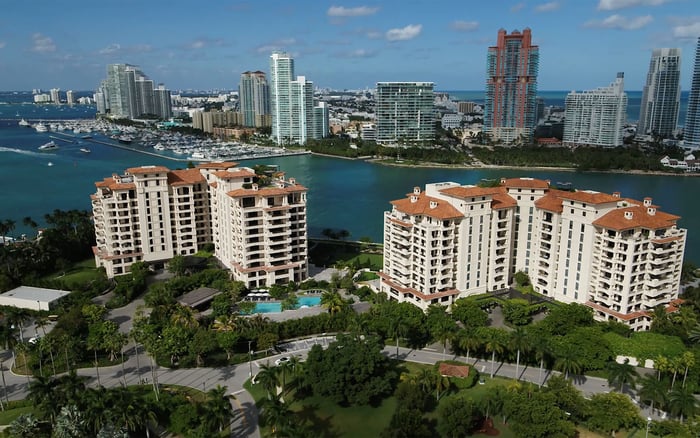
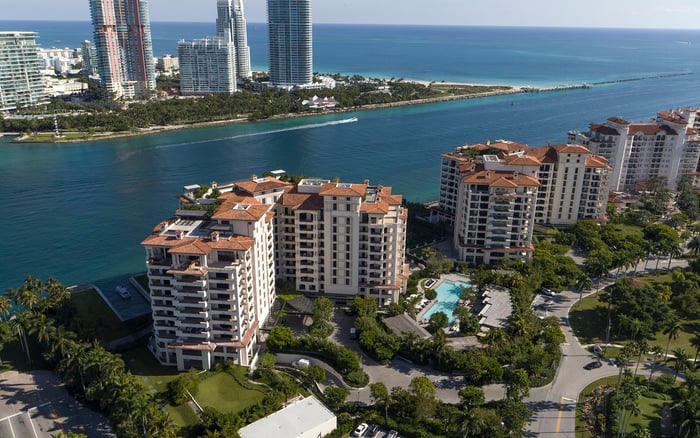
The appeal of The Links Estates at Fisher Island is unusually clear: estate-home living within a private-island environment otherwise defined predominantly by condominium residences. Its golf-course orientation brings fairways, greens, and landscaped open space into the daily view, while the wider Fisher Island setting offers golf, marina, beach, dining, spa, and private-club amenities.
Yet the decisive question is not whether the proposition is desirable, but whether the entire ownership system fits the buyer. With no mainland road or bridge connection, ferry logistics are not a peripheral inconvenience to rationalize after closing. They are a structural feature of the property, shaping daily movement, household operations, emergency planning, and eventual resale.
For 2026 buyers, discipline means evaluating the residence and the island ecosystem as a single acquisition.
A polished viewing can make separation from Miami feel effortless. Due diligence should test that impression under both ordinary and demanding conditions. Buyers should map a realistic week encompassing office commitments, school or family movements, dining plans, airport departures, medical appointments, and spontaneous mainland trips. The issue is not simply access, but how often it is required and how sensitive each trip is to timing.
The same exercise should account for guests, deliveries, household staff, and contractors. A primary resident with a stable, island-centered schedule may experience ferry dependence very differently from an owner who entertains frequently, renovates, manages rotating staff, or crosses to the mainland several times a day.
Obtain current operating information directly during diligence and test it against actual routines. Examine arrival procedures, vehicle movement, guest protocols, delivery handling, and contingencies. Do not rely on a generic assurance that the system is convenient. Convenience is personal, and on Fisher Island, it is operational.
Golf frontage is not a uniform attribute. Each home warrants close study of the direction and depth of its sightlines, its relationship to fairways and greens, the layering of landscaping, and the extent of visible or audible course activity. Privacy can vary across a garden, terrace, bedroom, and principal entertaining space, even within the same property.
Visit at more than one time if possible. Consider how landscaping may screen views while also influencing maintenance exposure. Assess whether the home feels connected to open space or overly exposed to nearby movement. The best choice depends on the buyer’s preferences for outlook, privacy, and social proximity-not on a broad golf-course label.
Here, golf functions as both amenity and site condition. It contributes to the estate’s atmosphere, but merits the same careful assessment as orientation, boundaries, and outdoor living areas.
The estate format is central to the project’s distinction, but buyers should resist evaluating it as a standalone mainland house. At The Links Estates at Fisher Island, the home participates in a managed environment defined by controlled access, shared expectations, private-club life, and recurring obligations.
Review association rules, club requirements, budgets, carrying costs, assessments, insurance terms, and restrictions affecting use. Confirm which responsibilities rest with the owner and which are handled through the broader island framework. A gated-community mindset is directionally useful, but ferry-only access adds another layer to staffing, servicing, and continuity.
For context within Fisher Island, buyers may also explore Palazzo del Sol, Palazzo della Luna, and The Residences at Six Fisher Island. These should not be treated as direct substitutes without property-specific analysis. Instead, they help clarify whether the buyer’s priority is the estate-home proposition or another form of private-island residence.
A disciplined valuation has at least two components. The first is the home itself: scale, condition, plan, outdoor areas, landscaping, privacy, and golf-course relationship. The second is the premium attached to Fisher Island’s separation, controlled access, amenity environment, and identity.
Those components should not be blended into a single emotional number. Current comparable sales, recurring costs, and property-specific condition remain essential. Claims of scarcity or appreciation are no substitute for evidence. The buyer should understand precisely how much value is assigned to the physical estate and how much to participation in the island ecosystem.
The same distinction matters at resale. Ferry-only access can reinforce exclusivity, yet it can also narrow the audience among buyers who require seamless mainland mobility. The strongest ownership case aligns lifestyle utility with financial discipline rather than presuming that every element of privacy will translate equally for a future purchaser.
Emergency access, storm procedures, service continuity, and evacuation planning require formal review before closing. Request current protocols and determine how they apply to residents, guests, staff, vehicles, deliveries, and property preparation. Insurance terms should be considered alongside those procedures, not as an isolated financial document.
A useful diligence file should also address how the residence operates when normal routines are disrupted. Who secures the property, manages landscaping, coordinates vendors, and communicates with the relevant island entities? For a second-home buyer, these questions may be as consequential as finish quality.
This is the practical core of disciplined luxury due diligence: ownership is most durable when its structure remains legible under pressure.
The right buyer is likely to regard separation as a benefit and organize life around it comfortably. A less suitable buyer may admire the privacy but repeatedly resist the planning it requires. Neither response is wrong. The mistake is treating ferry dependence as a minor detail simply because the residence itself is compelling.
Before committing, conduct a routine audit, a property audit, and an obligations audit. The routine audit tests mainland frequency, guests, staffing, and deliveries. The property audit examines sightlines, privacy, landscaping, course activity, and condition. The obligations audit covers rules, club requirements, carrying costs, insurance, assessments, and emergency procedures.
When all three support the same conclusion, The Links Estates can be assessed for what it truly offers: estate-scale living embedded within the social, amenity, and security fabric of Fisher Island.
Does Fisher Island have a mainland road or bridge connection? No. Ferry logistics are therefore a structural element of ownership at The Links Estates.
What should buyers test about ferry use? Test commute timing, spontaneous trips, guest access, deliveries, staffing, contractor movement, and airport or appointment routines.
Is The Links Estates primarily a condominium proposition? No. It is positioned as an estate-home alternative within an island market predominantly associated with condominiums.
How should a buyer evaluate the golf-course location? Review sightlines, privacy gradients, landscaping exposure, and potential activity near fairways and greens for the specific home.
Which ownership documents deserve close review? Examine governing documents, association rules, budgets, assessments, insurance terms, club obligations, and use restrictions.
Should ferry schedules be assumed from past experience? No. Obtain current operating information directly during due diligence and test it against the household’s actual routine.
What resilience issues matter before purchase? Review emergency access, storm procedures, evacuation planning, service continuity, and responsibility for securing the property.
How should buyers think about valuation? Separate the home’s physical attributes from the premium for Fisher Island’s privacy, controlled access, amenities, and identity.
Can ferry-only access affect resale? Yes. It may reinforce exclusivity while narrowing the pool of buyers who need effortless mainland mobility.
Who is best suited to this ownership model? A buyer who values managed island separation and can align household operations with ferry-based access is the clearest fit.
When you're ready to tour or underwrite the options, connect with MILLION.
If branded residences are on your mind — as a home or as an allocation — we would be glad to share what we are seeing, privately.
Begin a quiet conversation