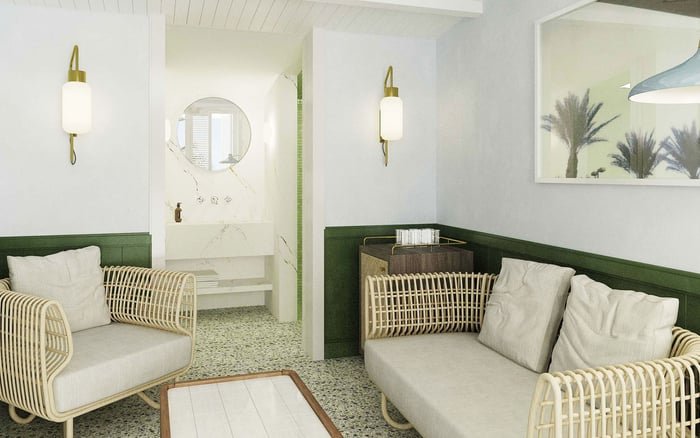
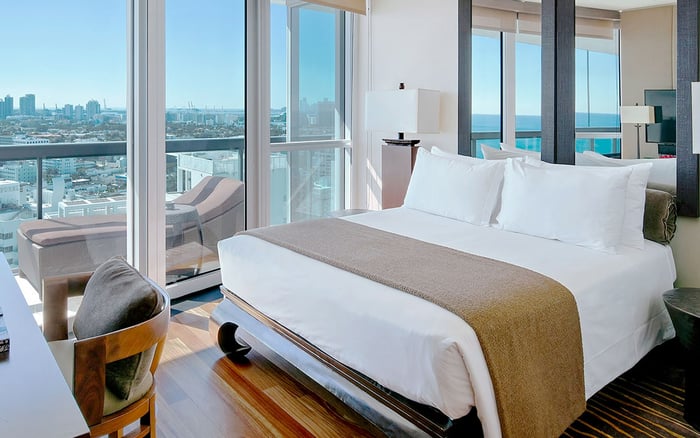
A buyer-oriented look at how strict the pool deck environment at Delano Residences & Hotel Miami is likely to feel, based on publicly disclosed information, luxury hospitality norms, and the realities of mixed-use residential-hotel operations.
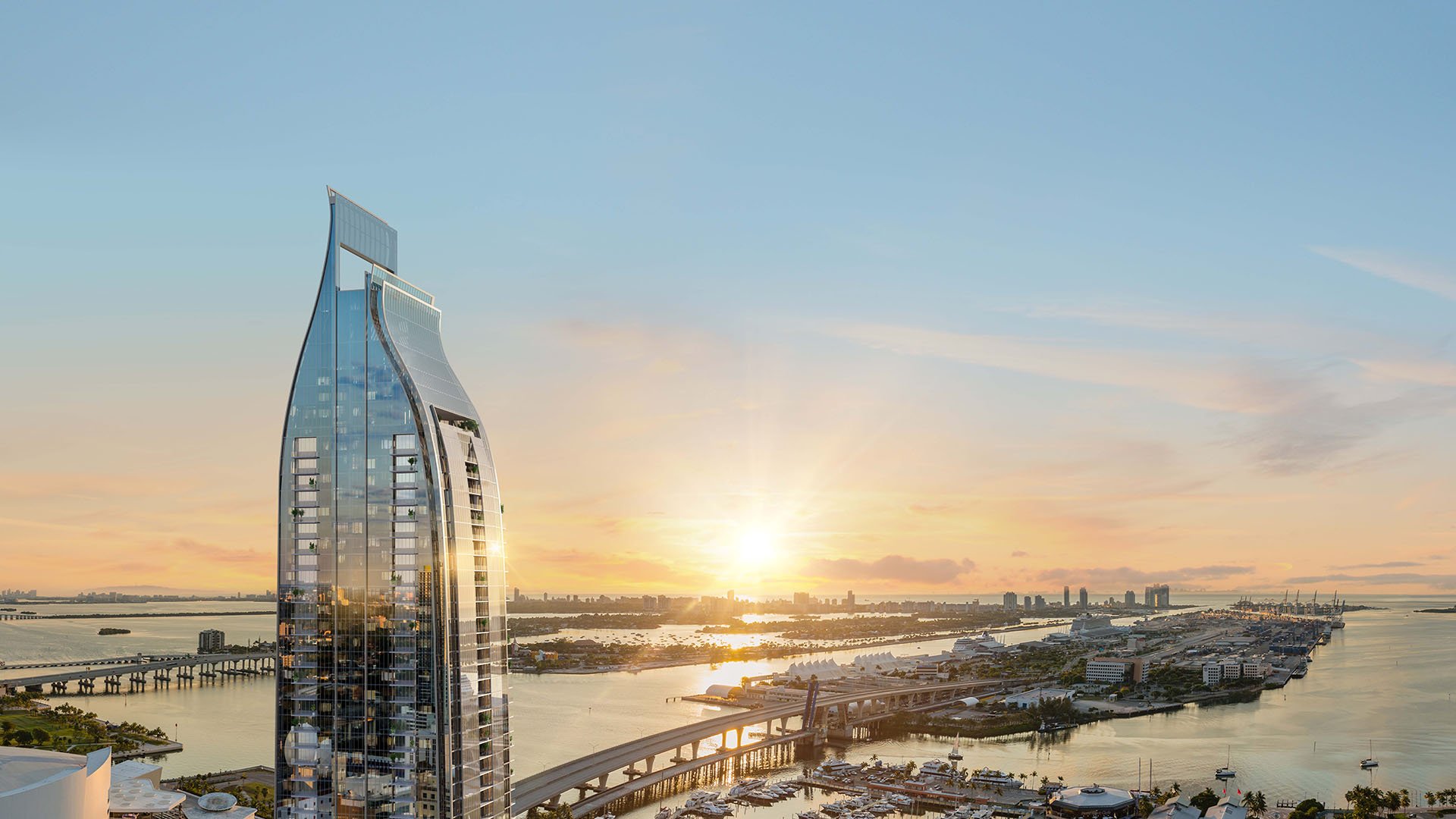
At Delano Residences & Hotel Miami, the key question is not whether a detailed pool deck dress code is publicly posted. It is not. The more useful question for buyers, residents, and hotel guests is how disciplined the pool environment is likely to feel in practice.
Public materials emphasize the property, the lifestyle proposition, and the amenity experience, but they do not present a centralized handbook of pool-attire rules. That distinction matters. In South Florida luxury real estate, there is a meaningful difference between a property that publicly lists line-by-line restrictions and one that relies on on-site management standards, concierge guidance, and situational enforcement.
At Delano, the available picture points to a refined, managed setting rather than one defined by a highly codified public rule set. In practical terms, that usually suggests a pool deck where presentation matters, even if every prohibited item is not spelled out online.
Miami beach culture can feel visually relaxed, but private luxury environments rarely operate with the same looseness as the public shoreline. At a mixed-use luxury address, pool decks are typically curated social spaces-part amenity, part brand expression, and part extension of the residential experience.
That is why the most reasonable reading is that Delano’s pool rules are likely stricter than public-beach norms while still aligned with the polished ease expected in high-end hospitality. Think resort-appropriate rather than casual to the point of disorder. A resident arriving in tailored swimwear with a clean cover-up fits the setting. Someone treating the deck like a gym courtyard or public boardwalk may not.
What should not be assumed, however, is an itemized set of Delano-specific bans. There is no public basis to say that Delano formally prohibits tank tops, athletic wear, cutoffs, or any other specific category through an official rule page. Those examples reflect broader luxury-hospitality patterns, not a confirmed Delano policy.
Delano combines hotel and residential components, and that mixed-use structure matters. In luxury properties of this kind, amenity access and behavioral expectations can vary by user group. Residents may have one level of access, hotel guests another, and visitors or accompanied guests yet another.
That operational split often creates a stricter feel even without a public rulebook. A residential owner expects privacy, consistency, and a certain level of decorum around common areas. A hotel operator also has brand standards to protect. When both worlds coexist, management often enforces tone through staff discretion rather than exhaustive public web copy.
This dynamic is familiar across South Florida’s more design-conscious product. At properties such as Setai Residences Miami Beach and The Ritz-Carlton Residences® South Beach, the value proposition is not simply access to a pool. It is access to a controlled atmosphere. Delano fits naturally within that conversation, even if its publicly viewable dress guidance is less explicit.
A disciplined reader can infer several things from the available information.
First, Delano appears to favor discretion over public rule posting. Second, its pool environment is likely governed by elevated expectations consistent with luxury private property in Miami. Third, because the amenity setting serves both residential and hospitality interests, the property may apply different operational standards depending on whether someone is an owner, resident, hotel guest, or approved visitor.
What a buyer should not infer is a definitive list of banned garments, guest counts, day-pass permissions, or resident-only carveouts unless those points are confirmed directly by the property at the time of inquiry. For a serious purchaser, these operational nuances matter nearly as much as finishes and views. They shape livability, guest entertaining, privacy, and the day-to-day feel of the amenity deck.
Even without a published handbook, several signals point to a relatively strict standard of use.
The first is branding. Luxury properties do not invest heavily in amenity identity only to leave tone entirely unmanaged. The second is mixed-use complexity. Shared environments with residential owners almost always require closer operational control than pure transient hospitality. The third is market positioning. In top-tier South Florida product, common spaces are treated as extensions of the brand, not as neutral public zones.
That does not necessarily mean a stiff atmosphere. More often, it means quiet enforcement. Staff may redirect dress, seating behavior, guest access, food presentation, or general conduct in the moment. The result can feel seamless to some and strict to others, depending on what they expect from Miami living.
Comparable design-led residences, including Arte Surfside and Continuum on South Beach, have conditioned affluent buyers to expect amenity spaces that are visually composed and operationally controlled. Delano’s likely strictness should be viewed within that broader luxury context.
For residents, the issue is rarely fashion alone. It is compatibility. Does the pool deck feel like a serene extension of home, or does it read as a hotel scene with rotating traffic and looser boundaries? A strict or semi-strict dress and conduct culture often supports the former.
That can be especially relevant for second-home buyers, families, and owners who value predictability over spectacle. It can also matter for investors evaluating guest profile and building reputation. In a Downtown setting tied to hospitality, the right balance is delicate. Too relaxed, and the amenity loses exclusivity. Too rigid, and the property risks feeling performative.
Delano appears positioned in the middle of that spectrum: elevated, image-conscious, and likely more controlled than a casual resort, yet not publicly framed through an unusually severe dress manifesto.
Before reserving a stay or moving forward with a purchase, ask direct operational questions rather than broad ones. Asking what attire is appropriate when moving between the pool, indoor public areas, and food-service spaces is more useful than simply asking whether there is a dress code. It is also worth asking whether hotel guests and residents use the same deck, whether accompanied visitors are permitted, and whether certain seating zones are prioritized by user type.
Also ask how standards are enforced. Some properties rely on posted signage. Others leave almost everything to the discretion of management, concierge, or pool staff. That distinction reveals a great deal about the actual culture of the amenity.
For the ultra-prime buyer, those answers can reveal as much about daily life as any finish schedule or marketing rendering.
Does Delano Residences & Hotel Miami publish a detailed public pool dress code? No. Public-facing information emphasizes the property and amenities rather than a detailed online dress-code handbook.
Is the pool deck likely to feel stricter than a public beach? Yes. The setting is likely to follow a more polished private-property standard than Miami Beach’s open public shoreline.
Are there confirmed Delano rules banning athletic wear or tank tops? No. There is no public Delano rule page confirming those specific prohibitions.
Could residents and hotel guests face different pool rules? Yes. Mixed-use luxury properties often separate access or operations by user group.
Does a lack of posted rules mean the environment is casual? Not necessarily. Luxury properties often enforce standards on-site through staff rather than through exhaustive public disclosures.
Should buyers ask about guest access separately from dress code? Yes. Visitor permissions and amenity access rules can shape the feel of the pool deck as much as attire standards.
Is Delano likely to be unusually severe about pool attire? No public information suggests an unusually harsh policy. A more likely scenario is refined but discreet enforcement.
Why does mixed-use matter when evaluating pool strictness? Because hotel and residential components often create different expectations around privacy, access, and conduct.
What is the most reliable way to confirm current rules? Directly asking the property is the best way to confirm current attire, guest, and access policies.
Why should this matter to a luxury buyer? Because pool deck culture affects privacy, entertaining, daily comfort, and the overall quality of the amenity experience.
For a discreet conversation and a curated building-by-building shortlist, connect with MILLION Luxury.
If branded residences are on your mind — as a home or as an allocation — we would be glad to share what we are seeing, privately.
Begin a quiet conversation