In a supertall tower, elevator performance is not a convenience feature. It is core life-safety infrastructure, a daily quality-of-life metric, and a quiet determinant of resale desirability. For South Florida buyers who prioritize privacy, punctuality, and predictability, the right question is less “How many elevators?” and more “How does the entire vertical-transportation system behave under peak demand, storms, maintenance, and human error?” This MILLION Luxury guide lays out what to evaluate: speed and travel time, the presence and design of sky lobbies and destination dispatch, redundancy of power and controls, service-elevator separation, and the operational culture that keeps all of it working. The goal is to help you read beyond marketing language and understand what a well-engineered, well-managed elevator ecosystem looks like in a true high-rise.
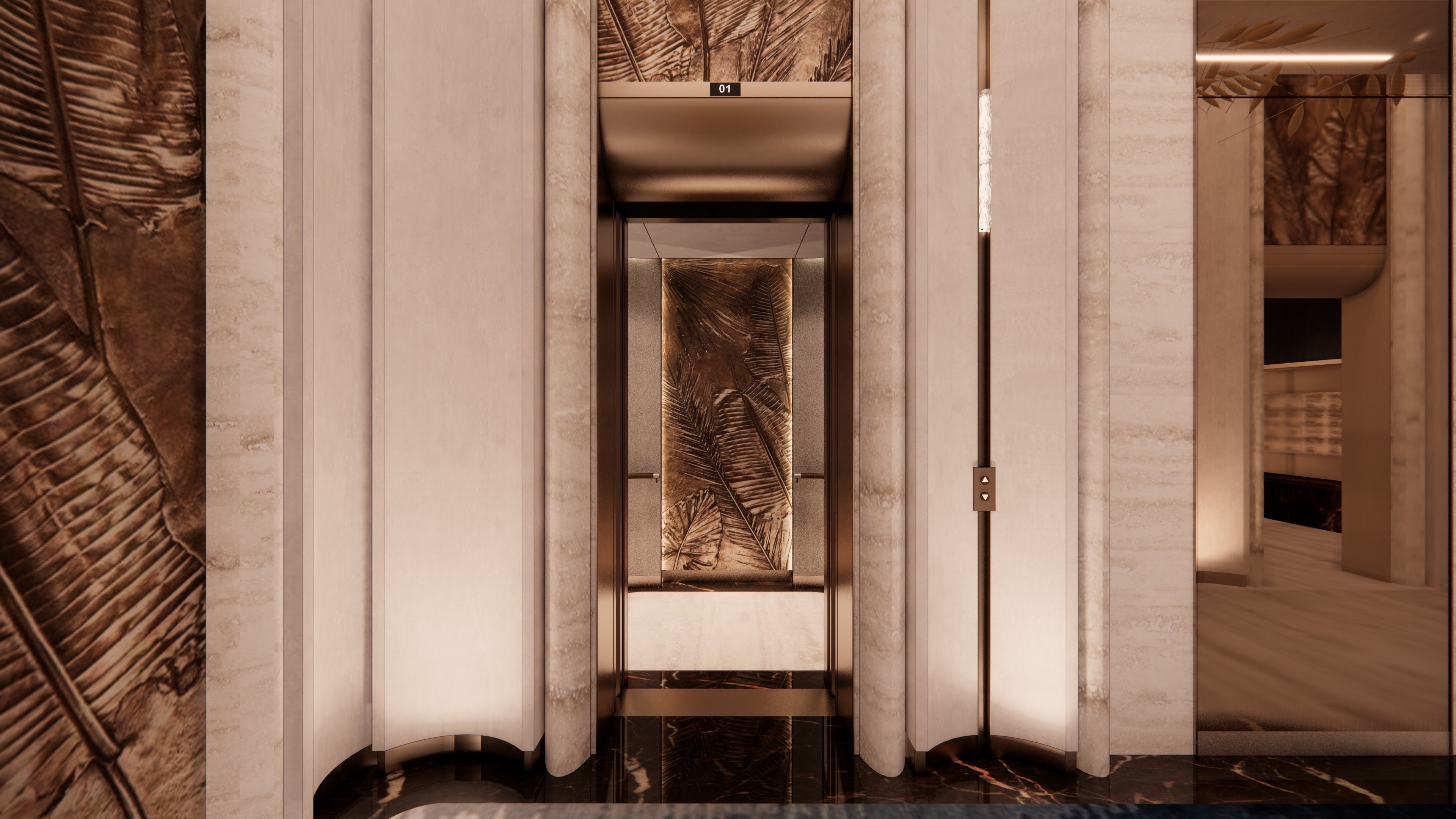
In a supertall, the elevator is the building’s heartbeat. It governs how quickly you move from curb to residence, how discreetly guests arrive, and how smoothly the tower absorbs predictable surges: morning departures, weekend arrivals, event nights, and weather-driven constraints.
For ultra-premium buyers, the elevator also shapes a more intangible form of luxury: psychological ease. A lobby that stays serene because cars arrive in a steady rhythm. A residence that feels more private because access routes are calm and intuitive. A staff operation that stays out of sight because service circulation is separated and disciplined.
Speed matters, but it is rarely the only measure. A tower can advertise fast cars and still feel slow if zoning is weak, dispatching is unsophisticated, or redundancy is thin enough that a single outage turns into daily friction.
When buyers hear “fast elevators,” they often picture top speed. In practice, perceived speed is a composite of four moments: the wait, the ride, the stop pattern, and the door cycle. A slightly slower car that arrives promptly, runs express to your zone, and avoids unnecessary stops will feel materially faster than a high-speed car trapped in a chaotic dispatch pattern.
A buyer-oriented way to evaluate speed is to ask: how does the system perform during the building’s worst normal hour? Not the occasional anomaly, but the predictable peak. The best towers are engineered around handling capacity-how many people can be moved efficiently within a given period-while preserving comfort and minimizing crowding.
Three design choices largely determine whether speed reads as luxury:
First, zoning. In a tall tower, elevators are typically grouped into banks serving defined floor ranges. Proper zoning reduces stops, calms the lobby experience, and prevents a surge in one zone from spilling into the entire building.
Second, intelligent dispatch. Destination-based systems, where you select your floor before entering, can reduce stops and improve throughput when tuned correctly. The advantage is most evident during morning and evening peaks, when random stop patterns become the enemy.
Third, vertical strategy. Some supertalls incorporate transfer floors or sky lobbies. Executed well, these reduce travel time to upper zones, but they introduce an additional “moment” that must stay polished: the transfer itself. The most refined systems treat transfers like a quiet lounge experience, not a choke point.
In luxury real estate, redundancy is often discussed in broad terms. In elevator systems, it should mean layered resilience: the ability to keep the building functional when a component is down, power is unstable, or conditions require partial shutdown.
Start with elevator group redundancy. If one car is removed for maintenance, does the remaining bank still deliver acceptable wait times? True resilience is not “we have many elevators.” It is “each critical zone still works when one is offline.” In well-designed systems, upper-floor residents are not dependent on a single high-zone bank.
Then consider control redundancy. Modern elevator logic is software-driven, and the most sophisticated systems include fail-safes that allow degraded operation rather than a full stop when a subsystem faults. For a buyer, the question is simple: if something fails, do you experience inconvenience-or paralysis?
Finally, consider operational redundancy. The best-performing buildings typically run on clear protocols: staged maintenance scheduling, active monitoring, and staff trained to manage surges. In other words, redundancy is hardware plus management culture.
In South Florida, resilience also has a climate-specific dimension. Storm season elevates the importance of power continuity, equipment protection, and clear rules for elevator use during severe weather. Even a world-class system can feel fragile if procedures are unclear to residents and guests.
A supertall elevator system is tightly integrated with life-safety. That includes fire service modes, smoke control strategies, stair pressurization, and emergency communications. Buyers do not need to be engineers, but they should ask questions that reveal whether the building treats elevators as a life-safety ecosystem-or merely a convenience amenity.
Focus on three areas.
First, backup power strategy. Many high-rises provide emergency power for select systems, but the nuance is which elevators are supported, under what conditions, and how long the building can operate at a reduced but stable level. A robust approach supports controlled elevator service for priority use, rather than a full stop that pushes residents to stairwells.
Second, water and humidity protection. Elevator equipment lives in machine rooms, hoistways, pits, and lobbies, and each can be vulnerable to water intrusion if it is not thoughtfully detailed and maintained.
Third, communications. If an elevator is taken out of service, do residents receive clear, timely messaging? In a luxury environment, the expectation is not only safety, but calm.
For high-net-worth households, elevator performance is inseparable from privacy. The most desirable experiences minimize uncontrolled mixing between residents, guests, vendors, and building staff.
Evaluate whether the tower meaningfully separates passenger and service circulation. A dedicated service elevator system, separate loading paths, and clear back-of-house routing protect the residential arrival sequence. Without that, even a beautiful lobby can feel operationally busy.
Private elevator access can be a genuine differentiator-but only when the system is designed to support it. If multiple homes rely on a limited number of cars without intelligent zoning, privacy can paradoxically create waiting. Conversely, when zoning is disciplined and access control is executed well, private arrival feels effortless.
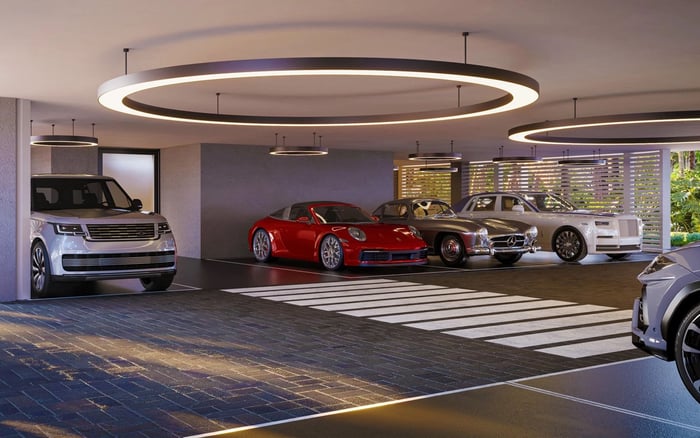
In Brickell, where the pace is urban and arrivals can concentrate, buyers often value buildings that treat vertical circulation with hospitality-level intent. When touring 2200 Brickell, pay attention not only to aesthetics, but to how the arrival choreography is designed to work at rush hour: where people queue, where guests are directed, and how discreetly residents can move from porte-cochere to car.
A supertall can showcase impressive passenger elevators and still frustrate owners if service circulation is undersized or poorly managed. Deliveries, move-ins, contractors, housekeeping, and events all rely on service elevators. When service capacity is tight, buildings may pull passenger cars into service use, immediately diluting the resident experience.
Ask how the building handles three predictable stressors: move-ins and move-outs, large deliveries, and maintenance projects. The best-managed properties use scheduling systems and enforce them consistently. The goal is straightforward: your morning commute should not become collateral damage from someone else’s renovation.
This is especially relevant in high-design residences where owners expect museum-level finishes. A disciplined service-elevator protocol reduces wear on common areas and preserves the “new building” feeling over time.
Elevator systems are both mechanical and digital, which means they require physical maintenance and software tuning. In a supertall, preventative maintenance is not optional; it is the only credible path to uptime.
For buyers, the most productive questions are not “Do you have a maintenance contract?” but “How is performance measured?” and “How are outages managed?” Look for evidence of:
Routine testing and commissioning practices that verify performance after adjustments.
Planned modernization thinking, even in newer buildings, because technology and parts cycles evolve.
Transparent service standards for response times, especially for high-zone cars.
This is also where condominium governance becomes visible. A building that underfunds reserves or defers maintenance may still present beautifully in a brochure, but its vertical transportation will quietly drift from crisp to compromised.
You can learn a great deal in a 20-minute visit if you watch the right details.
Listen to the lobby. A calm lobby often correlates with predictable dispatching. A loud lobby with clusters of people waiting can indicate demand that exceeds capacity-or a system that is not properly tuned.
Watch door behavior. Doors that hesitate, reopen repeatedly, or feel inconsistent can signal wear or misalignment. In premium buildings, doors should feel decisive and smooth.
Observe how staff manage flow. Do they direct deliveries away from the main lobby? Is there a clear, discreet path for vendors? Operational discipline is not glamorous, but it is felt every day.
And consider the “last 50 feet.” If you are evaluating a boutique oceanfront tower like 57 Ocean Miami Beach, the elevator experience should match the building’s promise of serenity: minimal stops, quiet landings, and an arrival that feels residential rather than hotel-like.
Elevator demand is partly lifestyle. In dense urban cores, weekday peaks are sharp. In resort-oriented neighborhoods, weekend arrivals and seasonal patterns can dominate.
On Miami Beach, arrival surges are often tied to leisure schedules, guests, and service activity. In ultra-premium properties such as Five Park Miami Beach, the buyer’s lens should include how the building anticipates event nights and weekend movement without letting common areas feel crowded.
In Sunny Isles, where many homes function as second residences, elevator patterns can be intermittent-and then sudden. Touring a vertical icon like Bentley Residences Sunny Isles, evaluate whether the system feels designed for seamless arrivals with luggage, guests, and staff, while preserving privacy for owners who prefer minimal contact in common areas.
To keep the evaluation practical, anchor on outcomes: wait times, reliability, privacy, and resilience.
Ask which elevators serve your stack and whether those cars are shared with other zones.
Ask how many passenger elevators are dedicated to your floor range, and what happens operationally when one is down.
Ask whether service circulation is separate, and how move-ins and large deliveries are scheduled.
Ask about backup power coverage for elevators and the building’s procedures during severe weather.
Ask who monitors performance and how the building communicates planned outages.
The most sophisticated systems make all of this feel effortless. That effortlessness is not accidental; it is engineered, budgeted, and managed.
What is the most meaningful measure of elevator “speed” in a supertall? The combination of peak-time wait and total trip time is what residents feel day to day.
Do more elevators always mean better performance? Not necessarily; zoning, dispatch logic, and service separation often matter more than raw count.
What is destination dispatch and why does it matter? It groups riders by destination to reduce stops, improving handling capacity during busy periods.
How does redundancy show up in daily life? If one car is offline, you should still see reasonable waits and predictable access to your zone.
Why should buyers care about service elevators? Strong service capacity prevents deliveries and renovations from consuming resident elevator time.
Is private elevator access always superior? It can be, but only if the building has smart zoning and sufficient cars to avoid bottlenecks.
What should I ask about backup power for elevators? Ask which cars are supported, how operation is prioritized, and what the building’s protocol is.
Can elevator design affect resale value? Yes; buyers remember friction, and reliable vertical transportation supports long-term desirability.
What are warning signs during a building tour? Crowded lobbies, inconsistent door operation, and frequent out-of-service cars are red flags.
Should I consider maintenance planning even in new construction? Yes; proactive maintenance and clear outage communication are essential for sustained performance.
When you're ready to tour or underwrite the options, connect with MILLION Luxury.
If branded residences are on your mind — as a home or as an allocation — we would be glad to share what we are seeing, privately.
Begin a quiet conversation