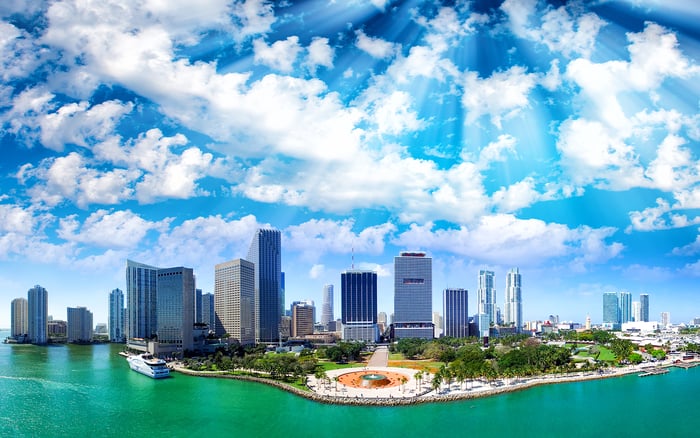
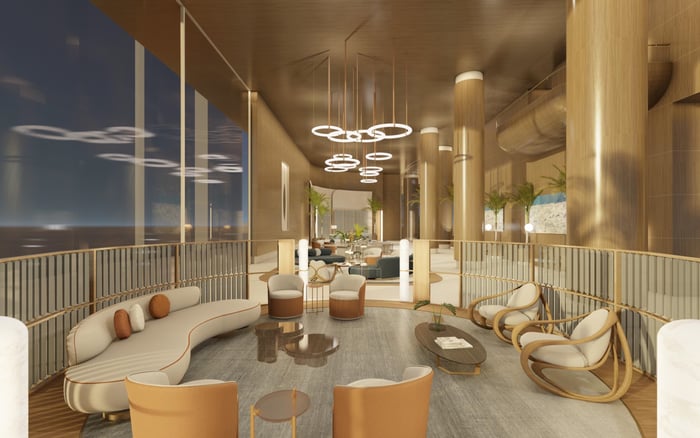
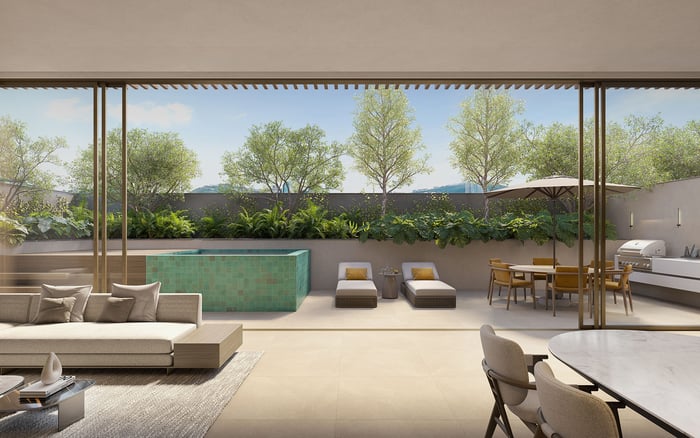
A buyer-oriented look at how walkable life can feel from 619 Brickell, with practical routing logic, comfort factors, and what “downtown venues” realistically means from a Brickell address.
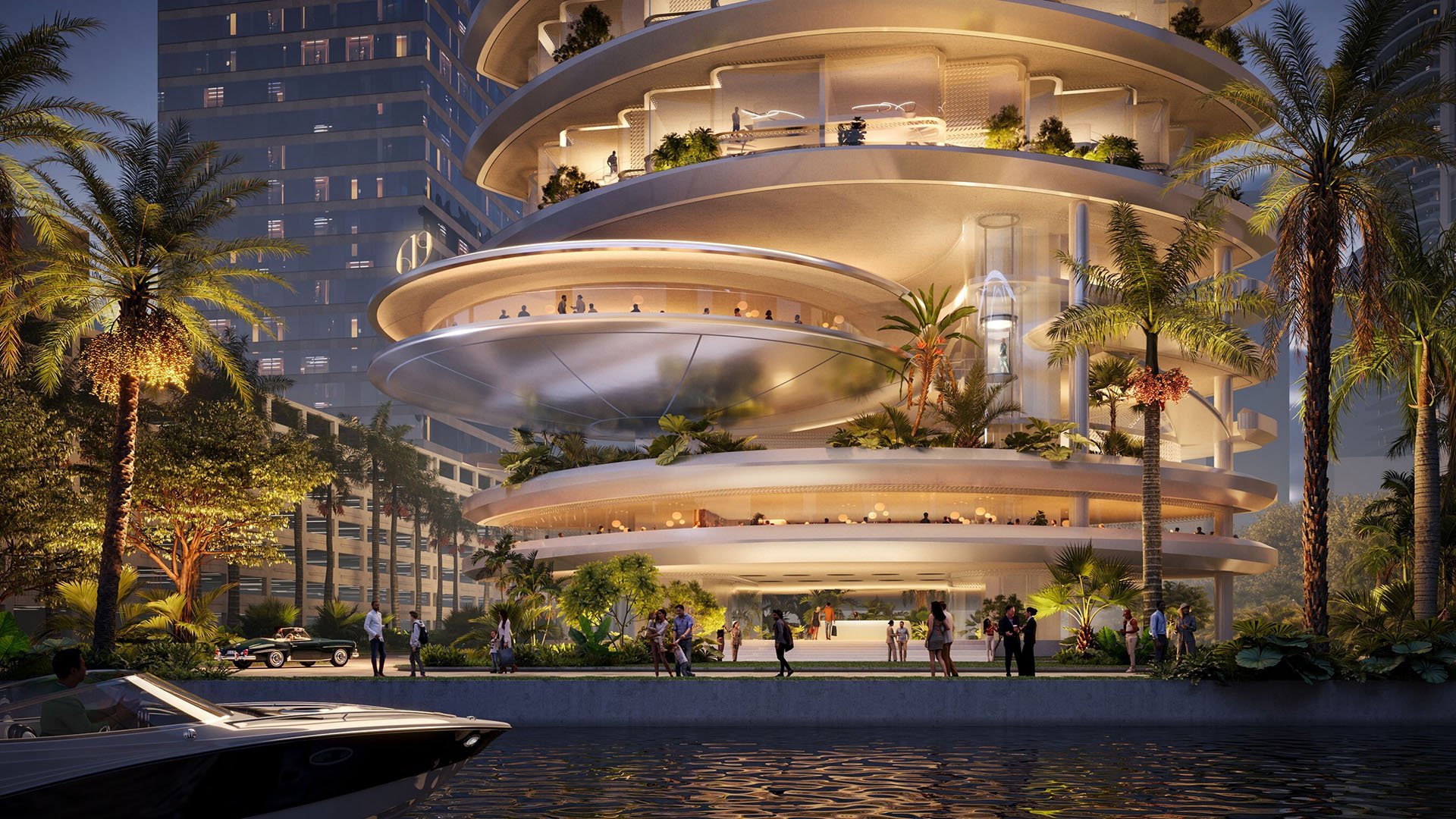
For a Brickell address, “pedestrian access to downtown venues” is less about the mere presence of sidewalks and more about whether the walk feels like a lifestyle you will actually repeat. From 619 Brickell, the calculus is tactile: how quickly you clear major intersections, how often shade breaks up the sun, how predictable the streets feel after dark, and whether you arrive looking composed rather than weathered.
Brickell and Downtown Miami sit close enough that the distance can read as “walkable” on a map, yet the lived experience is defined by comfort and continuity. The cleanest way to evaluate it is in layers: a core walking radius you’ll use daily, a secondary radius you’ll use selectively, and a low-friction “expanded zone” unlocked by the Metromover and short rides.
For context, this is why ultra-urban buyers also cross-shop addresses that pair design-forward living with immediate pedestrian convenience, such as Mercedes-Benz Places Miami in Brickell’s evolving core.
In practice, downtown venues tend to concentrate into a few categories: waterfront and bayfront destinations, performing-arts and arena environments, museum-adjacent areas, and the dining corridors that become the default before and after an event. From Brickell, pedestrian success depends on whether the destination sits along a route with continuous sidewalks and crossings that don’t feel punitive.
The mental model is straightforward:
Venues at the Brickell-Downtown seam often feel genuinely walk-first.
Venues deeper into Downtown can still be walked, but the experience becomes weather-dependent and timing-sensitive.
Waterfront destinations may be “close” yet feel psychologically far if the route requires multiple signal cycles at wide arterials.
If you routinely plan evenings around a show, a game, or a museum plus dinner, the real question isn’t only distance. It’s whether the walk back feels as comfortable and intuitive as the walk there.
From a Brickell address like 619 Brickell, routes that track well-trafficked corridors typically feel more natural because they come with lighting, other pedestrians, and clearer wayfinding. The tradeoff is that these same corridors often involve wider intersections and longer signal waits.
A buyer-friendly strategy is to prioritize routes that minimize “decision points”-those moments where you’re choosing between an underlit block and a higher-traffic avenue. In many cases, the most comfortable walk isn’t the most direct line on a map; it’s the path with fewer complex crossings and a more consistent streetscape.
Expect the experience to shift block by block:
The Brickell core can feel polished and pedestrian-forward.
Transition blocks toward Downtown can read more infrastructural, where streets widen and cars set the rhythm.
Once you reach Downtown’s event districts, foot traffic often returns-especially on event nights.
For buyers who want Brickell energy but also value a direct, design-centric home base, 619 Brickell - NOBU is naturally part of the conversation as an anchor for an urban, walk-and-dine routine.
Even sophisticated buyers underestimate how quickly “walkable” turns into “I’ll drive next time” once small points of friction add up. In South Florida, the variables that typically decide the outcome are:
Heat and humidity.
A ten-minute walk in mild weather can feel like a different city than the same ten minutes in late-summer conditions. If you plan to walk to venues often, assume timing matters.
Shade and exposure.
Streets with intermittent shade read as dramatically more livable. When a route is fully exposed, it’s easy to default to a quick ride instead of walking.
Crossings and signal cycles.
Wide arterials and long waits can make short distances feel long. On event nights, this isn’t mere impatience; it’s the difference between arriving calm or arriving rushed.
Evening legibility.
The return walk matters. Good lighting, active storefronts, and predictable pedestrian flow are what turn a one-time walk into a habit.
Shoes and attire.
Luxury lifestyles aren’t always sneaker-forward. If the route forces you to dress for the walk rather than the venue, “access” starts to feel like effort.
Brickell’s advantage isn’t just proximity-it’s that the neighborhood sits inside an ecosystem where short hops can replace longer walks without triggering a “do I need a car?” decision. For buyers who value optionality, that matters: walk when it’s pleasant, shift modes when it’s not.
Micro-mobility can be an elegant middle ground for reaching downtown venues while keeping a sense of independence. The Metromover can also change the equation, turning what could be a sweat-prone walk into a more composed arrival-particularly on evenings when you want your look to stay intact.
The luxury-buyer takeaway is that you’re not choosing between walking and driving. You’re choosing a layered mobility lifestyle: walking as the default for short trips, with transit or a short ride extending your reach seamlessly.
Pedestrian access becomes clearer when you compare Brickell with other prime submarkets. In Brickell and Downtown, the pattern is urban: density, vertical living, and a menu of destinations that supports walking and short rides.
Contrast that with a waterfront, resort-leaning environment like Sunny Isles, where walking can be beautifully scenic but less oriented around Downtown venues. A residence such as Bentley Residences Sunny Isles can deliver a different pedestrian rhythm: more promenade, more beach adjacency, and less “walk to an arena” practicality.
Or consider a South of Fifth lifestyle, where walking often centers on restaurants and the beach, with Downtown becoming an intentional outing. Apogee South Beach illustrates that contrast: the pedestrian experience can be exceptional, but the venue mix is not the same as Brickell-Downtown.
The point isn’t that one is better. It’s that 619 Brickell’s value proposition is tied to urban proximity, where downtown venues can sit inside the weekly palette rather than feeling like a planned expedition.
If you’re evaluating 619 Brickell specifically, the most useful exercise is to map your personal venue routine and pressure-test it against three tiers.
Tier 1: Habit walks.
These are the walks you do without thinking-coffee, casual dining, quick errands. If these feel effortless from your front door, you’ll walk more overall, including to venues.
Tier 2: Event walks.
These are intentional walks-a show, a game, a museum evening, a reservation you don’t want to arrive late for. Here, the question is whether the route feels clean and predictable on the return.
Tier 3: Weather-contingent walks.
These are the walks you want to do, but only when conditions cooperate. For these, assume you’ll sometimes switch to the Metromover or a short ride-and that’s still a win. A walkable lifestyle isn’t a vow; it’s a default setting.
As a cross-check, notice how other Brickell luxury towers frame daily life around short distances and elevated design. The Residences at 1428 Brickell is a relevant reference point when considering how Brickell’s upper-tier residential product pairs with an urban, on-foot lifestyle.
A private walk test can tell you more than any map.
Walk to one daytime destination and one evening destination.
Complete at least one return trip after dark.
Flag the intersections that feel like “speed bumps” in the experience.
Notice whether you feel comfortable waiting at crossings.
Watch how quickly the streets feel active again after an event lets out.
If the walk test feels smooth, you’re not just buying proximity. You’re buying a repeatable pattern that compounds: fewer car decisions, more spontaneous dinners, and a sense that the city is scaled to your feet.
Is Downtown Miami truly walkable from 619 Brickell? Many destinations can be reached on foot, but comfort depends on route choice, time of day, and weather.
What makes a walk feel longer than it is in Brickell and Downtown? Wide intersections, long signal cycles, and exposed blocks can add friction even when distances are short.
Should I expect to walk to major events and still arrive polished? In cooler months, yes more often; in hotter or humid periods, a short ride or transit can be the smarter play.
Is the walk back after an event different from the walk there? Often, yes-lighting, street activity, and crowd flow can change the perceived comfort of the route.
How important is shade when evaluating pedestrian access? Extremely important in South Florida; intermittent shade can be the difference between a habit walk and a one-off.
Will I still need a car if I live in Brickell? Many residents use a layered approach: walking for short trips, transit or rides for longer ones, and a car for select needs.
Does micro-mobility meaningfully expand my reach to venues? Yes, it can turn longer walks into quick hops, especially when you want flexibility without driving.
Are there safety considerations for walking at night? Choose well-lit, active corridors and avoid routes that feel isolated; your comfort should lead the decision.
How should I evaluate a route if I plan to host guests often? Test it in the evening and consider whether it’s intuitive, well-lit, and easy to navigate for first-timers.
What is the simplest way to decide if 619 Brickell fits my lifestyle? Do a two-part walk test, one daytime and one nighttime, and see if you would happily repeat both weekly.
For a discreet conversation and a curated building-by-building shortlist, connect with MILLION Luxury.
If branded residences are on your mind — as a home or as an allocation — we would be glad to share what we are seeing, privately.
Begin a quiet conversation