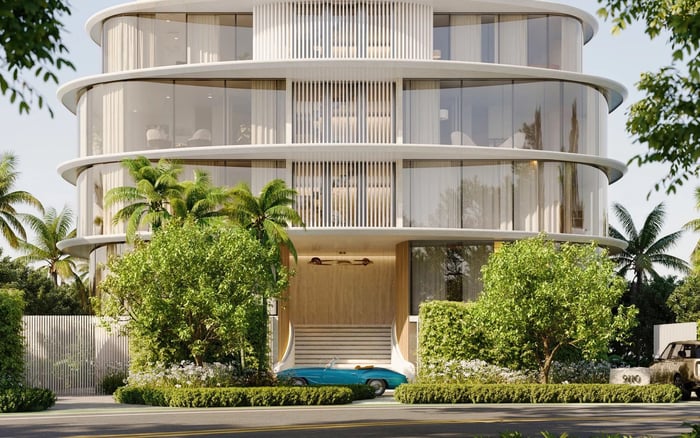
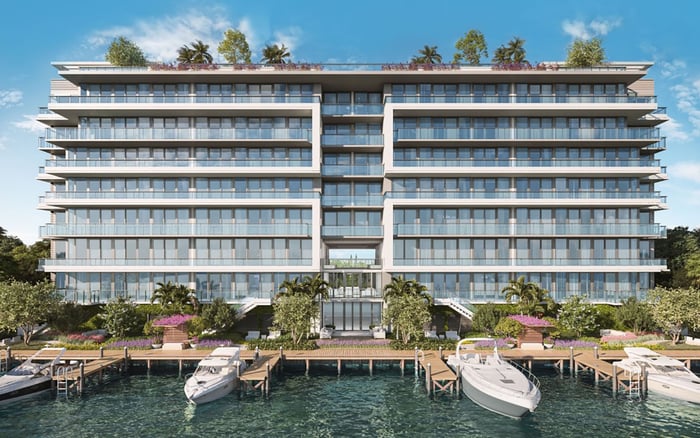
A discreet buyer’s framework for assessing what “private yacht club membership” really delivers near Indian Creek, and how to underwrite its value against South Florida’s most privacy-forward waterfront addresses.

In South Florida, “exclusive” is less about velvet ropes and more about frictionless access: to the water, to privacy, to a social circle that values discretion, and to rules that protect the experience year after year. The Indian Creek corridor-spanning Bay Harbor and nearby barrier islands-sits at the center of this idea. Here, private yacht club memberships aren’t merely amenities. They’re membership models, operating cultures, and governance systems that either protect or dilute what buyers are really buying: time, ease, and separation.
At Indian Creek-adjacent residences, yacht-club access is often sold as lifestyle. The more consequential question is underwriting: what, exactly, is scarce; what is controlled; and what is transferable? If you’re evaluating a membership connected to Indian Creek Residences, treat it like any other high-value asset. Define the boundaries, pressure-test the utility, and verify the durability.
Exclusivity is engineered. The most durable clubs rely on overlapping constraints that are difficult to replicate.
1) Access control that is real, not symbolic.
A private club becomes meaningfully exclusive when entry is controlled at multiple points: property access, dock access, and guest access. Look for layered security-not merely a staffed desk. In the Indian Creek ecosystem, where privacy is part of the local culture, the strength of access control often determines whether the club feels like an extension of home or a public-facing venue.
2) Scarcity that is structural.
True scarcity is the kind that cannot be expanded without breaking the product: limited slips, a limited membership count, or a physical location constrained by shoreline, navigational rules, or the site plan. If a club can add dozens of memberships without adding water capacity, exclusivity becomes a marketing phrase rather than a lived experience.
3) Governance that protects the experience.
A club’s bylaws and board culture can matter as much as the view. Exclusivity holds when policies are explicit about noise, hours, guest behavior, service standards, and vessel operations. Ask what is enforceable-and who enforces it.
4) Culture that matches the resident profile.
Two clubs can have identical hardware and feel completely different. If your priorities are quiet, low-friction departures, and privacy, the social rhythm should reflect that. A club oriented toward events and entertainment may be beautifully executed and still be the wrong fit.
5) Service depth that reduces decision fatigue.
The most exclusive clubs aren’t necessarily the most flamboyant. They’re the ones that solve problems without drama: coordinated arrivals, seamless billing, predictable dock staff, and a “no surprises” operating cadence.
Before you compare one club to another, clarify the membership’s legal and practical form.
Bundled membership tied to residence.
Some offerings are framed as “membership included.” The value is obvious, but the risk is quieter: if it isn’t deeded or contractually locked, the benefit can be revised. Due diligence should focus on whether the right is perpetual, whether it is transferable on resale, and whether it can be reassigned or terminated for noncompliance.
Optional membership with initiation and annual obligations.
Optional memberships can be appealing because they let you buy the home first and upgrade later. They also add a second underwriting layer: initiation, annual dues, assessments, and minimums. The most discreet clubs keep the financial model clear and predictable.
Third-party partnership.
Sometimes “yacht club access” is delivered through a relationship with a separate operator. This can work extremely well, particularly if the operator is disciplined-but it places exclusivity in someone else’s governance. If the partnership ends, what replaces it? The strongest agreements specify continuity and clearly define what happens if terms change.
In waterfront living, practicality is prestige. A membership can sound compelling until you map it against how you actually boat.
Slip suitability.
The question isn’t simply whether slips exist; it’s whether they fit your vessel and your habits. Consider turning-basin comfort, tidal considerations, wake conditions, and whether departures are genuinely quick or routinely congested. Ask how often members are displaced for events, maintenance, or transient traffic.
Guest policy.
An exclusive club can be generous with guests and still feel private-if guest volume is managed. Confirm guest docking rules, guest parking, and whether “events” change the character of weekends.
Operating hours and staffing.
Some clubs shine on paper and frustrate in practice due to limited dockmaster hours, inconsistent staffing, or rigid booking windows. Luxury is consistency.
Maintenance, fueling, and provisioning.
If your lifestyle includes frequent usage, the value rises when essentials are on hand or seamlessly coordinated. If those services are offsite, price in the true time cost.
The Indian Creek aura is built on privacy. For a yacht club membership to feel legitimately exclusive, it must meet that standard.
Look for policies designed to minimize exposure: controlled entry, discreet arrival areas, and a culture that doesn’t treat members as content. The club’s posture on media, photography, and event promotion is revealing. In a high-discretion environment, privacy isn’t a perk; it’s operational discipline.
This is also why the broader neighborhood context matters. Buyers weighing the corridor against other tightly managed enclaves often benchmark against places where privacy is embedded into the real estate itself, such as Oceana Bal Harbour, where community expectations align with discretion.
A yacht club membership is one way to buy access and social curation. But South Florida offers other luxury models that can deliver similar outcomes-with different tradeoffs.
Private residential club model.
In some addresses, the club isn’t nautical, but it can be equally exclusive through curated member spaces, hospitality-style service, and a strong resident profile. If you want a club-like lifestyle without dock logistics, a concept such as Continuum Club & Residences North Bay Village can be a useful comparison point: exclusivity created through membership culture and controlled amenities rather than slips.
Oceanfront privacy as the “club.”
For some buyers, the ocean itself becomes the amenity, and privacy is achieved through low density, disciplined management, and direct beach living. This is where the comparison to boutique oceanfront properties can clarify your priorities. Consider how a quieter, residentially oriented environment like 57 Ocean Miami Beach frames exclusivity around privacy and design, rather than a social calendar.
Wellness-forward exclusivity.
Increasingly, the most sought-after lifestyle isn’t nightlife-it’s restoration: calm public spaces, controlled access, and a resident community that values health and quiet. For buyers who want that tone in the same corridor, a wellness-driven residential concept like The Well Bay Harbor Islands can help you evaluate whether your ideal “club” is actually wellness, not yachting.
None of these alternatives replaces boating. But they sharpen the central question: are you buying a yacht club for boats-or for curated separation?
At this echelon, small contractual details become lifestyle realities. The most useful questions stay specific.
Transferability and resale:
Does membership transfer with the residence, and under what conditions? Is there a separate approval process?
Rules and enforcement:
Who writes and enforces the rules? What is the process for disputes, and how are repeated violations handled?
Capacity and waitlists:
Is there a waitlist, and how is it managed? Are there caps on vessel length or number of slips per member?
Assessments and changes:
Can the club levy special assessments? How often have dues changed, and what approvals are required to change policies?
Guest volume and events:
How many events are held, how public are they, and do they affect dock access or privacy on weekends?
Insurance and liability:
What insurance is required for vessel storage and operations? Who is responsible for damage in common dock areas?
A final note: exclusivity isn’t always about saying “no.” It’s about creating conditions where the right “yes” is reliable.
From an ownership standpoint, yacht club membership can add value in three ways.
1) Time savings that compounds.
The more frequently you boat, the more valuable streamlined access becomes. Convenience isn’t a soft benefit-it’s a measurable reduction in friction.
2) Social curation that matches your lifestyle.
If the club delivers relationships you wouldn’t otherwise access, it can deepen your attachment to the property and to the neighborhood.
3) Scarcity that supports desirability.
When membership is structurally limited and well governed, it can become part of the property’s long-term desirability-especially for buyers who prioritize waterfront lifestyle.
The inverse is also true: if a “private” club operates like a public venue, or if rules can be diluted, perceived value may not survive beyond the first few seasons.
In the Indian Creek corridor, the most compelling luxury is often the one that requires the least explanation. A yacht club membership should feel the same: useful, quiet, controlled, and consistent.
Evaluate it as you would any premium asset. Confirm what is scarce, what is controlled, and what is durable. Then decide whether the club enhances your real patterns of living-not simply the idea of a lifestyle.
What makes a private yacht club membership truly exclusive? Real access control, structural scarcity, and governance that protects privacy and service.
Is a “membership included” offer always the best value? Not always; confirm transferability, permanence, and whether terms can be revised.
How should I compare yacht-club access versus owning a private slip? Compare control and cost against service depth, convenience, and operational support.
Do yacht clubs typically have strict guest policies? Many do; ask how guest docking, events, and privacy rules are managed and enforced.
Can club rules and dues change after I join? Often yes; review bylaws and the process for dues increases and policy amendments.
What should I ask about slips before relying on them? Confirm suitability for your vessel, ease of maneuvering, and how availability is allocated.
Is a third-party partner club riskier than an in-house club? It can be; clarify continuity, termination terms, and what happens if the relationship changes.
Does yacht club membership add resale value to a residence? It can if it is transferable, scarce, and consistently operated to a high standard.
How do I evaluate privacy at a club without being intrusive? Look at entry controls, event frequency, and cultural norms around discretion.
What is the simplest sign that a club fits my lifestyle? When the logistics feel effortless and the culture aligns with how you prefer to spend time.
For a discreet conversation and a curated building-by-building shortlist, connect with MILLION Luxury.
If branded residences are on your mind — as a home or as an allocation — we would be glad to share what we are seeing, privately.
Begin a quiet conversation