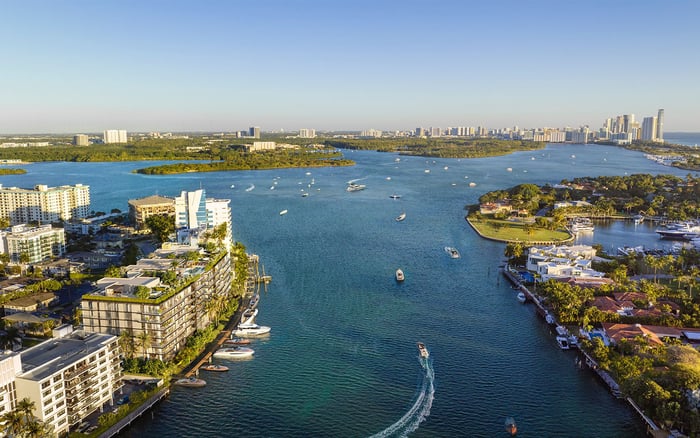
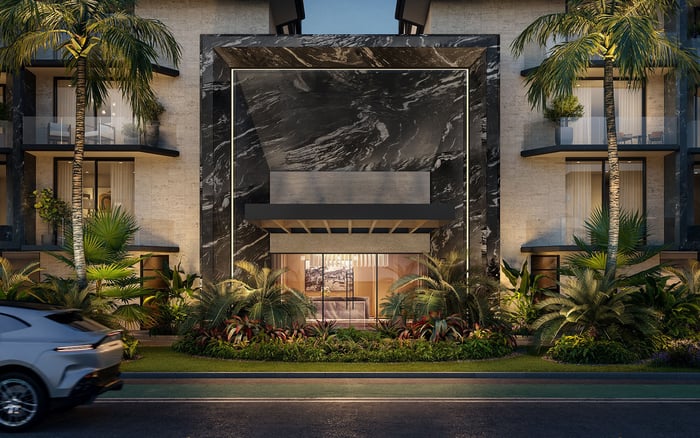
A private slip is more than a convenience in South Florida; it is a form of access, control, and time. For residents who boat regularly, the real luxury is not the vessel, it is the ability to leave on your schedule, return without friction, and keep ownership discreet and secure. At **[Bay Harbor Towers](https://www.millionluxury.com/bay-harbor-islands/bay-harbor-towers)**, the conversation around exclusivity centers on how a private marina integrates with day to day living in Bay Harbor Islands: arrival protocols, wake and current conditions, bridge timing, storage and service coordination, and the building’s ability to support an owner who treats boating as a routine rather than an event. Because availability, dimensions, and operating rules vary by community and can change over time, the most disciplined evaluation is less about marketing language and more about a repeatable checklist. Below is the buyer-oriented framework MILLION Luxury uses to assess whether “deep-water slips” are truly exclusive in practice.
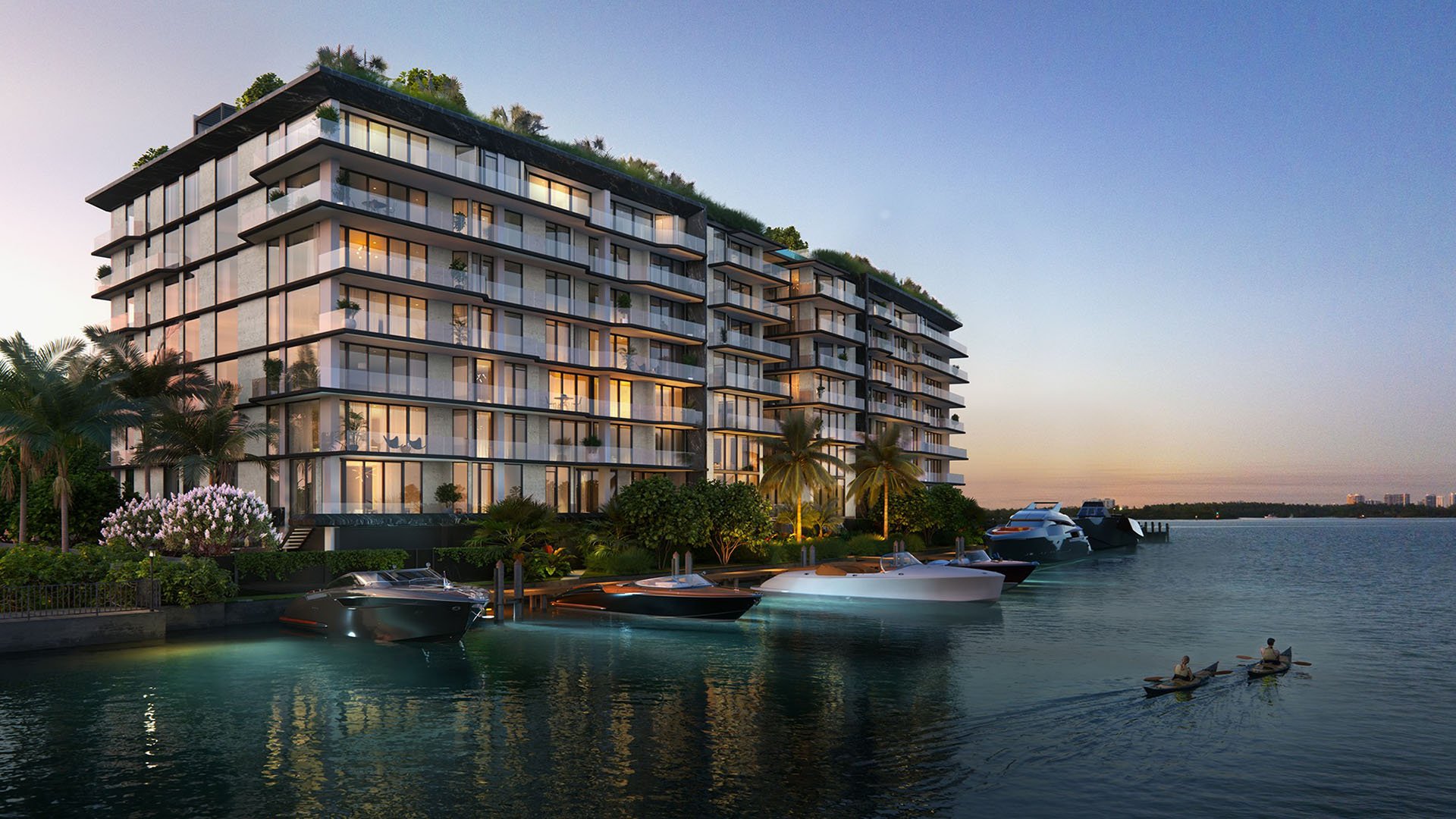
In an ultra-premium market, a private marina signals something specific: a community built around owner autonomy. The most valuable slips are not merely adjacent to the building-they compress the distance between home and open water by eliminating needless decision points. That reduction is what registers as luxury.
In Bay Harbor Islands, exclusivity is magnified by scale. Many residents want the privacy of a quieter enclave while remaining close to Miami Beach and the Design District. A marina can anchor that lifestyle by keeping weekends effortless and making weekdays genuinely practical.
This is where Bay Harbor Towers fits into the discussion. The building’s appeal is tied to Bay Harbor Islands itself: a neighborhood where the water is part of daily life, yet serious boaters still have to underwrite the logistics. A deep-water slip can be the difference between aspirational boating and boating as a routine.
“Deep-water” is often used as shorthand, but buyers should translate it into three measurable realities:
Approach depth and dredge history: Depth at the slip is only half the story. The controlling depth is often the approach channel and turning basin, and real-world conditions can shift with storms and routine silting.
Tide sensitivity and seasonal variability: A slip that feels forgiving at high tide can become a planning exercise at low tide. Owners running deeper-draft vessels should underwrite the margin for error-not just the headline.
Maneuvering envelope: Slip width, fairway clearance, and current exposure dictate how stress-free docking actually is, especially for larger beams or less maneuverable setups.
If a marina cannot reliably support your draft and handling profile across conditions, it is not deep-water in any meaningful lifestyle sense.
Marina exclusivity is created by governance, operations, and owner experience. For Bay Harbor Islands buyers, these are the decision points that separate a premium amenity from a true moat.
A slip can be deeded, leased, licensed, or assigned under building rules. The nuance matters because it directly affects resale value and flexibility. Buyers should confirm whether slip access is tied to a specific residence, whether it can be sold or rented separately, and what approvals are required.
“Private marina” can still mean waitlists, priority systems, and internal politics. Exclusivity is strongest when allocation is transparent and predictable. Clarity on whether slips are limited to residents only-and how often they trade hands-is a meaningful indicator of ongoing value.
Luxury boating often involves guests, crew, and service logistics. Confirm whether the marina supports guest docking, tender use, and vendor access without compromising security. Rules around liveaboards, fueling, and after-hours arrivals can also reshape usability.
A marina is an entry point. The best private marinas operate like a controlled arrival court: restricted access, clear sightlines, and procedures that feel professional without becoming intrusive. Discretion is part of the asset.
Marina policies can impose requirements on vessel insurance, documentation, and maintenance standards. These can be appropriate-and even protective-but they should be understood upfront. A buyer should know what is required, what is prohibited, and what enforcement looks like in practice.
In practice, exclusivity at Bay Harbor Towers comes down to how seamlessly the marina integrates into residents’ routines. A deep-water slip is only as valuable as the day-to-day experience: can you arrive, load, depart, and return without friction?
In Bay Harbor Islands, buyers should evaluate the full boating route. Bridges, traffic timing, and the last mile of navigation shape how often an owner truly uses the boat. When the route is manageable, a private slip becomes a lifestyle multiplier-morning runs, sunset cruises, and spontaneous guest outings become realistic.
The second component is community alignment. A marina is most exclusive when it is backed by a resident culture that treats boating as a primary amenity, not a decorative feature. That culture influences maintenance standards, the consistency of rule enforcement, and how quickly operational issues are resolved.
Buyers shopping Bay Harbor Islands often compare multiple projects because the neighborhood is compact, and each building expresses a distinct version of luxury.
For a newer, design-forward angle on the same enclave, Onda Bay Harbor is frequently part of the conversation. Even when boating is the priority, the broader residential experience still matters: arrival, amenities, privacy, and how the building’s scale fits your daily rhythm.
Those who want to stay within Bay Harbor Islands while exploring alternative building profiles also consider Origin Bay Harbor Islands and La Maré Bay Harbor Islands. The value of this comparison is practical, not theoretical. It forces clarity around what you are buying: not only a slip, but an operating ecosystem.
If wellness programming and quiet-luxury services are part of your decision, The Well Bay Harbor Islands can help you benchmark how much of your lifestyle is water-driven versus amenity-driven. For many buyers, the ideal answer is both-but the tradeoffs become clear only when you tour with a boater’s eye.
A sophisticated buyer should underwrite a slip like a second asset class, evaluated alongside the residence.
Before you anchor your valuation to a deep-water claim, read the rules that govern use, transfer, and compliance. If the documents do not clearly answer your questions, assume the most restrictive interpretation until proven otherwise.
Instead of standing at the dock and imagining, map the sequence: loading, guest arrival, line handling, turning radius, and the route out. The goal is to confirm whether the marina design supports your specific vessel and habits.
If you travel, use crew, or entertain frequently, ask how the marina performs under pressure: holiday weekends, weather disruptions, or maintenance periods. Exclusivity often reveals itself in exceptions-not in ideal conditions.
Your next boat may be different. A slip that barely accommodates today’s beam or draft can limit future options. If you expect to upgrade, evaluate the marina’s margin and whether rules allow reconfiguration, subleasing, or alternative assignments.
In Bay Harbor Islands, slip access can influence liquidity, not just price. A buyer pool that includes boaters tends to move quickly when a property solves multiple needs at once: location, privacy, and a ready-to-use slip.
That said, the market rewards clarity. Residences with well-defined slip rights and stable operating rules are easier to underwrite. Ambiguity can soften bids even when the marina photographs well.
For sellers, exclusivity is best communicated through specifics inherent to the asset: the nature of slip rights, operational consistency, and the lived experience of leaving the dock with minimal friction.
At the highest end, exclusivity is quiet. It feels like not having to negotiate your own lifestyle. A private deep-water slip at Bay Harbor Towers should be judged by how reliably it delivers that outcome: effortless departures, controlled arrivals, and a governance structure that protects owners.
When those pieces align, the marina is not an amenity. It is a private infrastructure advantage in Bay Harbor Islands.
What does “deep-water slip” actually mean for a buyer? It should mean reliable access for your draft and handling profile across normal tides and conditions-not just a marketing phrase.
Is a private marina always residents-only? Not necessarily; some marinas allow guest docking or limited access, so you should confirm the rules and enforcement.
Can a slip be sold separately from a condo? It depends on how the slip rights are structured, so review whether it is deeded, leased, or assigned by the association.
What is the biggest mistake buyers make evaluating marina exclusivity? Focusing on the dock itself while overlooking approach depth, maneuvering room, and practical routing to open water.
How do rules affect day-to-day usability? Policies on guests, vendors, hours, and maintenance can either support effortless boating or create recurring friction.
Does marina security matter beyond privacy? Yes; controlled access can reduce operational risk and protect the discretion many owners expect.
Should I prioritize slip size or location within the marina? Both matter, but location can affect current exposure and ease of docking, which impacts how often you actually use the boat.
How can I evaluate the marina during a showing? Walk through a full departure rehearsal-from arrival to route-out-checking clearances and the ease of handling.
Do deep-water slips increase resale value in Bay Harbor Islands? They can, especially when slip rights are clear and the marina is operationally consistent, expanding the buyer pool.
What should I review first when a building advertises slips? Start with the governing documents that define rights, transferability, and rules, then validate the on-water reality.
If you'd like a private walkthrough and a curated shortlist, connect with MILLION Luxury.
If branded residences are on your mind — as a home or as an allocation — we would be glad to share what we are seeing, privately.
Begin a quiet conversation