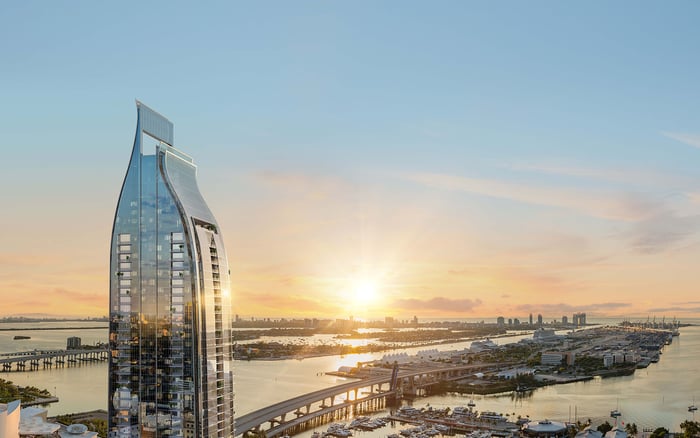
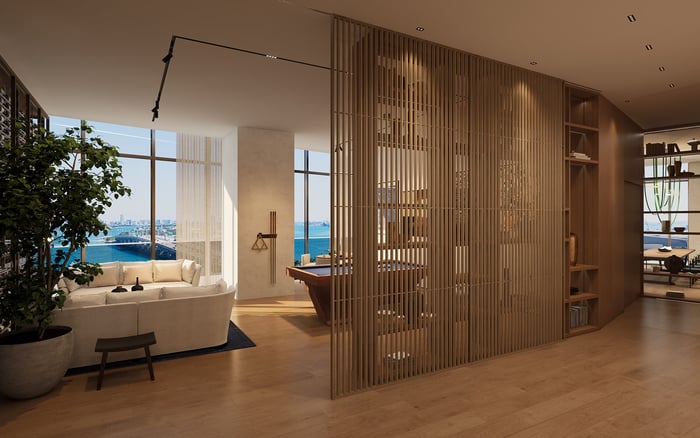
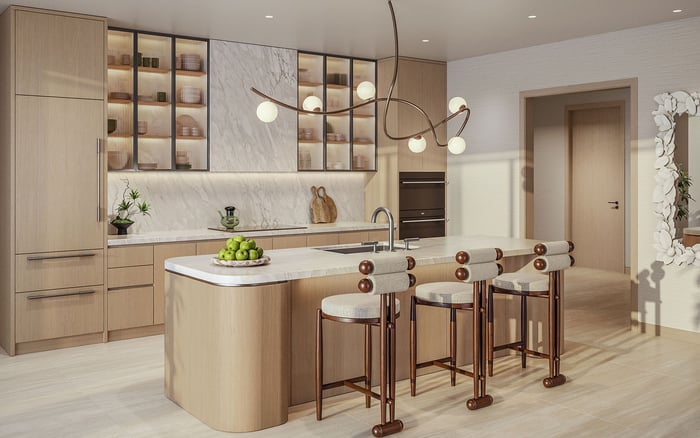
A buyer-focused editorial on why discreet arrival design matters at Delano Residences & Hotel Miami, and how VIP courts and subterranean entries shape privacy, security, and day-to-day ownership in Downtown Miami.
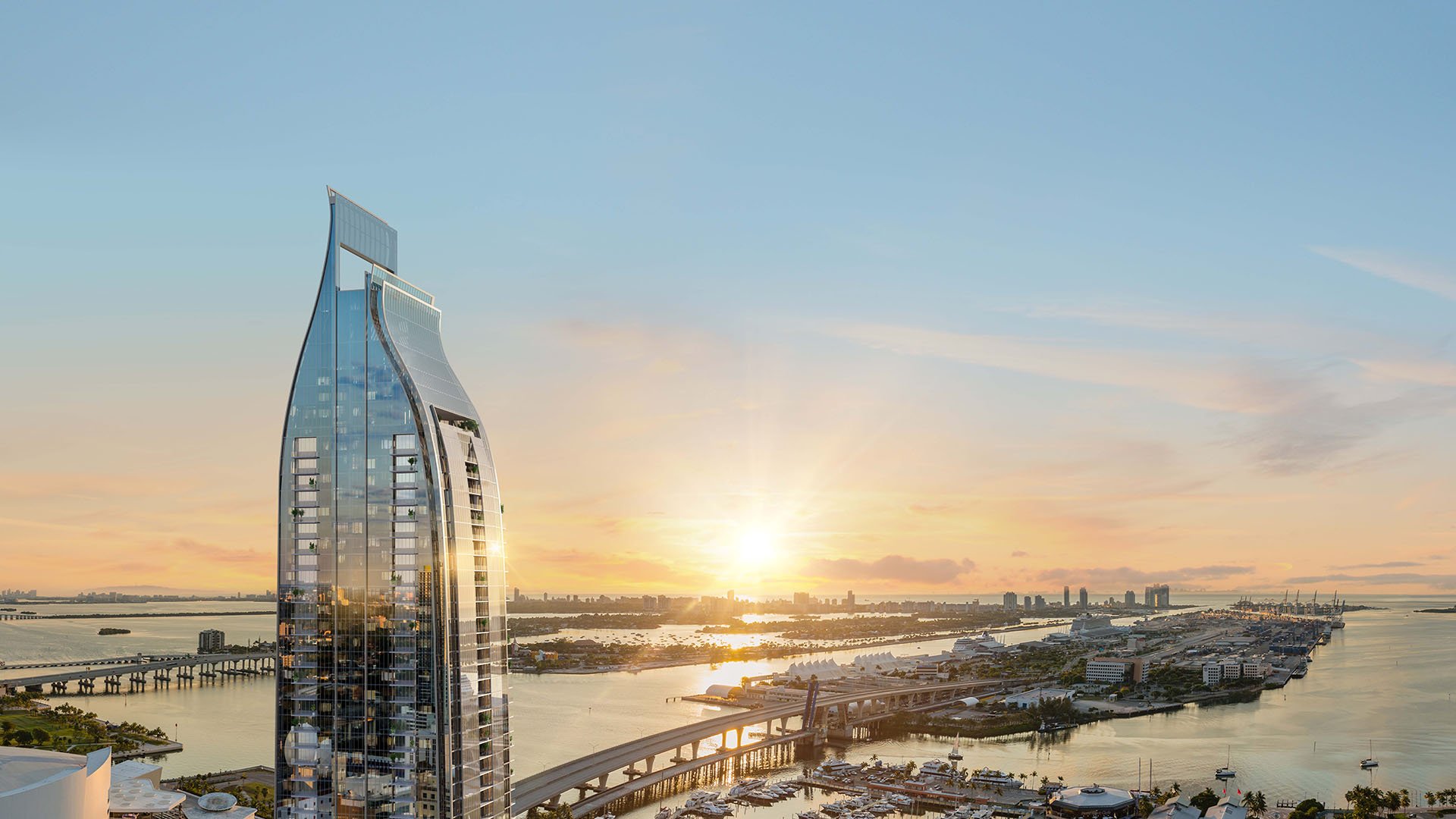
In the upper tier of South Florida residential design, privacy begins well before a resident reaches the lobby. For many buyers, the real measure of luxury is not simply a dramatic double-height entrance or a polished porte cochere. It is whether a building can receive owners, guests, staff, and security in a way that feels composed, unobtrusive, and difficult to read from the street.
That is the context in which Delano Residences & Hotel Miami merits attention. In Downtown, where visibility, traffic flow, and mixed-use intensity all place pressure on the front door, the idea of a VIP arrival court or subterranean entrance takes on unusual importance. These are not ornamental features. They are operational tools that shape discretion, security, speed of movement, and the emotional tenor of arriving home.
For buyers considering Delano Residences & Hotel Miami, the central question is straightforward: does the arrival experience create separation from the city, or merely stage it? In a market where residents increasingly expect hotel-grade screening paired with private-home calm, that distinction matters.
Discretion is often used loosely in luxury marketing, but sophisticated buyers tend to define it with more precision. A discreet building arrival should limit visual exposure, reduce waiting time, separate service traffic from resident traffic where possible, and avoid forcing a high-profile owner into a public choreography every time they come and go.
A VIP arrival court serves that purpose when it is designed as a controlled threshold rather than a ceremonial drop-off. The strongest examples allow a resident to move from vehicle to secured interior space with minimal pause and minimal public visibility. A subterranean entrance can take that logic further, shifting much of the transition below grade so the most sensitive part of the arrival sequence occurs outside the street’s line of sight.
This matters in Downtown more than it might in a quieter residential pocket. Urban density creates incidental exposure. Valet queues, rideshare movement, event traffic, and pedestrian activity all increase the likelihood that an owner’s routines become legible to others. In a genuinely private tower, the building absorbs this complexity rather than displaying it.
For a project such as Delano Residences & Hotel Miami, discretion should be judged less by language and more by sequence. Buyers should think in terms of seven practical thresholds: street approach, vehicular screening, traffic separation, covered transition, vertical circulation, staff visibility, and directness of access to private floors.
If a VIP court is successful, it should feel intuitive and calm. Security should be present without becoming theatrical. Valet should appear coordinated rather than congested. Residents should not have to cross hotel-heavy circulation to reach private areas. If a subterranean arrival component is part of the design language, it should do more than provide concealment. It should also reduce friction.
That final point is critical. Privacy without efficiency often becomes inconvenience disguised as exclusivity. The best buildings deliver both.
This is one reason seasoned buyers compare arrival systems across branded and design-led residences throughout South Florida. In Brickell, projects such as 888 Brickell by Dolce & Gabbana and The Residences at 1428 Brickell raise expectations around formal hospitality and controlled owner access. In Miami Beach, developments like The Perigon Miami Beach show how seclusion can be expressed differently when the surrounding urban conditions are less vertical but no less status-sensitive.
Not every covered drop-off is a VIP arrival court. The distinction lies in what the building is designed to solve.
A traditional porte cochere is often social and visible by design. It can be elegant, but it also tends to place the act of arrival on display. By contrast, a VIP court is more selective. It narrows who sees whom, compresses the path between vehicle and secured interior, and often allows for more active management of access.
At the very top end of the market, this difference is not cosmetic. It can affect resale positioning because privacy infrastructure tends to age better than decorative gestures. Finishes can be updated. Landscaping can mature. But a compromised front-of-house sequence is difficult to correct once a tower is operating.
That is why buyers looking at Delano should pay attention to whether the project’s arrival design creates layered access rather than a singular grand entrance. The most convincing luxury environments often rely on multiple experiences: a public-facing hotel arrival, a more discreet residential reception path, and a service logic that remains largely invisible.
Subterranean entrances hold particular appeal for owners who value anonymity, continuity of schedule, and reduced street friction. They are especially compelling for residents whose profile, family considerations, or travel rhythm make a quieter ingress preferable to a front-door performance.
Done well, below-grade access creates a psychological shift. The city falls away earlier. Noise softens. The resident enters a sequence that feels curated rather than exposed. This can be an important advantage in Condo-hotel environments, where the hospitality identity of the property is part of the appeal, but resident privacy still needs to be protected.
The caveat is that subterranean access must remain elegant. If it feels utilitarian, dim, or operationally detached from the residential brand, it undermines the promise. In successful luxury execution, even the concealed route should feel architectural, secure, and unmistakably premium.
Comparable expectations appear in a range of waterfront and branded settings. Along Brickell, the language of controlled access is now integral to premium positioning, while at projects such as Waldorf Astoria Residences Downtown Miami, buyers also scrutinize how hospitality circulation and private ownership circulation coexist. In top-tier project conversations, arrival choreography increasingly ranks alongside wellness, views, and service depth.
The right tour questions are rarely about the beauty of the driveway. They are about the predictability of use.
Ask whether resident and hotel arrivals are distinct in practice, not merely in plan. Ask how guest screening occurs and whether regular residents can move from vehicle to elevator lobby without crossing active public zones. Ask where staff, deliveries, and back-of-house movement occur during peak hours. Ask whether security presence is fixed, adaptive, or layered through technology and personnel.
A buyer should also observe the intangible qualities. Is the transition quiet? Does the route feel compressed and protected? Can someone waiting outside easily identify who is coming home? Does the sequence support family living as effectively as it supports ceremonial entertaining?
In the current New-construction market, these answers often separate merely expensive buildings from genuinely accomplished ones.
Private arrival infrastructure is not just a lifestyle amenity. It can also support long-term value perception. In the upper luxury segment, buyers tend to remember how a building made them feel at the moment of entry. A serene, shielded, and efficient arrival can become part of a residence’s identity, especially in dense urban neighborhoods where privacy is scarce.
That has implications for Investment thinking. Buildings that solve for discretion tend to remain compelling across changing buyer profiles, whether the next owner is a principal residence user, an international buyer seeking quiet occupancy, or a household balancing family life with public visibility.
At Delano Residences & Hotel Miami, the arrival question therefore belongs near the top of the due-diligence list. View lines, finishes, and branding may secure initial attention. Over time, however, the mechanics of entry often define lived luxury more convincingly than any lounge or rooftop feature.
For a residence positioned within Downtown Miami’s luxury conversation, a VIP arrival court or subterranean entrance is best understood as strategic architecture. It is part security system, part hospitality design, and part psychological buffer from the city outside.
At Delano Residences & Hotel Miami, buyers should evaluate whether that buffer is robust enough to support a truly private residential life within a highly visible urban setting. The right arrival sequence does not announce importance. It quietly protects it.
Why do luxury buyers care so much about arrival courts? Because privacy begins at the curb, and the arrival sequence often determines how exposed or protected daily life feels.
What is the difference between a VIP court and a regular porte cochere? A VIP court is typically more controlled and discreet, with a stronger emphasis on privacy, screening, and limited visibility.
Why is subterranean access attractive in Downtown Miami? It can reduce street exposure, ease congestion, and create a calmer transition from city traffic to private residence.
Does a subterranean entrance automatically mean better security? Not automatically. Its value depends on how well it is integrated with staffing, screening, access control, and circulation planning.
Is this especially important in a condo-hotel setting? Yes. In a Condo-hotel environment, owners often want hospitality benefits without sharing the same public arrival rhythm as transient guests.
Can discreet arrival design affect resale value? It can support buyer appeal over time because privacy infrastructure is difficult to replicate and highly valued in dense luxury markets.
What should buyers inspect during a tour? Focus on traffic separation, guest handling, elevator access, service visibility, and how quickly you move from car to private space.
How does Delano compare with other New-construction projects? Buyers will likely judge it against peers where privacy, service choreography, and front-of-house control are already central expectations.
Why does this matter for Investment-minded purchasers? Because enduring luxury value often comes from operational excellence, not just aesthetics, and arrival design is part of that equation.
What is the clearest takeaway for Downtown buyers? In Downtown, discretion is a functional luxury. The more effectively a building conceals and simplifies arrival, the stronger its residential proposition.
For a tailored shortlist and next-step guidance, connect with MILLION Luxury.
If branded residences are on your mind — as a home or as an allocation — we would be glad to share what we are seeing, privately.
Begin a quiet conversation