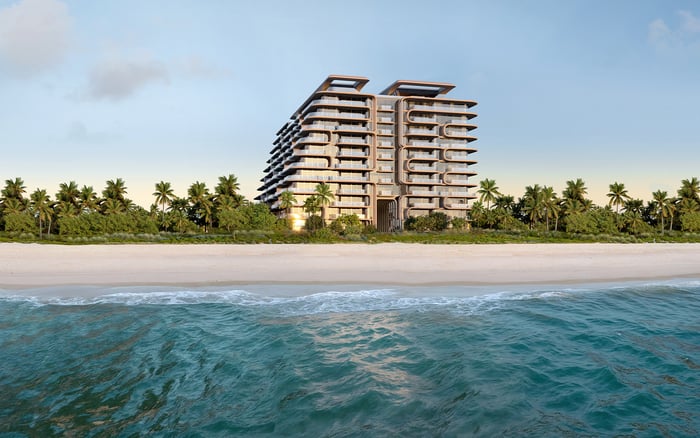
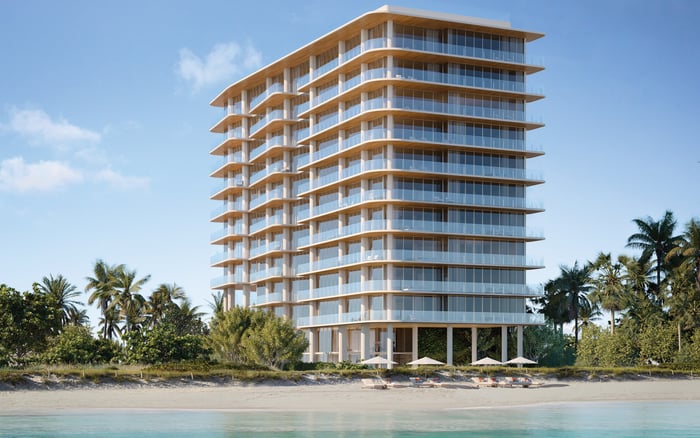
Ocean House Surfside presents a compelling, low-density wellness vision. Buyers should also examine the staffing, maintenance, testing, reserves, and service standards that will determine whether its amenities perform as promised after opening.
At 9317 Collins Avenue, Ocean House Surfside is conceived as a boutique condominium with 25 residences and private, direct beach access. The two- to five-bedroom residences span approximately 2,093 to 6,279 square feet, including penthouse offerings. Construction was underway in February 2025, with completion expected in 2027 and pricing beginning near $5 million.
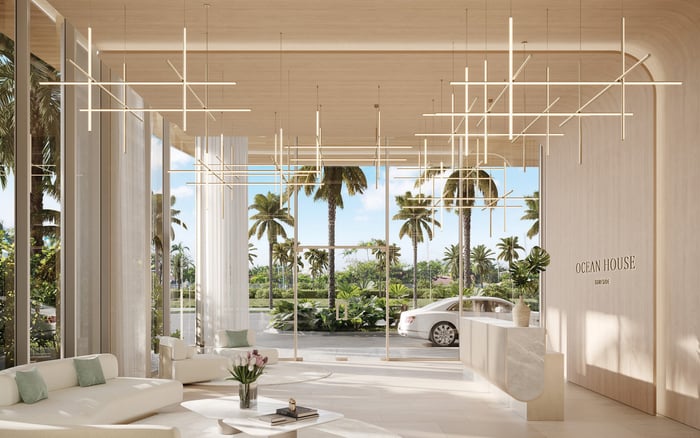
The design pedigree is substantial. Multiplan Real Estate Asset Management is the developer, Arquitectonica is responsible for the architecture, ArquitectonicaGEO for the landscape design, and Carla Guilhem Design for the interiors. Private elevators, dedicated vestibules, electronic fob access, and a double-height lobby are intended to reinforce privacy and controlled circulation. Within the residences, specifications include floor-to-ceiling impact glass, natural stone flooring, European cabinetry, automated lighting controls, and spa-inspired bathrooms.
Yet the defining proposition is not simply oceanfront architecture. It is wellness as a daily residential experience, expressed through three floors of amenity spaces, tropical landscaping, reflecting ponds, floating cabanas, intimate lounges, and an experiential spa.
In luxury residential wellness, the operating model matters as much as the amenity plan.
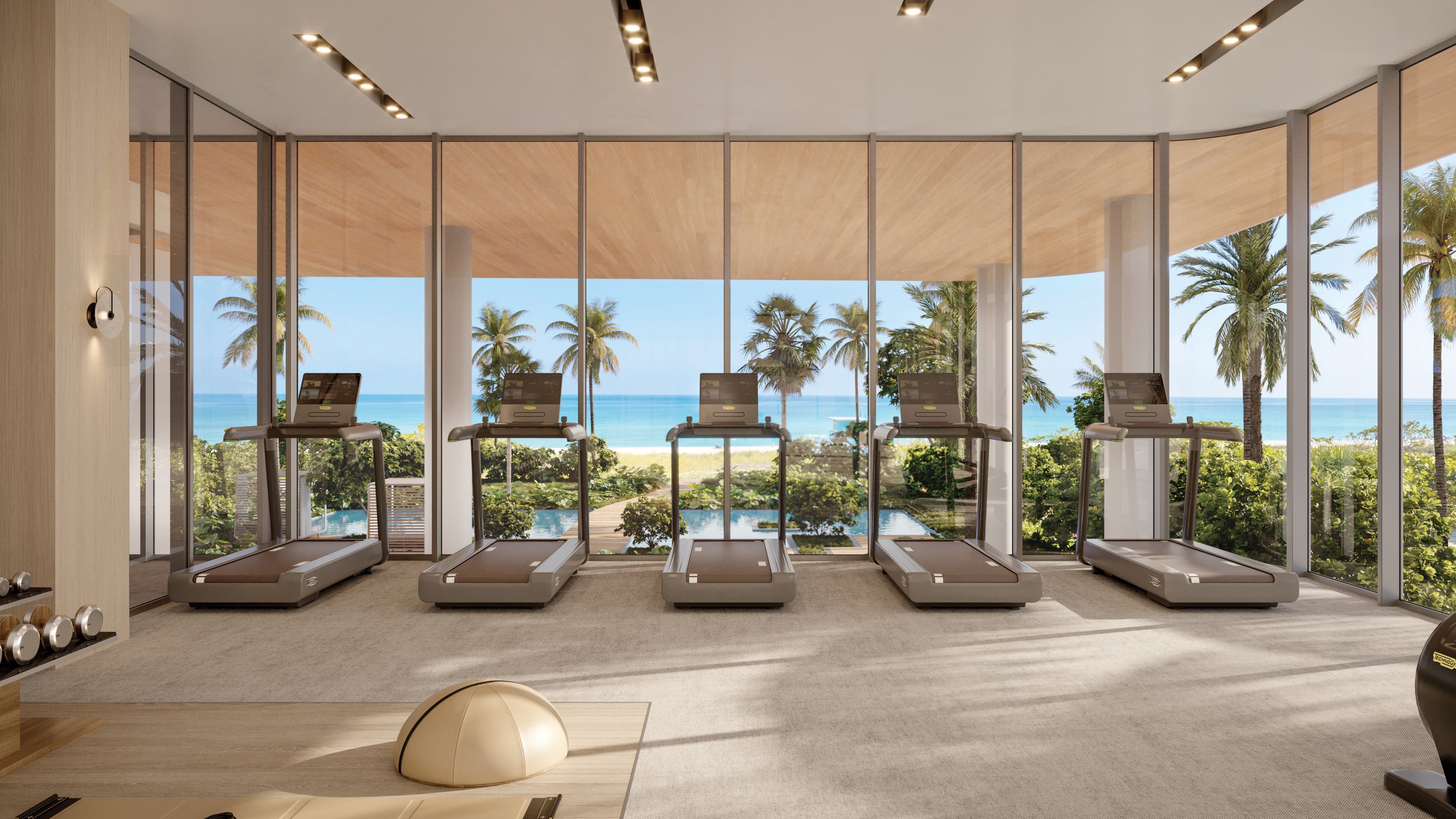
The planned spa combines a steam room, sauna, hot tub, salon room, and massage treatment room. A fitness studio and private training room broaden the program, while water-based amenities include an expansive rooftop pool with a sundeck and relaxation area, plus a sunset deck with a vitality pool. Reflecting ponds, secluded lounges, cabanas, and landscaped areas are intended for relaxation and meditation.
Service is also meant to shape the experience. The proposed package includes round-the-clock front-desk reception or concierge coverage and valet service, alongside an on-site property manager. Beach- and pool-chair attendants are planned to assist with setup. The social component includes a club room with a library, television, lounge seating, and a communal dining table reservable for private events. A ground-floor garden, outdoor kitchen, lounge, and recreational lawn extend the lifestyle proposition beyond the spa.
It is an appealing plan, particularly for buyers who value privacy and a quieter scale. But because the development remains under construction, the amenity descriptions represent planned facilities rather than demonstrated operating performance.
A sauna can be beautifully detailed yet unavailable when demand peaks. A treatment room can appear complete yet offer little practical value without qualified therapists, reliable booking windows, sanitation protocols, and clear service hours. A fitness studio can photograph impeccably while lacking a structured class calendar, assessment program, or disclosed trainer qualifications.
The facilities are identified, but no named spa operator, therapist staffing schedule, treatment-availability standard, or branded wellness-management agreement has been published. Nor has a WELL, Fitwel, or comparable third-party wellness certification been identified. Specifications do not state advanced indoor-air filtration, coastal-humidity performance targets, air-quality monitoring, or a formal circadian-lighting standard.
These omissions do not establish that such systems or standards will be absent. They do mean that a buyer should distinguish between an aesthetic wellness narrative and an operational commitment that can be reviewed in writing. That distinction is useful throughout the market, whether comparing Ocean House with The Delmore Surfside or considering established Surfside references such as The Surf Club Four Seasons Surfside. The relevant question is not which presentation is most seductive, but which operating obligations are documented, funded, and measurable.
Round-the-clock concierge and valet coverage sounds comprehensive, but coverage alone does not reveal staffing depth or response quality. Buyers should request proposed staffing schedules for concierge, valet, beach, spa, fitness, and property-management functions. They should also ask whether staffing changes seasonally, who supervises each team, and how absences or peak periods will be covered.
Useful benchmarks include target valet retrieval times, concierge acknowledgment times, maintenance-ticket closure periods, amenity downtime, treatment-booking availability, and resident-satisfaction reporting. Concierge, valet, and beach services are planned, but measurable service levels and staffing ratios have not been stated.
Low density may support a more personal experience, but 25 residences do not automatically guarantee flawless service. Staffing levels, training, vendor oversight, escalation procedures, and management accountability will ultimately determine consistency. During comparison visits, buyers may also place Eighty Seven Park Surfside in the conversation while keeping the evaluation focused on documents and operating commitments rather than surface similarities.
South Florida wellness amenities are physical systems exposed to intensive use, moisture, heat, and salt air. Pools, hot tubs, steam rooms, saunas, fitness machines, ponds, cabanas, pumps, finishes, and control equipment all require routine care. Cleaning frequencies, preventive-maintenance schedules, equipment-replacement cycles, and reserve allocations for these components have not been published.
Buyers should examine the condominium documents and proposed budget to determine who maintains each amenity, how often inspections and servicing occur, and whether specialist vendors are contemplated. The review should cover the rooftop pool, vitality pool, spa equipment, reflecting ponds, fitness machines, cabanas, and measures addressing salt-air corrosion. It should also clarify how closures are communicated and what restoration timelines apply when equipment fails.
Reserve planning deserves equal attention. A lavish initial installation can become a recurring assessment risk if renewal costs are underestimated. Buyers should look for realistic replacement assumptions, clearly assigned responsibilities, and funding that reflects the complexity of water, mechanical, and outdoor systems. The objective is not merely to preserve appearance. It is to sustain availability, safety, comfort, and value.
Before committing, a buyer can request an operating package addressing six areas: staffing, service levels, sanitation, preventive maintenance, reserves, and performance reporting. Indoor-air and water-quality testing would make wellness claims more verifiable, as would documented cleaning procedures, qualified operators, and independent certification. Where details are not yet final, buyers can ask when they will be approved and whether they will become binding association obligations.
The same discipline applies to residence-level systems. Buyers can seek precise specifications for ventilation, humidity control, lighting automation, impact glazing, and bathroom fixtures, then confirm which features are included in the purchase agreement rather than shown only in marketing material.
Ocean House Surfside has the ingredients of an intimate and sophisticated coastal retreat: low density, direct beach access, considered design, layered landscaping, and an unusually broad amenity program. Its long-term distinction, however, will depend on converting those ingredients into dependable service and resilient operations. For luxury buyers, measurable standards do not diminish aspiration. They protect it.
For confidential guidance on evaluating South Florida luxury residences, connect with MILLION.
If branded residences are on your mind — as a home or as an allocation — we would be glad to share what we are seeing, privately.
Begin a quiet conversationOcean House Surfside is planned with 25 residences, giving it a low-density profile compared with larger condominium developments.
The condominium is located at 9317 Collins Avenue in Surfside and is planned with private direct beach access.
Two- to five-bedroom residences are marketed at approximately 2,093 to 6,279 interior square feet, including penthouse offerings.
Plans include a spa, fitness studio, private training room, rooftop pool, vitality pool, reflecting ponds, cabanas, and relaxation areas.
The reviewed public materials do not identify WELL, Fitwel, or a comparable third-party wellness certification.
The public materials identify spa facilities but do not publish a named operator, therapist schedule, or treatment-availability standard.
Buyers should request staffing schedules, response-time targets, valet retrieval standards, booking availability, and escalation procedures.
Pools, spa equipment, fitness machines, ponds, and cabanas require recurring care, particularly in South Florida's humid, salt-air environment.
Buyers should review proposed funding for inspections, preventive maintenance, repairs, and eventual replacement of complex amenity systems.
Construction was underway in February 2025, with completion expected in 2027.