A buyer-focused comparison of Ocean House Surfside and The Surf Club Four Seasons Surfside, separating advertised parking services from unit-specific rights, key-custody rules, chauffeur access, and recurring costs.
For a Surfside buyer, the arrival experience is more than a beautifully composed entrance. It is the daily connection between a residence, a vehicle, and the people entrusted to make that transition seamless. A covered drop-off, private elevator, or attentive valet may set the tone. None, by itself, establishes a parking entitlement or its annual cost.
The distinction matters when comparing Ocean House Surfside with The Surf Club Four Seasons Surfside. Ocean House advertises round-the-clock valet. The Surf Club's residential features include dedicated arrivals, with self-parking and private-garage features available to select residences. The meaningful comparison is not simply service versus service. It is the combination of legal rights, vehicle access, key custody, and operating charges attached to the residence under consideration.
A polished arrival is an amenity; a documented parking right is an ownership question.
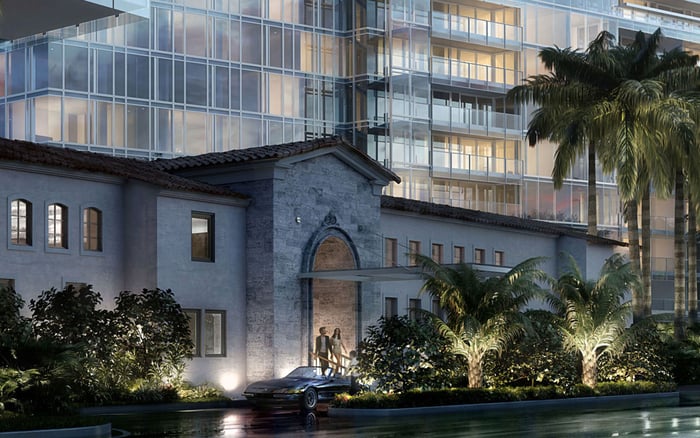
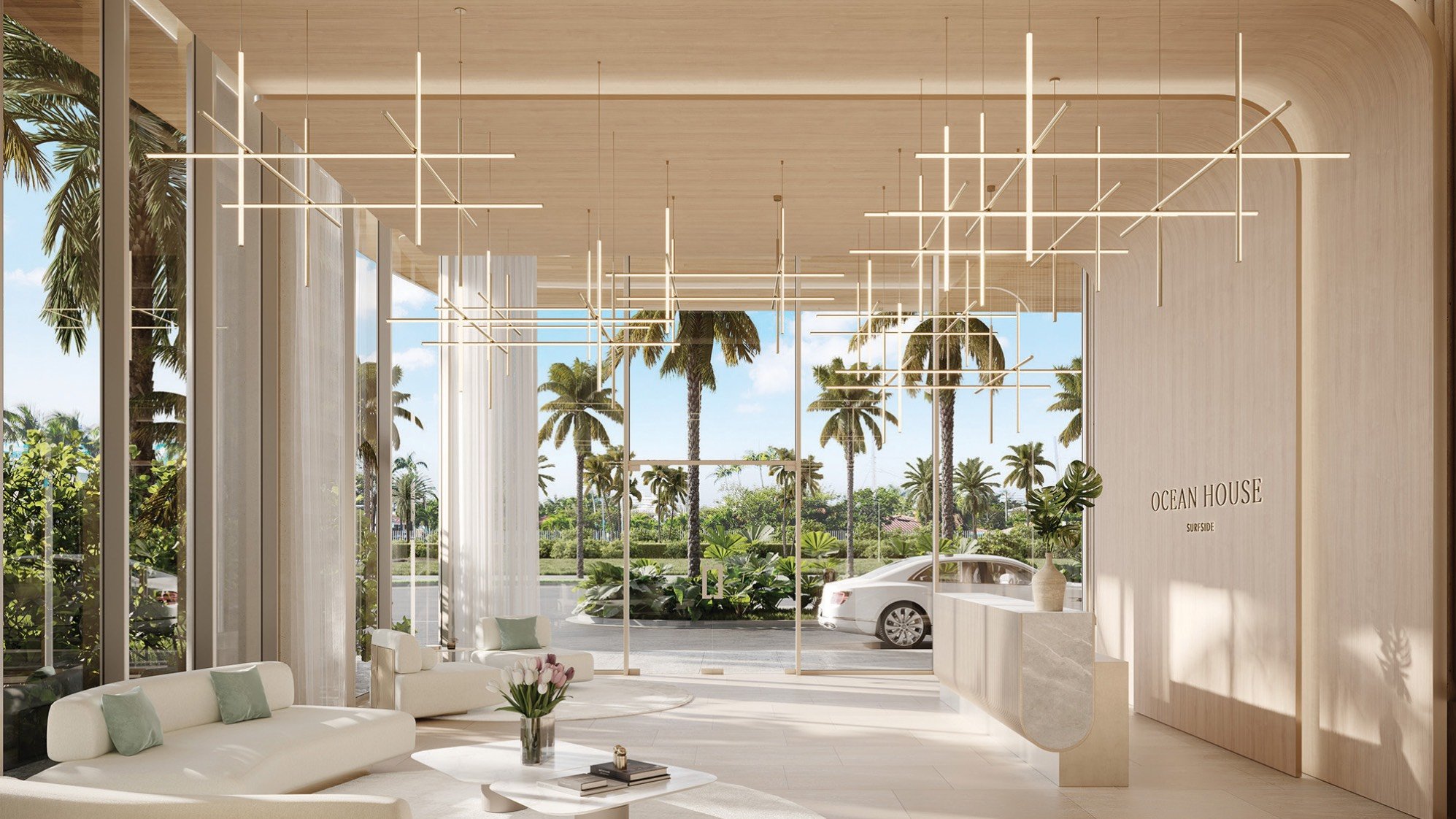
Ocean House occupies 9309-9317 Collins Avenue. Its arrival sequence includes a landscaped area and covered porte-cochère. Private elevators with dedicated lobbies and electronic fob-controlled access carry that emphasis on privacy into the building.
The advertised offering includes a garage with 24-hour valet, alongside 24/7 front-desk reception and concierge service. These are meaningful conveniences, particularly for an owner who prefers a managed transition from car to residence. They do not establish whether the target unit carries deeded parking, an assigned space, a limited common element, or a contractual parking entitlement.
Nor does round-the-clock valet establish that an owner may self-park, retain every vehicle key, or authorize a chauffeur to collect a car independently. Each is a separate operating question. Buyers should obtain written confirmation of the number of vehicles permitted, the form of the parking right, and any restrictions on access or use.
The advertised amenities also include electric-vehicle charging stations. Charging fees, allocation rules, and access priorities remain questions to resolve, rather than benefits to factor into ownership automatically.
The Surf Club combines hotel and residential uses, but its residential arrival arrangements warrant a separate review. The advertised residential features include dedicated private arrival and valet entry for each building, together with electronic access to elevators and garage doors.
Private self-parking is offered in select residences in addition to valet. The residential features also include a private tandem garage for two cars. Neither statement establishes that every condominium includes self-parking or a two-car entitlement. Buyers must confirm the eligible residence, garage configuration, and legal status of the parking for the actual purchase.
Richard Meier Signature Penthouses are marketed with air-conditioned private parking garages and designated private beachfront cabanas. That distinction reinforces the need to evaluate each residence individually rather than assume a penthouse feature applies throughout the property.
Hotel valet offerings should not be used to infer condominium-owner charges or key-custody procedures. Likewise, a hotel vehicle-retrieval process does not establish residential authorization rules. Buyers should request the residential policy applicable to their building and unit, not a general description of the hospitality experience.
Begin with the recorded declaration, condominium plat, purchase contract, parking exhibit, and current rules. Ask the closing team to reconcile the advertised parking arrangement with the documents governing the residence.
The questions should be precise: Is the entitlement tied to a numbered space or garage? Can management relocate an assignment? Is it transferable with the residence, separately transferable, or subject to revocation? Does the right cover storage only, or also direct owner access? These are questions for review, not assumptions about either property.
A tandem arrangement also warrants a practical inspection. Ask how two vehicles would enter and leave, who may move them, and whether the household's proposed routine works within the actual space and rules.
For buyers also considering Arte Surfside, the same document-first discipline applies. Similar location or positioning should never substitute for examining the parking rights attached to a particular residence.
Neither property's advertised residential features establish a complete key-management policy. At Ocean House, resident key-retention rights and permanent valet key custody remain unresolved. At The Surf Club, the parking options likewise should not be read as a complete residential key-custody agreement.
Request written answers on whether valet must hold an operating key, whether a spare is required, where keys are stored, and how access is logged. Ask who may authorize retrieval, how that authorization is verified, and how permissions are withdrawn when a driver or household employee changes.
Insurance and responsibility deserve equal attention. Clarify the applicable coverage and procedures for vehicle damage, lost keys, replacement keys, and disputed retrievals. Do not assume these matters are settled merely because valet is available around the clock.
For a household with multiple drivers, the objective is a clear chain of authorization: who may request the vehicle, who may receive it, and whether the owner must be present.
A private valet entry is not necessarily a chauffeur waiting area. A covered porte-cochère likewise does not establish permission to stage a vehicle there while an owner finishes a meeting or prepares to depart.
At The Surf Club, the advertised residential features do not establish chauffeur credential rights, owner-absent retrieval, temporary arrival-court staging, or peak-period queue rules. Ocean House's arrival and access amenities leave the same questions unanswered.
Ask management where a driver may wait, whether waiting is time-limited, and whether third-party drivers receive individual credentials. Confirm the procedure for owner-absent collection and whether a driver may use resident access credentials at all.
Buyers extending their search to Fendi Château Residences Surfside should apply the same household-specific test, without assuming equivalent parking or chauffeur arrangements. A useful walkthrough follows an ordinary departure and return, including the permissions needed at each step.
The available details do not support a reliable annual parking-cost comparison between Ocean House and The Surf Club. At either property, buyers should not assume that valet is included in association dues or billed separately.
Request the association budget and current fee schedule, covering valet, additional vehicles, guest parking, garage maintenance, EV charging, and car washing. Clarify any tipping policy and distinguish optional services from mandatory charges. A charge not publicly specified is an unresolved question, not proof that it does not exist.
Then build a household-specific estimate using confirmed terms: the intended number of vehicles, expected guest use, charging needs, and driver access. Keep discretionary spending separate from required ownership costs. The strongest choice is the residence whose documented rights and operating arrangements fit the owner's routine-not simply the entrance that makes the finest first impression.
For a discreet perspective on Surfside residences and ownership due diligence, explore MILLION.
If branded residences are on your mind — as a home or as an allocation — we would be glad to share what we are seeing, privately.
Begin a quiet conversationOcean House advertises a garage with 24-hour valet and 24/7 valet service. This does not establish unit-specific parking rights or whether valet is included in association dues.
The available details do not establish whether parking is deeded, assigned, a limited common element, or a contractual entitlement. Review the declaration, parking exhibit, and purchase contract for the target residence.
Resident key-retention rights and permanent valet key custody are not established. Obtain the residential key-management policy in writing.
No universal self-parking entitlement is established. Private self-parking is advertised for select residences in addition to valet.
A private tandem garage for two cars is described as a residential feature, but not as an entitlement for every unit. Confirm the specific residence's garage and parking documents.
Richard Meier Signature Penthouses are marketed with air-conditioned private parking garages. The purchase documents should establish the specific garage entitlement.
No. Hotel valet offerings do not establish condominium-owner parking terms, charges, or residential key-custody rules.
That permission is not established by the available residential details. Ask management for written retrieval-authorization and driver-credential rules.
A private arrival or covered porte-cochère does not itself establish waiting or staging permission. Confirm the designated waiting location, time limits, and queue procedures.
Not from the available details alone. Obtain budgets and fee schedules covering valet, additional vehicles, guests, garage maintenance, charging, and optional services.