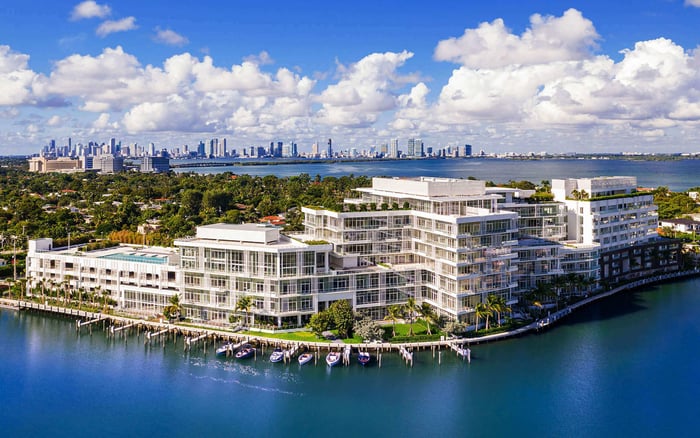
A seasonal Miami Beach residence should be tested for both pet compatibility and future resale liquidity. Buyers need written rules, same-building transaction evidence, view and floor comparisons, and a complete 12-month carrying-cost schedule before assigning value.
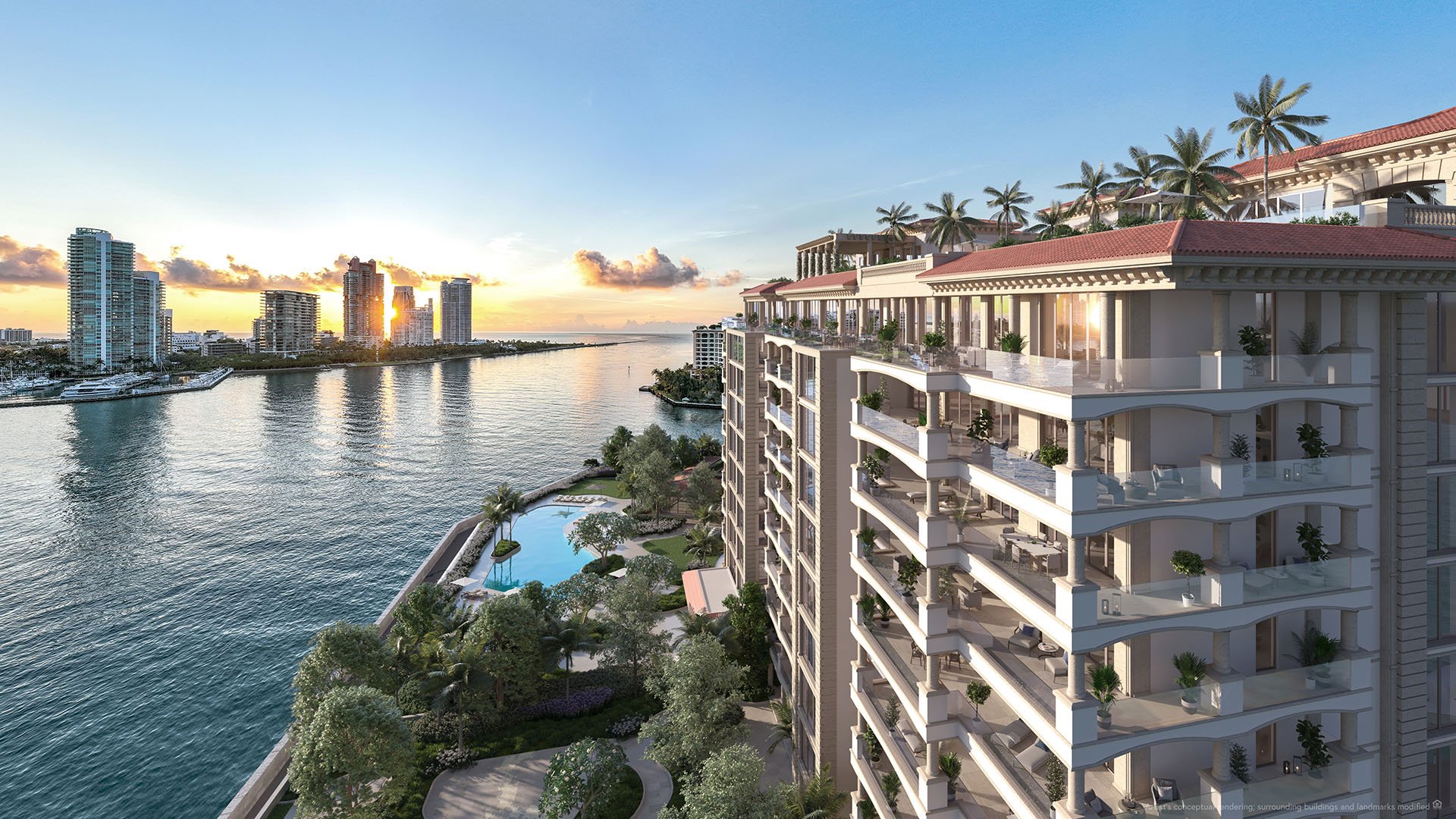
A seasonal residence in Miami Beach must perform on two levels. It should simplify arrival, daily routines, and departure for both owner and pet. It should also appeal to a sufficiently broad pool of future buyers. These objectives are connected: restrictive pet rules, unusually high carrying costs, or a thinly traded unit type may narrow demand when it is time to sell.
The broader setting rewards disciplined due diligence. Miami's luxury-condo market held 19 months of inventory in Q1 2026, compared with the 9 to 12 months associated with balance. Median marketing time reached 93 days, up 13.4% from 82 days one year earlier. Yet Miami Beach had 2,349 active condo listings in April 2026, 54 fewer than the prior count and the lowest level since November 2024. These figures provide context; they do not establish the liquidity of a particular residence.
The relevant buyer pool is the one for the same building, unit type, view line, and cost profile.
For a second-home purchase, ask the broker to prepare a property-specific resale file before discussing premiums. It should combine closed sales, pending transactions, active competition, withdrawn listings, price changes, and directly comparable carrying costs within the same building.
A listing described as pet friendly is not sufficient evidence. Request the current declaration, bylaws, rules, application materials, and any pet-related board resolutions or management notices. The written package should specify limits on pet count, weight, breed, registration, elevator use, leashes, and access to common areas.
Confirm whether the rules differ for owners, tenants, and guests. This distinction matters to seasonal owners who may host family, bring a pet only during certain months, or lease the residence while absent. Ask how pets are registered, whether approval must be renewed, and which documents management requires before arrival. The practical question is not simply whether pets are permitted, but whether the rules suit the owner's actual pattern of use.
Rental provisions belong in the same review. Request minimum lease terms, annual rental-frequency limits, approval procedures, and tenant pet restrictions. Even when rental income is not part of the acquisition thesis, leasing flexibility can influence the eventual resale audience.
Public market totals do not establish how quickly a specific bedroom count or square-footage band trades. Request closed and pending comparables segmented by bedroom count and interior size, preferably within the same building. For each, record the original list price, final asking price, sale price, days on market, price reductions, list-to-sale ratio, and status date.
Then determine which size categories sold fastest, which accumulated competing inventory, and which required the deepest discounts. A larger residence may attract a wealthier buyer, but not necessarily a deeper buyer pool. A smaller plan may carry a lower absolute price while facing more competition. Neither conclusion should be assumed without transaction evidence.
This analysis is especially useful when comparing markedly different Miami Beach propositions. A buyer considering 57 Ocean Miami Beach alongside Five Park Miami Beach should not transfer an absorption conclusion from one building to the other. Building-specific supply, policies, cost structures, and comparable sets remain decisive.
Request a stack-by-stack schedule distinguishing direct-ocean, bay, Intracoastal, partial-water, and city views. It should include closed, pending, active, expired or withdrawn, and reduced listings for each relevant line. Ask for photographs or listing records documenting the view at the time of each transaction, as identical marketing language can conceal materially different outlooks.
A view premium is credible only when supported by comparable transactions. Test whether buyers consistently paid more for the preferred exposure, how long those units took to sell, and whether the premium survived negotiations. The analysis should also identify how many realistic substitutes were available at each price point.
The same discipline applies when assessing established and newer choices such as The Ritz-Carlton Residences® Miami Beach or The Perigon Miami Beach. The links provide useful starting points, but current governing documents and same-building transaction records must control the decision.
Higher floors often command a premium in asking prices, but the building's own sales should establish whether buyers actually paid it. Request same-line closed sales across several floors, controlling as closely as possible for size, condition, renovation, parking, storage, and transaction timing.
Group the evidence into practical floor bands rather than comparing a single high-floor sale with an unrelated lower-floor residence. Determine whether the premium rises steadily, plateaus, or varies with the view line. Compare marketing time and price reductions as well. A high floor that commands a higher asking price but takes longer to sell may offer prestige without the deepest exit pool.
For each candidate, the broker should state the implied floor premium in dollars and on a per-square-foot basis. Frame the conclusion as a range supported by sales, not as a universal percentage.
The ownership-cost analysis should cover HOA dues, property taxes, unit insurance, applicable flood coverage, assessments, and building-specific fees. Compare both annual dollars and cost per square foot. Confirm whether quoted dues already include recently approved assessments or insurance increases.
Request the association's current budget, reserve information, assessment history, and notices concerning pending structural, façade, roof, or seawall work. These materials distinguish a currently quoted expense from a more realistic forward cost. They also reveal whether two similarly priced residences place markedly different demands on a seasonal owner.
Carrying cost affects buyer-pool depth because purchasers compare the complete ownership proposition, not merely the contract price. Ask the broker to show how directly competing listings differ once all recurring and known nonrecurring expenses are incorporated.
Before making an offer, reduce the file to four decisions:
Does the written pet policy accommodate the owner's pet, guests, and intended leasing pattern?
Which bedroom and size category has demonstrated the strongest same-building absorption?
Which view line and floor band have premiums supported by closed and pending evidence?
What is the complete first-year and forward carrying-cost range?
The final brief should identify the candidate's closest substitutes, likely resale audience, current competing inventory, recent withdrawals, and price reductions. It should also explain which assumption would most weaken the exit case if market conditions soften.
This is the analytical standard behind MILLION's Buyer's Guides and Pricing & Trends coverage: lifestyle fit is essential, but it should be paired with evidence of liquidity, restrictions, and cost. In a buyer-favorable market, precision provides more leverage than broad market narratives.
For discreet advice on evaluating a pet-compatible seasonal residence and its future buyer pool, connect with MILLION.
If branded residences are on your mind — as a home or as an allocation — we would be glad to share what we are seeing, privately.
Begin a quiet conversationNo. Request the complete current written policy and verify pet count, weight, breed, registration, elevator, leash, and common-area rules.
Yes. Confirm the rules for owners, tenants, and guests because differences can affect seasonal use, leasing flexibility, and resale appeal.
Request same-building closed sales, pending transactions, active competition, withdrawn listings, price changes, and carrying costs for comparable residences.
Segment comparable sales by bedroom count and square footage, then compare marketing time, reductions, list-to-sale ratios, and available inventory.
Separate direct-ocean, bay, Intracoastal, partial-water, and city-facing stacks, using same-building transactions rather than broad market averages.
No. Compare same-line sales across several floor bands to determine whether the building's actual transactions support the premium.
Include HOA dues, property taxes, insurance, applicable flood coverage, assessments, and building-specific fees in a 12-month schedule.
Request the current budget, reserve information, assessment history, and notices of pending structural, façade, roof, or seawall projects.
Minimum terms, rental-frequency limits, approval procedures, and tenant pet rules can affect flexibility and the future buyer pool.
No. Marketwide figures provide context, while building-specific transactions, policies, view lines, floor bands, and costs determine the more relevant resale case.