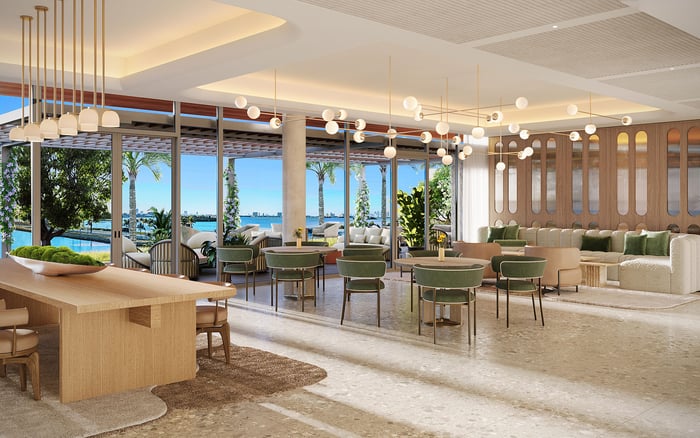
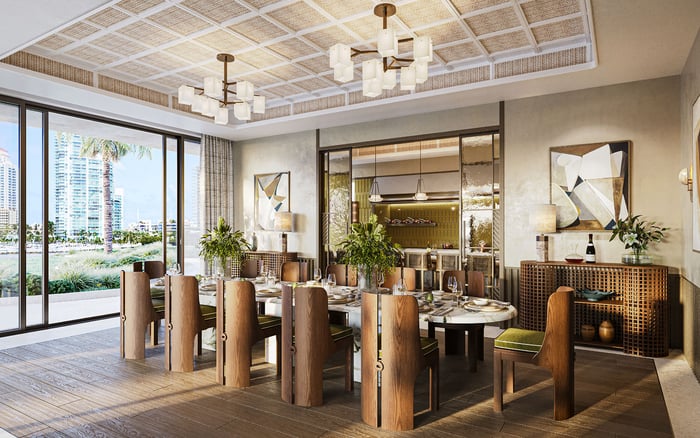
In South Florida, the decision between natural stone and composite surfaces is less about taste and more about coastal physics: salt, sun, wind-driven rain, and constant cleaning. For luxury residences, the best outcomes come from matching the material to the microclimate, selecting the right finish, and specifying detailing that keeps water out and maintenance predictable.
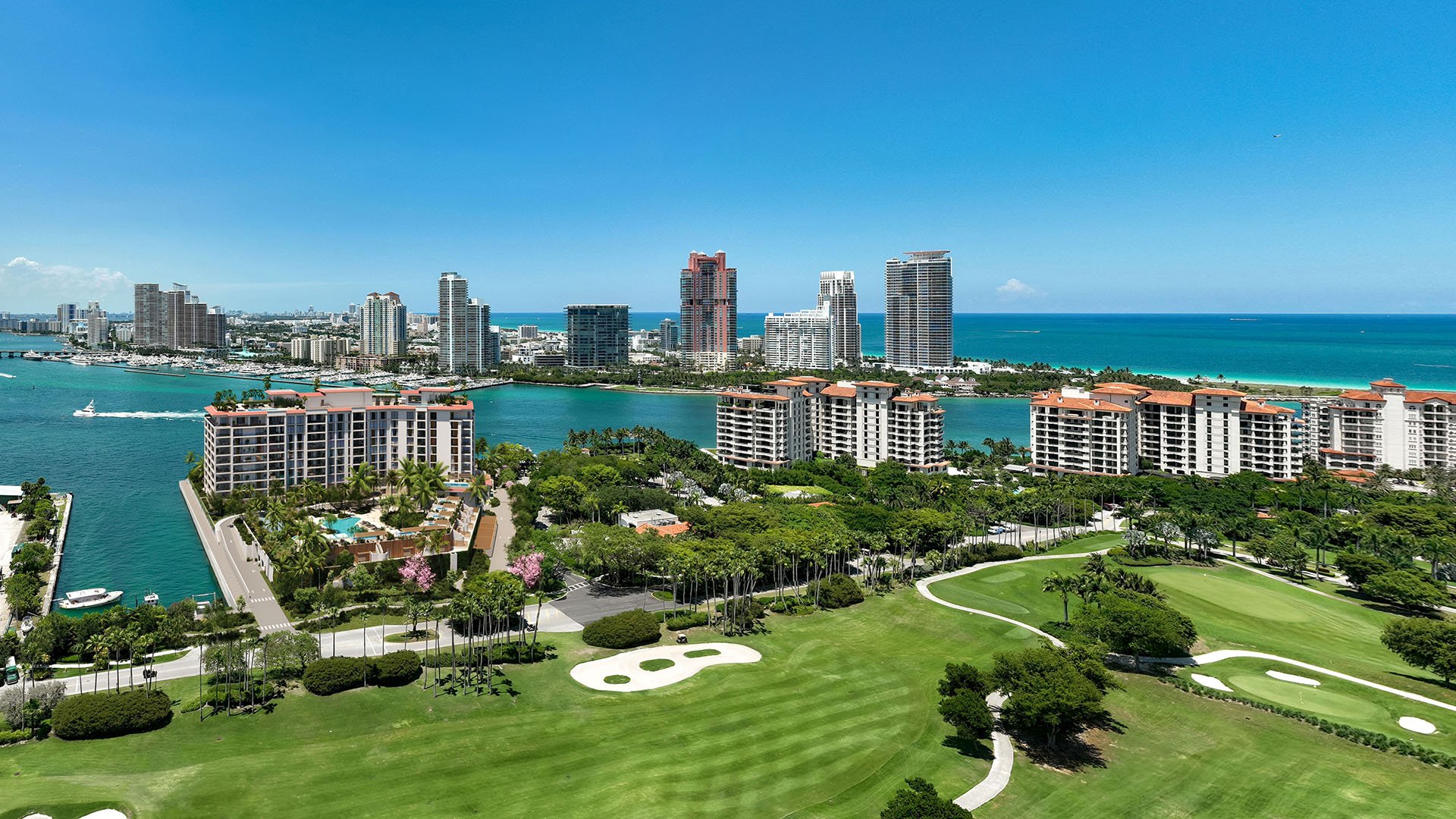
Inland, surface selection is often a matter of style and budget. Along South Florida’s shoreline, it becomes a decision about durability and long-term stewardship. Salt carried in the air can accumulate on façades, terraces, and window surrounds. UV exposure is relentless, and wind-driven rain works its way into joints, fastener penetrations, and any edge detail that was drawn beautifully but not engineered defensively.
For buyers weighing natural stone against composite materials, the question is rarely “Which is better?” A more useful question is: “Where will it live, what will it be asked to do, and how will it be cared for?” A honed limestone on a shaded loggia behaves differently than the same stone on a sun-baked pool deck. A porcelain slab panel on a rainscreen will age differently than a resin-rich composite used outdoors where it can heat up.
In markets like Miami Beach and Surfside, terrace living is central to the lifestyle, which makes exterior finishes as consequential as interior millwork. You see the difference immediately in buildings that treat the terrace as a true outdoor room, such as 57 Ocean Miami Beach, where the design intent is elevated, but long-term performance still comes down to specification and detailing.
Natural stone carries a credibility that is difficult to replicate. It signals permanence and craft. In luxury environments, it can also make a space feel quieter, cooler, and more architectural. But stone is not a single category. Marble, limestone, travertine, granite, quartzite, and slate each bring different porosity, hardness, and chemical sensitivity.
In coastal settings, the risk profile typically revolves around four themes:
Many stones absorb moisture and airborne salts. That does not automatically mean “don’t use it,” but it does mean owners should expect a disciplined sealing strategy and quick attention to spills, metal planters, and standing water.
Calcareous stones (commonly used marbles and limestones) can be sensitive to acids. Coastal living adds its own chemistry: frequent cleaning, sunscreen, beverages, and certain outdoor maintenance products can create a patina faster than expected.
A polished finish can be visually glamorous, but outdoors it can become slippery and reveal spotting more readily. Honed, leathered, or textured finishes often read more relaxed and can be more forgiving-especially on terraces.
Stone issues in coastal homes are often “system” issues, not “material” issues. Water finds a way into an edge, a poorly protected underside, or a joint. Salt crystallization and repeated wet-dry cycling can stress the weakest detail.
For buyers who love the romance of stone, best practice is not avoidance-it’s specification. Treat it like an exterior material even when it is used indoors near openings. In high-rise living, where balconies and sliding doors invite salt air into the plan, this becomes especially relevant in Brickell towers with expansive indoor-outdoor layouts, including 2200 Brickell.
“Composite” can mean several things in a luxury finish schedule: engineered quartz surfaces, sintered stone, porcelain slabs, solid-surface materials, fiber-cement panels, wood-plastic composites for decking, and other hybrid products. What many of these share is manufactured consistency-predictable color, controlled porosity, and often a tighter performance envelope.
In coastal environments, that consistency can be a clear advantage:
Can reduce staining and moisture-related darkening.
Can make replacements easier if a panel is damaged.
Can help installers hold cleaner joint lines.
The principal tradeoff is frequently thermal behavior. Dark, dense manufactured surfaces can run hot in direct sun, especially on terraces. That is not a deal-breaker, but it should inform color selection, barefoot zones, and furniture planning. Another consideration is connection performance: coastal wind loads, building movement, and temperature swings can concentrate stress at fasteners and joints.
In newer luxury residences where façade systems and amenity decks are conceived as engineered assemblies, composites often perform best when specified as part of the overall envelope strategy, not as an afterthought. You see this mentality in highly curated projects such as Aria Reserve Miami, where the broader context is high-performance living near the water.
Most buyers are not choosing “stone vs composite” once. They’re choosing it repeatedly across a home: lobby-to-elevator thresholds, kitchen counters, bath walls, terrace pavers, pool coping, outdoor kitchens, façade accents, and even planter cladding. A practical decision map looks like this:
Kitchen and wet bars (interior):
If you want the look of marble with fewer lifestyle constraints, many engineered surfaces can offer more consistent performance. If you choose natural stone, expect a living finish and plan maintenance accordingly.
Primary baths:
Stone can feel exceptional here, but pay close attention to sealers, shower detailing, and floor slip resistance. Large-format composites can reduce grout lines, which many owners appreciate.
Terraces and outdoor rooms:
This is where coastal exposure is most intense. Select finishes for traction, heat comfort, and cleanability. Consider how sand, salt spray, and frequent rinsing will shape the appearance over time.
Façade and cladding moments:
Natural stone has undeniable prestige on a façade, but it demands an engineered approach to anchoring, drainage, and movement. Many composite cladding systems are built around ventilated assemblies that help manage moisture.
Pool decks and coping:
Barefoot comfort matters. Light colors and textured finishes can help, regardless of material family. Edges, drainage slopes, and control joints are as important as the surface itself.
This is also where neighborhood microclimates matter. A home directly on the sand in Hallandale or Sunny Isles experiences a different intensity than a more protected location farther inland. Oceanfront living, such as at 2000 Ocean Hallandale Beach, rewards material choices that treat salt, sun, and wind as everyday design inputs.
Luxury buyers often focus on the slab selection or the showroom sample. In coastal performance, the quiet details are what carry the outcome:
Joints and movement accommodation.
Materials expand and contract. Buildings move. A joint that is too tight can crack; a joint that is too open can collect water and salt residue. Ask whether the design is detailed for movement-not merely drawn for minimalism.
Edges and undersides.
The underside of a stone tread, the edge of a terrace paver, or the return on a cladding panel is often where moisture finds a pathway. A refined edge profile should also be a protected edge profile.
Drainage and slope.
If water lingers, everything degrades faster. Even the best surfaces still depend on correct slope to drains and thoughtful transitions at door thresholds.
Metal compatibility.
Coastal air accelerates corrosion. If an assembly mixes metals, fasteners, anchors, and trims should be chosen with corrosion resistance in mind-because staining and spalling can begin around compromised hardware.
Owners considering branded ultra-luxury towers often assume this is handled automatically. Many times it is, but buyers still benefit from understanding what sits behind a clean terrace line or a seemingly seamless façade.
A surface is only as high-performing as the owner’s ability to care for it. The highest-end natural stone can look tired when cleaned improperly. A low-porosity composite can look dull if it’s abraded with the wrong pads.
For decision-making, think in three maintenance tiers:
Low-intervention:
Choose composites or dense stones with forgiving finishes, especially in high-traffic zones and outdoor areas.
Stewardship-required:
Choose natural stones that reward attentive care. Plan for periodic sealing and more cautious cleaning.
Patina-forward:
If you prefer a lived-in look, select materials that age gracefully-and accept that perfection is not the goal.
This is also a lifestyle question. A second home with intermittent occupancy benefits from surfaces that don’t punish gaps in routine care. A full-time residence with dedicated household support can accommodate more nuanced material palettes.
In the most successful coastal interiors, natural stone is used where it delivers emotional value: entry moments, signature baths, sculptural walls, and spaces where its depth is legible. Composites are used where performance and uniformity matter: hardworking kitchens, outdoor kitchens, large-format exterior planes, and areas exposed to constant cleaning.
The most sophisticated projects don’t treat this as a binary decision. They orchestrate both, then rely on craftsmanship to make transitions feel inevitable.
For buyers evaluating a building or commissioning a renovation, the smartest question is not “Is it stone?” It’s “How is it detailed, and what is the maintenance plan?” When those answers are clear, both natural and engineered materials can deliver an enduring South Florida standard.
Is natural stone a risky choice near the ocean? Not inherently, but it requires more thoughtful detailing and consistent maintenance than many composites.
Which is better outdoors: stone or composite? Either can work, but outdoor success depends heavily on slip resistance, heat comfort, and drainage detailing.
Do composites completely eliminate staining? They often reduce absorption, but no surface is immune to discoloration from harsh chemicals or neglect.
Will salt air damage my countertops indoors? Salt is more of an issue at openings and terraces; indoors, cleaning habits and sealing matter more.
Is polished stone a bad idea on terraces? Polished finishes can be slippery and show spotting, so textured or honed options are typically safer.
Do lighter colors perform better in coastal sun? Lighter tones generally feel cooler underfoot and can visually mask salt residue more easily.
How important is grout or joint design in coastal areas? Very important, because joints manage movement and water; poor joints can undermine premium materials.
Can I mix natural stone and composites in one home without it looking inconsistent? Yes, when tones and finishes are coordinated and transitions are detailed cleanly.
What should I ask a builder or designer before selecting materials? Ask about outdoor slip rating, sealing schedule, cleaning products, and how edges and drains are detailed.
What is the simplest way to extend the life of coastal finishes? Rinse salt-exposed areas regularly, avoid harsh cleaners, and address standing water promptly.
When you're ready to tour or underwrite the options, connect with MILLION Luxury.
If branded residences are on your mind — as a home or as an allocation — we would be glad to share what we are seeing, privately.
Begin a quiet conversation