A discreet buyer’s guide to weighing design pedigree against operational discipline in West Palm Beach luxury ownership, with emphasis on governance, service, privacy, resilience, and long-term usability.
For a certain West Palm Beach buyer, beauty is not enough. A residence may offer architectural ambition, collectible interiors, a poised arrival sequence, and the right social geography, yet still fail the real test of ownership. The decisive question is not whether the property impresses on a private tour. It is whether the building, home, or residence can sustain a high standard of daily life without friction.
That is the ownership test for buyers who require both design pedigree and operational discipline. Design pedigree is the visible language: proportion, materiality, light, landscape, craftsmanship, and restraint. Operational discipline is the quieter system beneath it: staff culture, governance, security, maintenance, budgeting, service recovery, privacy protocols, and the ability to make a residence feel effortless even when the owner is elsewhere.
In West Palm Beach, this distinction has become more important as the buyer profile has grown more exacting. Many purchasers are not simply relocating. They are editing a portfolio of homes, simplifying seasonal life, or seeking a South Florida base that can support work, entertaining, family, art, wellness, and quiet retreat. For them, luxury is no longer measured by surface alone. It is measured by what happens when the elevator opens, when guests arrive, when a storm watch begins, when a delivery is handled, and when the owner returns after three months away.
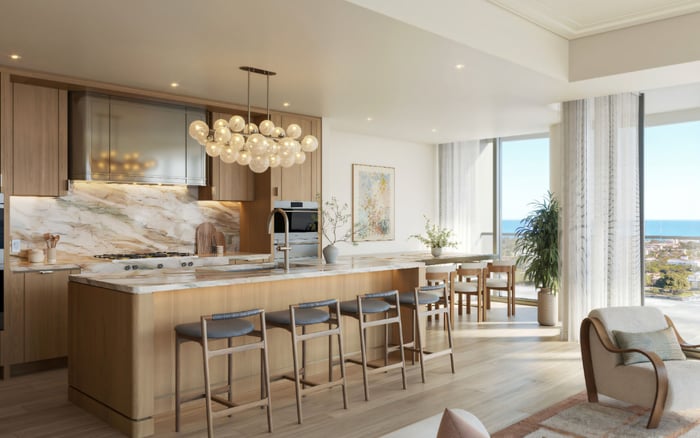
A well-designed residence creates confidence immediately. The best examples in West Palm Beach understand scale without excess. They control glare, frame views, choreograph public and private rooms, and avoid decorative noise. Materials feel selected rather than merely specified. Kitchens support real use. Primary suites provide calm rather than spectacle. Outdoor spaces are not afterthoughts; they are extensions of the living rhythm.
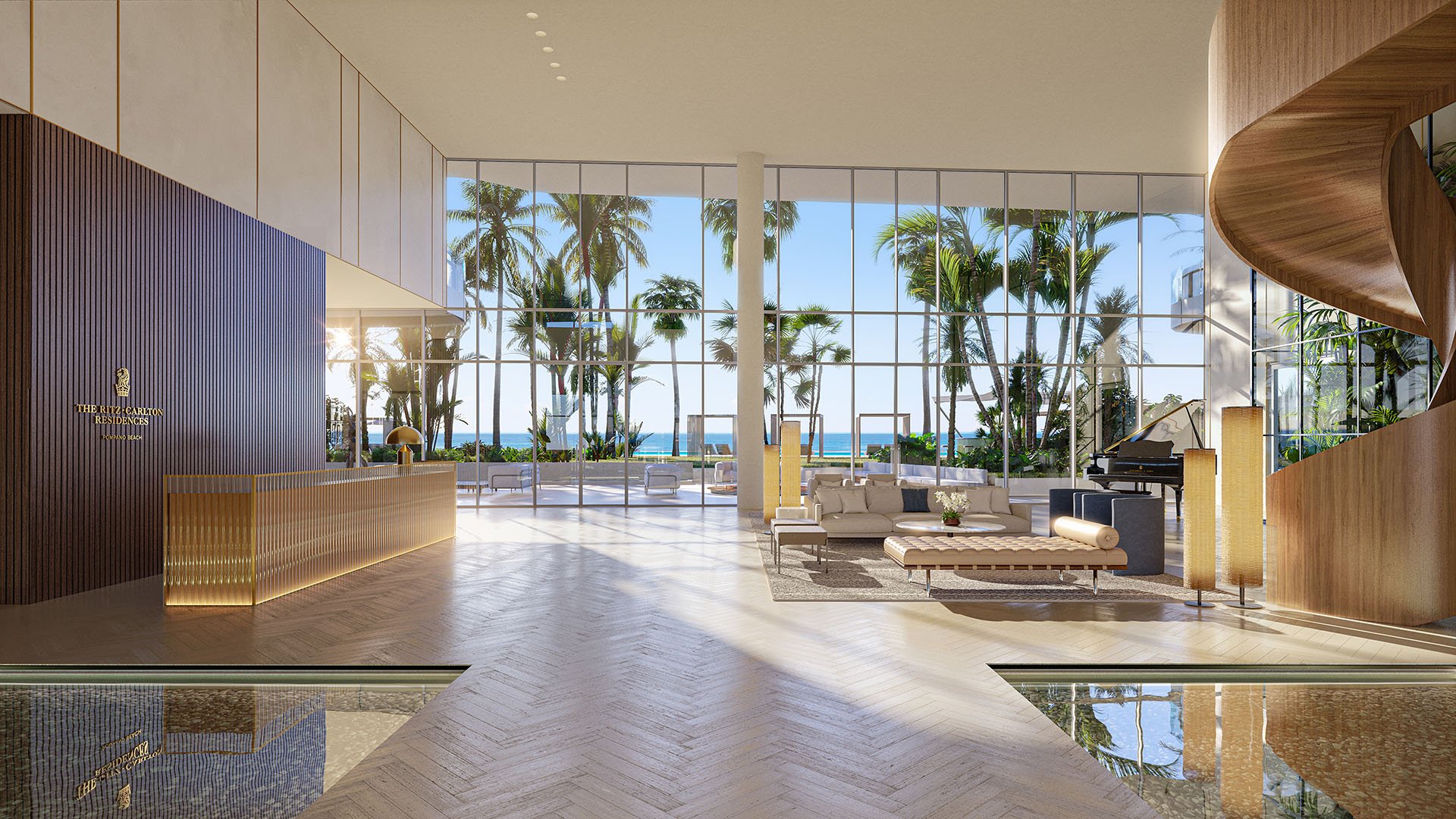
Still, design pedigree should be tested beyond the mood board. Buyers should ask how the design will age, how it will be maintained, and whether the detailing supports real life. A dramatic lobby can signal ambition, but it also raises questions about staffing, cleaning standards, acoustic control, and replacement costs. A highly customized interior may be exquisite, but it should not create fragile ownership.
The most durable luxury is edited. It allows the owner to entertain without resetting the entire home. It accommodates art without turning every wall into a statement. It permits family use, guest use, and staff use without compromising privacy. In this sense, design pedigree is less about recognizability than intelligence.
Operational discipline is rarely the most glamorous part of a purchase conversation, yet it is often where long-term satisfaction is won or lost. A buyer should understand who is responsible for the property’s daily performance, how decisions are made, how service standards are trained, and how building culture is protected as residents change over time.
In a condominium or serviced residential setting, the questions become especially precise. Is the arrival sequence secure without feeling punitive? Are staff empowered to solve problems, or merely to relay messages? Are amenity spaces programmed with discretion? Is there a clear approach to vendors, deliveries, guest access, and after-hours needs? Does the building maintain a sense of calm during peak season?
For single-family ownership, the same principle applies through a different structure. The buyer must evaluate property management, landscape care, systems oversight, insurance readiness, generator capacity, security planning, and the ease of maintaining a polished residence when the owner is not in residence. A beautiful home that requires constant intervention is not operationally disciplined. It is simply demanding.
The city’s appeal is layered: waterfront atmosphere, cultural proximity, dining, access to Palm Beach, and a more urban residential rhythm than many traditional resort enclaves. But a buyer who needs design pedigree with operational discipline should resist purchasing only by neighborhood reputation or view corridor. The stronger exercise is to map how the residence will function across a full ownership year.
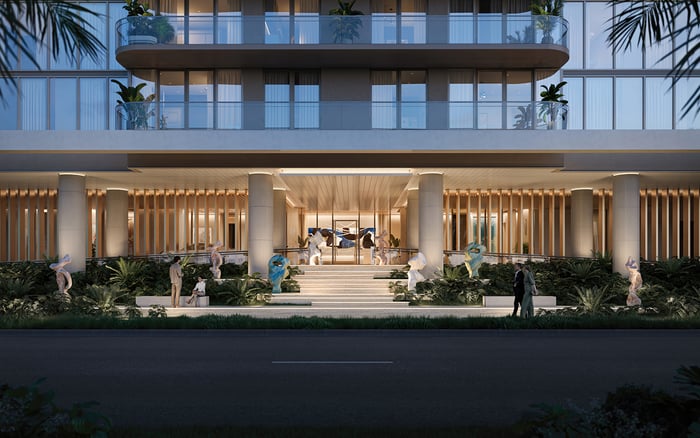
Consider arrival. How does the owner enter after travel? Where does a driver wait? How are guests received? Is there a protected transition from street to residence? Then consider daily use. Is the gym convenient enough to replace a club visit? Are work areas truly quiet? Do terraces support morning and evening use, not just photography? Does the residence feel private when neighboring homes or towers are active?
For internal planning, buyers often organize priorities around location, Palm Beach adjacency, new-construction expectations, boutique privacy, water views, and second-home usage. These labels are not substitutes for diligence, but they help clarify how the property will actually be lived in.
In ultra-premium ownership, culture is a form of infrastructure. A building or community can have strong design credentials and still feel misaligned if its resident culture is too transient, too public, too informal, or too dependent on amenities that read better in renderings than in daily life. The right culture is not necessarily quiet at all times. It is consistent, well managed, and respectful of privacy.
Buyers should pay attention to the tone of common spaces. Are they serene without being sterile? Are service teams attentive without overfamiliarity? Are rules clear enough to preserve quality, yet flexible enough to serve sophisticated owners? Is there an expectation that residents understand discretion as part of the value proposition?
This is particularly important for buyers who divide time among multiple homes. A West Palm Beach residence may need to perform as a primary home one month, a family gathering place the next, and a lock-and-leave asset for the rest of the season. Operational culture determines whether that transition feels seamless.
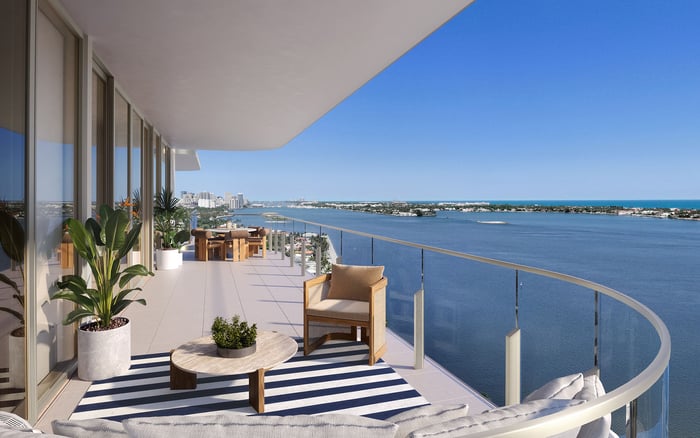
Views are central to the emotional pull of West Palm Beach ownership, but waterfront or water-oriented living requires clear-eyed evaluation. Orientation affects heat, glare, privacy, and how often outdoor space is genuinely usable. Expansive glass can be magnificent, but it also requires disciplined maintenance. Terraces can transform the experience of a residence, but only when they are proportioned, shaded, and protected enough to be lived on.
A design-led buyer should not separate visual drama from practical resilience. Mechanical systems, envelope quality, drainage, landscape selection, and maintenance access all influence whether a residence feels effortless in South Florida’s climate. The goal is not to avoid complexity. The goal is to ensure that complexity is professionally managed and financially understood.
For homes with significant outdoor living, the question is whether the exterior environment has been designed as architecture or merely staged as lifestyle. Pools, gardens, loggias, summer kitchens, and docks, where applicable, should support the way the owner lives, not simply decorate the listing narrative.
A disciplined acquisition process should move from aesthetic attraction to operational verification. Begin with design quality: plan logic, ceiling heights, natural light, material integrity, storage, privacy, and the relationship between indoor and outdoor living. Then shift to performance: staffing, governance, maintenance, reserves, vendor access, security, and owner services.
Next, test the residence against actual life. If the property will be used seasonally, determine who prepares it before arrival and who supervises it after departure. If entertaining is important, follow the path of a guest from arrival to powder room to terrace. If wellness is a priority, inspect whether amenities or private facilities will truly be used. If art is involved, study light control, wall structure, humidity management, and delivery logistics.
Finally, consider exit quality. The most resilient properties are not merely beautiful. They are comprehensible to the next sophisticated buyer. A residence with strong design, disciplined operations, and a clear use case tends to travel better through changing market conditions than one dependent on fashion or novelty.
The right West Palm Beach residence should feel composed before it feels impressive. It should reduce the number of decisions an owner must make, not increase them. It should be gracious to guests and protective of private life. It should allow for spontaneity because the operating framework is already in place.
For the design-driven buyer, this does not mean compromising on aesthetics. It means demanding that aesthetics and operations reinforce each other. The lobby, the staff desk, the elevator, the terrace, the back-of-house route, the service calendar, and the budget should all support the same promise: an ownership experience that remains elegant after the first season.
That is the real standard. In West Palm Beach, the most compelling properties are not simply the ones that photograph beautifully. They are the ones that understand how beauty must behave.
What is the ownership test in West Palm Beach? It is the process of evaluating whether a residence combines strong design with reliable daily operations, privacy, service, and long-term usability.
Why is design pedigree not enough on its own? Design creates the first impression, but operations determine whether the property remains effortless, secure, and well maintained over time.
What should buyers ask about building service? They should ask how staff handle arrivals, guests, vendors, deliveries, emergencies, privacy, and owner requests during both peak and quiet periods.
How should a seasonal buyer evaluate a residence? A seasonal buyer should focus on lock-and-leave readiness, pre-arrival preparation, post-departure oversight, security, and maintenance continuity.
Does boutique ownership always mean better privacy? Not automatically. Boutique scale can support privacy, but governance, staffing, access control, and resident culture matter just as much.
Why does water-view orientation require extra diligence? Water-view residences can be highly desirable, but buyers should study glare, heat, terrace usability, glass maintenance, and exposure management.
Is new construction always easier to own? New construction may offer modern systems and current design expectations, but buyers still need to examine management quality and operating structure.
How does Palm Beach adjacency influence the decision? Palm Beach adjacency can enhance lifestyle convenience, but the residence itself must still meet the buyer’s standards for privacy and function.
What makes a second home successful in West Palm Beach? A second home succeeds when it can be opened, used, secured, and maintained with minimal owner involvement and consistent service quality.
What is the best sign of long-term ownership quality? The best sign is coherence: design, staff, systems, governance, and maintenance all working together without visible strain.
When you're ready to tour or underwrite the options, connect with MILLION.
If branded residences are on your mind — as a home or as an allocation — we would be glad to share what we are seeing, privately.
Begin a quiet conversation