A discreet buyer’s guide to evaluating South Florida luxury condominiums for effortless lock-and-leave living, from service depth and security to location, governance, and long-term ownership fit.

For many South Florida luxury buyers, the ideal residence is not defined by constant use. It is defined by confidence. A true lock-and-leave condominium should feel ready the moment an owner arrives and secure the moment an owner departs. That promise is especially relevant for seasonal residents, international families, executives, and collectors whose lives move between homes, offices, boats, aircraft, and resort destinations.
The phrase sounds simple, but the best examples require careful scrutiny. A beautiful lobby and a dramatic view are not enough. The building must function as private infrastructure for ownership, with staff, systems, access control, maintenance standards, and governance that reduce the friction of being away. In South Florida, where buyers weigh waterfront calm against urban immediacy, the strongest choices balance privacy with convenience.
A lock-and-leave residence should minimize owner dependency. The experience begins before arrival: secure access, responsive management, clear package handling, consistent climate considerations, and a building team that understands discretion. It continues during a stay, when valet, concierge, wellness, dining adjacency, pet policies, guest procedures, and service elevators can determine whether the home feels effortless or merely attractive.
The most important distinction is operational. A building can be luxurious without being low-maintenance. Conversely, a well-run condominium can make ownership feel materially lighter by reducing small decisions. For a second-home buyer, that difference can define the entire value proposition. The residence must support absence as gracefully as presence.
Brickell remains compelling for buyers who want a high-service urban base. The area appeals to owners who prioritize dining, work proximity, private banking, cultural access, and the ability to arrive for several days without managing a larger residential footprint. In this context, lock-and-leave value is less about escape than efficiency.
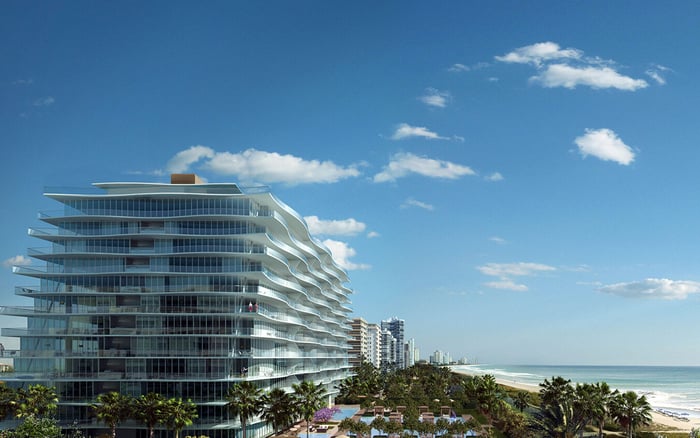
Miami Beach presents a different proposition. Here, buyers often seek a coastal rhythm, privacy, wellness, and proximity to sand, restaurants, and artful hospitality. A Miami Beach condominium can be especially effective when it offers strong building control, thoughtful arrival sequences, and residences that do not demand the upkeep of a detached waterfront home.
Oceanfront living has its own logic. The attraction is emotional, but the ownership test is practical. Buyers should look closely at staff depth, maintenance culture, window and terrace care, storage, parking, and how the building manages guest access. The more exposed and resort-like the setting, the more important it becomes to understand how daily operations are handled when the owner is elsewhere.
Boutique buildings can be ideal for buyers who want intimacy rather than scale. The tradeoff is clear: smaller buildings may offer a quieter residential feel, while larger towers may deliver broader staffing and more amenities. Neither model is inherently superior. The right fit depends on whether the buyer values privacy, amenity range, staff coverage, or a more residential cadence.
A strong lock-and-leave purchase begins with questions that go beyond finishes. How does the building handle vendors, deliveries, guests, and service appointments? Is access controlled without becoming inconvenient? Are staff members accustomed to seasonal owner patterns? Can management communicate clearly while an owner is away? Are policies documented and consistently enforced?
Storage also matters more than many buyers expect. Owners who travel frequently may need space for luggage, sports equipment, wine, art materials, seasonal wardrobes, or beach and boating accessories. Parking, valet protocol, charging access, and private entry experiences should be reviewed with the same attention as views and floor plans.
Interior planning should support the lifestyle as well. Durable stone, integrated lighting, concealed storage, and resilient outdoor furnishings can make a residence easier to maintain between visits. Smart-home systems may be attractive, but simplicity remains the luxury. The goal is not to create a complicated control room. The goal is to create a residence that behaves predictably.
The most elegant condominium can become frustrating if governance is unclear. Buyers should understand rules around leasing, guests, pets, renovations, deliveries, and amenity use. These policies shape the lived experience and the future marketability of the residence. In a lock-and-leave context, predictability is not restrictive. It is protective.
Board culture and management quality also influence value. A building with disciplined standards can preserve common areas, reduce operational surprises, and create a more composed environment for residents who are not present year-round. New-construction buyers should evaluate not only the design vision, but also how the building intends to operate once the initial sales period has passed.
For investment-minded owners, the question is not only whether the residence may appreciate. It is whether the building’s rules, location, service model, and buyer profile will remain coherent over time. A condominium that serves absentee ownership well can be attractive to future buyers with similar lifestyles, provided its policies and operations remain aligned.
South Florida’s luxury condominium market often asks buyers to choose between two kinds of ease. One is urban ease: restaurants, offices, wellness, shopping, and entertainment close at hand. The other is residential ease: quieter arrival, lower density, water views, and a feeling of retreat. The best lock-and-leave ownership experience usually depends on which form of convenience matters most.
For a frequent traveler, proximity to airports, marinas, private clubs, schools, or family may outweigh a slightly better view. For an owner who stays for longer winter stretches, amenity quality, terrace usability, and neighborhood walkability may carry more weight. The correct answer is personal, but the evaluation should be rigorous.
A useful test is to imagine arriving after a long flight. Is the path from car to residence intuitive? Is there someone to assist without intrusion? Can the home be opened, stocked, cleaned, and secured with minimal instruction? If the answer is yes, the building is beginning to perform as a true lock-and-leave residence.
What makes a luxury condo good for lock-and-leave ownership? Strong security, responsive management, reliable maintenance, and clear access procedures are essential. The best buildings make arrival and departure feel seamless.
Is Brickell a good area for lock-and-leave buyers? Brickell can suit buyers who want an efficient urban base with dining, business access, and high-rise convenience. It is especially practical for shorter stays.
Are oceanfront condos harder to maintain? They can require closer attention to terrace, window, and exterior exposure. A capable building team helps reduce that burden for absentee owners.
Should I choose a boutique building or a larger tower? Boutique buildings may offer intimacy and privacy, while larger towers may offer broader amenities and staffing. The better choice depends on lifestyle priorities.
Why is governance important for second-home owners? Rules around guests, vendors, pets, leasing, and renovations affect daily ease. Clear governance reduces surprises when owners are away.
Is new-construction always better for this lifestyle? Not always. New-construction can offer modern systems and amenities, but management quality and long-term operations are just as important.
What interior features help a lock-and-leave residence? Durable materials, concealed storage, practical lighting, and simple smart-home controls can reduce upkeep. The best interiors feel refined but not fragile.
Can a lock-and-leave condo also be an investment? It can be, if the building’s location, rules, service model, and buyer profile remain aligned. Future resale appeal often depends on operational consistency.
What should buyers ask before making an offer? Ask how the building handles deliveries, vendors, guests, parking, storage, and emergency access. These details reveal how ownership will actually feel.
What is the most overlooked factor in lock-and-leave ownership? Staff depth is often underestimated. A well-trained team can turn an elegant condominium into a genuinely effortless home.
For a confidential assessment and a building-by-building shortlist, connect with MILLION.
If branded residences are on your mind — as a home or as an allocation — we would be glad to share what we are seeing, privately.
Begin a quiet conversation