A buyer-focused editorial on how discerning purchasers should evaluate hurricane resilience and autonomous backup power in South Florida’s newest coastal towers, with attention to building systems, operations, and livability during disruptions.
For South Florida’s highest-end buyers, hurricane resilience is no longer a quiet technical footnote. It now stands alongside architecture, service, privacy, and views as a defining measure of whether a tower is truly future-ready. In oceanfront enclaves and inland urban districts alike, purchasers are asking a more discerning question than whether a building can withstand a storm. They want to know how it will function during and after one.
That distinction matters. Structural integrity is essential, but livability is what shapes owner confidence. A residence that remains orderly, climate-controlled in key areas, operational at entry points, and supported by dependable water and life-safety systems offers something more valuable than marketing language: continuity. In that context, autonomous backup power has become one of the most important standards to assess in new-construction inventory.
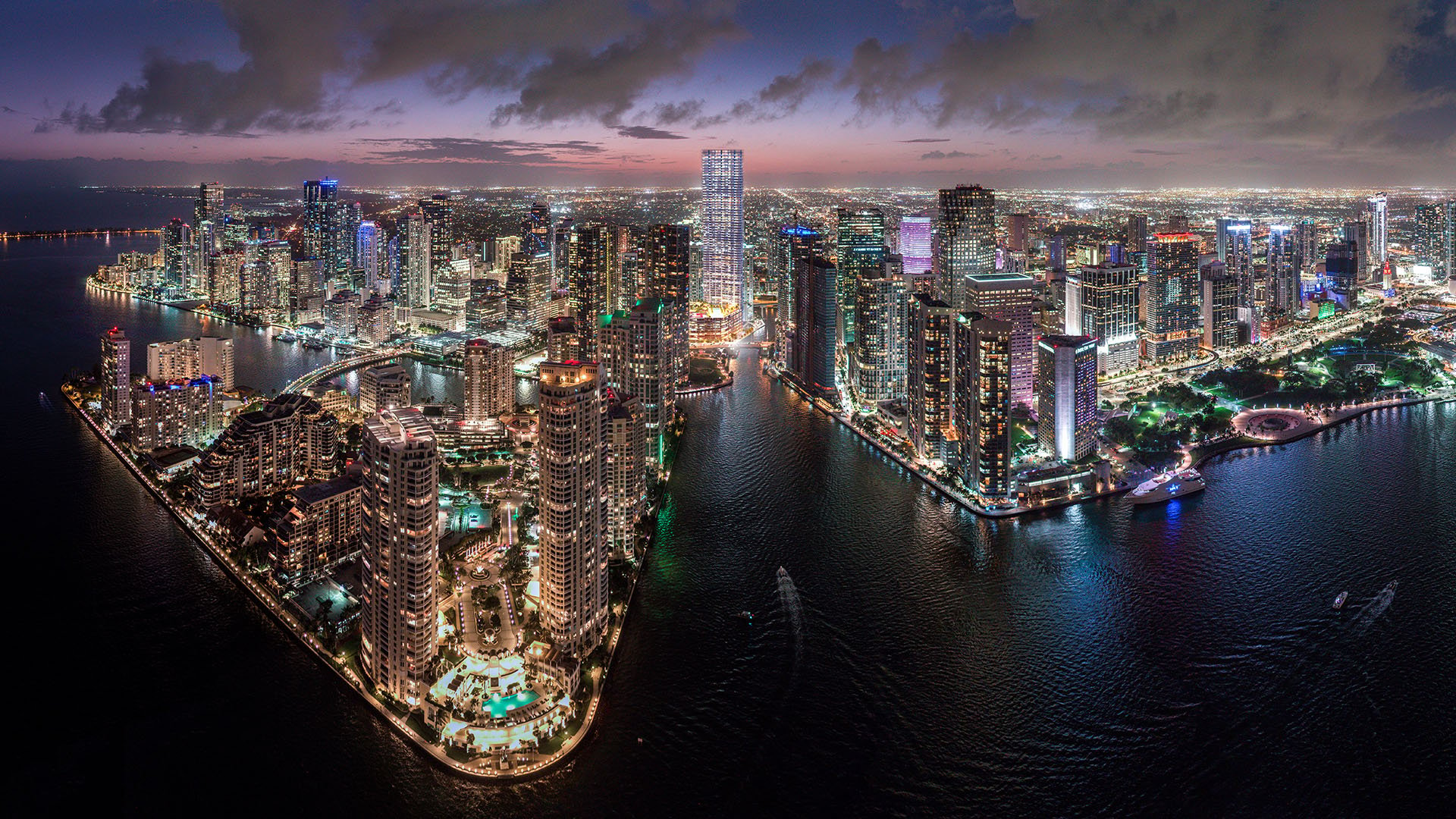
Projects across the region increasingly reflect this broader mindset. In Brickell, developments such as The Residences at 1428 Brickell and St. Regis® Residences Brickell are part of a market where engineering sophistication and operational resilience now shape buyer scrutiny as much as finish selections or branded amenities.
When reviewing a new coastal tower, resilience should be understood as a layered system rather than a single specification. The first layer is the building envelope: impact-resistant glazing, robust waterproofing, protected openings, and façade assemblies designed for severe wind exposure. The second is site planning, including how the property manages drainage, critical equipment placement, and access during heavy rain or coastal flooding.
The third, and often most meaningful, layer is backup power. Buyers should look beyond the simple presence of a generator and ask what it serves. There is a substantial difference between emergency power that supports code-required life-safety functions and a more expansive autonomous system that also sustains elevators, domestic water pressure, selected climate conditioning, security, communications, and common-area operations. In a luxury context, that difference may determine whether owners can remain in place more comfortably or must relocate.
A fourth layer is human operations. Even a well-engineered property depends on staffing protocols, mechanical maintenance, fuel strategy, vendor relationships, and clear resident communication. The most resilient towers tend to be those where engineering, hospitality, and property management are designed to work together under stress.
Backup power is easy to discuss in broad terms and far harder to compare precisely. For buyers, the central question is not whether a tower has some level of generator support, but whether it has enough autonomy to preserve normalcy. That means understanding duration, redundancy, fuel storage strategy, transfer systems, and which residential or common-area loads are included.
At the ultra-premium end of the market, the strongest standard is not mere emergency compliance. It is selective continuity. Can the tower maintain controlled access, surveillance, water service, elevator availability, and cooled refuge or lobby spaces? Can residents return quickly after a storm because essential systems remain stable? These are practical luxuries, and they become especially relevant for second-home owners who may be away when a weather event approaches.
This is where purchaser diligence has become more sophisticated. In Miami Beach and Sunny Isles, where exposure and prestige often coincide, buyers are increasingly comparing resilience details with the same seriousness once reserved for ceiling heights or marina access. Buildings such as The Perigon Miami Beach and Bentley Residences Sunny Isles sit within submarkets where envelope performance, system redundancy, and operational preparedness now shape long-term desirability.
A disciplined review typically begins with five questions.
First, where are the building’s critical systems located? Mechanical and electrical equipment positioned with flood exposure in mind generally signals more thoughtful planning than systems placed merely for convenience.
Second, what exactly is generator-backed? Ask for a functional explanation in plain language. Elevators, water pumps, access control, garage systems, lighting in key circulation zones, and communications support all matter.
Third, how does the property handle water? Potable water continuity, pump reliability, drainage strategy, and the resilience of sanitary systems are often more decisive to day-to-day comfort than buyers initially assume.
Fourth, what is the post-storm operating plan? A polished tower should be able to explain re-entry procedures, inspections, staffing continuity, and service restoration with confidence.
Fifth, is the residence itself designed for shelter quality as well as visual appeal? Storage, kitchen functionality, protected glazing, and efficient layouts become unexpectedly important during multi-day disruptions.
These questions are just as relevant in Fort Lauderdale and Hallandale as they are in Miami Beach. A refined oceanfront purchaser considering a new Broward-area residence should evaluate not only architecture and service culture, but also how the building is intended to perform when regional infrastructure is under pressure.
In luxury real estate, enduring value rarely comes from aesthetics alone. It comes from a property’s ability to remain desirable as expectations evolve. In coastal South Florida, resilience has moved from a specialist concern to a mainstream buyer expectation, particularly in new project positioning at the upper end of the market.
That shift has several implications. First, buildings with more credible continuity planning may be better positioned to preserve reputation. Second, owners may assign a premium to towers that reduce disruption risk, especially if they divide time between multiple residences and want confidence from afar. Third, as purchasers become more fluent in building systems, vague assurances tend to lose persuasive power.
Importantly, resilience should not be confused with invulnerability. No tower can promise a storm without interruption. The smarter standard is preparation, redundancy, and recovery discipline. Buyers should favor teams that describe these matters with precision and restraint. In luxury, understatement often signals substance.
Before committing to a residence, request a focused walkthrough of resilience-related systems and protocols. Ask developers or sales teams to distinguish between code-minimum emergency power and broader autonomous backup power. Clarify whether cooling is available only in select common areas or also in limited residential scenarios. Ask how fuel resupply is planned, how long essential systems are expected to operate, and what conditions could reduce performance.
Also consider the practical overlap between resilience and lifestyle. For primary residents, continuity supports daily comfort and household planning. For seasonal owners, it supports peace of mind and asset stewardship. For investors, it may strengthen tenant appeal in select segments where reliability is becoming part of the value proposition.
The larger takeaway is simple: in South Florida’s most ambitious towers, resilience is no longer separate from luxury. It is one of its clearest expressions.
What does autonomous backup power mean in a luxury tower? It generally refers to power systems that support more than bare-minimum life safety, helping maintain critical building functions during outages.
Is a generator enough to consider a building resilient? No. Buyers should examine what the generator actually powers, how long it can operate, and how the building is managed during disruptions.
Why is backup power so important in oceanfront properties? Coastal towers may face broader infrastructure interruptions, making continuity of water, access, and elevator service especially important.
Do all new-construction towers offer the same level of storm readiness? No. Standards can vary meaningfully in envelope design, equipment placement, redundancy, and operational planning.
Which systems matter most during a prolonged outage? Water pumps, elevators, access control, communications, lighting, and selected cooling capacity are among the most important.
How should buyers compare Miami Beach and Sunny Isles towers on resilience? Compare system specifics rather than branding, with close attention to exposure, backup power scope, and post-storm operations.
Does resilience affect resale appeal? Increasingly, yes. Buyers are placing greater value on buildings that can preserve comfort and order during severe weather events.
Should second-home owners prioritize these features differently? Often yes, because remote owners typically place a premium on dependable building operations when they are away.
Can a beautiful tower still be a weak resilience choice? Absolutely. Design excellence does not automatically indicate strong continuity planning or robust backup systems.
What is the best final step before purchase? Request a precise explanation of protected systems, staffing protocols, and storm operating procedures before signing final documents.
To compare the best-fit options with clarity, connect with MILLION Luxury.
If branded residences are on your mind — as a home or as an allocation — we would be glad to share what we are seeing, privately.
Begin a quiet conversation