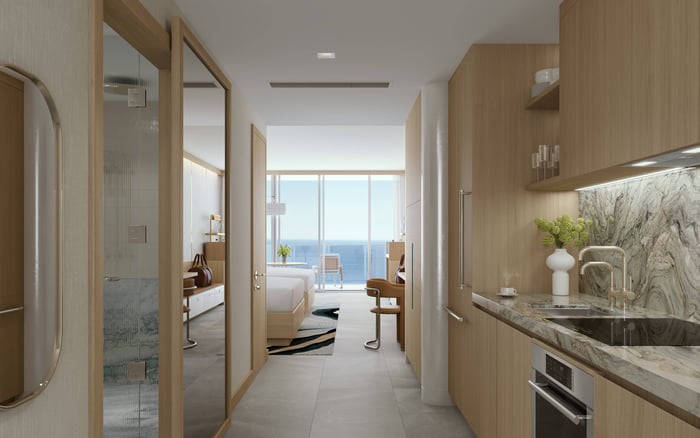
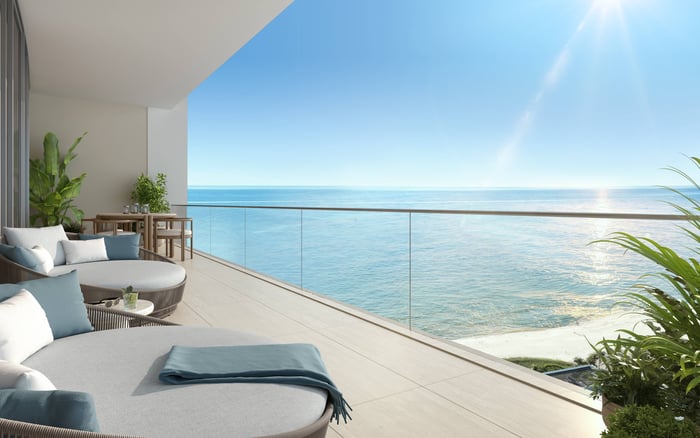
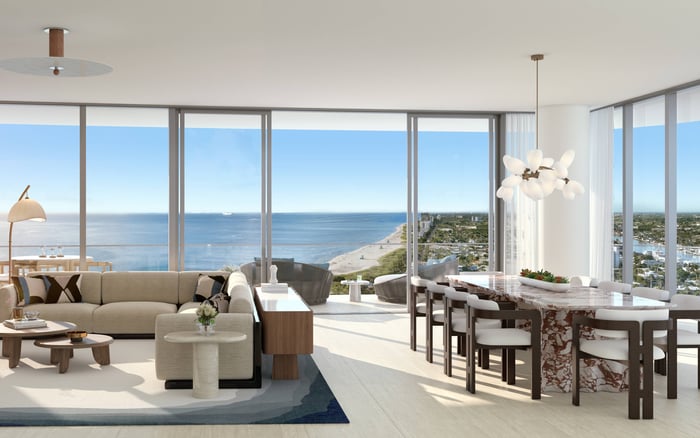
A buyer-focused comparison of two luxury ownership models: hotel-residence service culture at W Pompano Beach Hotel & Residences and the more private residential posture associated with The Residences at Six Fisher Island.
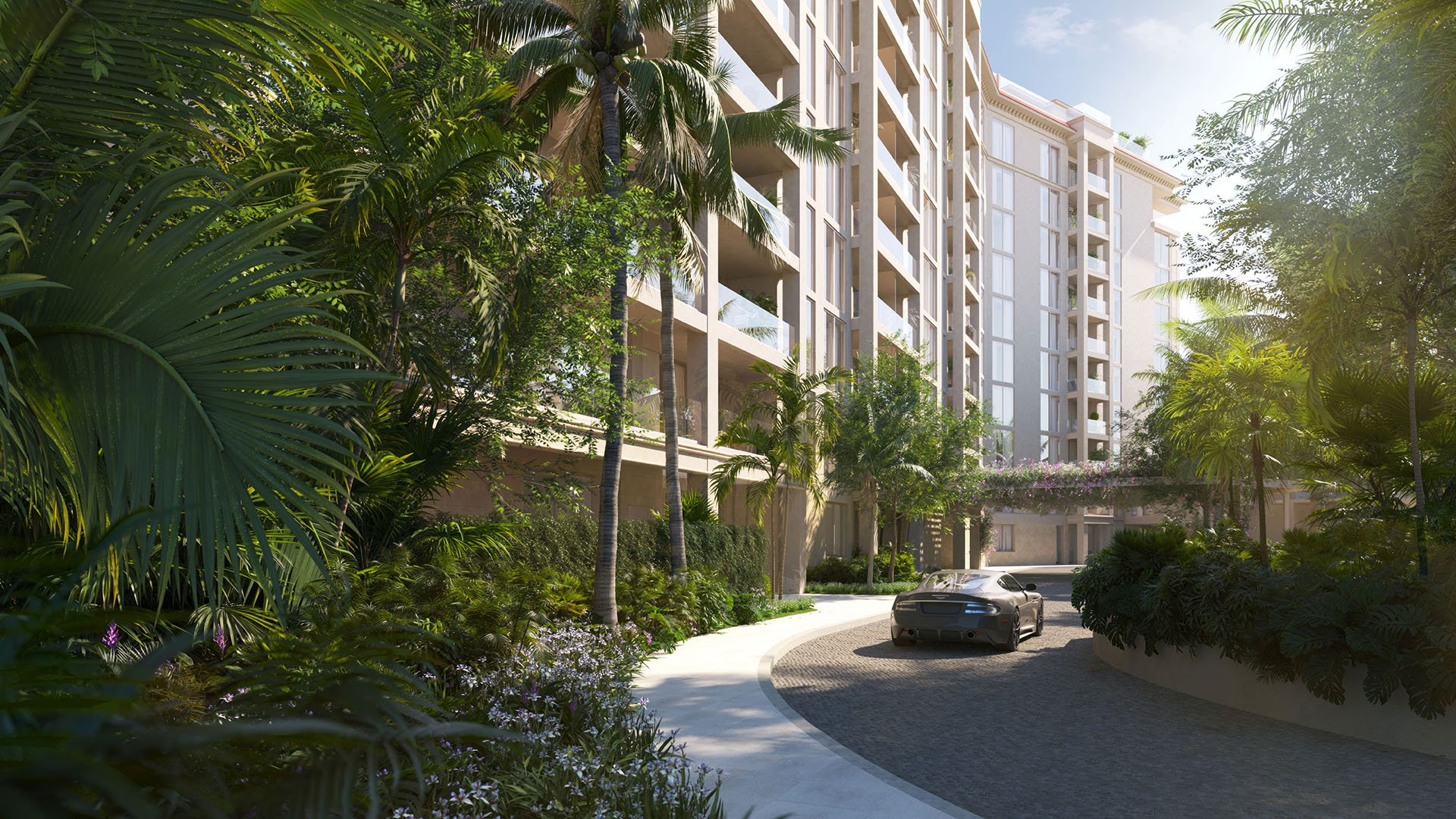
W Pompano Beach Hotel & Residences and The Residences at Six Fisher Island sit within the same broader South Florida luxury conversation, yet they appeal to different ownership instincts. One signals a hotel-and-residences environment, where service, hospitality rhythm, and branded ease are central to the proposition. The other points to a more residentially coded Fisher Island setting, where privacy, control, and owner-only spaces often become the more decisive measures.
For the affluent buyer, the question is not simply which address feels more glamorous. It is which model fits how the owner intends to live. Some buyers want the energy of a serviced residence, with the expectation that the building operates with the cadence of a refined hospitality property. Others want a quieter ownership structure, where the public-facing layer is reduced and the residential experience feels more insulated.
This is where service depth, elevator privacy, and owner-only amenities become more than marketing language. They become tests of daily comfort. The comparison sits squarely between Pompano Beach and Fisher Island demand, with hotel-residence and private-residence considerations shaping how buyers read the two models.
A hotel-and-residences model tends to attract buyers who want their South Florida property to feel immediately usable. The appeal is not only architectural. It is operational. The owner imagines arriving, handing off friction points, and stepping into a residence supported by a broader service culture.
For W Pompano Beach Hotel & Residences, the name itself places hospitality at the center of the buyer’s evaluation. A careful purchaser will want to understand how the residential component is separated from the hotel experience, how staff are allocated between guest-facing and resident-facing functions, and where the private residential sequence begins. These questions matter because service depth is truly valuable only when it is both available and controlled.
This model can be especially compelling for owners who split time among multiple homes. They may prioritize a building that feels active, supported, and responsive even when they are away. The residence is less a solitary private apartment than a staffed lifestyle platform. That can be powerful for second-home owners, frequent travelers, and buyers who prefer a hospitality layer to be part of the asset rather than arranged externally.
The due-diligence focus should be precise. Buyers should ask how residential arrivals are handled, whether elevator access is meaningfully differentiated, which amenities are exclusive to owners, and how any guest or hotel activity intersects with the residential environment. The best version of this model gives owners the convenience of service without making them feel as if they are living in a lobby.
The Residences at Six Fisher Island enters the conversation from another direction. The language of the name points less to hotel energy and more to a private residential mindset. For buyers considering this model, the primary attraction is often not maximum activity, but maximum discretion.
Here, the analysis starts with privacy architecture. How does an owner move from arrival to residence? How many shared moments are built into the daily path? How are elevators controlled? Which amenity areas are reserved for owners, and how clearly is that separation maintained? These are not minor lifestyle preferences. At the top of the market, they define the emotional value of ownership.
A buyer drawn to The Residences at Six Fisher Island is likely to care about the feeling of separation from the broader world. The residence is not merely a place to stay. It is a controlled environment, one that should protect quiet, continuity, and domestic ritual. In that context, service depth still matters, but it is interpreted differently. The question is not only whether service exists, but whether it appears only when needed and recedes when it is not.
This is the deeper distinction between the two ownership models. A hospitality-led residence often emphasizes access to service. A private residential model emphasizes control over service. Both can be luxurious. They simply solve different problems.
Elevator privacy has become one of the most revealing details in luxury condominium selection. Buyers often focus first on floor plans, views, and finishes, but the arrival sequence shapes how a residence feels every day. If the path from entry to home is crowded, exposed, or operationally confusing, even a beautiful residence can feel compromised.
In a hotel-and-residences environment, the elevator question is especially important. Owners should understand whether residential elevators are dedicated, how access is managed, and how any shared circulation is handled during periods of high activity. The goal is not isolation for its own sake. The goal is predictability. A resident should know what to expect each time they arrive.
In a more private residential model, elevator privacy becomes part of the broader architecture of discretion. A buyer may expect fewer points of contact, clearer residential boundaries, and an arrival that feels closer to a private home than to a public building. The more expensive the property, the more this expectation intensifies.
For both W Pompano Beach Hotel & Residences and The Residences at Six Fisher Island, the correct buyer question is practical: does the elevator strategy match the price point, the brand promise, and the owner’s tolerance for shared space?
Amenities have changed. The luxury buyer no longer measures a property only by the number of spaces it offers. The sharper question is who can use them. Owner-only amenities are increasingly important because they protect the residential experience from dilution.
In a hotel-and-residences setting, this distinction is critical. A beautiful amenity can lose value if it feels too public, too transient, or too difficult to access when owners actually want to use it. Buyers should look for clarity. Which spaces are exclusive? Which are shared? Are there separate resident lounges, pools, fitness areas, or arrival points? The names of the amenities matter less than their governance.
In a private residential setting, owner-only amenities can function as an extension of the home. They support entertaining, wellness, privacy, and daily rhythm without requiring the owner to leave the protected residential environment. The most successful amenity programs do not feel like attractions. They feel like private infrastructure.
This is why service depth and amenity exclusivity should be evaluated together. Service without private space can feel exposed. Private space without excellent service can feel under-supported. The right fit depends on whether the buyer wants the property to act like a resort, a sanctuary, or a carefully balanced version of both.
The W Pompano Beach Hotel & Residences buyer is likely to be comfortable with a more animated ownership setting, provided the residential experience remains clearly protected. This buyer values service access, hospitality confidence, and the ability to arrive at a property that feels operationally alive. The purchase may be driven by convenience as much as privacy.
The Residences at Six Fisher Island buyer is more likely to prioritize insulation. This buyer may still expect service of a very high caliber, but the tone should be quieter, more private, and more residential. The residence should feel like a controlled personal domain, not a hospitality extension.
Neither model is inherently superior. The distinction is about temperament. Some owners want energy downstairs and calm upstairs. Others want calm from the first point of arrival. Some enjoy a branded service environment. Others prefer a private residential structure where the brand, if present, is less visible than the quality of life it supports.
A serious buyer should spend less time asking which project is more luxurious and more time asking which ownership model removes more friction from their own life.
What is the core difference between these two ownership models? W Pompano Beach Hotel & Residences suggests a hospitality-led model, while The Residences at Six Fisher Island is best evaluated through a private residential lens.
Why does service depth matter to luxury buyers? Service depth determines how consistently the property can support arrivals, daily living, guests, maintenance, and time away from the residence.
Is a hotel-residence model better for second-home owners? It can be attractive for buyers who value operational support and a residence that feels ready to use with less personal coordination.
Why is elevator privacy so important? Elevator privacy affects the daily arrival experience, the sense of discretion, and the degree to which the residence feels separate from shared areas.
What should buyers ask about owner-only amenities? Buyers should ask which spaces are exclusive to residents, which are shared, and how access is governed during peak periods.
Does more service always mean more luxury? Not necessarily. For some buyers, the most luxurious service is discreet, controlled, and nearly invisible until needed.
Can a branded residence still feel private? Yes, if residential circulation, amenity access, staffing, and guest activity are clearly separated and thoughtfully managed.
Who is the likely buyer for W Pompano Beach Hotel & Residences? The likely buyer values hospitality rhythm, service access, and the convenience of a supported South Florida ownership experience.
Who is the likely buyer for The Residences at Six Fisher Island? The likely buyer is focused on privacy, residential calm, controlled access, and a more insulated ownership environment.
How should a buyer choose between the two? The decision should be based on lifestyle fit: whether the owner prefers a service-forward hospitality setting or a quieter private residential model.
If you'd like a private walkthrough and a curated shortlist, connect with MILLION.
If branded residences are on your mind — as a home or as an allocation — we would be glad to share what we are seeing, privately.
Begin a quiet conversation