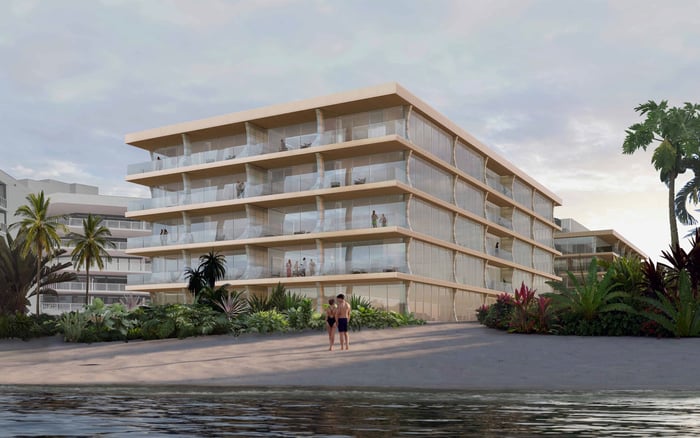
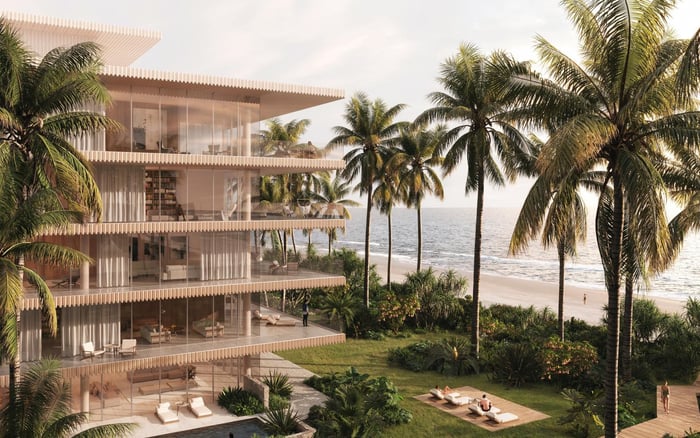
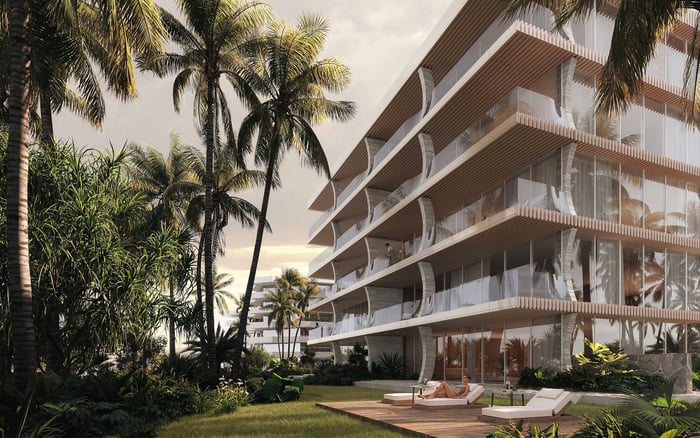
For art-driven buyers choosing a South Florida foothold, Miami’s Design District and Palm Beach’s Worth Avenue offer very different cultural propositions. One is contemporary, walkable, and plugged into the international design calendar; the other is polished, traditional, and shaped by privacy, preservation, and legacy cachet. This MILLION Luxury editorial compares the two through the lens that matters most to collectors: how daily life, housing stock, entertaining style, and social rhythm align with the kind of art-centered base they actually want to own.
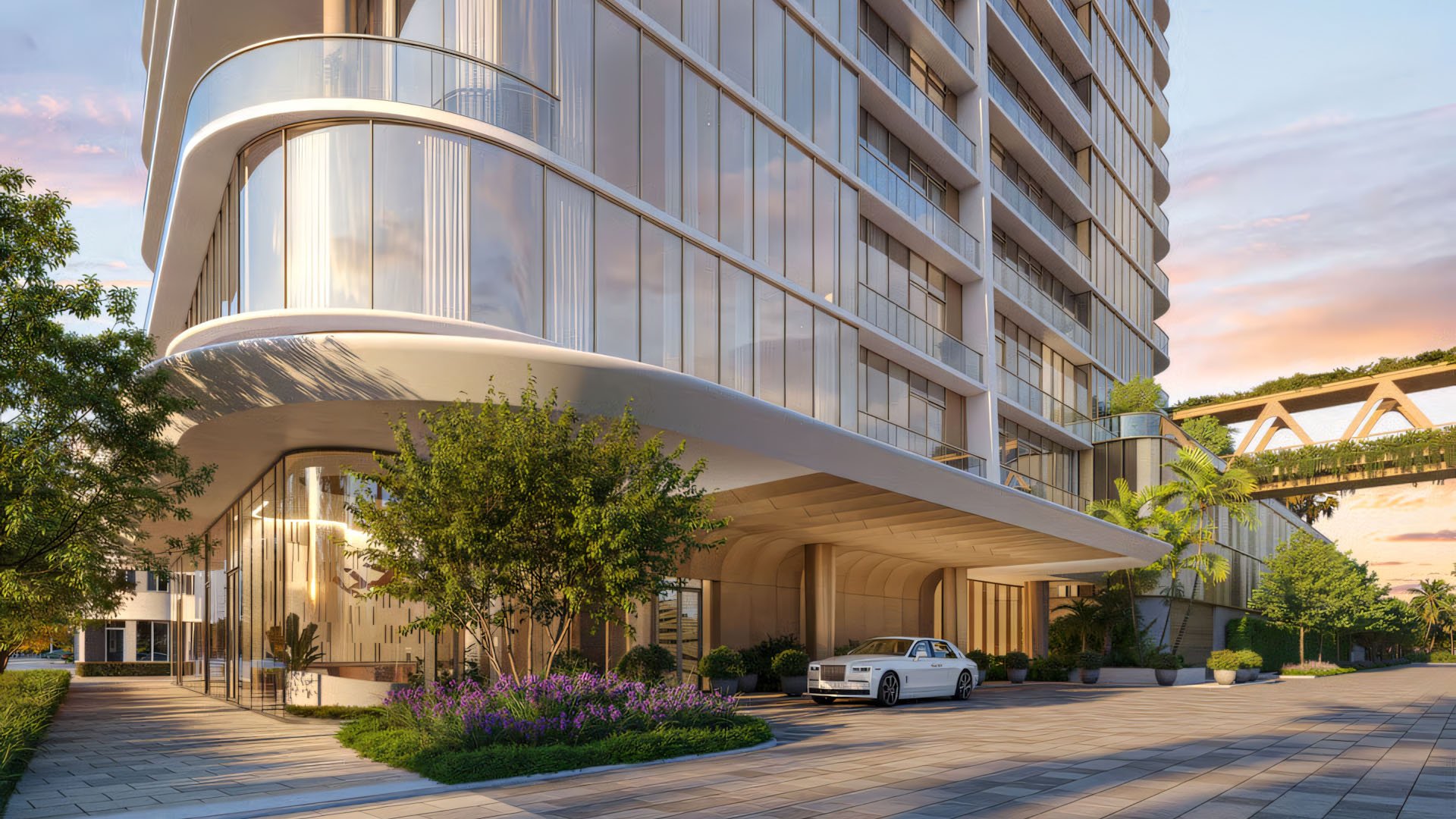
For buyers who collect art, design, or both, a South Florida residence is rarely just a place to stay. It is a setting for conversations, dinners, viewings, and the subtle rituals that shape a collecting life. In that context, Miami’s Design District and Palm Beach’s Worth Avenue compete less as shopping corridors than as distinct cultural ecosystems.
The Design District is best understood as a mixed-use neighborhood centered on luxury retail, dining, art, architecture, and design. Its appeal is not that it feels residential first, but that daily life unfolds within a compact, highly visual environment where galleries, showrooms, boutiques, and restaurants are all within easy walking distance. It offers unusual density for buyers who want culture close at hand.
Worth Avenue, by contrast, offers a more composed proposition. It is Palm Beach’s iconic corridor for luxury retail, galleries, dining, and specialty boutiques, but the atmosphere feels more edited than kinetic. The surrounding island setting, reinforced by preservation-minded civic controls, gives the area a quieter, more controlled tone. For many buyers, that distinction is exactly the appeal.
The strongest case for the Design District is not status signaling. It is access. Buyers who want frequent contact with contemporary art and collectible design are simply closer to the action there. The neighborhood’s walkability lends itself to spontaneous gallery visits, impromptu lunches that become showroom stops, and entertaining that requires little choreography.
That advantage becomes even clearer during fair season. Miami’s annual design and art calendar reinforces the district’s place in the global design conversation. For buyers who want a home base that comes especially alive when the collector world arrives, that seasonal rhythm carries real weight.
The residential expression of that lifestyle often sits just beyond the district itself, in neighborhoods that share its urban energy and newer inventory profile. A buyer seeking architecture-forward condominium living might look to Kempinski Residences Miami Design District for direct proximity, or consider Miami Design Residences Midtown Miami as part of the broader design-centric orbit. For those who prefer a more established luxury core while remaining connected to the city’s cultural calendar, Baccarat Residences Brickell can suit buyers balancing collecting, entertaining, and business.
Worth Avenue’s appeal is less about intensity than refinement. Its galleries and antique dealers sit alongside heritage luxury brands in a setting that feels polished, pedestrian-friendly, and socially legible. For buyers who prefer a more traditional collecting environment, that curation can feel more appealing than Miami’s deliberate overstimulation.
Palm Beach also offers a stronger backdrop for discretion. The town’s preservation culture and civic framework help sustain a residential atmosphere where privacy, continuity, and formality carry real weight. That tends to resonate with buyers who want home life to feel removed from the public churn of cultural programming, even if they remain deeply engaged collectors.
In residential terms, that usually means competing for scarcer inventory at higher price points. Worth Avenue-adjacent ownership is often defined by limited island supply, established addresses, and legacy properties rather than abundant new product. Buyers who want a newer vertical residence within the West Palm sphere might compare the sensibility of Alba West Palm Beach or Forté on Flagler West Palm Beach, but the cultural identity tied to Worth Avenue remains distinctively Palm Beach: formal, restrained, and socially polished.
Art-driven buyers often frame this decision as Miami versus Palm Beach, but the more useful distinction is tempo.
In the Design District, the day can remain open-ended. A morning coffee turns into a furniture viewing, then a lunch meeting, then a gallery visit, then cocktails nearby. The compact layout rewards spontaneity. That makes the neighborhood especially attractive to buyers who entertain often, like to host collectors on short notice, and prefer an address where cultural activity is visible at street level.
Worth Avenue operates on a more deliberate rhythm. Appointments feel more scheduled. Social life tends to read as polished rather than improvised. The luxury signaling is unmistakable, but it is expressed through control, tradition, and consistency rather than urban energy. Buyers who want a residence that supports quieter hosting, established routines, and a more private social posture often find this atmosphere better suited to long-term ownership.
Lifestyle is the headline, but inventory shapes the practical decision. Miami offers a broader range of for-sale entry points than Palm Beach, which generally makes a Design District-oriented base more accessible at lower price levels. That does not mean inexpensive. It means comparatively more flexible.
Miami buyers are also more likely to encounter newer condominium inventory and design-forward residential options. That matters for collectors who prioritize clean lines, contemporary finishes, amenity depth, and lock-and-leave ease. In the wider urban luxury landscape, buildings such as Villa Miami reflect the kind of newer product that often appeals to buyers choosing culture-rich city living over legacy island convention.
Palm Beach, meanwhile, concentrates value differently. Residential offerings are weighted more heavily toward top-tier pricing, limited inventory, and established addresses. The proposition is less about variety than exclusivity. For some buyers, paying more for a rarer, quieter base is entirely rational. For others, the trade-off feels too restrictive compared with Miami’s range and immediacy.
Choose the Design District if your version of luxury includes proximity to ideas. It suits buyers whose collecting taste skews contemporary, who enjoy fair-week energy, and who want to live in a place where design is not an accessory but part of the daily streetscape. It also suits owners who prefer newer residences, urban walkability, and the ability to move fluidly between art, dining, and commerce.
Choose Worth Avenue if your priorities are privacy, legacy, and polish. It is the stronger fit for buyers who value a quieter residential backdrop, a more traditional luxury code, and a collector environment that feels curated rather than crowded. If your ideal South Florida base should support elegant discretion first and cultural engagement second, Palm Beach often comes out ahead.
For many households, the answer comes down to whether the residence is meant to amplify one’s public cultural life or protect one’s private one. The Design District excels at the former. Worth Avenue excels at the latter.
If the goal is an art-driven base with maximum daily exposure to contemporary culture, the Design District is the more dynamic choice. If the goal is a refined, private setting where collecting sits within a legacy luxury environment, Worth Avenue remains unmatched.
Neither address is universally better. Each is highly specific. The right choice is the one that mirrors how you want culture to enter your life: constantly, visibly, and on foot in Miami, or selectively, elegantly, and behind a calmer facade in Palm Beach.
Is the Design District better for contemporary art collectors? Yes. Its strongest advantage is daily access to contemporary design programming, galleries, and fair-season energy.
Is Worth Avenue more private than the Design District? Generally, yes. The surrounding Palm Beach setting is quieter and more aligned with discreet luxury.
Which area is more walkable for gallery-hopping? The Design District. Its compact urban layout makes spontaneous cultural stops easier to fold into a normal day.
Which location feels more traditional? Worth Avenue. Its galleries, antique dealers, and heritage luxury brands create a more classic collector atmosphere.
Is Miami easier to enter at lower price points than Palm Beach? In broad terms, yes. Miami offers more varied for-sale entry points than Palm Beach’s concentrated inventory.
Where are buyers more likely to find newer condo inventory? Near the Design District and across greater Miami. Newer, design-forward residences are more common there than on Palm Beach island.
Does Worth Avenue appeal more to legacy-minded buyers? Yes. Buyers who value established social codes and traditional luxury signaling often prefer Palm Beach.
Is fair season a meaningful advantage for Miami buyers? Yes. Miami’s annual design and art calendar brings collector energy directly into the city.
Which base is better for entertaining on short notice? The Design District tends to work better for spontaneous hosting because dining, galleries, and retail are closely clustered.
Should art-driven buyers choose Palm Beach or Miami if they want flexibility? Buyers usually find more flexibility in the broader Miami market, while Palm Beach tends to reward those prioritizing exclusivity and calm.
For a tailored shortlist and next-step guidance, connect with MILLION Luxury.
If branded residences are on your mind — as a home or as an allocation — we would be glad to share what we are seeing, privately.
Begin a quiet conversation