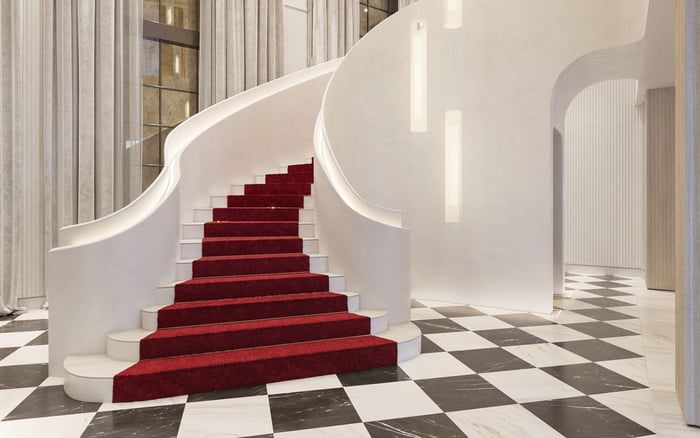
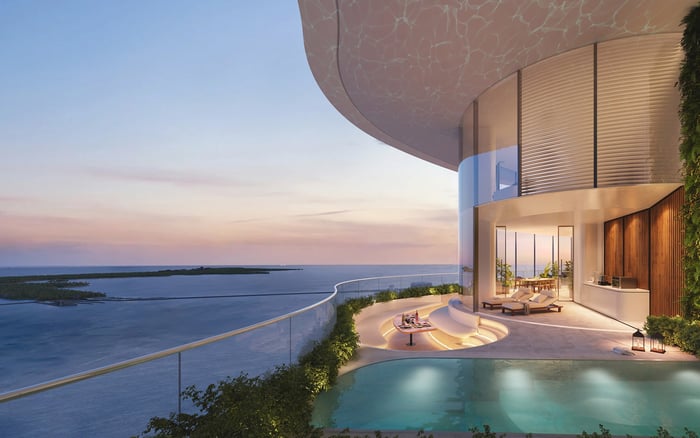
A discreet buyer’s guide to evaluating Delano Residences & Hotel Miami and Colette Residences Brickell for households that rely on trainers, tutors, private chefs, and other recurring professionals.
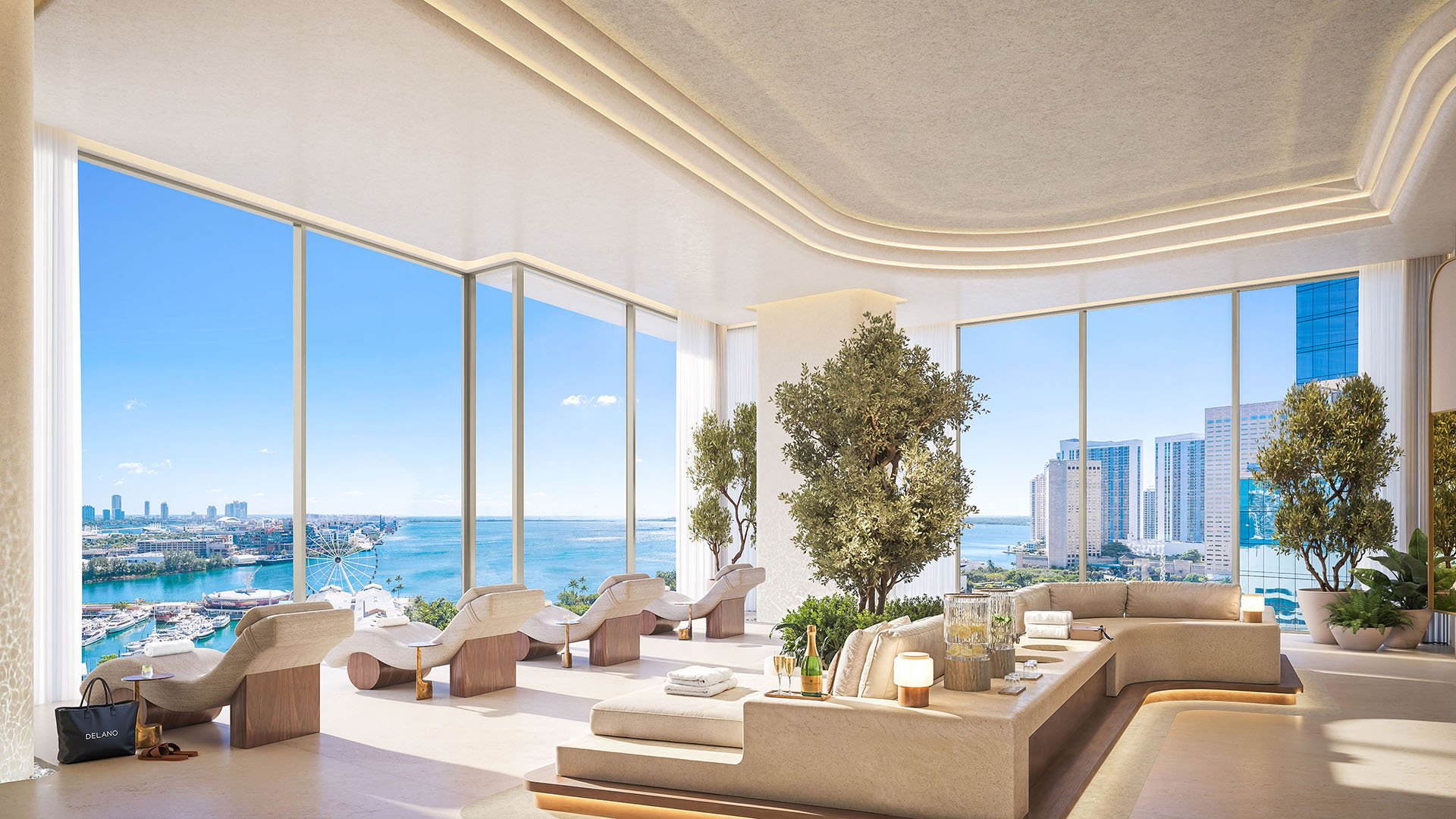
For buyers who travel with a trainer, host a tutor several afternoons a week, or expect a private chef to prepare dinner without friction, the comparison between Delano Residences & Hotel Miami and Colette Residences Brickell is less about spectacle than household choreography. The better building is the one that allows private life to function quietly, repeatedly, and without explanation.
That is a different test from the usual amenity conversation. A beautiful lobby, dramatic arrival, or fashionable restaurant can matter. But for this buyer profile, the deeper issue is whether the building can absorb a steady rhythm of trusted outsiders. Trainers need predictable access and sufficient space to work. Tutors need a calm arrival path and a setting that does not feel transient. Private chefs need service logic, not merely a handsome kitchen.
With limited publicly defined operational detail, the prudent approach is to evaluate each building through the lens of daily use. Colette Residences Brickell has the intuitive advantage for buyers whose household schedule is anchored in Brickell, office life, school runs, and city routines. Delano Residences & Hotel Miami may appeal more to owners who want a hospitality sensibility, especially if they prefer a residence connected to leisure, guests, and seasonal entertaining.
This is not the occasional-housekeeper buyer. This is the owner whose residence functions almost like a private appointment calendar. A trainer may arrive before sunrise. A tutor may come on weekdays after school. A chef may need access ahead of the owner’s dinner guests. There may also be assistants, drivers, stylists, wellness practitioners, pet care, or family-office personnel.
The building must therefore support a controlled but gracious flow of people. Security should be firm without being theatrical. Front-desk protocol should distinguish between a one-time visitor and a recurring professional. Elevator access should feel efficient. Parking and drop-off should not require constant improvisation. The residence should allow work to happen without turning the home into a public corridor.
This is where the distinction between a purely residential atmosphere and a hotel-influenced environment becomes important. A condo-hotel sensibility can be convenient for owners who like service energy, hospitality staffing, and a broader range of arrivals. Yet that same energy may feel less private if the household’s professionals are part of a daily family routine. The right answer depends on whether the owner wants service intensity to feel institutional, residential, or resort-like.
Colette Residences Brickell reads as the more natural fit for buyers whose daily life is already organized around Brickell. The neighborhood context matters because trainers, tutors, chefs, and assistants often work best when travel time is predictable. If an owner’s office, school orbit, medical appointments, and dining habits are concentrated near the urban core, convenience becomes a form of privacy.
For a family or executive household, Brickell can support repeat scheduling. A tutor can arrive after a private-school pickup window. A trainer can come between office calls. A chef can coordinate around weekday entertaining without longer cross-county travel. None of this proves the building’s internal rules, which must be reviewed directly, but it clarifies why Colette may be the cleaner operational choice for a buyer who values routine over resort theater.
Colette also feels conceptually aligned with the buyer who wants the home to remain distinctly residential. That matters for children, tutors, and wellness professionals. The atmosphere should allow recurring visitors to be recognized without feeling exposed. The more a household relies on repeat service providers, the more valuable it becomes to live in a building where the daily pattern is stable.
Due diligence should focus on access protocols, guest registration, elevator designation, service elevator availability, staff parking, food delivery policies, and rules around in-residence commercial activity. Buyers should also ask how the building handles recurring visitors during peak hours, holidays, storms, and high-traffic social periods.
Delano Residences & Hotel Miami may be the more compelling choice for buyers who want their residence to live closer to a hospitality environment. The name itself signals a relationship between private residence and hotel identity, which may attract owners who divide their time, entertain frequently, or want their Miami home to feel more connected to leisure.
For a second-home buyer, that can be meaningful. A residence with hotel energy may better suit owners who arrive for long weekends, social seasons, wellness escapes, or extended stays with visiting friends. If the trainer is part of a wellness-oriented itinerary, or the private chef is tied to entertaining rather than weekday family logistics, a hospitality-minded setting can feel more emotionally aligned.
The tradeoff is privacy calibration. Hotel-oriented environments can be superb for access, service, and guest movement, but buyers should be precise about boundaries. Can a private trainer arrive early without feeling like a public guest? Can a chef bring equipment or provisions through a practical route? Can a tutor work with a child in a calm setting without crossing the most active hospitality zones? These are not aesthetic questions. They are operational questions.
Buyers should also consider the rhythm of their own use. Seasonal peaks, event calendars, and leisure traffic can affect how easily recurring professionals move in and out. That may be irrelevant to an owner who uses the residence primarily for curated stays. It may be inconvenient for a household that needs school-week consistency.
A trainer needs three things: access, space, and discretion. The buyer should not stop at asking whether the building has fitness amenities. The better question is whether private instruction is allowed, where it may occur, and whether the trainer can enter without a lengthy guest process each time.
If workouts happen in the residence, the plan should accommodate movement, storage, noise control, and flooring sensitivity. If workouts happen in shared amenities, the building’s policy on outside trainers becomes decisive. Some owners prefer the energy of a shared fitness environment. Others want a trainer to arrive directly to the home, complete the session, and leave with minimal visibility.
Colette may be preferable where weekday repetition is the priority. Delano may be preferable where the wellness routine is part of a broader hospitality experience. The buyer’s actual calendar should decide.
Tutors require a different atmosphere from trainers. The issue is calm. A child or teenager should not feel as though every session begins with a production. The best building for tutoring offers predictable arrival, a quiet residence, and enough separation from entertaining zones.
Families should evaluate where tutoring would occur within the home, whether the arrival path feels secure, and whether the building’s visitor process is child-friendly. Private-school schedules can be unforgiving. If a tutor loses 15 minutes at the front desk or in traffic, the inconvenience becomes cumulative.
For that reason, Colette may better support the buyer whose academic schedule is tied to a dense urban routine. Delano may suit families who use the residence seasonally or want a hospitality-minded home where tutoring is occasional rather than daily.
Private chefs expose the difference between a beautiful kitchen and a workable one. The buyer should study appliance specifications, prep surfaces, pantry space, ventilation, trash routes, delivery procedures, service elevator logic, and how groceries or specialty provisions reach the residence.
A chef working a quiet family dinner needs different support from a chef preparing for twelve guests. If entertaining is central, Delano’s hospitality identity may feel appealing. If the chef is part of weekly household maintenance, Colette’s urban residential posture may be easier to integrate.
The pool, wellness areas, and shared entertainment spaces can also affect the chef question. If owners expect food service to connect with outdoor or amenity living, rules around catering, glassware, alcohol service, and guest counts must be reviewed before contract.
For buyers who need recurring trainers, tutors, and chefs as part of ordinary life, Colette Residences Brickell is likely the more practical starting point if the household’s center of gravity is Brickell and the goal is repetition, speed, and residential calm. It should be evaluated as a home base for structured schedules.
Delano Residences & Hotel Miami is likely the more seductive starting point for buyers who value a hotel-inflected lifestyle, seasonal use, entertaining, and a hospitality-oriented atmosphere. It should be evaluated as a service-rich residence where privacy and access rules are especially important to confirm.
The decisive move is not choosing by brand impression. It is asking each building to walk through a sample week: Monday trainer, Tuesday tutor, Wednesday chef delivery, Friday dinner, weekend guests. The building that handles that itinerary with the least friction is the better building.
Which building is better for a buyer with daily trainers, tutors, and chefs? Colette Residences Brickell is the stronger starting point if the household depends on weekday repetition and Brickell convenience.
Which building is better for a seasonal Miami residence? Delano Residences & Hotel Miami may suit a seasonal owner who wants hospitality energy and a leisure-oriented setting.
What should buyers ask before hiring an outside trainer? Ask whether outside trainers are permitted, where sessions may occur, and how recurring access is approved.
What matters most for tutors? Predictable arrival, a quiet learning environment, and a visitor process that does not disrupt the session are key.
What should a private chef review before purchase? The chef should review kitchen layout, service access, delivery rules, storage, ventilation, and trash routing.
Is a hotel-style building always easier for staff access? Not always. It may offer service infrastructure, but privacy rules and guest flow still need careful review.
Is Brickell better for private-school logistics? It can be, especially when school, office, and appointment patterns are concentrated near the urban core.
Can leisure-focused living create challenges for recurring professionals? It can during peak periods, so owners should test travel patterns against their actual weekly schedule.
Should buyers rely on amenity descriptions alone? No. Amenity language rarely explains access permissions, recurring visitor rules, or service elevator procedures.
What is the simplest way to compare both buildings? Map a real week of household appointments and ask each building how it would handle every arrival and departure.
For a discreet conversation and a curated building-by-building shortlist, connect with MILLION.
If branded residences are on your mind — as a home or as an allocation — we would be glad to share what we are seeing, privately.
Begin a quiet conversation