A discreet primer for waterfront buyers weighing deeded slips, marina economics, Florida permitting realities, and the due diligence that protects resale value.
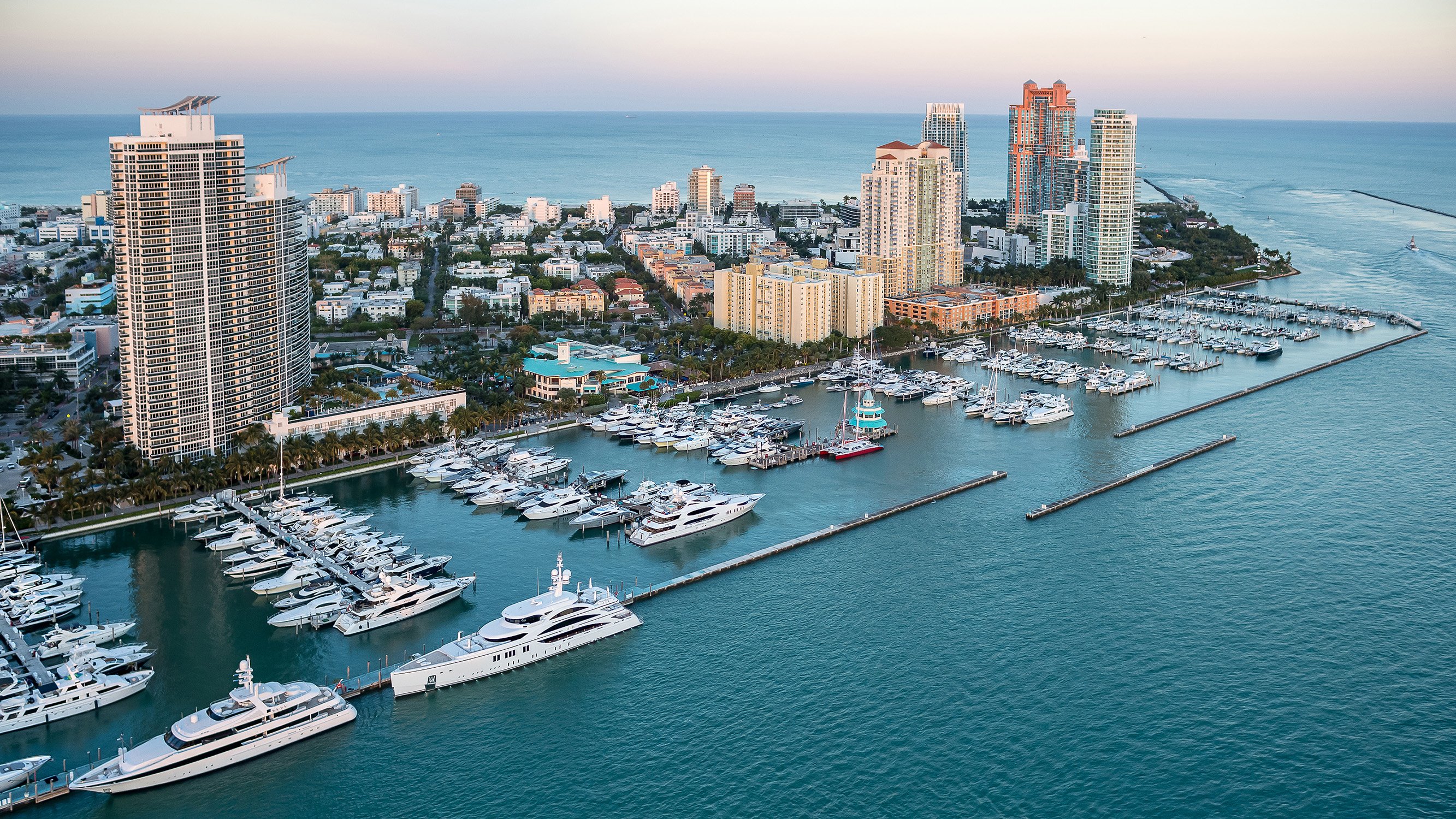
In South Florida, waterfront real estate is often sold as a lifestyle. For owners who actually run a vessel, the more decisive question is operational: what, precisely, do you own at the dock?
A “boat slip” tied to a residence can describe very different rights. It may be a deeded, fee-simple interest. It may be a renewable lease. Or it may be an association assignment that can be revised through board policy. Each structure carries different permanence, transferability, and protection, which is why sophisticated buyers underwrite the slip with the same discipline they apply to the residence.
This distinction is not academic. Where deeded slips exist, they are often treated as real property: conveyable by recorded deed and, in many cases, insurable with title insurance. That legal posture can influence liquidity and resale more than any finish schedule.
Marketing language can be polished while the legal reality is simple. Before you price the “marina premium,” identify which model applies and which documents control.
A deeded slip can be conveyed by recorded deed, with rights that can be perpetual and transferable, similar to real property. For buyers, this is typically the cleanest structure because the right is not dependent on annual renewals or discretionary approvals.
Some marinas operate under long-term ground leases that can run for decades. The risk is timing. As the underlying lease approaches expiration, market value can compress even if the marina feels stable day to day. When you see “remaining term” language, ask for the source document and extension options, not just the brochure.
“Dockominium” ownership generally means the slip is purchased as a real-estate unit, and you share ownership of common marina elements through an association with dues funding operations and maintenance. It can be a strong structure when the association is well-capitalized and rules are clear. It still requires the same document review you would do for any condo.
South Florida buyers often treat a slip as an amenity. Marina operators treat it as infrastructure. Your underwriting should reflect both perspectives.
Across many marinas, pricing is commonly framed by linear footage, with owners budgeting separately for utilities, add-on services, and rule-driven fees. The point is not a single “going rate,” but the pattern: slips are often commoditized by dimensions, while operating line items vary sharply by property and governance.
In other U.S. markets, publicly advertised deeded-slip examples have included roughly 30-foot slips in the tens of thousands of dollars and deep-water 60-foot slips around the high five figures. Leasing examples can be equally structured. Some communities advertise seasonal slip leasing priced as a set annual fee for boats up to a stated length, while other marinas post monthly pricing by the foot.
The most consequential cost center is rarely the pedestal electricity. It is the long-life systems you do not see, and the capital plan you do not control.
Seawalls are a prime example. Published cost ranges for seawall construction or repair are often cited around $150 to $600 per linear foot, and can be higher for complex scopes. Even with diligent management, inspections and maintenance can create recurring annual costs that become meaningful at a marina scale.
For buyers, this is ultimately a governance question: Are reserves appropriately funded? Is there a recent engineering assessment? Are special assessments contemplated or already scheduled? A slip can be “deeded” and still be economically volatile if the common elements are underfunded.
A perfectly structured right is still a poor purchase if the slip does not function in real conditions.
Slip-fit begins with Length Overall (LOA) and beam. Common guidance recommends selecting a slip a few feet longer than LOA to ease docking and account for conditions. If a slip is “nominally” 50 feet and your LOA is close, confirm how length is measured and whether pilings or finger piers reduce usable space.
Draft and tidal variation matter. Confirm water depth at the slip and along the approach at low-water conditions. In South Florida, where owners may run inlets, bays, and intracoastal routes, the approach can be more limiting than the berth itself.
If a slip includes a lift, capacity should exceed the boat’s weight, commonly by about 20 to 25 percent, to account for fuel, gear, and a safety margin. Verify not only the rated capacity but also maintenance history, inspection protocols, and any marina rules about who may service the equipment.
The physical dock is not a blank canvas, and South Florida buyers should assume constraints are real.
Florida dock and marina projects are regulated through Florida DEP permitting, including rules that appear in Florida Administrative Code Chapter 62-312 for many dock authorizations. For single-family residential docks, DEP guidance commonly addresses dimensional constraints such as maximum 4-foot-wide access walkways and a terminal platform cap of 160 square feet for many authorizations. DEP guidance also addresses design measures to protect submerged resources, including minimum plank spacing often cited as half-inch gaps to improve light penetration.
If you are buying a waterfront single-family home and imagining a future dock expansion, treat these parameters as underwriting inputs, not wishful thinking. For condo-adjacent marina structures, the permitting regime still shapes what can be modified, how long approvals can take, and which design details are non-negotiable.
Mangroves add another layer. Mangrove trimming along Florida shorelines is regulated, and homeowners are directed to follow the Mangrove Trimming and Protection Act, with DEP guidance on compliant trimming and exemptions. The practical takeaway is straightforward: a “view corridor” or “turning basin” may be governed by environmental rules and timelines, not just a contractor’s calendar.
Marina docking commonly triggers insurance requirements. Many marinas require liability coverage plus proof of boat insurance before issuing slip agreements. This is not paperwork; it is a condition of use.
For budgeting, a commonly cited planning assumption for boat insurance is roughly 1 to 2 percent of the boat’s value annually, varying by vessel type, location, and coverage. Ask the marina for minimum limits and any named-insured requirements early, particularly if the slip is intended for a higher-value vessel.
Buyers who prioritize boating tend to separate “waterfront living” from “operational boating.” Both can be exceptional. They are not always the same purchase.
In the Edgewater corridor, Aria Reserve Miami has been marketed with water-focused amenities, including a bayfront marina concept alongside kayak and paddleboard offerings and a long baywalk frontage. For buyers who want daily proximity to the bay, that emphasis is part of the value proposition, even when the precise form of slip rights still requires confirmation.
On Miami Beach, many ultra-luxury addresses trade more on walkability, service, and ocean adjacency than on private slip ownership. Residences such as The Ritz-Carlton Residences® Miami Beach and Setai Residences Miami Beach are often evaluated for lifestyle and hospitality DNA, while owners who keep vessels may pair the residence with separate marina arrangements depending on preference and availability.
For those who want the Miami Beach social core with a residential collection feel, Shore Club Private Collections Miami Beach sits naturally in the conversation. The sophisticated move is to treat the slip question as its own acquisition: understand the right, the rules, and the replacement cost of the infrastructure supporting it.
Further north along the sand, 57 Ocean Miami Beach reflects a quieter, more residential posture while still within reach of the regional boating ecosystem. Oceanfront living and a true boat-slip strategy can coexist, but they typically require deliberate planning rather than assumptions.
Regionally, publicly disclosed development coverage has also described a planned Ritz-Carlton Residences project in North Bay Village marketed as including a private marina with 42 slips serving residents. For buyers, that detail is a reminder to read beyond renderings: clarify whether slips are deeded, leased, or assigned, and confirm transfer rules at resale.
Luxury buyers tend to win by being quiet and thorough. Before you ascribe a premium to a marina component, confirm:
A slip that is easy to finance, easy to insure, and easy to use is typically the slip that is easiest to resell.
What makes a slip “deeded”?
A deeded slip can be conveyed by a recorded deed, with rights that are generally transferable like real property.
Why does an underlying ground lease matter?
If the marina sits on a long-term ground lease, an approaching expiration can reduce slip market value even if the slip feels fully functional today.
What is a dockominium?
A dockominium typically means you purchase a slip as a real-estate unit and share common marina elements through an association with dues.
Are slip fees usually all-in?
Often not. Many marinas price by linear foot and add utilities, services, and rule-based charges on top.
How do I know the slip will actually fit my boat?
Start with LOA and beam, and many guides recommend choosing a slip a few feet longer than LOA for easier docking.
Why should I check depth at low water?
Draft and tidal variation can restrict access. Confirm depth at the berth and on the approach at low-water conditions.
What if the slip has a lift?
Verify that lift capacity exceeds the boat’s weight, commonly by about 20 to 25 percent, and confirm maintenance rules.
What are typical marina insurance requirements?
Many marinas require liability coverage plus proof of boat insurance before issuing slip agreements.
What Florida rules can affect dock changes?
Florida DEP permitting and guidance can limit dock dimensions and require environmental design measures, and mangrove trimming is also regulated.
What is the simplest way to start evaluating a boat slip?
Treat it like a separate real-estate asset: verify the legal right, the operating costs, and the condition of shared infrastructure such as the marina seawall. For private guidance aligned with South Florida’s top waterfront addresses, connect with MILLION Luxury.
If branded residences are on your mind — as a home or as an allocation — we would be glad to share what we are seeing, privately.
Begin a quiet conversation