A discreet buyer’s framework for evaluating Bay Harbor Islands residences through the particular needs of traveling art collectors, from display planning and privacy to arrival readiness, waterfront due diligence, and long-term stewardship.

For collectors who organize part of the year around Art Basel and Miami Art Week, a South Florida residence must perform in two distinct modes. It should feel composed enough for private viewings and conversation during a demanding cultural calendar, yet remain simple to close, monitor and reopen between trips.
The best purchase is therefore less about spectacle than operational clarity. Waterfront outlooks may set the emotional register, but art care, controlled light, privacy, service routines and dependable access deserve equal weight. A collector should also distinguish between a home intended for entertaining and one conceived primarily as a restorative retreat.
Bay Harbor Islands is best approached as a focused residential search rather than a hunt for a universal winner. The brief should reflect the buyer’s actual pattern of use, the scale and sensitivity of the collection, and the degree of oversight expected while the owner is away.
A disciplined review might begin with Bay Harbor Towers and Alana Bay Harbor Islands. Their inclusion invites comparison; it does not suggest that their offerings or waterfront conditions are equivalent. Buyers should request current plans, disclosures, rules and availability before drawing conclusions.
The same standard applies to Onda Bay Harbor. For a collector, the decisive questions concern the specific residence: wall dimensions, glazing, exposure, elevator logistics, service access and the route from vehicle to interior. Marketing language cannot replace precise measurements and an art adviser’s review.
A broader comparison can include La Maré Bay Harbor Islands and La Baia North Bay Harbor Islands. Each warrants an independent review of current status and fit. Buyers should verify whether a particular residence delivers the desired waterfront relationship rather than relying on a project name, rendering or general orientation.
Begin with the collection, not the furniture plan. Inventory the works likely to live in Miami, then map their dimensions, media, weight and sensitivity. Confirm where direct sunlight may fall, whether window treatments can be integrated discreetly, and how lighting, electrical locations and wall construction will affect installation.
A balcony or broad view can enrich daily life while complicating decisions about glare and placement. Similarly, open living areas may work beautifully for gatherings but provide fewer protected walls. The right answer is often a restrained interior architecture with a limited number of deliberate display moments, supported by storage for crates, tools and rotating works.
Involve the relevant specialists before contracting. An art adviser can test the curatorial plan; an installer can assess access and mounting conditions; insurance and conservation professionals can identify documentation or environmental requirements. These reviews should address the specific residence and collection rather than generic luxury standards.
During Miami Art Week, the residence may serve as a setting for breakfast meetings, pauses between appointments or intimate evenings. Buyers should therefore model the entire arrival sequence: guest screening, parking procedures, elevator use, deliveries, household staffing and the separation of private rooms from social areas.
The same exercise matters when the owner is absent. Establish who receives shipments, supervises vendors and prepares the home before arrival. Confirm which responsibilities belong to the owner, the association or an outside manager. A polished lifestyle depends on these unglamorous boundaries being clearly defined.
Miami Beach may be central to an owner’s fair-week itinerary, but the residence should not be judged by one annual period alone. Visit at the times and under the conditions that matter personally. A calm morning, a working afternoon and an evening arrival can reveal more than a staged presentation.
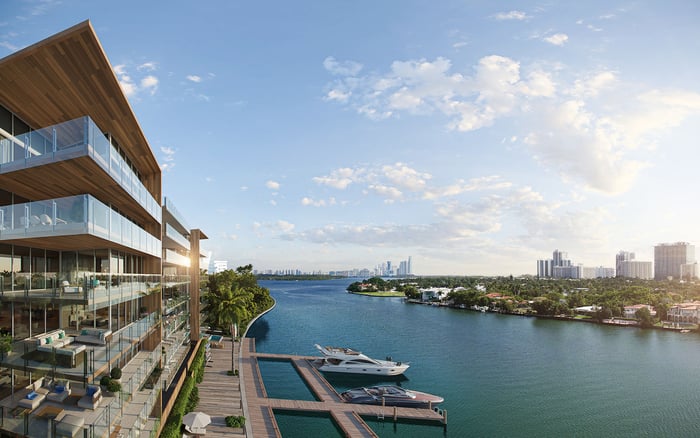
A waterfront purchase requires both residence-level and building-level review. Confirm legal view corridors and orientation, then investigate glazing, exterior maintenance, water-intrusion history, emergency planning and insurance obligations with qualified advisers. If boating matters, verify the existence, dimensions, rights, restrictions and transferability of any relevant facility. Never infer a boat slip from proximity to the water.
A boutique building may appeal to buyers seeking discretion, but fewer residences do not automatically ensure privacy, lower costs or simpler governance. Review staffing, reserves, budgets, planned work, rental rules, pet policies, renovation procedures and delivery protocols. Ask how major art shipments are scheduled and whether common areas require protective measures.
A pool, wellness space or entertaining room may be desirable, but every amenity should be weighed against actual use and carrying obligations. Collectors who travel extensively may prefer fewer moving parts, while owners who host family and advisers may value a deeper service program.
The strongest choice is a home that remains coherent when the calendar grows crowded and secure when it becomes quiet. Treat the property as a year-round second home, not merely a fair-week address. Favor a plan that supports the collection, an ownership structure that can be managed from afar and a setting that remains rewarding when no event is underway.
Before closing, assemble a single decision file containing plans, rules, budgets, insurance guidance, inspection findings and written answers to operational questions. The objective is not to eliminate every variable, but to understand which details are confirmed, which remain conditional and which require specialist approval.
What should an art collector prioritize first? Start with the collection’s physical and environmental needs, then test each residence against them.
Should waterfront views outweigh display walls? No. Balance the view with usable wall area, controllable light and suitable installation conditions.
How should buyers compare the featured projects? Compare current plans, rules, costs, disclosures and residence-specific conditions on the same worksheet.
Is a waterfront address enough to confirm boating access? No. Verify any boating right, facility or restriction in writing before purchase.
Why review elevator and delivery logistics? Large works, crates and specialist teams may require access beyond ordinary residential deliveries.
What matters when the owner is traveling? Clear protocols for monitoring, vendors, shipments, emergencies and pre-arrival preparation are essential.
How can a buyer assess privacy? Walk the complete route used by residents, guests, staff and deliveries, then review access rules.
Should Miami Art Week drive the entire decision? No. The residence should support fair-week activity while remaining satisfying throughout the year.
When should art specialists become involved? Engage them before contracting when light, access, installation or conservation could affect suitability.
What is the final pre-closing step? Reconcile written representations, specialist findings and governing documents with the intended use.
When you're ready to tour or underwrite the options, connect with MILLION.
If branded residences are on your mind — as a home or as an allocation — we would be glad to share what we are seeing, privately.
Begin a quiet conversation