A buyer-oriented look at retail-adjacent security expectations in Bal Harbour and how discerning residents should evaluate monitoring, privacy, access, and branded-residence operations.
In Bal Harbour, retail proximity is central to the lifestyle proposition. The appeal is not simply the ability to move easily between residence, dining, shopping, beach, and private appointments. It is the feeling that each transition has been considered before the resident arrives. For ultra-prime buyers, that feeling increasingly depends on security that is present without becoming theatrical.
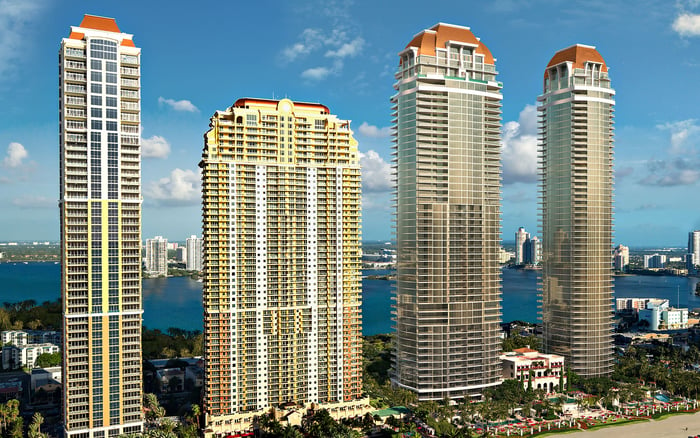
This is where the conversation around Acqualina Residences and The St. Regis Residences monitoring becomes relevant. Buyers comparing branded or service-led residences are not merely asking whether a building has cameras, controlled entrances, or staff at the desk. They are asking whether the entire daily choreography feels composed: arrivals, guest handling, retail adjacency, package flow, vendor access, valet coordination, beach movement, and after-hours discretion.
The strongest security posture in South Florida’s luxury market is rarely the most visible. It is measured, layered, and respectful of privacy. It gives residents confidence without turning home into a checkpoint. In a market where wealth is mobile and expectations are international, that balance is now part of the value conversation.
Retail security differs from residential security because the rhythms are different. Retail settings bring public movement, peak-hour surges, service deliveries, special events, restaurant traffic, transportation demand, and visitors who may have no connection to the residential building. A residence near that energy must create a clean operational boundary between public convenience and private calm.
For a buyer, the questions should be precise. How are residential entrances separated from retail or public arrival patterns? How are guests verified before they reach private areas? What protocols govern vendors, deliveries, housekeeping teams, drivers, and temporary service personnel? How is after-hours access handled? Who reviews incidents, and how quickly are policies updated when patterns change?
The answer should never be a vague assurance. In a serious building, security is a living operating system. Staff training, technology, physical design, and resident communication should reinforce one another. A camera is only as valuable as the response protocol behind it. A staffed lobby is only as strong as the discipline of its access procedures.
In buyer conversations, Bal Harbour and Sunny Isles often occupy the same mental map: oceanfront privacy, polished service, and an exclusive-area expectation that everyday movement will feel protected but never cumbersome.
A comparison involving The Estates at Acqualina Sunny Isles or St. Regis® Residences Brickell should be less about brand admiration and more about operational fit. These names signal a particular buyer expectation: refined service, controlled arrival, attentive staffing, and a residential environment where privacy is treated as part of hospitality.
That does not mean every buyer wants the same level of formality. Some prefer a highly residential atmosphere where staff presence is understated. Others want a hotel-informed service culture with more visible coordination. In both cases, monitoring should support the resident’s preferred pace. The goal is not to create friction. The goal is to prevent uncertainty.
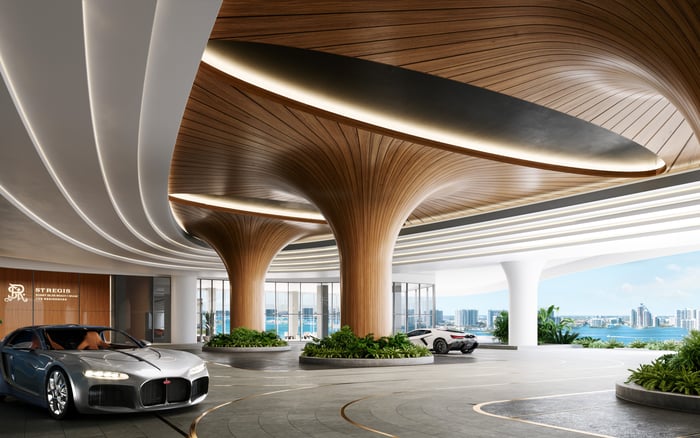
Buyers should pay close attention to how security appears during an in-person visit. Is staff eye contact confident and calm? Are visitors handled gracefully? Does the porte cochere feel orderly? Are service areas clearly separated from the resident experience? Is there a sense that procedures are embedded rather than improvised? These small observations often reveal more than a marketing description.
Bal Harbour’s strongest residential appeal depends on contrast. A resident may want immediate access to retail, dining, and the coast, then complete retreat upon returning home. That retreat is not only architectural. It is psychological. The buyer must feel that the residence has a defensible private boundary.
This boundary begins before the front door. It includes approach routes, valet sequencing, elevator control, lobby sightlines, staff positioning, visitor verification, and the treatment of common spaces. In a high-value building, the experience should feel intuitive. Residents should not have to wonder who belongs where.
The most refined properties make this look effortless. They avoid overexposure at arrival. They reduce unnecessary waiting. They train staff to recognize patterns without appearing intrusive. They protect resident information with discretion. They understand that privacy is not simply the absence of strangers. It is the absence of avoidable attention.
For families, seasonal owners, and international buyers, this matters deeply. A second home may be occupied intermittently. Guests may include relatives, assistants, chefs, wellness providers, stylists, drivers, and household staff. The building’s ability to manage that ecosystem quietly becomes a practical test of luxury.
Monitoring technology can be reassuring, but only when it is integrated into a broader service culture. Cameras, access credentials, license plate recognition, elevator controls, and digital guest systems can all contribute to a safer environment. Yet technology alone cannot deliver confidence. It must be paired with judgment.
A buyer should ask how information is used, who has access to it, and how privacy is preserved. The most sophisticated residents do not want unnecessary exposure in the name of convenience. They want systems that are effective, discreet, and governed by clear internal standards.
This is especially important in buildings with prominent residents or high-profile guests. Security should protect without broadcasting status. Staff should be trained to handle names, schedules, deliveries, and requests with restraint. The building should feel polished under ordinary conditions and composed under pressure.
The best question is simple: if something unusual happens, does the property have a calm path from detection to decision to response? If that path is unclear, the building may be relying too heavily on appearances.
Before committing to a purchase, buyers should treat security as part of the same diligence as views, finishes, reserves, service charges, and governance. It belongs in the conversation early, particularly for residences connected to or near active retail environments.
Ask to understand the arrival sequence at different times of day. Visit during a busy period, not only during a quiet appointment. Observe valet flow, guest handling, and how staff manage simultaneous demands. Review building rules that affect visitors, vendors, short-term occupancy, deliveries, and private events. If privacy is a priority, confirm how resident information is protected and who can authorize access.
Also consider the human element. A building can have excellent design and still feel unsettled if staffing is inconsistent. Conversely, a mature team can elevate even a complex environment. In the luxury tier, staff culture often becomes the difference between a beautiful property and a trusted home.
For MILLION readers, the essential point is that security should not be treated as a defensive afterthought. It is part of lifestyle quality, asset preservation, and daily ease. When retail energy and residential privacy are balanced well, the result is one of South Florida’s most compelling forms of urban coastal living.
Why does retail security matter to Bal Harbour condo buyers? Retail proximity can add convenience, but it also makes access control, guest handling, and privacy procedures more important.
Should buyers ask about cameras and monitoring systems? Yes. Buyers should ask not only what technology exists, but who monitors it and what response protocols support it.
Is visible security always better? Not necessarily. In luxury residences, the strongest security often feels calm, discreet, and professionally integrated.
How should Acqualina and St. Regis comparisons be approached? Focus on operations, staffing discipline, arrival experience, and privacy standards rather than brand prestige alone.
What is the most important access-control question? Ask how guests, vendors, drivers, and service providers are verified before they enter private residential areas.
Can retail adjacency affect resale value? It can influence buyer perception, especially when convenience is paired with strong privacy and controlled access.
What should seasonal owners prioritize? Seasonal owners should examine vendor procedures, guest authorization, package handling, and staff communication standards.
How can a buyer test the security experience? Visit during active hours and observe arrival flow, staff confidence, lobby control, and separation of public and private areas.
Does technology replace trained staff? No. Technology is most effective when supported by experienced personnel and clear decision-making protocols.
What is the ideal security impression? The ideal impression is quiet confidence: residents feel protected, but the home still feels gracious and effortless.
When you're ready to tour or underwrite the options, connect with MILLION.
If branded residences are on your mind — as a home or as an allocation — we would be glad to share what we are seeing, privately.
Begin a quiet conversation