A buyer-focused framework for translating association fees into daily value, reviewing cost categories, and comparing luxury oceanfront condominiums with greater precision.

At Muse Residences Sunny Isles Beach, the association fee is more than a recurring line item. It is the financial expression of an ultra-luxury oceanfront building operating every day, whether an owner is in residence or abroad. For a buyer, the more useful question is not whether the monthly charge appears high or low in isolation, but what residential value it supports.
That distinction is particularly important in Sunny Isles Beach, where privacy, security, amenity readiness, convenience, and immaculate shared spaces are integral to the ownership proposition. A disciplined review should translate the fee into a daily cost, identify the services it supports, and determine whether those services align with the buyer’s lifestyle.
This Buyer’s Guides approach also places service fees within the broader Pricing & Trends conversation. Recurring costs matter, but their significance depends on what the building is designed to deliver.
Begin by separating the monthly charge into clear components. The principal categories are building operations, staffing and resident services, amenity expenses, applicable utilities and insurance, and reserve contributions for future repairs or replacements.
Operations may encompass the care of lobbies, corridors, parking areas, exterior grounds, pools, fitness and spa spaces, mechanical equipment, and other shared systems. Staffing and security support both visible service and less visible readiness. Reserves serve a different purpose: helping the association prepare for the eventual repair or replacement of common building components.
The latest association budget, assessment statement, reserve disclosures, and notices of any special assessments are therefore essential. Together, they reveal not only what an owner pays, but how the condominium prioritizes current service and long-term stewardship.
The basic calculation is straightforward: divide the current monthly association fee by the average number of days in a month. The result is a daily ownership cost that can be weighed against the benefits available on any given day.
The next step is allocation. Using current association documents rather than assumptions, estimate how much of that daily figure supports operations, staffing, amenities, insurance, utilities, and reserves. Then connect each category to a tangible outcome: controlled access, maintained common areas, functioning equipment, prepared amenities, responsive service, or future capital care.
This does not reduce every benefit to a commodity. It simply makes the relationship between recurring expense and lived experience more legible.
Second-home ownership requires a broader definition of value. A seasonal resident may use a pool, fitness area, or spa only intermittently, yet the building must remain secure, staffed, maintained, and ready throughout the year. The cost of that availability does not disappear when a residence is vacant.
This is the distinction between usage value and availability value. Usage value reflects what an owner personally consumes. Availability value reflects confidence that services and shared systems will be operating when the owner arrives, along with the ongoing care provided while the owner is away.
Low-density luxury buildings also distribute fixed operating costs across fewer residences than high-density condominiums. That structural difference can materially affect dues, particularly when homes are large and service expectations remain elevated.
Oceanfront high-rise ownership carries maintenance demands associated with salt air, high winds, and hurricane exposure. In this coastal setting, exterior elements, shared equipment, landscaping, and mechanical systems require consistent attention. A fee review should therefore assess whether the budget supports preventive care rather than focus exclusively on immediate amenity use.
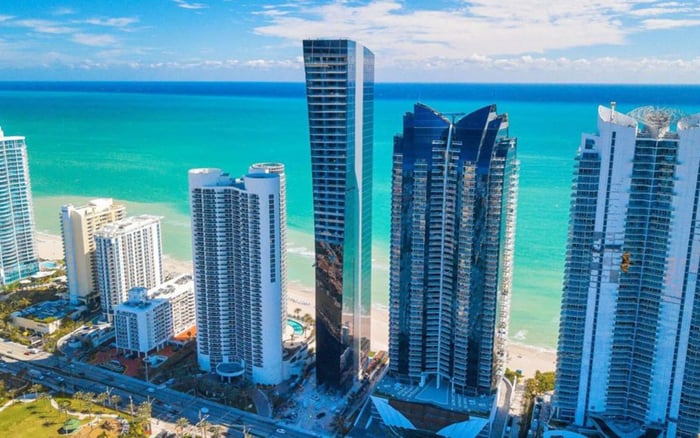
The same lens can shape a market review of Jade Signature Sunny Isles Beach, The Ritz-Carlton Residences® Sunny Isles, and Turnberry Ocean Club Sunny Isles. Each offers relevant residential context, but headline dues alone do not create an equivalent comparison.
A meaningful comparison accounts for residence count, average unit size, staffing model, amenity scope, reserve funding, and services included in the charge. It should also distinguish routine association dues from special assessments and owner-paid expenses outside the association.
For Muse Residences, a buyer should ask five practical questions. What remains operational around the clock? Which expenses vary with occupancy, and which are fixed? What does the association maintain? How are reserves funded? Which services are included rather than billed separately?
Viewed through this lens, oceanfront service fees become part of a broader ownership decision. They reflect collective choices about how shared spaces, systems, amenities, and service standards will be sustained. The best value is not necessarily the lowest daily figure. It is the clearest alignment among cost, building performance, and the owner’s expectations.
What is the current monthly association fee at Muse Residences? Buyers should confirm the current amount through the latest assessment statement and association documents before relying on any quoted figure.
How do I calculate the fee per day? Divide the verified monthly association fee by the average number of days in a month.
What should the association fee generally support? It can support operations, staffing, services, amenities, shared systems, and contributions toward future repairs or replacements.
Why do fees continue when an owner is away? Security, staffing, maintenance, and building readiness continue regardless of whether every residence is occupied.
Do seasonal owners receive less value? They may use amenities less often, but they still benefit from continuous availability, upkeep, security, and operational readiness.
Why can low-density luxury towers have higher costs? Fixed operating expenses are spread across a smaller ownership base than in a high-density condominium.
How does the coastal location affect expenses? Salt air, high winds, and hurricane exposure create ongoing maintenance demands for an oceanfront high-rise.
Can I compare two buildings by monthly dues alone? No. Account for unit size, residence count, staffing, amenities, reserves, and included services.
Which documents deserve close review? Review the current budget, assessment statement, reserve disclosures, and notices concerning special assessments.
What defines good daily residential value? It is the alignment among recurring cost, services used, continuous readiness, property upkeep, and the owner’s priorities.
For a tailored shortlist and next-step guidance, connect with MILLION.
If branded residences are on your mind — as a home or as an allocation — we would be glad to share what we are seeing, privately.
Begin a quiet conversation