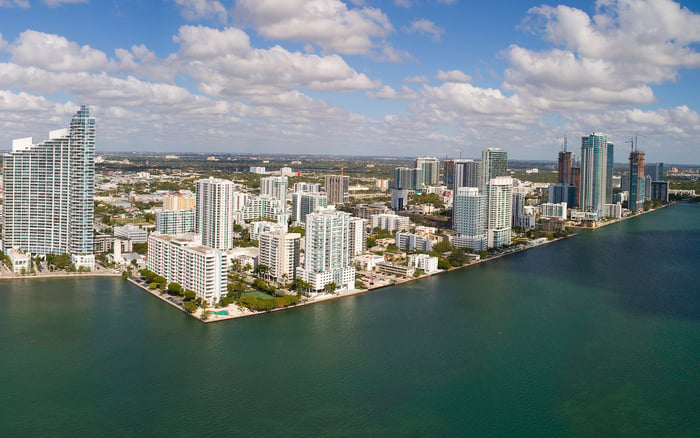
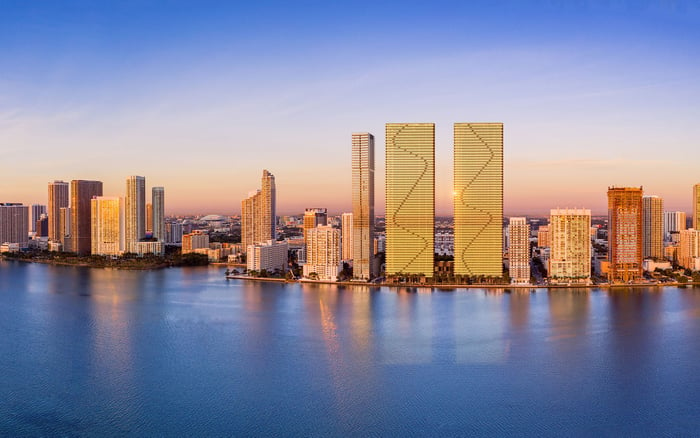
A buyer-oriented comparison of how biophilic architecture is expressed in two Edgewater towers, focusing on experiential design, health, privacy, and long-term value signals rather than marketing claims.
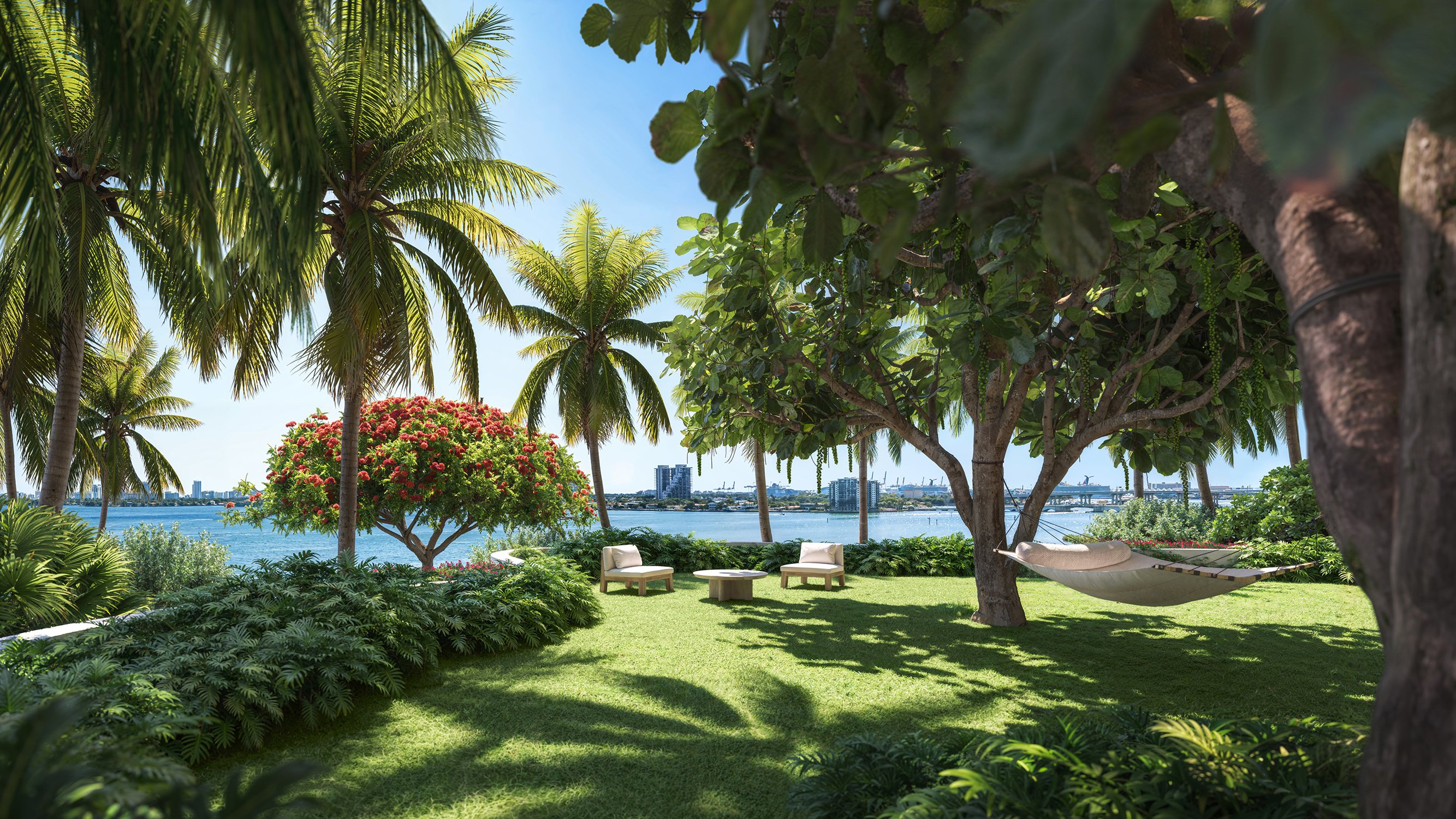
Biophilic architecture is often reduced to potted plants and green walls. In practice, the difference between a decorative gesture and a true biophilic strategy registers in your body: calmer sleep, softer acoustics, less glare, and a home that stays more temperate even when Miami turns bright and humid.
In Edgewater, those outcomes are not theoretical. Waterfront exposure brings wind, salt air, and intense light. Urban adjacency brings traffic noise, reflected heat, and visual density. A building that integrates biophilia well doesn’t just add greenery-it uses landscape, materiality, shade, and spatial sequencing to create buffers and daily rituals that feel restorative.
For buyers comparing EDITION Edgewater and Villa Miami, the most useful lens isn’t which tower “has more plants.” It’s which tower more convincingly choreographs nature into everyday living-from the lobby arrival to the way your terrace handles afternoon sun.
Integration is the keyword. It means nature isn’t an amenity you visit; it’s a condition that follows you through the building.
In a luxury residential context, biophilic integration typically shows up in four buyer-relevant categories:
Arrival and transition. The entry sequence should slow you down. Layered thresholds, softer lighting, and material warmth create an immediate sense of refuge.
Daylight and shadow. Miami is a high-glare environment. Strong design balances expansive views with shade strategies so rooms feel luminous, not harsh.
Air, sound, and tactility. Natural materials, softened acoustics, and a sense of airiness can make a home feel less “tower” and more “resort.”
Outdoor living that performs. Terraces and exterior spaces are only biophilic if they’re comfortable: managed wind, usable furniture zones, and planting that reads as landscape-not decoration.
With those criteria, the comparison becomes clearer and more personal.
EDITION, as a design ethos, tends to prioritize experiential calm-spaces that feel curated, quiet, and sensory without tipping into theatrical. In a residential tower, that hospitality DNA can be a meaningful advantage for biophilic integration because it supports a continuous indoor-outdoor narrative.
For buyers, the tell is whether nature is used to modulate mood. Look for planted thresholds that soften the transition from city to private realm, and materials that feel warmer in the hand and underfoot. When those moves carry consistently through the lobby, amenity levels, and residential circulation, the result reads less like “amenities” and more like a daily retreat.
Another subtle marker is how the building frames stillness. Biophilic design isn’t only visual; it’s also about reducing cognitive load. If common areas are planned to feel less like corridors and more like lounges-and if the palette avoids excessive reflectivity-the building can support a quieter life, even with the skyline outside.
In Edgewater specifically, pay close attention to the microclimate on outdoor decks. A biophilic approach uses planting, shade structures, and spatial zoning to create pockets of comfort. If you can linger outside at different times of day without feeling punished by heat or wind, the design is doing what it should.
Villa Miami reads differently. The biophilic conversation here is often less about “retreat” and more about composition-how the building’s geometry, openness, and outdoor rooms make nature feel integral to the architecture.
In that mode, greenery isn’t a background element. It becomes an organizing device. Buyers who prefer a more contemporary, design-led environment often respond to this approach because it treats outdoor space as an extension of the interior rather than a separate amenity zone.
The practical buyer question is straightforward: does the landscape feel structural, or simply applied? Structural landscape shows up when terraces, edges, and shared spaces are shaped to host planting naturally, with enough depth and intent that greenery feels inevitable. Applied landscape shows up when planters read like accessories.
Edgewater’s waterfront energy can be exhilarating. In a design-forward tower, the goal is to harness that energy while maintaining comfort. Look for outdoor rooms that function as true living spaces-with proportion and privacy-rather than exposed balconies that photograph beautifully but rarely get used.
On tour, you can evaluate biophilia with a short, repeatable checklist that stays anchored in lived experience.
Ask whether the building decompresses you. Do you move through layered spaces that feel shaded and calm, or do you step straight into a bright, reverberant volume? True biophilic integration typically softens sound and reduces contrast.
Miami towers sell views. Biophilia asks whether the view comes with comfort. Can you sit near the glass without glare fatigue? Are there natural-feeling transitions between brighter and darker zones? If a room needs shades drawn all day to feel livable, the daylight strategy isn’t complete.
Stand on the terrace and picture a typical afternoon. Is there meaningful shade? Is wind moderated? Do you see planting that creates privacy without feeling enclosed? In Edgewater, the best outdoor spaces feel like rooms, not edges.
Natural materials and tactile finishes support biophilic goals because they age with dignity and read as calm. Overly glossy surfaces amplify glare and skew more commercial. It’s a subtle distinction-but luxury buyers tend to feel it immediately.
In ultra-premium real estate, value isn’t only location and views. It’s also livability over time. Buildings that integrate biophilia well tend to hold desirability because they keep residents comfortable and emotionally connected to their homes.
There are three value signals to watch:
Amenity relevance. If outdoor areas are comfortable across seasons and times of day, they stay used. Used amenities are cared for, and cared-for spaces protect resale perception.
Design longevity. Biophilic strategies that rely on proportion, shade, and materiality typically age better than trend-driven greenery statements.
Wellness adjacency. Even without explicit “wellness branding,” a building that prioritizes airiness, softness, and outdoor living aligns with how affluent buyers increasingly define luxury.
For buyers also considering other coastal lifestyle options, it can be useful to benchmark Edgewater’s “urban waterfront” version of biophilia against more overtly oceanfront environments such as 57 Ocean Miami Beach, where proximity to dunes, sand, and sea breezes naturally shapes daily rhythms.
Edgewater’s appeal is the blend of water and skyline, paired with quick access to Miami’s cultural and dining ecosystem. The tradeoff is exposure: wind corridors, reflected heat from glass and pavement, and the acoustic complexity of a dense urban edge.
So the best biophilic design here is pragmatic. It buffers. It filters. It creates quiet.
That’s why the comparison between EDITION Edgewater and Villa Miami is best focused on how each building handles the in-between spaces: shaded exterior walkways, planted transitions, and outdoor rooms that feel protected.
If you want a useful cross-neighborhood contrast for “buffered luxury,” consider how Brickell’s newest residential concepts often treat landscape as a mediator between street intensity and private calm, as seen in projects like 2200 Brickell.
Because the Research Pack and Fact Table for this assignment do not specify technical design details, the most responsible guidance is experiential: how different biophilic philosophies tend to align with different lifestyles.
A resort-like cadence to daily life, where common spaces feel curated and restorative.
A preference for quiet luxury, with nature used to soften transitions and reduce sensory noise.
A building identity that feels service-oriented, even when you’re simply coming home.
A more design-led expression, where outdoor living reads as an architectural statement.
An appetite for contemporary spatial drama, with landscape acting as a visual and spatial framework.
A home that feels like a gallery for light, air, and greenery-not just a place with amenities.
If your second-home lifestyle also includes time farther north, you may notice how different markets interpret biophilia. In West Palm Beach, for example, the tone often leans toward breezy, low-friction outdoor living, which can be a helpful reference point when comparing how towers stage nature, as with Alba West Palm Beach.
To keep the evaluation grounded, use questions that force specificity without requiring technical jargon.
Where do you feel the first temperature shift from outdoors to indoors?
Which common areas feel acoustically soft, and which feel echoing?
At what time of day will the main living area be most glare-prone?
Does the terrace have a naturally shaded zone that can hold a dining table?
Do you see real landscape depth, or mainly decorative planters?
The goal is to translate “biophilic” into comfort, privacy, and a sense of refuge.
What is biophilic architecture in a luxury condo context? It’s design that integrates nature through light, air, materials, and landscape so the home feels calmer and more restorative day to day.
How can I tell if a building’s greenery is decorative or integrated? Integrated landscape shapes circulation, shade, and privacy; decorative greenery reads like an accessory that doesn’t change comfort.
Why does Edgewater require a different biophilic approach than Miami Beach? Edgewater is an urban waterfront with more reflected heat and city acoustics, so biophilia has to buffer glare, wind, and noise.
Do larger balconies automatically mean better biophilic living? Not necessarily; comfort depends on shade, wind management, and proportions that make outdoor rooms usable.
What interior cues support biophilic comfort? Softer acoustics, warmer tactile materials, and layered lighting that avoids harsh contrast typically feel more biophilic.
Is biophilic design mainly about wellness? Wellness is a benefit, but the practical payoff is livability: calmer spaces, better outdoor use, and less sensory fatigue.
How should I compare EDITION Edgewater and Villa Miami on a tour? Evaluate arrival calm, glare control, outdoor usability, and whether landscape feels structural rather than applied.
Can biophilic integration influence resale value? Yes, because comfortable outdoor areas and timeless material strategies tend to sustain desirability across buyer cycles.
Does biophilic design reduce maintenance issues? It can if planting and materials are thoughtfully specified, but it can also add complexity if landscape is overly ornamental.
What is the simplest litmus test for biophilic success? If you naturally linger in shared spaces and on the terrace without fighting heat, glare, or noise, the design is doing its job.
For a tailored shortlist and next-step guidance, connect with MILLION Luxury.
If branded residences are on your mind — as a home or as an allocation — we would be glad to share what we are seeing, privately.
Begin a quiet conversation