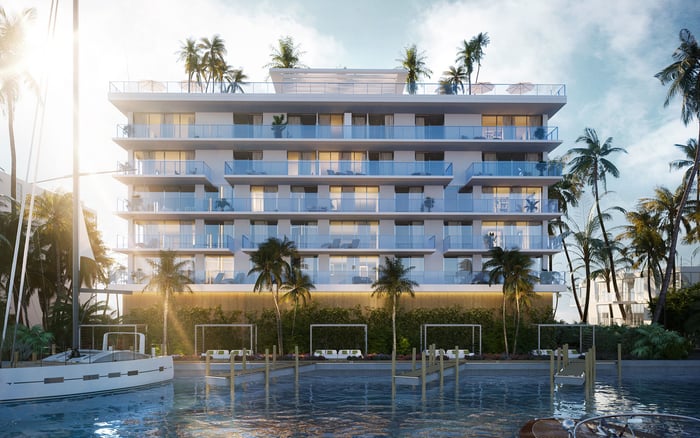
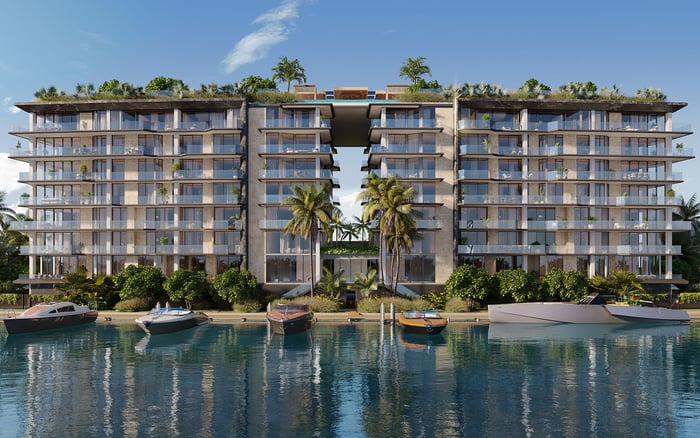
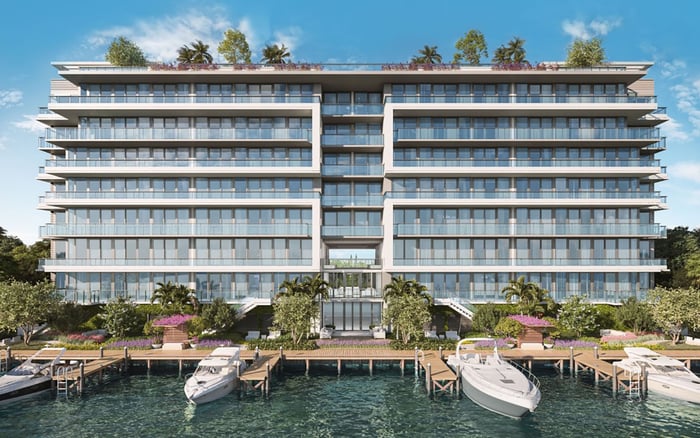
For collectors considering La Baia North and La Maré, a successful purchase requires more than a beautiful art wall. Confirm the exact building, document the delivery route, and establish work-specific climate requirements before arranging installation.

For a buyer with significant artwork, the most consequential questions often lie beyond the presentation suite. Can a crated painting reach the residence without an improvised transfer? Where can it wait safely? Who approves the installation, and what happens to the interior environment while the owner is away?
At La Baia North Bay Harbor Islands and La Maré Bay Harbor Islands, those questions warrant written answers specific to the building and residence. Private arrival, refined interiors, and advertised air filtration do not replace documented freight access or a conservator's environmental brief.
The objective is straightforward: establish whether the home can receive, display, and support your collection before committing to shipping arrangements or interior alterations. Treat the recommendations below as buyer due diligence, not as services either development has confirmed.
La Baia North is identified at 9481 East Bay Harbor Drive, with 57 residences. Its stated status is under construction, with estimated completion in Q1 2027. That estimate is not a guaranteed delivery date; reconfirm it against current contractual information.
Do not apply La Baia specifications associated with 9201 East Bay Harbor Drive to La Baia North at 9481. A shared name does not establish an identical loading arrangement, elevator configuration, or delivery policy.
La Maré requires a similar distinction. Its contact address is 10301 East Bay Harbor Drive, while the Signature Collection is identified at 9781 East Bay Harbor Drive and the Regency Collection at 9927 East Bay Harbor Drive. The Regency Collection is identified as having 33 residences.
Before requesting logistics documents, confirm the collection, building address, and residence. Require every drawing, operating rule, and approval to identify the relevant property, not merely the development name.
La Baia North's freight-elevator dimensions, cab weight limits, loading clearance, truck restrictions, and delivery hours remain unconfirmed here, as do La Maré's freight-elevator, loading-dock, and art-handling specifications. These are questions to resolve, not evidence that access is unsuitable.
La Maré's private or semi-private elevator entry describes an arrival experience; it does not establish whether a particular crate can travel through the elevator.
Request written door and cab dimensions, usable diagonal clearance, weight capacity, and the approved route from truck to residence. Have the art shipper check thresholds, corridor turns, vestibules, and the final entrance-not just the elevator interior. Establish who is authorized to confirm those measurements.
The truck's approach deserves equal attention. Confirm clearance, turning restrictions, permitted stopping locations, and whether unloading requires a reservation. Arrange a route survey before crate fabrication, with a documented plan for any work that cannot use the approved route.
A successful art delivery requires more than sufficient clearance. Request the move-in manual and rules governing elevator reservations, delivery windows, insurance certificates, deposits, and approved vendors. Confirm whether the art shipper must coordinate separately with building management and the interior contractor.
Then establish where each operation may take place. Is unpacking permitted within the residence? Can a crate wait temporarily in an approved area? What protection is required for floors, doors, and elevator finishes? Who removes packing materials, and by when?
Obtain written crate-storage rules rather than assuming packaging can remain on site. Ask the shipper to specify staffing, equipment, and handling procedures, and have the building confirm what is permitted. Agree on an alternative arrangement for a delayed delivery before the truck arrives.
La Maré's advertised HEPA-grade air filtration is an air-quality feature, not a verified art-preservation specification. It does not establish independent humidity regulation, dedicated art-storage controls, or climate-controlled delivery staging.
Begin with the works themselves. Have a conservator define environmental requirements appropriate to the individual materials and their condition. Avoid adopting a single temperature or humidity target merely because it sounds suitable for a collection.
Request the residence's HVAC zoning and dehumidification specifications, along with details of environmental monitoring and controls during extended absences. Ask where sensors could be located and who would receive alerts. Establish whether a proposed system can meet the conservator's brief rather than assuming residential comfort settings will suffice.
Also ask about cooled staging, leak detection, and backup power. Identify which systems, if any, would remain operational during an interruption. These are planning questions for both developments, not confirmed amenities or guarantees of collection protection.
La Maré's interior specifications include Poliform cabinetry, travertine finishes, Antonio Lupi kitchen and bath fixtures, and deep soaking tubs. These describe the residential finish palette; they do not establish an art wall's construction, fixing capacity, or suitability for a particular installation.
Ask the design team to identify proposed display walls, reinforcement requirements, security wiring, and access for future maintenance. For heavy sculpture, obtain the necessary structural review and building approvals before selecting its final position.
Discuss glazing and shading with the conservator and interior designer, including how planned artwork locations relate to windows. Confirm which changes require approval and when decisions must be made. The strongest installation plan coordinates display, lighting, environmental needs, and building permissions rather than treating art as the final decorative layer.
For buyers whose search also includes Bal Harbour or Onda Bay Harbor, use the same questions at every property. This is a comparison framework, not an assertion that another building offers equivalent handling or climate provisions.
New-construction planning should distinguish proposed specifications from written commitments and conditions that still require inspection. Keep a single file containing route measurements, management approvals, the conservator's brief, shipping arrangements, and installation permissions. Assign responsibility for each unresolved item and set a deadline for its resolution.
The decisive advantage is clarity: knowing what the building permits, what the residence supports, and what your specialists must provide. That allows the architecture and the collection to be considered together, without mistaking an elegant arrival for a complete art-handling plan.
For a discreet conversation about aligning your next residence with your collection, connect with MILLION.
If branded residences are on your mind — as a home or as an allocation — we would be glad to share what we are seeing, privately.
Begin a quiet conversationLa Baia North is identified at 9481 East Bay Harbor Drive in Bay Harbor Islands. Delivery documents should specifically identify that building.
No. Q1 2027 is an estimate, not a guaranteed delivery date; buyers should reconfirm timing against current contractual information.
Confirm the collection first: Signature is identified at 9781 East Bay Harbor Drive and Regency at 9927. The contact address, 10301 East Bay Harbor Drive, is distinct.
No. Private or semi-private elevator entry does not establish cab dimensions, door clearance, weight capacity, or suitability for a particular crate.
No detailed freight or art-handling specifications are confirmed here. Request written, building-specific information before planning delivery.
No. That address differs from La Baia North at 9481, so its specifications should not be transferred to La Baia North.
No. The filtration description does not establish independent humidity regulation, dedicated art-storage controls, or climate-controlled staging.
Arrange the survey before crate fabrication. Have the shipper examine the full truck-to-residence route, including doors, turns, thresholds, and elevator clearances.
A conservator should specify requirements for the individual works. The buyer's team can then assess the residence's systems against that brief.
Obtain the necessary structural review and building approvals before finalizing placement. Confirm any related floor protection, handling, and installation requirements as well.